Connect with us

Latest News

Takhar’s border with Tajikistan secure: IEA official 

Published

on

 
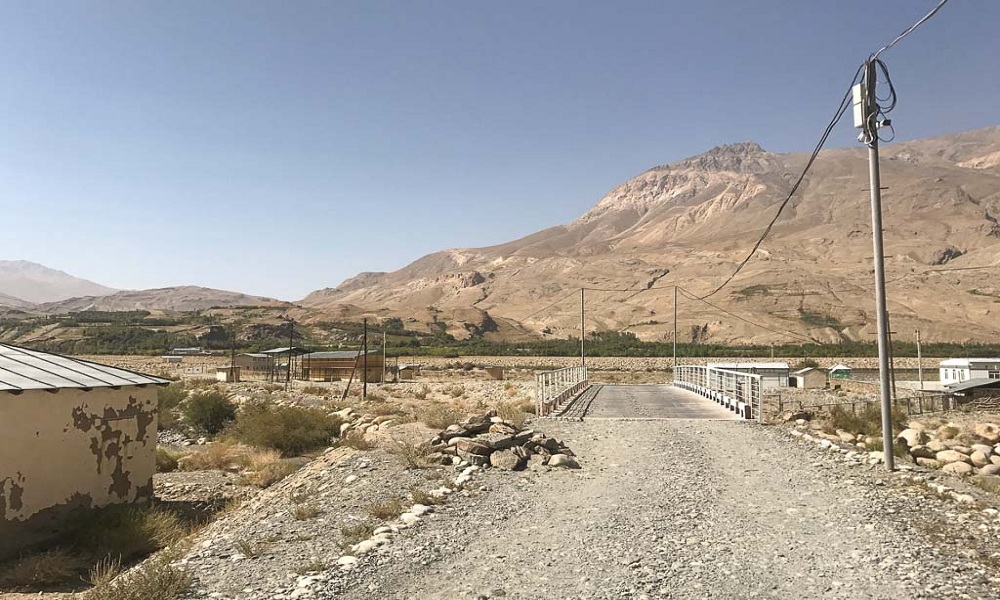
Takhar security authorities say they have the border areas in the province under control and will not allow threats to be created from Afghanistan against Tajikistan.
 
The acting head of the Takhar Police Command Qari Zakrullah Zaker says that they have the necessary preparations in place in coordination with the National Army and the Border Police, and that there are no security concerns along the border at the moment.
 
“Our forces are stationed in all the districts that are bordering Tajikistan, and they are ready to provide any type of security, and we also have a coordinating office that coordinates between our army and police,” said Qari Zakrullah Zaker.
 
According to Zaker, the Islamic Emirate has arrested several drug smugglers in border areas and drug trafficking has been stamped out completely in the province. 
 
“Under the previous government, drugs were exported to and from Afghanistan from Tajikistan, but now our forces are regular at the borders,” said Zaker.  
 
Six districts of Takhar province, along the Kokcha River, share a border with Tajikistan.
 
The residents of Takhar say that they once witnessed artillery shelling from Tajikistan after the establishment of the Islamic Emirate but they want the government to establish good relations with neighboring countries so that they do not witness such incidents again.
 
“As you know the situation in the borders of Afghanistan, especially on the borders of Takhar province – not long ago, we witnessed the artillery attacks of the Tajik forces in different places, especially in the Khowaja Ghar district,” said Wasim Rasouly, a resident of Takhar province. 
 
Early this year, several mortar rounds were launched from Khwaja Ghar district in Takhar, aimed at Tajikistan. Daesh claimed responsibility. Now Takhar security officials say that after that incident, they have taken serious security measures and have deployed more security forces along the border areas with Tajikistan. 

Latest News

Omari and Iranian ambassador meet to strengthen Afghan migrant labor ties

Published

on

Continue Reading

Latest News

Pakistan’s actions target militants, not religious sites: Khawaja Asif

He rejected claims equating these operations with India’s alleged strikes on mosques and religious seminaries in Bahawalpur and Muridke, stressing that Pakistan does not target religious or civilian sites.

Published

on

Pakistan’s Defence Minister Khawaja Muhammad Asif has dismissed comparisons between Pakistan’s counterterrorism operations along the disputed Durand Line and what he described as India’s attacks on religious sites, saying such parallels are “entirely wrong and inappropriate.”

In a statement issued Tuesday, Asif said Pakistan’s military actions are strictly aimed at verified camps belonging to Tehreek-e-Taliban Pakistan (TTP) militants operating from Afghanistan. He rejected claims equating these operations with India’s alleged strikes on mosques and religious seminaries in Bahawalpur and Muridke, stressing that Pakistan does not target religious or civilian sites.

The defence minister said the international community, including the United Nations, has repeatedly expressed concern over the threat of terrorism they claim is originating from Afghanistan. He said these concerns are reinforced by continued militant infiltration and attacks inside Pakistan, which, according to him, are carried out by armed groups entering from Afghan territory.

Referring to India’s allegations surrounding the Pahalgam incident, Asif said New Delhi has failed to present credible or verifiable evidence to support its claims. He added that Pakistan had offered to cooperate with an independent and impartial investigation, an offer that India declined.

Asif further said a recent United Nations report had described India’s actions as illegal and based on unsubstantiated claims, while affirming that Pakistan’s response was justified under international law. He said Pakistan has already addressed and clarified allegations regarding India, what he termed proxy extremist elements, and their alleged supporters.

Reiterating Pakistan’s stance, the defence minister said the country remains vigilant and determined to protect its sovereignty and national security. He emphasized that Pakistan will continue its counterterrorism efforts and will challenge what he described as baseless accusations and hostile narratives at all international forums.

Meanwhile, the Islamic Emirate of Afghanistan (IEA) has consistently rejected Pakistan’s accusations, maintaining that Afghanistan does not allow any group to operate from its soil. Afghan authorities have repeatedly stated that Pakistan’s security challenges are an internal matter and should be addressed domestically.

Continue Reading

Latest News

Germany conducts first deportation to Syria in a decade

The deportation marks a historic shift in German migration policy and signals the government’s determination to enforce stricter measures against convicted foreign nationals.

Published

on

deportations from germany

Germany has carried out its first deportation to Syria since the outbreak of the country’s civil war in 2011, sending a convicted Syrian national back to Damascus on a scheduled commercial flight.

The 37-year-old man, who had served a prison sentence in North Rhine-Westphalia for aggravated robbery, bodily harm, and extortion, was escorted by federal police to the Syrian capital, where he was handed over to local authorities on Tuesday, December 23.

The Federal Interior Ministry confirmed the deportation, which coincided with another removal of an individual to Afghanistan. The ministry said it had reached agreements with both Damascus and Kabul authorities to facilitate “regular” deportations of serious offenders and individuals considered security risks in the future.

The Afghan national had been imprisoned in Bavaria, including for intentional bodily harm. The ministry said this marked the second deportation of an Afghan criminal within a week.

“Criminals must leave our country. We stand for control, consequence, and zero tolerance towards offenders and threats,” said Interior Minister Alexander Dobrindt (CSU), emphasizing that the move reflects Germany’s commitment to law and order.

Dobrindt further justified the policy by highlighting the strain on local municipalities, which have faced challenges accommodating foreign nationals serving prison sentences. “We have reached the breaking point for a long time, and the overload in the municipalities is visible,” he said.

The deportation follows months of diplomatic negotiations after the fall of Bashar al-Assad’s regime in December 2024, which ended a 14-year civil war. The change prompted Germany to reassess its long-standing ban on returns to Syria.

The current coalition government, formed by CDU/CSU and SPD, explicitly committed in its agreement to resume deportations to Syria and Afghanistan, targeting criminals and “Gefährder” — individuals considered potential security threats. Chancellor Friedrich Merz has been a vocal supporter of the policy, meeting with Syria’s transitional president Ahmed al-Sharaa to discuss mechanisms for further returns.

The move carries symbolic weight amid heightened public concern over migration, with roughly one million Syrians currently residing in Germany, many of whom arrived during the 2015-2016 refugee influx under former Chancellor Angela Merkel.

While the German government asserts that the Syrian conflict is over, human rights organizations continue to caution against deportations, citing lingering instability, ongoing reconstruction challenges, and potential security risks for returnees.

The deportation marks a historic shift in German migration policy and signals the government’s determination to enforce stricter measures against convicted foreign nationals.

Continue Reading
Advertisement
Advertisement
Advertisement
Advertisement

Trending

Copyright © 2025 Ariana News. All rights reserved!