
Latest News
Registered Afghan refugees must return by June 30 or face deportation: Pakistani official

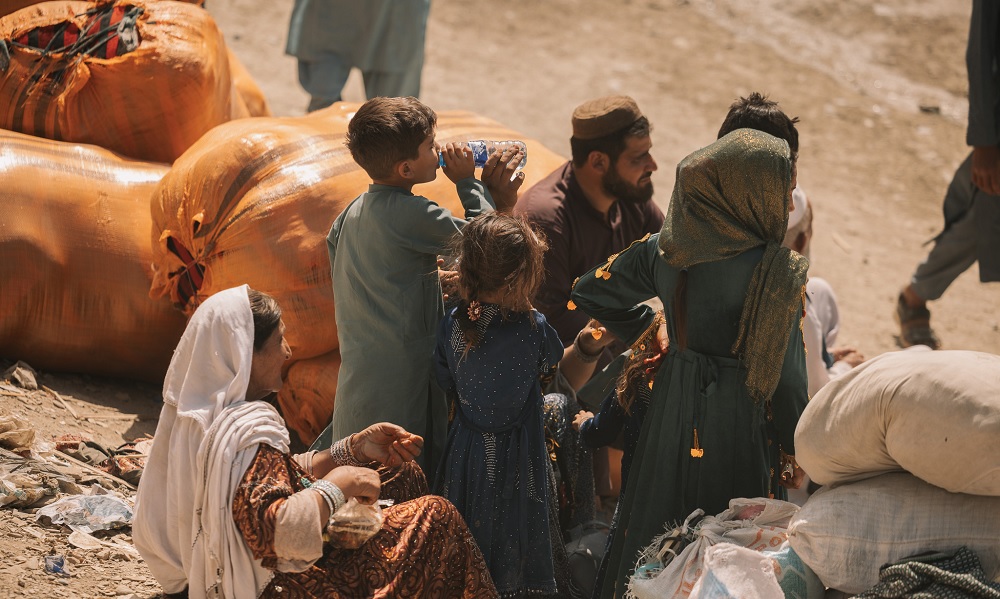
Pakistan’s State Minister for Interior Affairs Talal Chaudhry has confirmed that Pakistan has set a June 30 deadline for registered Afghan nationals, including Proof of Registration (PoR) holders, to voluntarily return to Afghanistan.
“After this, he said that formal deportation procedures will begin. Afghan refugees were and remain our guests. They are being sent back with full dignity and respect,” he told Geo News.
Pakistan is currently deporting illegal immigrants and Afghan Citizen Card holders, with thousands returning to their country daily.
Meanwhile, UNHCR’s spokesperson Qaisar Khan Afridi stressed that deportations must be voluntary, not forced.
Afridi also highlighted that the UNHCR has received complaints of arrests in parts of Punjab, even involving some documented Afghan refugees.
However, Chaudhry categorically denied such incidents, stating that no such case has been officially reported and that previous allegations turned out to be fake news upon verification.
He clarified that Afghan refugees who fail to leave within the stated deadlines are not immediately deported, but are first notified, and then taken to refugee holding centres where they are provided food, shelter, security, medical aid and travel facility.
“This is a structured, humane process. There is no chaos. Our hospitality has always been there for Afghan citizens,” Chaudhry emphasised.



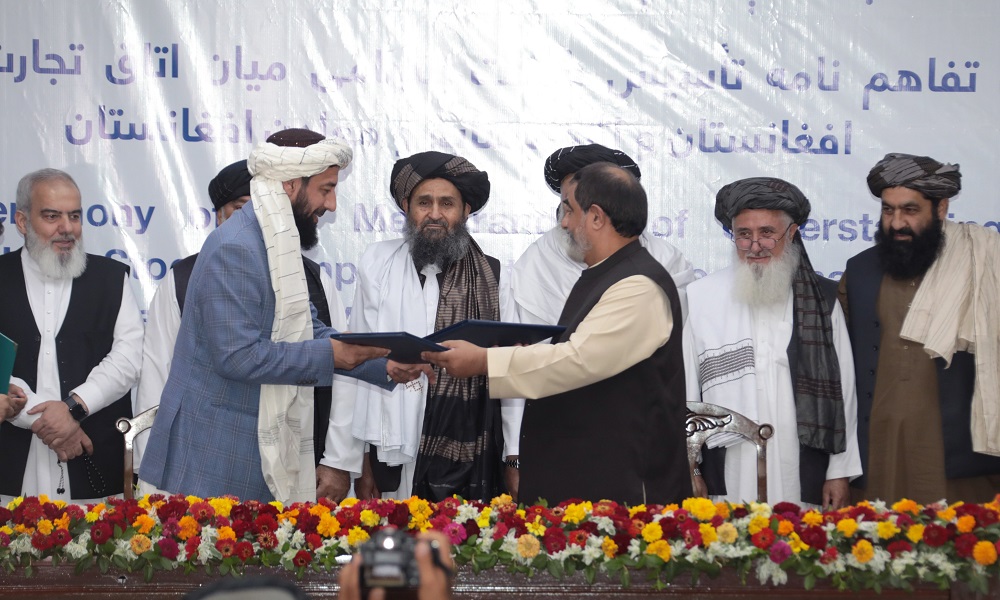
A memorandum of understanding (MoU) has been signed between the Afghanistan Chamber of Commerce and Investment and the Chamber of Industries and Mines to establish a joint-stock company aimed at financing major economic and infrastructure projects and promoting investment in Afghanistan.
The agreement was signed on Tuesday at the Government Media and Information Center in the presence of Mullah Abdul Ghani Baradar, Deputy Prime Minister for Economic Affairs.
Speaking at the ceremony, Baradar said the new company would provide a structured mechanism for mobilizing private capital to finance large-scale economic and infrastructure projects.
He said the private sector has a key role to play in Afghanistan’s economic growth, particularly in boosting domestic production, creating jobs, expanding exports and financing major development projects.
Baradar said the company would pool the capital of traders, industrialists and investors under an organized, transparent and legal framework, allowing their combined resources to be used for major projects.
He also said the Islamic Emirate had created a secure environment for investors and industrialists and was working to streamline administrative procedures, provide legal and economic facilities, and remove barriers to investment.
Baradar called on traders, industrialists and investors to pool their resources and jointly invest in Afghanistan’s economic development. He also urged government institutions to provide comprehensive support to the private sector.
Under the agreement, the joint-stock company will focus on implementing infrastructure projects across various sectors and is expected to create new opportunities for investment in the country.
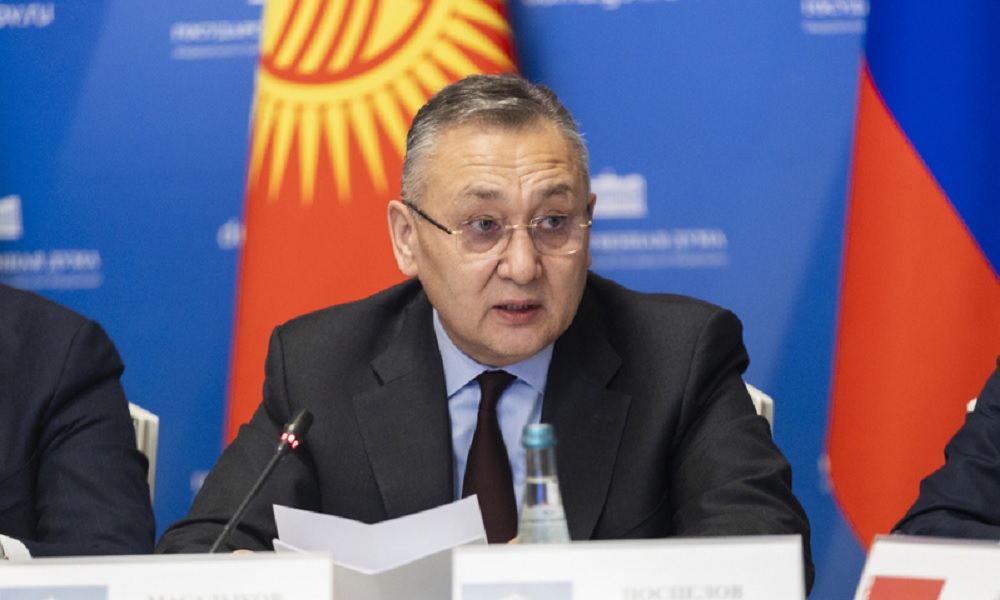
Collective Security Treaty Organization (CSTO) Secretary-General Taalatbek Masadykov has warned that instability in parts of Afghanistan, particularly areas bordering the organization’s zone of responsibility, poses risks to regional security.
In an interview with RIA Novosti, Masadykov said the CSTO was closely monitoring the situation in Afghanistan and considered developments in the country important for the security of Central Asia.
“Instability persists in several regions of the country, including those bordering the CSTO zone of responsibility, posing obvious risks to the Central Asian collective security region,” he said.
Masadykov said the CSTO considers Afghanistan an important neighbour and is interested in its development as a peaceful and prosperous state.
He noted that political and economic relations between Kabul and nearly all CSTO member states are developing actively. However, he said the current situation made stronger border controls with Afghanistan necessary.
“Given the current situation, we recognize the need to strengthen border control with this country,” Masadykov said.
He added that the CSTO was implementing an interstate programme aimed at strengthening Tajikistan’s border with Afghanistan.
Masadykov also said that during a recent working visit, he inspected border outposts and discussed the situation along the Tajik-Afghan border with the commander of Tajikistan’s border troops.
The remarks come as the Islamic Emirate of Afghanistan (IEA) has repeatedly said that it will not allow Afghanistan’s soil to be used against any other country.
Latest News
Afghanistan does not pursue confrontation with Pakistan: envoy
He said lasting regional security requires mutual trust, practical cooperation, coordination and respect for each other’s legitimate concerns.
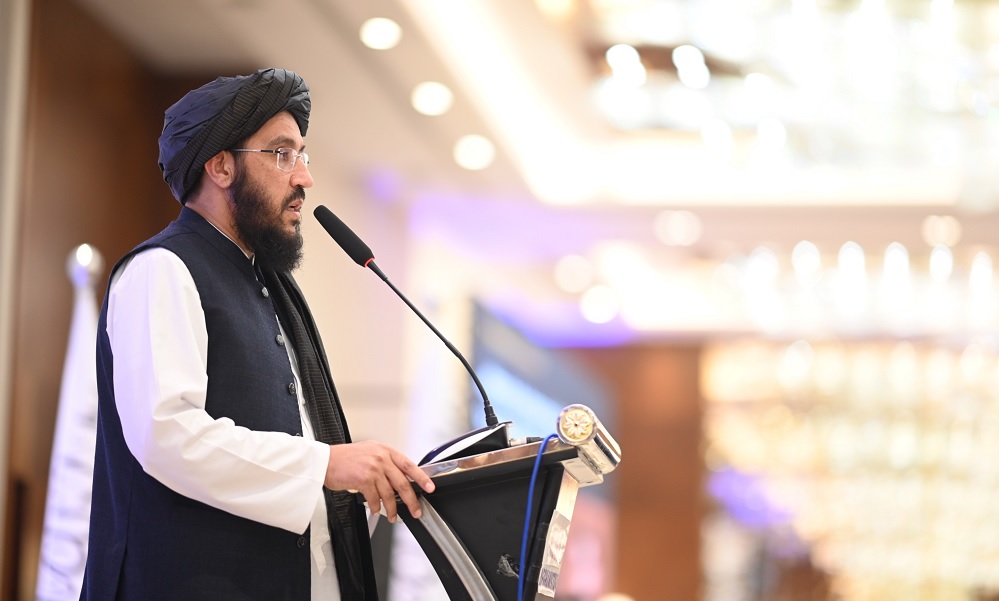
Afghanistan does not pursue a policy of confrontation with Pakistan and seeks to build relations with its neighbour through dialogue, mutual respect and cooperation, Afghan Ambassador to Pakistan Sardar Ahmad Shakeeb said Monday.
Speaking at a ceremony in Islamabad marking the fifth anniversary of the Islamic Emirate’s return to power, Shakeeb said Afghanistan’s relations with its neighbours, particularly Pakistan, should be based on mutual respect, sovereign equality, non-interference and shared interests.
“We believe that an atmosphere of trust cannot be created through pressure or force. It can only be built through understanding, sustained dialogue, and sincere cooperation,” he said.
Shakeeb said Afghanistan does not allow its territory to be used against the security and stability of other countries, while expressing hope that Afghanistan’s security concerns would also be understood and respected.
He said lasting regional security requires mutual trust, practical cooperation, coordination and respect for each other’s legitimate concerns.
The envoy also highlighted the geographical and economic importance of Afghanistan and Pakistan, saying a peaceful and stable Afghanistan could contribute to regional connectivity, trade, transit, investment and energy cooperation.
Meanwhile, Maulana Fazlur Rahman, leader of Pakistan’s Jamiat Ulema-e-Islam, also called for mutual support between the two countries.
Speaking at the same event, Fazlur Rahman said he was confident that Pakistan would support Afghanistan and Afghanistan would support Pakistan.
He said Afghanistan and Pakistan could play the role of a bridge in the region because of their geographical positions, urging both countries to recognise the region’s geopolitical importance.


MoU signed to establish joint-stock company to boost investment in Afghanistan

CSTO chief: Afghan border instability poses risks to regional security

Pakistan Supreme Court orders Imran Khan moved from prison to hospital

Afghanistan does not pursue confrontation with Pakistan: envoy

Indian and Serbian officials attend August 15 event at Afghan Embassy in Delhi

Pakistan’s governance system has ‘collapsed’: Mohsin Naqvi

Spain sweep FIFA World Cup player awards after historic triumph

First Chinese transit shipment arrives in Herat via Iran’s railway corridor

AFC confirms clubs for 2026/27 competitions; draw set for August 18

Afghanistan exports first stone shipment to US in $100,000 trade milestone

Tahawol: U.S. non-recognition of IEA

Saar: Tensions between Iran and the United States

Debate with Nooruddin Azizi, Minister of Industry and Commerce

Saar: Marking IEA’s fifth anniversary in Afghanistan discussed

Tawsia: $420M investment in TAPI gas distribution network in Herat discussed
-
 Latest News5 days ago
HesabPay unveils new visa card and digital payment app in Kabul
-
 Regional4 days ago
Turkey lays out plans for defence pact with Pakistan and Saudi Arabia
-
 Latest News3 days ago
Afghanistan expresses regret over civilian death in Tajikistan border incident
-
 Latest News4 days ago
Tajikistan sends protest note to Afghanistan after airspace violation, civilian death
-
 World4 days ago
US says it can keep naval blockade on Iran ‘indefinitely,’ vows more economic pressure
-
 Latest News3 days ago
Muttaqi urges U.S. to reopen Kabul embassy, invest in Afghanistan’s mines
-
 Sport3 days ago
Afghanistan crowned champions of five-match ODI series against Ireland
-
 Business2 days ago
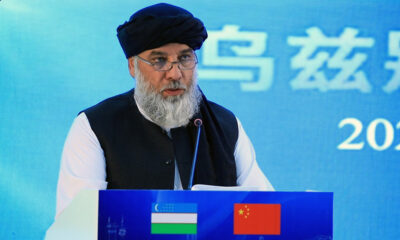
Azizi: Afghanistan ready to attract Chinese and Uzbek investment