
Regional
India PM Modi warns Pakistan of more strikes if there is a ‘terrorist attack’
Modi’s address came hours after the military operations chiefs of India and Pakistan spoke by phone, two days after they agreed to the ceasefire.


Indian Prime Minister Narendra Modi warned Pakistan on Monday that New Delhi would target “terrorist hideouts” across the border again if there were new attacks on India and would not be deterred by what he called Islamabad’s “nuclear blackmail”, Reuters reported.
Modi’s first public comments since Indian armed forces launched strikes on what New Delhi said were “terrorist camps” across the border last week indicated a hardening of India’s position on ties with its neighbour, which were icy even before the latest fighting.
Pakistan denies Indian accusations that it supports militants who attack it and says the locations hit by India last week were civilian sites.
Modi was speaking two days after the nuclear-armed neighbours agreed to a ceasefire, announced by U.S. President Donald Trump.
The truce was reached after four days of intense exchanges of fire as the old enemies targeted each other’s military installations with missiles and drones, killing dozens of civilians.
The military confrontation began on Wednesday, when India said it launched strikes on nine “terrorist infrastructure” sites in Pakistan and Pakistani Kashmir following an attack on Hindu tourists by Islamist militants in Indian Kashmir last month that killed 26 men.
Islamabad denied any links to the attack and called for a neutral investigation.
“If there is a terrorist attack on India, a fitting reply will be given… on our terms,” Modi said, speaking in Hindi in a televised address. “In the coming days, we will measure every step of Pakistan… what kind of attitude Pakistan will adopt.”
“India will strike precisely and decisively at the terrorist hideouts developing under the cover of nuclear blackmail,” he said, and listed New Delhi’s conditions for holding talks with Islamabad and lifting curbs imposed after the Kashmir attack.
“India’s position is clear: terror and talks cannot go together; terror and trade cannot go together. And water and blood cannot flow together,” he said, referring to a water sharing pact between the two countries New Delhi suspended.
There was no immediate response to his comments from Islamabad.
Hindu-majority India and Muslim Pakistan both rule part of the Himalayan region of Kashmir, but claim it in full. They have fought two of their three wars since independence in 1947 over the region and there have been several other more limited flare-ups, including in 2016 and 2019, read the report.
The latest military conflict between the South Asian neighbours spiralled alarmingly on Saturday and there were briefly fears that nuclear arsenals might come into play as Pakistan’s military said a top body overseeing its nuclear weapons would meet.
But the Pakistani defence minister said no such meeting was scheduled.
Military analysts said this may have been Pakistan’s way of hinting at its nuclear option as Islamabad has a “first-use” policy if its existence is under threat in a conflict.
Modi’s address came hours after the military operations chiefs of India and Pakistan spoke by phone, two days after they agreed to the ceasefire.
“Issues related to continuing the commitment that both sides must not fire a single shot or initiate any aggressive and inimical action against each other were discussed,” the Indian army said.
“It was also agreed that both sides consider immediate measures to ensure troop reduction from the borders and forward areas,” it added.
There was no immediate Pakistani readout of the military operations chiefs’ talks.
In Washington, Trump said the leaders of India and Pakistan were “unwavering”, and the U.S. “helped a lot” to secure the ceasefire, adding that trade was a “big reason” why the countries stopped fighting.
“We are going to do a lot of trade with Pakistan… and India. We are negotiating with India right now. We are soon going to negotiate with Pakistan,” he said, just ahead of Modi’s speech.
Pakistan has thanked the U.S. for brokering the ceasefire while India, which opposes third-party involvement in its disputes with Pakistan, has not commented on Washington’s role.
Pakistan’s international bonds rallied sharply on Monday, adding as much as 5.7 cents in the dollar, Tradeweb data showed.
Late on Friday, the International Monetary Fund approved a fresh $1.4-billion loan and also the first review of its $7-billion programme, Reuters reported.
Pakistan’s benchmark share index (.KSE), closed up 9.4% on Monday, while India’s blue-chip Nifty 50 (.NSEI), index closed 3.8% higher in its best session since February 2021.
In Beijing the foreign ministry said China, which also controls a small slice of Kashmir, was willing to maintain communication with both its neighbours, and play a “constructive role in achieving a comprehensive and lasting ceasefire” and maintaining peace.
India blames Pakistan for an insurgency in its part of Kashmir that began in 1989, but Pakistan says it provides only moral, political and diplomatic support to Kashmiri separatists.





Regional
US and Iran hold first talks since June after Trump’s ‘annihilation’ threat
WATCH Donald Trump’s speech to UNGA on Iran, including his ‘annihilation’ threat
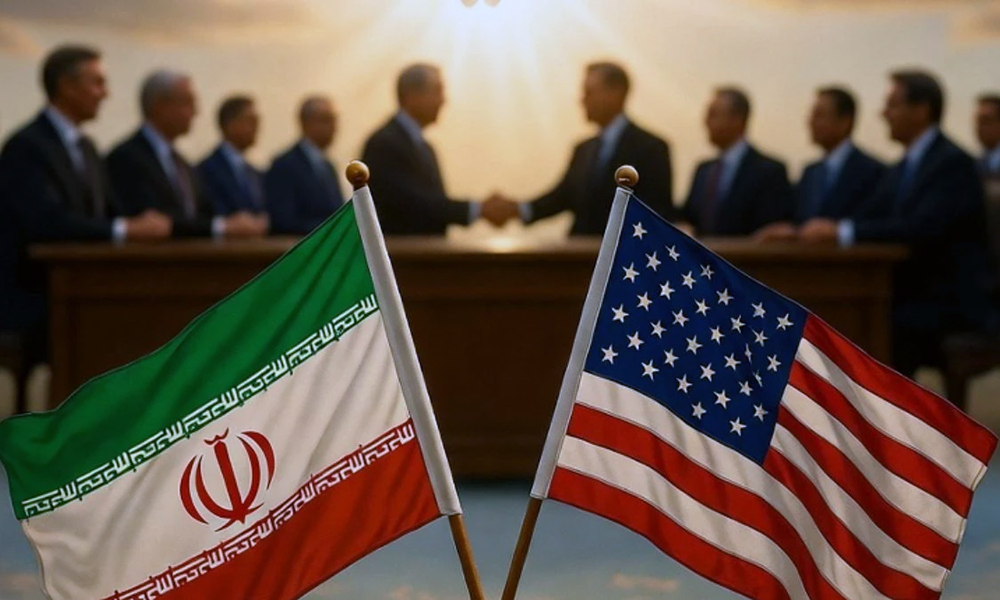
The United States and Iran have held their first high-level talks since June, with discussions taking place on the sidelines of the United Nations General Assembly in New York amid continued fighting and growing international pressure to end the conflict.
Iranian Foreign Minister Abbas Araghchi and US special envoy Steve Witkoff took part in the talks, which were mediated by Qatar. US envoy Jared Kushner also participated on the American side, according to reports.
No breakthrough was immediately reported. Witkoff said the two sides had completed a round of discussions that he hoped would prove “constructive and promising”, adding that mediators would continue their efforts.
Iranian officials said Araghchi conveyed Tehran’s conditions, including an end to what Iran describes as US acts of aggression and the lifting of measures affecting Iranian shipping and assets.
The talks came just hours after US President Donald Trump warned in his address to the UN General Assembly that he could “annihilate” Iran if no agreement was reached.
Trump said Iran faced a choice between reaching a deal and what he described as destruction, while also saying he believed an agreement could be reached after the US midterm elections in November.
Trump later described the three-hour discussions as very productive. Witkoff, however, clarified that the two sides communicated through mediators who shuttled between the delegations rather than holding direct face-to-face negotiations.
The latest contact follows months of conflict between Iran, Israel and the United States. The fighting has also disrupted shipping through the Strait of Hormuz, one of the world’s most important energy routes.
Iran has indicated that it could reopen the strategic waterway if Washington takes steps to ease military and economic pressure on Tehran. Iranian officials have linked the issue to demands including the lifting of the US naval blockade and the release of frozen Iranian assets.
The Strait of Hormuz is a key route for global energy supplies, and its closure has contributed to volatility in international oil markets.
Despite the renewed diplomatic contact, significant differences remain between Washington and Tehran over the war, Iran’s nuclear programme, sanctions, shipping through the Strait of Hormuz and US military operations in the region.
Iranian President Masoud Pezeshkian is due to address the UN General Assembly on Wednesday, with further diplomatic efforts expected to continue in New York.
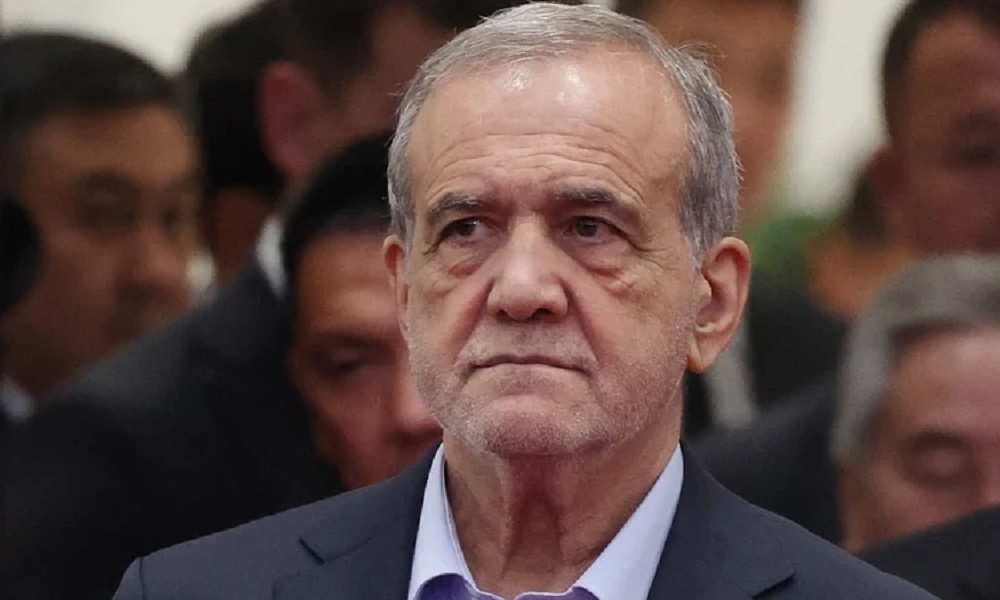
Iranian President Masoud Pezeshkian left Tehran for New York on Tuesday to attend the 81st United Nations General Assembly, where he says he will defend Iran’s positions and highlight what Tehran describes as the hardships facing its people and the wider region.
Speaking at a press conference before his departure on Tuesday, Pezeshkian said the UN gathering provides Iran with an opportunity to present its views to the international community.
“We will defend our positions with strength at international forums,” he said.
Pezeshkian said he would meet politicians, cultural figures and media representatives during his visit and discuss issues including regional conflicts, international law and what he described as violations of commitments made to Iran during previous negotiations.
Iranian Foreign Minister Abbas Araghchi is already in New York. He arrived on Monday ahead of the General Assembly and is expected to hold talks and consultations with foreign officials during the UN gathering.
Araghchi has said Iran’s main objective at the UN is to defend the rights and interests of the Iranian people and use the gathering as a platform for diplomacy.
The Iranian delegation’s presence comes amid ongoing tensions between Tehran and Washington.
A senior Iranian official told Reuters on Tuesday that Iran was prepared to reopen the Strait of Hormuz within seven days if the United States eased military pressure and lifted its blockade of Iranian ports. The official said the Iranian delegation in New York had full authority to pursue diplomatic discussions.
Pezeshkian meanwhile said Iran had repeatedly entered negotiations and agreements only to see the other side fail to honour its commitments. He argued that lasting peace and security required respect for the rights of nations and individuals.
He also criticised military actions and developments in Gaza and other parts of the Middle East, saying attacks on civilians and public facilities could not simply be justified as counter-terrorism measures.
Pezeshkian is expected to address the UN General Assembly on Wednesday. His visit comes as the United States and Iran remain at odds over the conflict and the possibility of renewed diplomacy.
The Iranian president has said his trip will be aimed at presenting Iran’s position, explaining developments in the region and conveying what he called the message of the Iranian people to the international community.
Regional
G7 foreign ministers call on Iran to stop arming Houthis
The ministers of Britain, Canada, France, Germany, Italy, Japan and the United States said in a statement after a meeting on the sidelines of the United Nations General Assembly
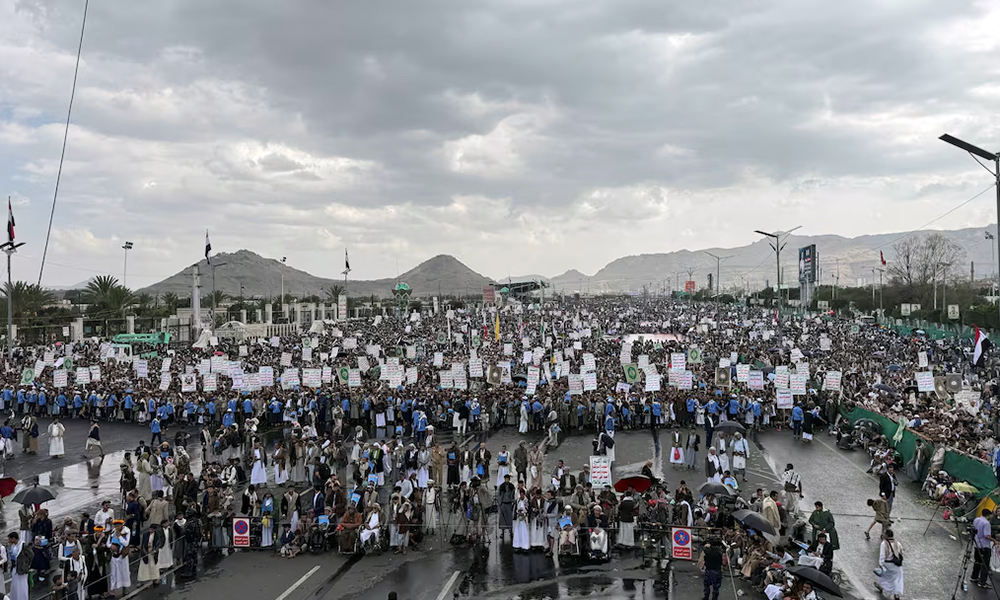
G7 foreign ministers on Monday called on Iran to end its arming and support of Houthis in Yemen, which they said constituted a dangerous pattern of escalation that risked undermining international trade and creating global instability, Reuters reported.
“We condemn in the strongest terms the unacceptable continued strikes carried out by the Houthis in Yemen and against the Kingdom of Saudi Arabia,” the ministers of Britain, Canada, France, Germany, Italy, Japan and the United States said in a statement after a meeting on the sidelines of the United Nations General Assembly, read the report.
“We call on the Houthis to immediately cease all military actions, all threats and attacks against civilian shipping, and to return to the political process in good faith.”


Ariana Afghan Airlines ranks seventh among 45 Central Asian airlines

Silk Road highway in Wakhan corridor now reaches the China border

Refugees minister, UNAMA deputy discuss challenges facing returnees

OIC Contact Group reaffirms support for Afghan people

UK Afghanistan war crimes inquiry faces delay over 97 million newly identified documents

Saudi energy group signs major Afghanistan deals covering gas exploration and pipeline plans

ATN secures exclusive rights to broadcast T20I series in India across Afghanistan

China evacuates thousands as Typhoon Narra brings torrential rain

Trump floats idea of renaming Atlantic or Pacific Ocean

US hits Egyptian bank branches with Iran sanctions as war marks six months

Tahawol: Reactions to Pakistan’s attacks on Afghanistan discussed

Saar: Uncertain fate of Afghanistan’s seat at UN discussed

Tahawol: Uncertain future of Afghanistan’s permanent UN seat

Saar: Pakistan military strikes Afghan provinces discussed

Tahawol: Impact of middle East war on Afghanistan
-

 Sport2 days ago
Afghanistan to face Japan and Nepal in Asian Games cricket group stage
-

 World4 days ago
US and Denmark reach deal on Greenland, Trump says
-
 Latest News3 days ago
Pakistan says Kohat attackers had roots in Afghanistan
-
 Latest News4 days ago
Afghanistan condemns mosque attack in Khyber Pakhtunkhwa
-
 Latest News3 days ago
OIC to hold Afghanistan Contact Group meeting on sidelines of UN General Assembly
-
 Latest News4 days ago
Afghan official meets Iranian oil minister to discuss energy cooperation
-
 Regional3 days ago
Flames, smoke seen near Riyadh airport; Houthis claim attacks on Saudi capital
-

 Sport5 days ago
ACL: Sarsabz Yashlar edge Istiqlal Kabul 2–1