
Latest News
Pakistan to begin deportation of Afghan PoR card holders from September 1
Human rights observers and refugee advocates have raised concerns regarding the legality and humanitarian impact of the campaign.

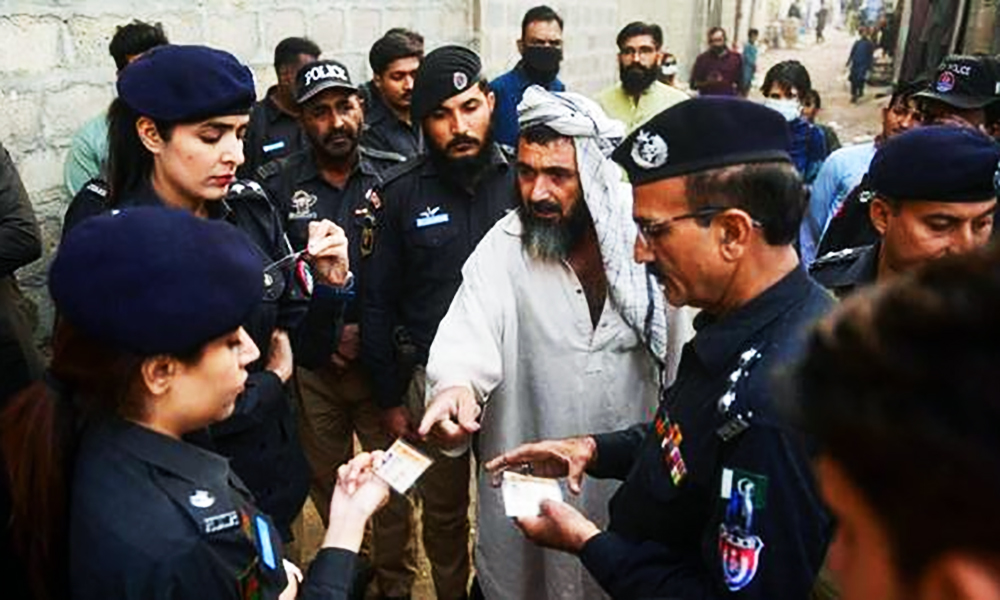
Pakistan’s Interior Ministry has formally initiated the next phase of its Illegal Foreigners Repatriation Plan (IFRP), announcing that Afghan nationals with expired Proof of Registration (PoR) cards need to leave the country starting September 1.
According to Pakistani media, the decision was finalized during a high-level government meeting on Tuesday. A ministry notification confirmed that all registered PoR cardholders—whose documentation expired on June 30, 2025—must now prepare for repatriation starting next month.
Since the deportation program began in November 2023, Pakistani authorities have forcibly returned more than 1.1 million individuals, including both undocumented migrants and Afghan Citizen Card (ACC) holders.
Since April 2025 alone, over 216,000 individuals have been deported.
PoR cardholders—formally registered refugees documented by UNHCR—have until now remained exempt. As of June 30, 2025, UNHCR reported 1.3 million Afghan refugees in Pakistan, the majority holding PoR cards, alongside approximately 800,000 ACC holders, many of whom also face forcible return starting next month.
Afghan refugees have been residing in Pakistan for decades—many since the Soviet invasion of the 1980s and Islamic Emirate takeover periods. While UNHCR counts a refugee population around 2.8 million, Pakistan’s own figures have fluctuated, with estimates reaching 4 million including undocumented residents.
Human rights observers and refugee advocates have raised concerns regarding the legality and humanitarian impact of the campaign.
Amnesty International described the IFRP as “opaque” and criticized mass relocations from cities like Islamabad and Rawalpindi, highlighting forced evictions that uproot communities established over decades. UN agencies have also flagged the risk of non‑refoulement violations due to hasty deportations.
The Afghan embassy in Islamabad, as well as the Islamic Emirate’s Ministry of Refugees and Repatriation in Kabul, have issued strong protests. Over 184,000 deportations have already occurred from Pakistan in 2025, part of nearly 1.8 million returns from Iran, Pakistan, and Turkey this year alone, an unprecedented scale that has alarmed relief agencies.
In April, acting Foreign Minister Amir Khan Muttaqi personally urged Pakistani authorities to uphold the rights of returning Afghans and allow them to repatriate proceeds from property or businesses left behind in Pakistan.
Despite these challenges, Pakistan maintains that the repatriations comply with domestic law and international principles. The Foreign Office has emphasized that its actions apply to all undocumented foreigners, not solely Afghans, and reaffirmed its longstanding role in hosting refugees while urging greater international support for solutions.
Critics argue, however, that the government’s approach risks destabilizing the region. The scale and speed of returns could exacerbate poverty and social unrest within Afghanistan. Yet authorities continue to assert the process is being carried out with dignity, including providing food, healthcare, and housing assistance during returns.
The newest phase—starting September 1—will target PoR cardholders who previously believed their status would be protected. Their sudden loss of legal residency has generated widespread anxiety across Afghan refugee communities.
UNHCR and human rights groups meanwhile continue to call on Pakistan to allow a voluntary, phased return process that safeguards vulnerable groups and upholds Afghanistan’s fragile stability.












Kazakhstan’s Foreign Minister Mukhtar Tileuberdi has called for pragmatic and coordinated international engagement with Afghanistan, saying the country’s long-term stability is closely linked to the security and sustainable development of Central Asia.
Speaking during the general debate of the 81st session of the United Nations General Assembly in New York on Friday, Tileuberdi said humanitarian assistance to Afghanistan remains essential but alone cannot break the cycle of poverty, displacement and dependency.
He said Kazakhstan supports a “pragmatic, coordinated and step-by-step” approach to international engagement with Afghanistan, with the United Nations playing a central role.
Tileuberdi also said Kazakhstan is working with the UN to operationalize the United Nations Regional Centre for the Sustainable Development Goals for Central Asia and Afghanistan in Almaty.
He said the success of the centre should be measured by the results and assistance it delivers to the region.


Abu Muslim Farah defeat Khurasan Faryab 2-0 in ACL season six

Saar: Concerns over Pakistan’s political crisis discussed

Afghanistan Champions League: Omar Zawak Herat beat Toofan Herat 1-0

Blast in Pakistan’s Dera Ismail Khan kills 11, injures 30

Ariana Afghan Airlines increases Kabul-Delhi cargo flights

Saudi energy group signs major Afghanistan deals covering gas exploration and pipeline plans

Trump floats idea of renaming Atlantic or Pacific Ocean

US hits Egyptian bank branches with Iran sanctions as war marks six months

Nepal flood rescue mission enters critical phase as thousands remain missing

Iranian clubs to face Gulf opponents at neutral venues in Asian Champions League Elite
Saar: Concerns over Pakistan’s political crisis discussed

Exclusive interview with Abdul Latif Mansoor, Minister of MRRD

Tawsia: Overview of Afghanistan’s iron mines

Tahawol: Discussion on fresh Pakistani airstrikes on Afghanistan

Saar: Calls for international support for Afghanistan discussed
-

 World5 days ago
CNN, MS NOW and Politico sue Trump, challenging White House ban
-

 Latest News3 days ago
Ariana Afghan Airlines ranks seventh among 45 Central Asian airlines
-

 Latest News5 days ago
UN reiterates call for respect for international law after Kunar airstrikes
-

 Regional4 days ago
US and Iran hold first talks since June after Trump’s ‘annihilation’ threat
-

 Latest News4 days ago
Silk Road highway in Wakhan corridor now reaches the China border
-

 Regional3 days ago
Iran airlines cancel flights as US sanctions hit
-

 Latest News5 days ago
Afghan Official: Pakistan’s airstrikes will not go unanswered
-

 Sport5 days ago
Afghan boxing referee heads to China for international festival