
Latest News
Iranian, Dutch officials hold talks over Afghan refugees
De Bont and a UNHCR representative visited migrant service centers in Tehran, where Iranian officials outlined human-centered policies focused on employment, dignity, and empowerment for refugees.

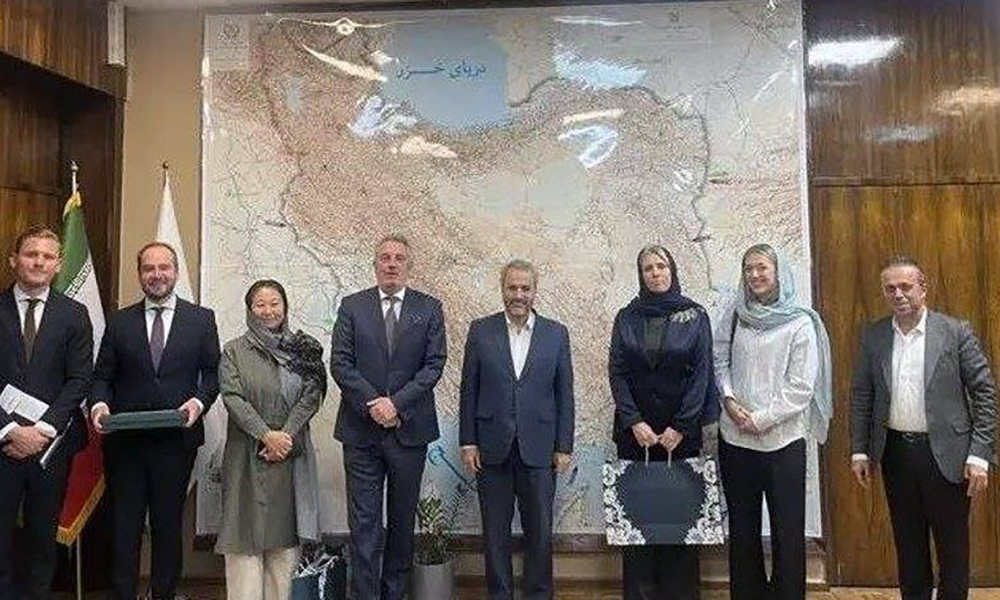
Iranian and Dutch officials have held discussions in Tehran on ways to strengthen international support for Iran’s efforts to host Afghan refugees, Iranian media reported.
Nader Yar-Ahmadi, head of Iran’s National Organization for Migration, met on Friday with Guusje Korthals Altes, Director of the Middle East and North Africa Department at the Dutch Ministry of Foreign Affairs. Dutch Ambassador to Iran Emiel de Bont also attended the meeting, according to Tasnim news agency.
Talks focused on attracting infrastructure and financial assistance from other countries to help Iran provide essential services to Afghan refugees. Korthals praised Iran’s generosity and commitment to supporting refugees despite economic challenges, noting the country’s active cooperation with international organizations, particularly the UN High Commissioner for Refugees (UNHCR).
“We are aware of the heavy burden of hosting refugees and are ready to help address these challenges, regardless of political differences,” Korthals said, emphasizing the need for greater global support to ease the pressure on host nations.
Yar-Ahmadi highlighted Iran’s ongoing efforts to boost cooperation with international organizations, enhance efficiency, and share experiences to overcome migration-related challenges. He noted that tensions between Pakistan and Afghanistan, along with limited international assistance, have slowed the voluntary return of Afghan refugees. Strengthening bilateral and multilateral cooperation, he added, would help manage the situation more effectively.
Following the talks, De Bont and a UNHCR representative visited migrant service centers in Tehran, where Iranian officials outlined human-centered policies focused on employment, dignity, and empowerment for refugees. They expressed optimism that the visit would pave the way for expanded international cooperation in refugee support.
IOM praises Iran’s role in hosting refugees
In a related development, Kim Eling, Senior Advisor to the Director-General of the International Organization for Migration (IOM), commended Iran for its extensive efforts in hosting and supporting Afghan refugees.
Eling made the remarks during a meeting with Iranian Deputy Interior Minister Mohammad Bathaei on the sidelines of the 76th annual session of the UNHCR Executive Committee, held October 6–10 in Geneva.
He noted that reduced financial contributions from donor countries have posed challenges for the UN in implementing refugee assistance programs. Bathaei, for his part, stressed that “despite unilateral sanctions, Iran continues to provide substantial services to foreign nationals” and called on donor countries to fulfill their responsibilities by increasing aid allocations.
During the Geneva session, the Iranian delegation also held talks with UN High Commissioner for Refugees Filippo Grandi and the UN Special Representative for Disaster Risk Reduction, Kamal Kishore, and delivered a lecture on Iran’s refugee policies.





Latest News
OIC Contact Group reaffirms support for Afghan people
The OIC Secretary-General also highlighted the organization’s work through its mission and field office in Kabul, particularly in the areas of girls’ education, healthcare and social cohesion.
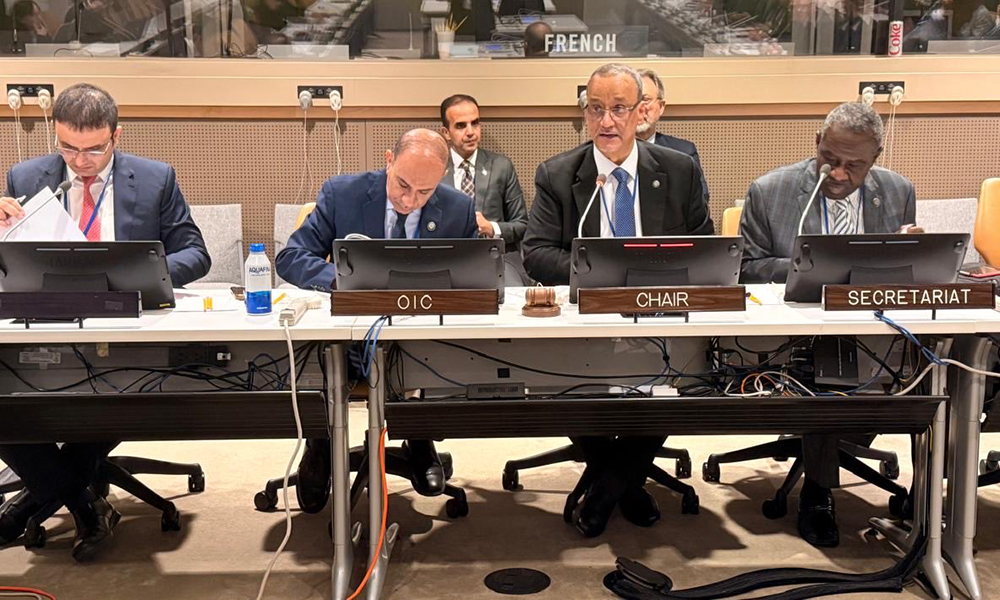
The Organization of Islamic Cooperation (OIC) Contact Group on Afghanistan has reaffirmed its commitment to supporting the Afghan people and strengthening the international response to the country’s humanitarian and development needs.
The group met in New York on Tuesday on the sidelines of the 81st session of the United Nations General Assembly to discuss the latest humanitarian and development situation in Afghanistan and ways to strengthen international support.
OIC Secretary-General Ismail Ould Cheikh Ahmed reaffirmed the organization’s commitment to the Afghan people, highlighting an approach based on engagement and practical cooperation with Afghanistan’s de facto authorities.
He said such engagement should serve the interests of the Afghan people while helping ensure the continuity of humanitarian assistance.
The OIC Secretary-General also highlighted the organization’s work through its mission and field office in Kabul, particularly in the areas of girls’ education, healthcare and social cohesion.
The meeting comes as Afghanistan continues to face significant humanitarian and development challenges, with international organisations and aid agencies calling for sustained support for the Afghan population.
Latest News
India condemns Pakistani airstrikes on Afghanistan
Afghan officials said the strikes killed three civilians and injured four others, and damaged structures including houses and shops.
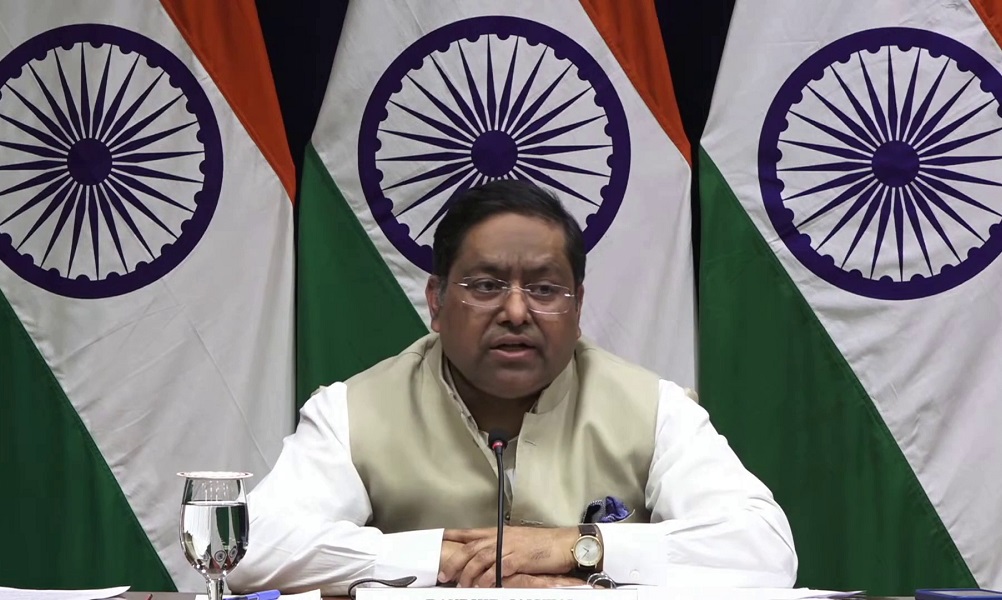
India on Tuesday condemned Pakistan’s airstrikes on border areas of Afghanistan, which Afghan officials said killed civilians, warning that such “aggression” against a sovereign neighbour threatens regional peace and security.
“We strongly condemn the attacks from Pakistan, the air strikes which were launched on Afghanistan in Kunar and Paktika provinces. In these air strikes, several civilians have been killed,” Indian External Affairs Ministry spokesperson Randhir Jaiswal said.
“Such instances of aggression against a sovereign neighbour is something that goes against regional peace and security,” he added.
Jaiswal also reaffirmed India’s support for Afghanistan’s independence, sovereignty and territorial integrity, and expressed condolences for those killed and hopes for the recovery of the injured.
Afghan officials said the strikes killed three civilians and injured four others, and damaged structures including houses and shops. Pakistan’s information ministry, however, said the strikes killed 28 militants.
The strikes were reportedly carried out in retaliation for a militant attack on a police facility in northwestern Pakistan that killed 24 people on Friday. Islamic Emirate of Afghanistan (IEA) spokesperson Zabihullah Mujahid said Kabul would respond to what he described as Pakistani aggression.
Latest News
UN reiterates call for respect for international law after Kunar airstrikes
The victims included a man, a woman and a girl, according to UNAMA.

The United Nations has reiterated its call on all parties to respect international humanitarian law after at least three civilians were killed and four others injured in apparent airstrikes in Afghanistan’s eastern Kunar province.
UN spokesperson Stéphane Dujarric said at the UN Daily Press Briefing on Monday that the UN Assistance Mission in Afghanistan (UNAMA) had confirmed the civilian casualties following the reported strikes early Monday.
The victims included a man, a woman and a girl, according to UNAMA.
“We reiterate our call for respect for international humanitarian law to prevent civilian casualties,” Dujarric said, adding that the United Nations continues to monitor the situation closely.
Dujarric also said the UN Office for the Coordination of Humanitarian Affairs (OCHA) had received reports of airstrikes in Barmal district of Paktika province, where residential structures were reportedly damaged. No serious civilian casualties had been reported there, he added.
The UN said UNAMA has documented more than 1,100 civilian deaths and injuries in Afghanistan so far this year linked to cross-border armed violence.
The comments followed Pakistan’s announcement that it had carried out what it described as “calibrated” strikes against militant targets along the border with Afghanistan. Pakistan said 28 militants were killed and claimed the targets included militant hideouts and a training facility.
Afghan authorities have condemned the strikes. Afghanistan’s Foreign Ministry summoned Pakistan’s chargé d’affaires in Kabul and lodged a formal protest, while Afghan officials have rejected Pakistan’s allegations that attacks inside Pakistan are being carried out from Afghan territory.
The latest escalation has renewed concerns over the impact of cross-frontier hostilities on civilians in Afghanistan’s border provinces, with the UN again stressing the need for all parties to uphold their obligations under international humanitarian law and take measures to protect civilians.


OIC Contact Group reaffirms support for Afghan people

US and Iran hold first talks since June after Trump’s ‘annihilation’ threat

Trump warns in UN speech he could ‘annihilate’ Iran without peace deal

Afghanistan, Turkmenistan agree to establish joint road transport commission

India condemns Pakistani airstrikes on Afghanistan

Saudi energy group signs major Afghanistan deals covering gas exploration and pipeline plans

ATN secures exclusive rights to broadcast T20I series in India across Afghanistan

Afghanistan squad announced for three-match T20I series against India

China evacuates thousands as Typhoon Narra brings torrential rain

Trump floats idea of renaming Atlantic or Pacific Ocean

Tahawol: Reactions to Pakistan’s attacks on Afghanistan discussed

Saar: Uncertain fate of Afghanistan’s seat at UN discussed

Tahawol: Uncertain future of Afghanistan’s permanent UN seat

Saar: Pakistan military strikes Afghan provinces discussed

Tahawol: Impact of middle East war on Afghanistan
-

 World4 days ago
US and Denmark reach deal on Greenland, Trump says
-
 Latest News3 days ago
Pakistan says Kohat attackers had roots in Afghanistan
-
 Latest News4 days ago
Afghanistan condemns mosque attack in Khyber Pakhtunkhwa
-
 Latest News3 days ago
OIC to hold Afghanistan Contact Group meeting on sidelines of UN General Assembly
-

 Sport2 days ago
Afghanistan to face Japan and Nepal in Asian Games cricket group stage
-
 Latest News4 days ago
Afghan official meets Iranian oil minister to discuss energy cooperation
-
 Regional3 days ago
Flames, smoke seen near Riyadh airport; Houthis claim attacks on Saudi capital
-

 Sport5 days ago
ACL: Sarsabz Yashlar edge Istiqlal Kabul 2–1