
Latest News
Afghanistan occupation mired in corruption, waste and unrealistic goals: SIGAR
SIGAR says its investigations led to 171 criminal convictions, though some suspects were declared off-limits because of ties to US intelligence agencies.

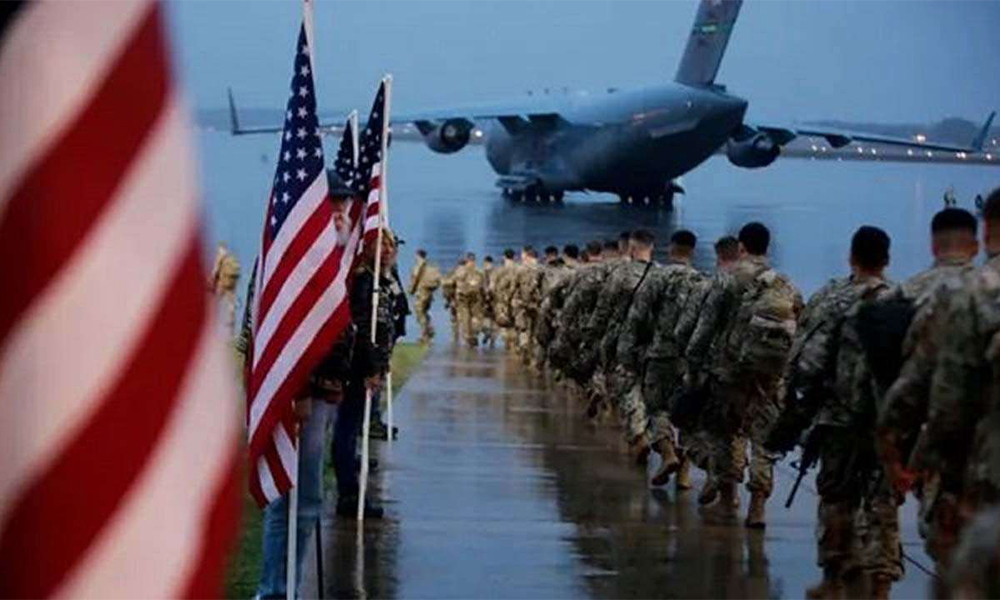
A new watchdog report has concluded that the United States’ 20-year effort to build a democratic Afghanistan was doomed by corruption, mismanagement and wildly unrealistic aims — with as much as $29.2 billion lost to waste, fraud and abuse.
The assessment, released on December 3 by the Special Inspector General for Afghanistan Reconstruction (SIGAR), caps a 17-year investigation into the US-led mission. It found that Washington built an Afghan government and security sector so riddled with graft that it collapsed within days of the 2021 US withdrawal.
SIGAR officials said successive US administrations ignored corruption for more than a decade, allowing contractors and officials — Afghan and American — to siphon off billions. Investigators logged 1,327 cases of misconduct and detailed hundreds of millions wasted on unused aircraft, empty buildings and failed infrastructure.
“The government we created was essentially a white-collar criminal enterprise,” acting inspector general Gene Aloise told reporters.
The report also found the US worked with Afghan warlords accused of serious human rights abuses and tolerated practices such as the sexual exploitation of boys by allied militias.
Legacy resurfaced after Washington shooting
The failures of the occupation have re-entered public debate after a former Afghan special forces member — who worked with CIA-run units — was charged with shooting two National Guardsmen near the White House, killing one. The suspect reportedly suffered severe trauma linked to his wartime service.
In response, US President Donald Trump further tightened asylum rules for Afghans and several other nationalities — a move criticised by rights groups and veterans who say it unfairly punishes former allies.
Billions spent, little achieved
Congress allocated $144.7 billion for reconstruction, more than the inflation-adjusted cost of the post-WWII Marshall Plan. Of that, $38.6 billion funded weapons, vehicles and facilities for Afghan forces, much of which is now in Afghanistan. The US left behind around $7.1 billion in equipment during the withdrawal.
SIGAR says its investigations led to 171 criminal convictions, though some suspects were declared off-limits because of ties to US intelligence agencies.
Aloise also criticised a “lack of cooperation” from officials — particularly under the Biden administration — saying investigators were at one point effectively blocked from accessing information.
More than 2,320 US troops, 69,000 Afghan security personnel and 46,000 civilians were killed during the 20-year war, according to the Costs of War Project at Brown University.
“The cost was much higher than just money,” Aloise said.









Afghanistan’s Ministry of Defense says a Pakistani military post near Spin Boldak was targeted and destroyed after Pakistani forces opened fire toward Afghanistan.
Ministry spokesperson Enayatullah Khwarazmi said in a post on X that Afghan forces suffered no casualties or damage in the clash.
Khwarazmi also rejected claims made by the Pakistani side about the incident, describing them as “propaganda.”
Latest News
Mujahid: Pakistan attacking Afghanistan to evade Mecca Pact responsibilities
He warned that the Islamic Emirate would give an “appropriate response” to what he called the Pakistani military regime’s “bullying.”
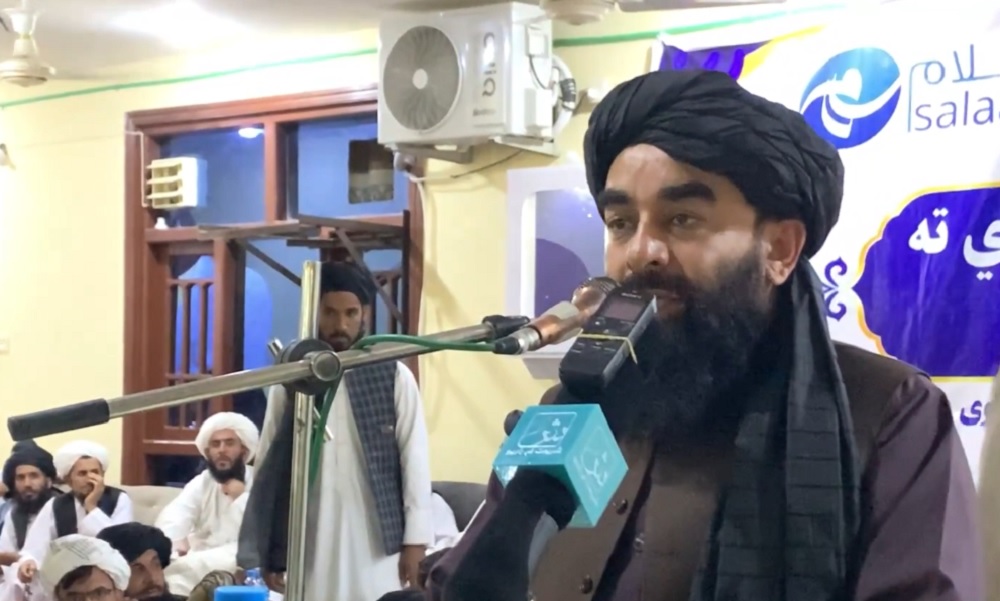
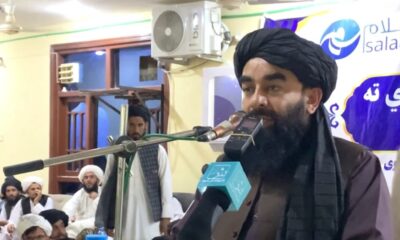
Islamic Emirate spokesperson Zabihullah Mujahid has accused Pakistan of carrying out attacks on Afghanistan to divert attention from its domestic problems and to evade responsibilities under the “Mecca Pact.”
Speaking at a religious seminary in Kandahar, Mujahid said Pakistan was facing political and economic challenges at home and was using attacks on Afghanistan to shift public attention away from protests and its internal problems.
“Pakistan, by violating the territory of its neighboring Islamic country, wants to divert attention from its failures,” he said.
Mujahid also criticized Pakistan’s political situation, claiming that political space had been restricted and that freedoms guaranteed under the country’s laws were not being allowed.
He said Pakistan’s economic problems had also increased significantly and accused the country of seeking to distract the public from those problems by engaging in conflict with Afghanistan.
Mujahid further accused Pakistan’s military leadership of putting the Pakistani people at risk through what he described as its “false position.”
He warned that the Islamic Emirate would give an “appropriate response” to what he called the Pakistani military regime’s “bullying.”
His remarks followed Pakistani airstrikes on Kandahar, Paktia and Khost provinces on Thursday, which Afghan authorities said killed four civilians.
The strikes came three days after attacks on Kunar and Paktika provinces, in which Afghan authorities said three civilians were killed.
Latest News
Kabul rejects U.S. claim that meth seized in Pakistan was of Afghan origin
Balkhi said the Islamic Emirate of Afghanistan (IEA) has imposed an absolute ban on the production, trafficking and use of all types of narcotics in Afghanistan.
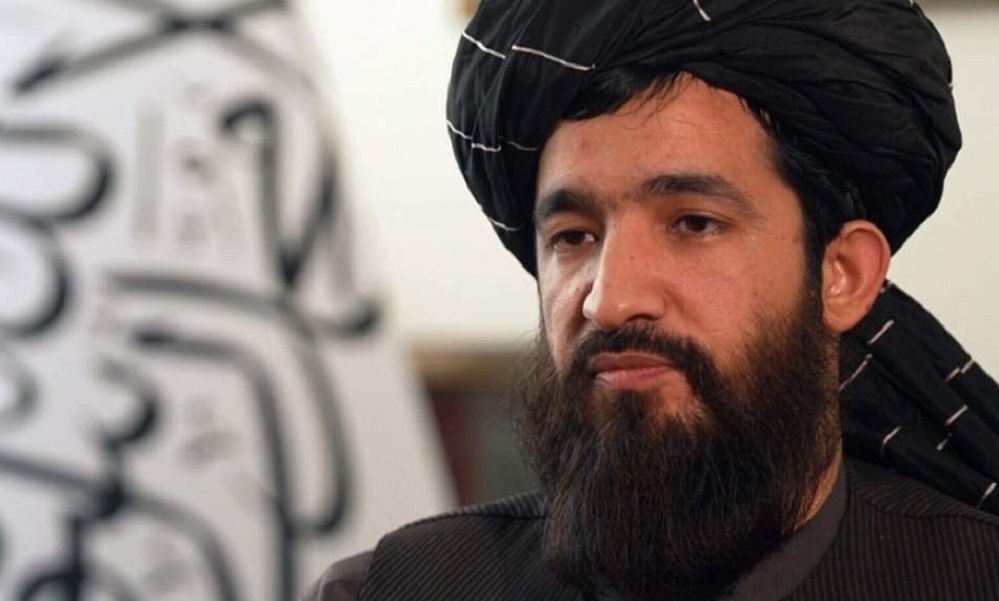
Afghanistan’s Foreign Ministry spokesperson Abdul Qahar Balkhi has rejected a U.S. claim that 463 kilograms of synthetic drugs seized in Pakistan were of Afghan origin, calling the attribution “unfounded and politically motivated.”
Balkhi said the U.S. Embassy in Islamabad should investigate the origin of the seized drugs in Pakistan rather than attributing them to Afghanistan.
“The attribution by the U.S. Embassy in Islamabad of the synthetic drugs bound for Sri Lanka and intercepted in Pakistan through joint U.S.-Pakistani efforts as ‘Afghan-origin’ is an unfounded and politically motivated allegation,” Balkhi said.
He said the Islamic Emirate of Afghanistan (IEA) has imposed an absolute ban on the production, trafficking and use of all types of narcotics in Afghanistan.
Balkhi also claimed that following the ban in Afghanistan, the cultivation, production and trafficking of narcotics have increased “on the other side of the Durand Line.”
He further argued that Afghanistan does not have the capacity to produce synthetic drugs and said crossing points along the Durand Line have been completely closed to all movement for nearly a year.
His remarks came after the U.S. Embassy in Islamabad said U.S. and Pakistani anti-narcotics authorities had seized 463 kilograms of crystal methamphetamine worth an estimated $21 million and bound for Sri Lanka.
The embassy said the operation led to multiple arrests and highlighted ongoing U.S. cooperation and training with Pakistani authorities to disrupt international drug-trafficking networks.


Exclusive interview with Abdul Latif Mansoor, Minister of MRRD

Sorkh Poshan Khafi rout Istiqlal Kabul 6-0 in ACL season six

Tawsia: Overview of Afghanistan’s iron mines

Afghanistan Champions League: Arman FC and Aino Mina play out goalless draw

Afghanistan says Pakistani military post destroyed near Spin Boldak

Saudi energy group signs major Afghanistan deals covering gas exploration and pipeline plans

ATN secures exclusive rights to broadcast T20I series in India across Afghanistan

Trump floats idea of renaming Atlantic or Pacific Ocean

US hits Egyptian bank branches with Iran sanctions as war marks six months

Nepal flood rescue mission enters critical phase as thousands remain missing
Exclusive interview with Abdul Latif Mansoor, Minister of MRRD
Tawsia: Overview of Afghanistan’s iron mines

Tahawol: Discussion on fresh Pakistani airstrikes on Afghanistan

Saar: Calls for international support for Afghanistan discussed

Tahawol: Opening of the 81st UN General Assembly Session
-

 Sport4 days ago
Afghanistan to face Japan and Nepal in Asian Games cricket group stage
-
 Regional5 days ago
Iran and US trade threats after Houthi attacks escalate regional conflict
-

 World4 days ago
CNN, MS NOW and Politico sue Trump, challenging White House ban
-
 Health4 days ago
Four-day polio vaccination campaign begins across Afghanistan
-

 Latest News3 days ago
UN reiterates call for respect for international law after Kunar airstrikes
-
 Latest News4 days ago
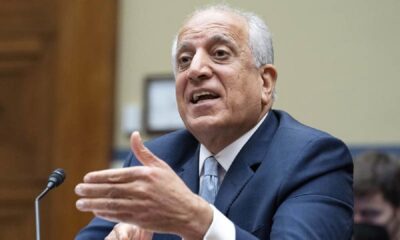
Khalilzad condemns Pakistan airstrikes, says current strategy is not working
-

 Latest News2 days ago
Ariana Afghan Airlines ranks seventh among 45 Central Asian airlines
-

 Latest News3 days ago
Afghan Official: Pakistan’s airstrikes will not go unanswered