
Latest News
Wasi, UK envoy discuss Pakistan tensions and aid access
Lindsay welcomed Afghanistan’s stated commitment to peace and said messages aimed at confidence-building had been conveyed to Pakistani officials.

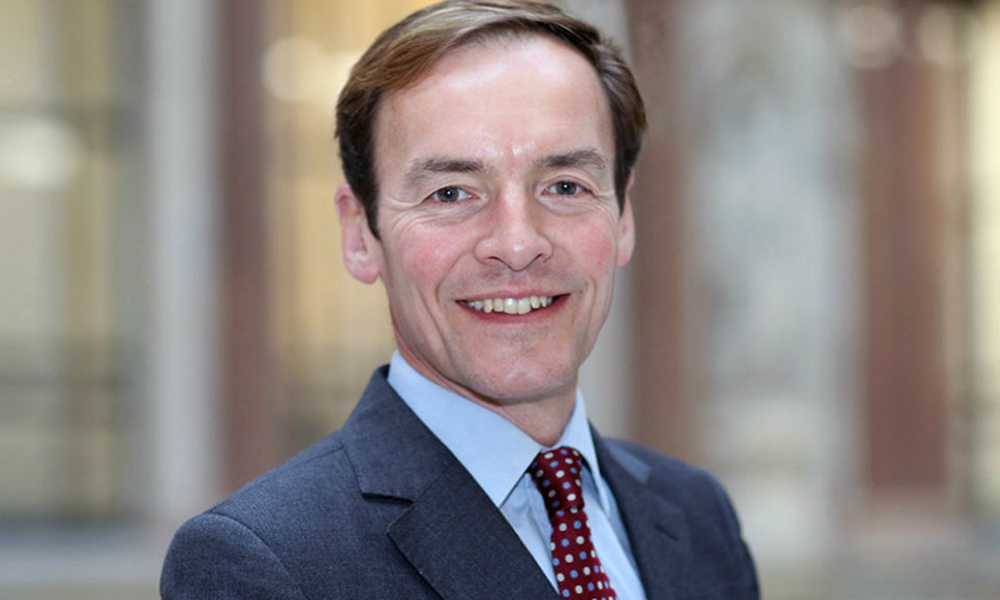
Afghanistan’s Prime Minister’s Chief of Staff, Dr. Abdul Wasi, met with the UK’s special envoy to Afghanistan Richard Lindsay in Kabul on Wednesday, and called for an end to tensions with Pakistan.
The meeting took place at the Presidential Palace, where Lindsay said he was pleased with his visit to Afghanistan and expressed condolences over civilian casualties caused by recent rocket attacks reportedly linked to Pakistani forces.
He stressed the importance of reducing tensions and building mutual trust between the two neighbors.
Wasi thanked the British envoy for his sympathy and diplomatic efforts, while condemning reported attacks on civilian areas, including homes and a university in Asadabad, the capital of Kunar Province.
He said attacks targeting civilians, especially women and children, could not be justified.
He stated that Afghanistan had not sought confrontation and does not support violence, but said defending the country’s sovereignty and territorial integrity remained its legitimate right.
He also urged the United Kingdom and other international partners to assess the situation fairly and hold those responsible accountable.
Wasi added that the Islamic Emirate had consistently sought to lower tensions and maintain constructive relations with Pakistan. He said Afghanistan would not allow its territory to be used against other countries and called on Pakistan to honor its commitments.
He also raised the issue of Afghan refugees living in Pakistan, acknowledging Islamabad’s role as host over many years while urging authorities to respect refugee rights and avoid harmful measures.
Lindsay welcomed Afghanistan’s stated commitment to peace and said messages aimed at confidence-building had been conveyed to Pakistani officials. He added that both sides should take practical steps to improve cooperation and regional stability.
The British envoy also emphasized the need to keep humanitarian aid flowing into Afghanistan through Pakistan, warning that continued conflict would worsen hardship for people on both sides of the border.
Closing the meeting, Wasi said trade, transit and humanitarian operations should remain separate from political disputes. He added that Afghanistan had not obstructed aid deliveries and would respond positively if Pakistan took steps toward de-escalation.

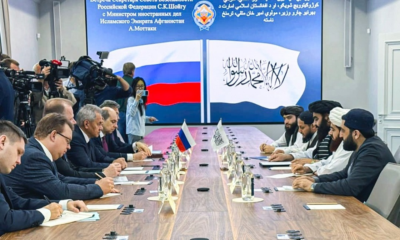
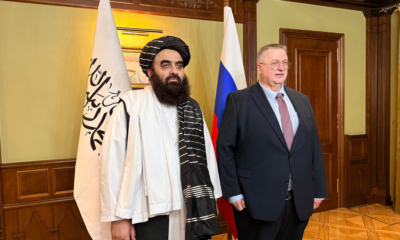



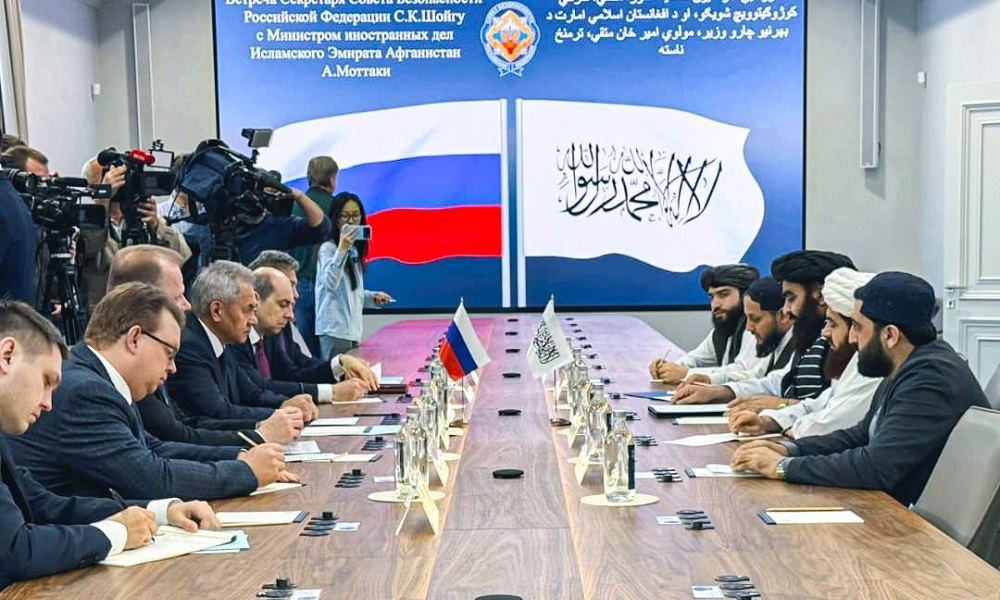
Amir Khan Muttaqi, Minister of Foreign Affairs, met on Tuesday with Sergei Shoigu, Secretary of Russia’s Security Council, to discuss bilateral relations, regional security, and security cooperation.
In a statement issued on Tuesday, the Ministry of Foreign Affairs of the Islamic Emirate said the two sides also discussed counter-narcotics efforts and expanding security cooperation between Afghanistan and Russia.
Muttaqi, referring to the positive progress in political relations between the two countries, thanked Russia for recognizing the Islamic Emirate of Afghanistan and stressed the importance of strengthening security cooperation, regular consultations, and expanding economic and trade relations.
The Foreign Minister also said Afghanistan would continue its efforts to ensure regional security and combat narcotics, and supports expanding cooperation with regional countries through direct contacts and practical cooperation.
Meanwhile, Sergei Shoigu described Afghanistan-Russia relations as expanding in various areas and expressed satisfaction with Afghanistan’s efforts to maintain security and combat narcotics.
The Secretary of Russia’s Security Council emphasized that Moscow would continue political consultations and practical cooperation with Afghanistan.
Latest News
Muttaqi, Russian deputy PM discuss expanding economic ties
Overchuk expressed Russia’s readiness to expand economic cooperation with Afghanistan, saying conditions are now in place for launching practical cooperation.
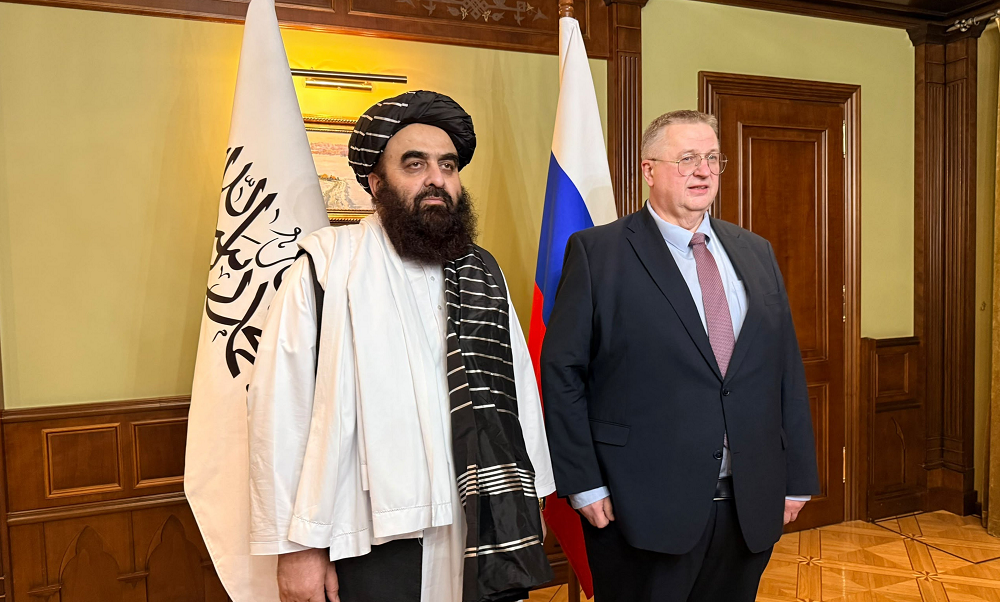
Afghanistan’s Foreign Minister Amir Khan Muttaqi met with Russian Deputy Prime Minister Alexei Overchuk in Moscow to discuss expanding political and economic cooperation between the two countries.
The talks focused on strengthening trade, transit, regional connectivity and energy cooperation, as well as investment and other areas of mutual interest, Afghan foreign ministry said in a statement.
Muttaqi highlighted the positive trajectory of political relations between Kabul and Moscow and thanked the Russian leadership for what he described as its positive policy toward Afghanistan.
He said the existing political understanding should be translated into practical economic partnerships, stressing the need to expand trade and transit, attract Russian investment to Afghanistan, cooperate in energy and mining, and facilitate banking and payment mechanisms between the two countries.
Overchuk expressed Russia’s readiness to expand economic cooperation with Afghanistan, saying conditions are now in place for launching practical cooperation.
He also stressed the importance of expanding joint work in transit, transport, energy and other sectors, while pointing to a significant increase in bilateral trade last year. He expressed hope that further practical economic cooperation between the two countries would develop in the near future.
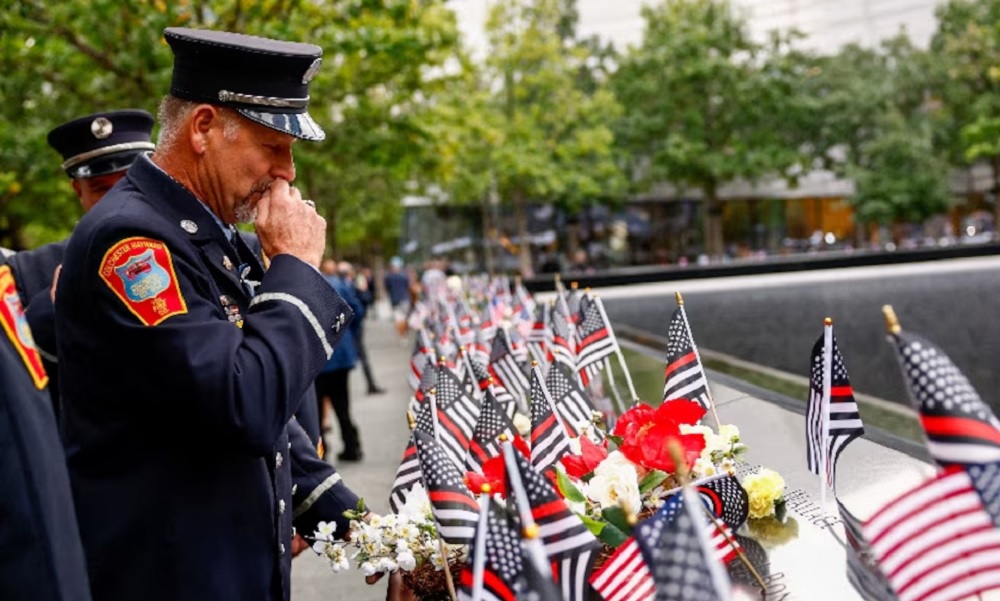
The attorneys general of 30 US states have asked the US Supreme Court to review a case involving around $3.5 billion in frozen assets of Da Afghanistan Bank that victims and families of the September 11 attacks are seeking to use for compensation.
The Iowa Attorney General’s Office said in a statement on Monday that the states filed a brief with the Supreme Court in support of the victims and their families, who have obtained compensation judgments in US federal courts.
According to the office, after years of legal proceedings, the victims and their families have secured nearly $17 billion in court-ordered compensation.
However, the US Second Circuit Court of Appeals ruled that around $3.5 billion in assets belonging to Afghanistan’s central bank cannot be used to satisfy those compensation awards.
The assets were frozen by the U.S. Treasury Department on August 15, 2021, the day the Islamic Emirate entered Kabul.
The state attorneys general argue that US law allows the frozen assets to be used to satisfy court-ordered compensation.
Iowa Attorney General Brenna Bird said the victims and their families had pursued justice and compensation through the US legal system and should be able to access the money awarded to them by the courts.
This comes as the Islamic Emirate has repeatedly called for the release of Da Afghanistan Bank assets.


Tahawol: Discussion on outcome of Moscow Format meeting

ACL: Sarbaz Yashlar and Khurasan Faryab play out goalless draw

Saar: Expansion of relations between Kabul and Moscow discussed

Aino Mina Kandahar defeat Istiqlal Kabul 3–2

Muttaqi and Shoigu discuss regional security and Afghanistan-Russia cooperation

Saudi energy group signs major Afghanistan deals covering gas exploration and pipeline plans

Khalilzad: Afghanistan ready to attract major investment

UAE firm eyes investment in Salang’s second tunnel and pharmaceutical factories

US Treasury ratchets up pressure on Iran with sweeping new aviation sanctions

AI could pose ‘existential’ risk to humanity, UN rights chief warns
Tahawol: Discussion on outcome of Moscow Format meeting
Saar: Expansion of relations between Kabul and Moscow discussed

Tahawol: Afghanistan-Iran: shared opportunities and challenges discussed

Saar: Pakistan’s hostile policy toward Afghanistan discussed

Tahawol: Doha process seeks new cooperation opportunities
-

 Sport1 day ago
Cricket Bonanza: Afghanistan set for packed international schedule
-
 Sport4 days ago
ACB announces Afghanistan squads for Bangladesh, Zimbabwe series
-
 Latest News5 days ago
Russia expects to ease Afghanistan-Pakistan tensions at Moscow Format meeting
-
 International Sports5 days ago
Afghanistan to face Pakistan, India and Australia at 2027 Cricket World Cup
-
 Regional5 days ago
Saudi-led coalition says Houthis attacked power station for Prophet’s Mosque in Medina
-
 Regional4 days ago
Cargo stacks up as Pakistan seizes containers to block capital routes
-
 Latest News4 days ago
Kazakhstan, Uzbekistan and UAE sign MoU on CASA railway project via Afghanistan
-
 Regional4 days ago
Pakistan says Mecca pact members to hold emergency talks on engaging Houthis