Argentina survive Cape Verde scare after extra-time own goal to reach last 16
Despite the narrow victory, Argentina were made to work hard for every opportunity as Cape Verde’s spirited performance earned widespread admiration, even in defeat.
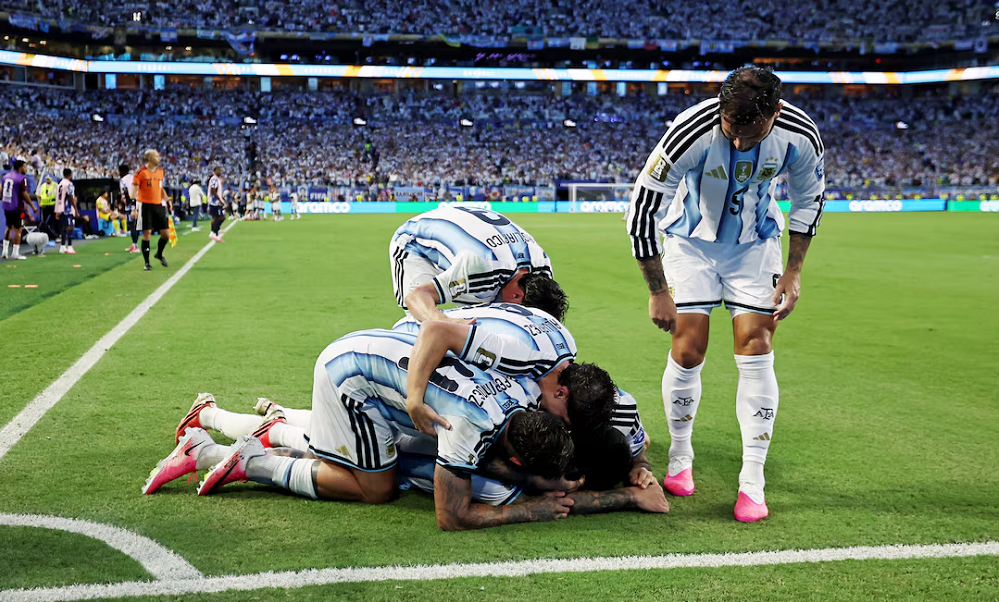
Defending champions Argentina needed an extra-time own goal to edge past a resilient Cape Verde side 3-2 and book their place in the World Cup last 16.
Playing in their first-ever World Cup, Cape Verde twice came from behind in a thrilling contest before 64,478 fans at a hot and humid stadium in Miami, pushing the three-time world champions to the limit.
The decisive moment came six minutes into the second half of extra time when Lionel Messi delivered a corner that Cristian Romero headed toward goal. The ball deflected off Cape Verde defender Diney Borges’ arm and into the net for the winning goal, setting up a last-16 clash with Egypt in Atlanta next Tuesday.
Messi had opened the scoring in the 29th minute with his seventh goal of the tournament after controlling a long pass from Lisandro Martinez before firing into the roof of the net.
Cape Verde responded just before the hour mark when captain Ryan Mendes found midfielder Deroy Duarte, who calmly controlled the ball before beating Emiliano Martinez to level the score at 1-1.
Argentina regained the lead early in extra time through a powerful strike from Lisandro Martinez, but Cape Verde refused to surrender. Left-back Sidny Lopes Cabral curled a superb effort into the top corner to make it 2-2 and force another dramatic twist.
Following the own goal, Cape Verde nearly equalised again, but Emiliano Martinez produced an outstanding save to deny Lopes Cabral’s free kick in the closing minutes.
Argentina coach Lionel Scaloni praised his players for their determination after his 100th match in charge.
“The match was incredibly tough. You always have to take the positive, and it’s that this team never gives up,” said Argentina coach Lionel Scaloni, who was overseeing his 100th match in charge of the Albiceleste.
“I want to congratulate our opponents. Today they showed they are a great team. When it is said there are no easy matches in the World Cup, it’s true.”
Although eliminated, Cape Verde impressed throughout the tournament. Ranked 67th in the world before the competition, the tournament debutants reached the knockout stage after holding Spain, Uruguay and Saudi Arabia to draws in the group phase.
Coach Bubista said his team had made the nation proud despite the defeat.
“I’m proud of my team, the work they’ve put in,” he said. “We must take pride in what we’ve done for our country. To be able to play the way we did against the world champions, and to draw level twice, is something incredible.”
Cape Verde frustrated Argentina for long periods with disciplined defending and confident possession, while Kevin Pina stood out with an impressive display in midfield.
Despite the narrow victory, Argentina were made to work hard for every opportunity as Cape Verde’s spirited performance earned widespread admiration, even in defeat.
The FIFA World Cup Round of 16 begins today (Saturday) with Canada taking on Morocco at 09:30pm Kabul time.
Fans can tune in to all the World Cup matches to watch all the thrills and spills unfold live and exclusively on Ariana Radio and Television Network (ATN).
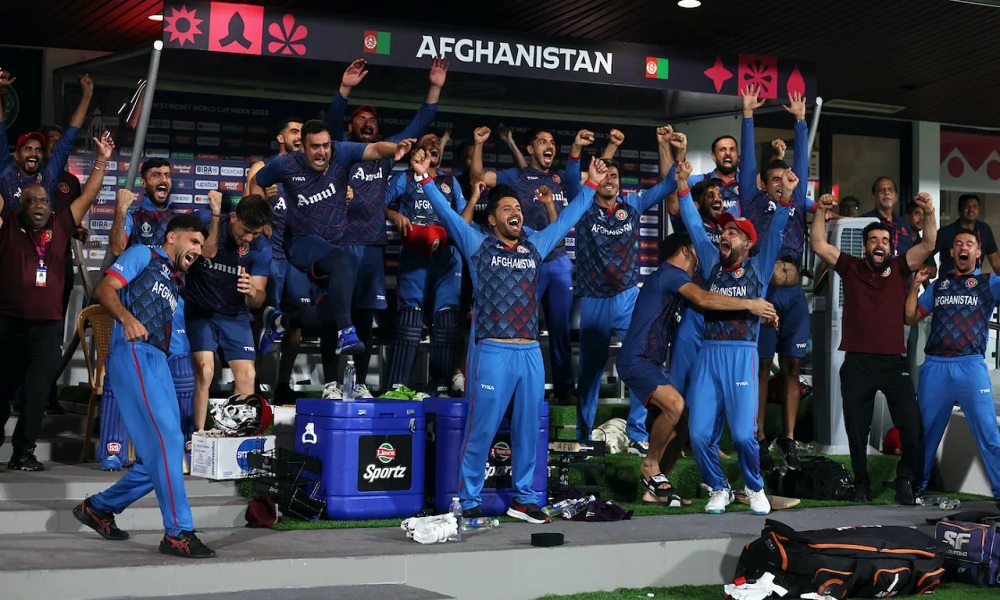
Afghanistan will face Pakistan, Zimbabwe, India and Australia in the group stage of the 2027 Men’s Cricket World Cup, after the International Cricket Council (ICC) announced the tournament schedule.
Afghanistan has been drawn in Group A alongside defending champions Australia, India, Pakistan, Zimbabwe and one qualifier.
The Afghan side will begin its World Cup campaign against Pakistan on October 8 in Tshwane of South Africa.
Afghanistan will then face Zimbabwe on October 11 in Bulawayo of Zimbabwe, followed by a highly anticipated clash with India on October 14 in Tshwane.
The team’s fourth group-stage match will be against Australia on October 18 in KuGompo City of South Africa, before Afghanistan concludes its group campaign against Qualifier A on October 21, also in KuGompo City.
The top three teams from each group will advance to the Super 7 phase, along with the fourth-placed team that has the better record between the two groups.
The Super 7 phase will be played from October 25 to November 14, with the seven teams starting the phase without carrying any points from the group stage. Each team will play six matches.
The top four teams in the Super 7 standings will advance to the semi-finals, scheduled for November 17 and 18 in Cape Town and Tshwane respectively. The final will be played in Johannesburg on November 21.
The 2027 World Cup will be jointly hosted by South Africa, Zimbabwe and Namibia, with the tournament beginning on October 2 with a three-team Super Series in Windhoek.
Afghanistan is among the 12 teams already placed in the group stage. The remaining four World Cup places will be decided through the Cricket World Cup Qualifier, with the qualifier winner advancing directly to the group stage and the other three teams competing in the Super Series for the final spot.
The group stage officially begins on October 7, with Australia facing India in Cape Town in a repeat of the 2023 World Cup final.
Crystal Palace advanced to the fourth round of the English Football League (EFL) Cup with a comfortable 3-0 victory over Championship side Middlesbrough at Selhurst Park.
Jørgen Strand Larsen scored twice with headers, one in each half, before substitute Daichi Kamada added a superb third to seal Palace’s progress.
Palace, who made eight changes from their 3-2 Premier League win over Fulham, took the lead when Óscar Mingueza delivered a cross from the right for Strand Larsen to head home.
Strand Larsen doubled the advantage eight minutes after the restart, meeting Ben Chilwell’s cross from the left to score his second of the night.
Kamada then completed the victory shortly after coming on, expertly chipping the ball over Middlesbrough goalkeeper Sol Brynn from outside the penalty area.
Middlesbrough struggled to create clear chances, with Amario Cozier-Duberry forcing Palace goalkeeper Walter Benítez into a save with 15 minutes remaining.
Strand Larsen was named Player of the Match after a standout performance.
Chelsea vs Leeds live on ATN
Football fans in Afghanistan can watch tonight’s EFL Cup action live and exclusively on Ariana Television Network (ATN), with Chelsea taking on Leeds United.
ATN will broadcast Chelsea vs Leeds live tonight, giving fans across Afghanistan the chance to watch the match exclusively on Ariana Television.
Messi returns to Inter Miami after Argentina retirement
The Argentine superstar marked his return by creating both of Miami’s goals, underlining his continued importance to the club after revealing his decision to step away from the Argentina national team.
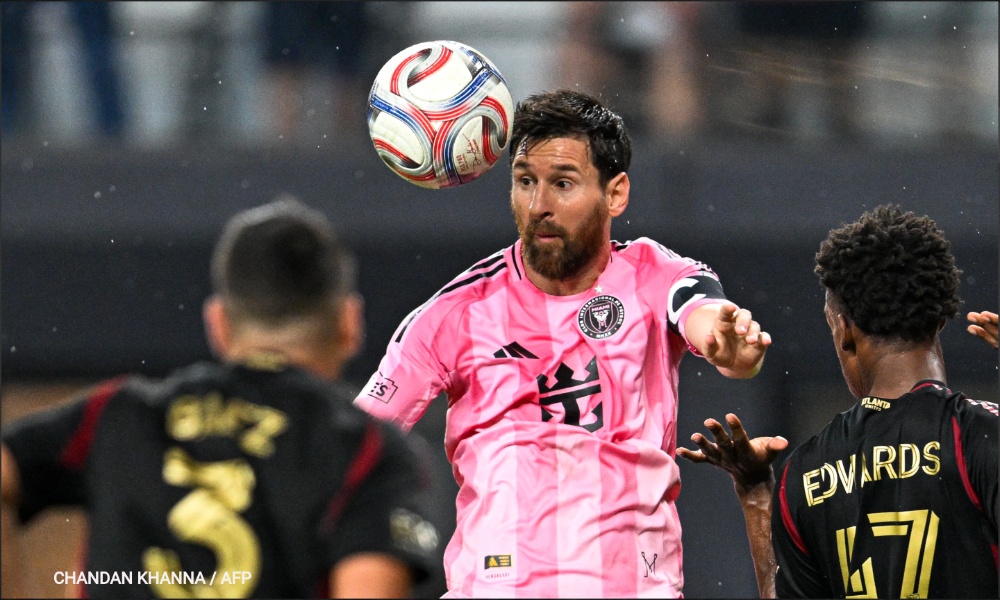
Lionel Messi returned to Inter Miami action on Saturday following his announcement that he is retiring from international football, helping the Major League Soccer champions to a 2-2 draw with Atlanta United.
The Argentine superstar marked his return by creating both of Miami’s goals, underlining his continued importance to the club just days after revealing his decision to step away from the Argentina national team.
The match was delayed by 90 minutes because of thunderstorms and lightning, but Messi provided plenty of fireworks once play finally got underway.
Miami opened the scoring in the 32nd minute when Brazilian midfielder Casemiro rose to head home Messi’s corner.
Atlanta hit back just three minutes later, with former Newcastle forward Miguel Almirón firing a low shot beyond the Miami defence.
Messi was again at the centre of the action just before half-time. He started a move down the left that eventually allowed former Liverpool and Barcelona striker Luis Suárez to calmly finish and restore Miami’s lead.
But Atlanta refused to surrender, with Swiss striker Breel Embolo converting an 87th-minute penalty to earn the visitors a point.
For Messi, the match represented his first appearance since announcing his international retirement and offered an early glimpse of the next chapter of his career, with his focus now firmly on Inter Miami.
The result came during a busy night of MLS action.
Toronto and Chicago played out a remarkable 4-4 draw, while Philadelphia defeated Montreal 2-0, with 16-year-old Cavan Sullivan scoring his fourth goal of the season.
Sullivan now has 11 goal contributions this season, surpassing Freddy Adu’s previous record of 10 for a 16-year-old.
In Orlando, Antoine Griezmann scored in the 28th minute to give the hosts a 1-0 victory over San Diego, while Austin rescued a 1-1 draw against San Jose through Guilherme Biro’s seventh-minute stoppage-time equaliser.