
World
Nearly 1,500 missing in Nepal and China after devastating Himalaya flood


Nearly 1,500 people including at least 800 foreigners are missing across Nepal and China’s Tibet, authorities said on Thursday, after a wall of mud and rock collapsed into a Himalayan river, sending catastrophic floods through towns and valleys.
Rescuers in Nepal used helicopters to search for survivors and drop emergency supplies to thousands cut off after Wednesday’s disaster swept a rugged mountainous region thronged by trekkers and pilgrims linking Lhasa in Tibet with the Nepalese capital of Kathmandu. Police said they expected the death toll to rise beyond 165, Reuters reported.
“This will go up, as we have resumed the search and more bodies are expected to be recovered,” police spokesperson Abi Narayan Kafle told Reuters.
Almost 600 foreigners were among 826 people missing in Nepal, police and tourism officials said.
Among the missing tourists from more than two dozen countries, 177 were from India, 63 were from the United States, 34 from Australia, 33 from Britain and 25 from Canada.
The tally of missing in Tibet’s Gyirong county was 558, Chinese state broadcaster CCTV said on Thursday, including 260 foreign nationals.
Verified videos showed crushing masses of water and debris sweeping away dozens of people at a border crossing in Gyirong, with homes, roads and power projects washed away further downstream in Nepal.
“It was a huge gush of mud coming straight towards us,” said Keshav Prasad Baral, a 68-year-old survivor being treated in hospital.
“As it got closer, it kept rising higher and higher. When I saw it enter our home, I tried to grab my wife’s hand and take her to the terrace. But she was swept away by the mud.”
A helicopter ferried him to safety four hours later. “My wife is still somewhere beneath the mud,” he added. “She’s gone.”
Another survivor said he saved himself by clinging to a mango tree as he watched the house where he had been working disappear.
EMERGENCY DELIVERIES BEGIN
In the hardest-hit districts, helicopters are dropping tents, food and other emergency supplies provided by neighbouring India, said Raja Ram Basnet, a spokesperson for Nepal’s army. More than 5,000 army and police rescue personnel were mobilised to look for survivors and find bodies.
Early reports from Nepali officials suggested an earthquake in the area could have caused the lower part of a glacier to collapse and trigger the floods.
The U.S. Geological Survey said an earthquake with magnitude initially reported as 4.4 was in fact seismic energy generated by the collapse of glacial rock and ice, followed by debris flow.
Chinese authorities have identified risks from a still-dammed lake located in Gyirong, upstream from the mudslide and flood-stricken Tibet-Nepal border crossing that could significantly complicate rescue efforts in the mountainous site, CCTV reported on Thursday.
Many of the victims were making a pilgrimage to Kailash Mansarovar, a high-altitude site in Tibet revered by Hindus and Buddhists among others.
Mount Kailash, which Hindus believe to be the abode of Lord Shiva, lies on the banks of Lake Mansarovar, also held sacred in various religions.
The U.S. State Department said it was sending a disaster response adviser and providing assistance of $500,000.
Canada was also closely following the situation, Prime Minister Mark Carney said on X, describing the floods as “absolutely devastating”.
U.N. teams and partners were sending supplies and personnel to support affected Nepali communities, Secretary-General Antonio Guterres said.
Australian Prime Minister Anthony Albanese said details on the disaster were scant.
“Nepal … is a developing country,” he said. “It doesn’t have the resources that an event like that would have in Australia, so information is difficult.”
Sagar Pandey, the chief executive of a Himalayan tourism operator, said 15 Indian-Australians on a pilgrimage tour with the company were missing.
“There are no human-made things, no human settlement left. Everything is just flat,” he told Reuters after flying over the zone in a helicopter. “So anyone in the hotel, the restaurant, or the car, I believe that everybody is gone.”
VIDEOS SHOW PEOPLE SWEPT AWAY WHILE FLEEING
Security footage captured on the Chinese side of the border showed many people fleeing from a torrent of rock, mud and water that destroyed buildings and vehicles.
People seeking information about family members missing from the affected areas of Nuwakot and Dhading gathered outside a Nepali army training centre that was the base for helicopter rescue operations, the images showed.
In the affected areas, layers of mud metres thick swathed homes, trees and vehicles. Helicopters ferrying survivors hovered overhead all day.
An initial study of Planet Labs satellite imagery showed a landslide of ice and rock unleashed a flood carrying debris in the Lhende River, about 20 km (12 miles) northeast of the Nepal-China Rasuwagadhi border crossing, Nepal disaster management officials said on X.
Television images showed collapsed homes, floating cars and a metal bridge being washed away, while witnesses said the waters engulfed entire villages.
“There is devastation everywhere we look,” said Tula Bahadur BK, a health worker in Rasuwa.
“The settlements next to the river have been completely swept away. Five of my own relatives are missing.






World
US Army schedules Iowa explosives detonation despite public outcry
The Army has described the operation as the safest available option to eliminate the threat of a potentially uncontrolled explosion.

The US Army has scheduled a controlled detonation of approximately five tons of unstable explosive material at the Iowa Army Ammunition Plant for Wednesday, November 25, at 10 a.m. Eastern time, as authorities prepare for the operation amid public safety and environmental concerns.
The operation, at the facility in Middletown, Iowa, involves 68 drums containing more than 9,700 pounds of degraded lead azide, a highly sensitive explosive compound used in ammunition production.
The Army said the material had deteriorated and developed crystallisation, making it vulnerable to friction, vibration, heat and shock. Officials warned that moving or chemically neutralising the material could create an unacceptable risk of an accidental explosion.
Following consultations involving several federal agencies, military explosive ordnance disposal specialists are expected to carry out the controlled detonation at the site.
The Army has described the operation as the safest available option to eliminate the threat of a potentially uncontrolled explosion.
The Army has established a series of safety measures to limit the spread of lead particles during the operation. These include concrete and sand barriers around the storage bunkers, water tanks, foam and gel systems designed to contain debris and reduce airborne contamination.
Authorities have recommended that residents of Middletown and surrounding affected areas within a five-mile zone southwest of the facility relocate temporarily. The Federal Emergency Management Agency (FEMA) is providing temporary accommodation, transport, food and other assistance.
Residents outside the evacuation zone but within the wider advisory area have been urged to remain indoors, close windows and doors, and switch heating and air-conditioning systems to recirculation mode to limit exposure to airborne particles.
The operation has raised concerns among residents, environmental groups and local officials over potential lead contamination, public health risks and the handling of the ageing explosive stockpile. Legal challenges were also brought against the planned operation, but a federal appeals court cleared the way for the Army to proceed.
The Army and Environmental Protection Agency (EPA) have said monitoring teams will collect air, soil and water samples before and after the detonation to assess any environmental impact.
World
Trump to meet NATO Chief Mark Rutte in Florida amid tensions over Ukraine peace talks
The upcoming meeting also comes as European countries push to be included in U.S.-backed negotiations aimed at ending Russia’s war in Ukraine.

U.S. President Donald Trump is scheduled to meet NATO Secretary-General Mark Rutte in Florida on Wednesday, the White House has announced, as tensions continue over Europe’s role in efforts to end Russia’s war in Ukraine.
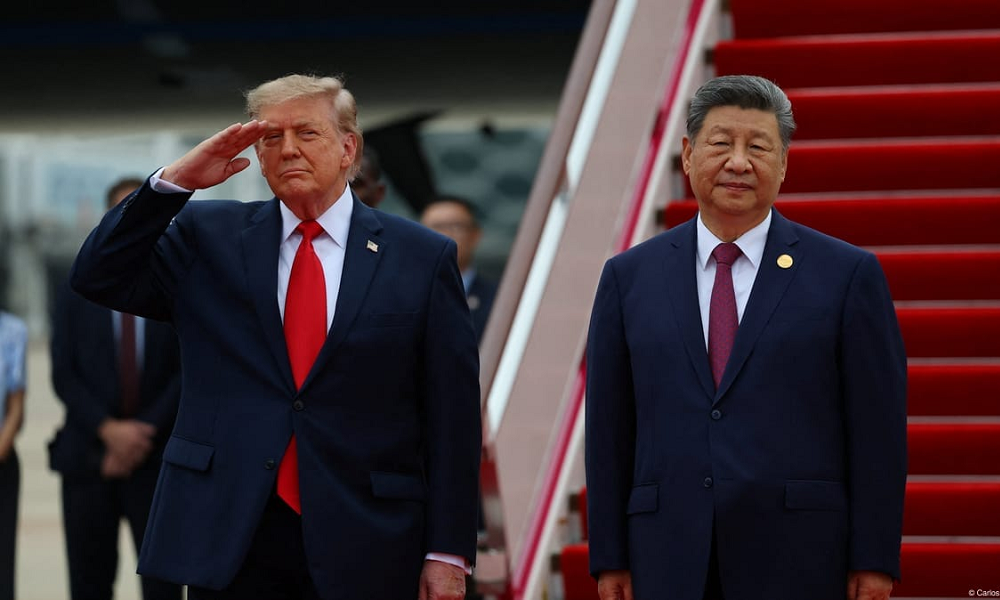
According to Reuters, the meeting will take place late Wednesday afternoon in Palm Beach, Florida, following Trump’s meetings with Russian President Vladimir Putin and Chinese President Xi Jinping during his recent visit to Asia.
Trump, who has repeatedly criticized Washington’s Western allies over NATO defence spending, trade tariffs and their support during the U.S.-Israeli war on Iran, described both Putin and Xi as his “friends” during last week’s summit.
His meeting with Putin sparked criticism from European allies and Democratic opponents in the United States.
Rutte, who has sought to ease tensions within NATO and maintain close ties with Trump, said meetings between major nuclear powers were normal.
The upcoming meeting also comes as European countries push to be included in U.S.-backed negotiations aimed at ending Russia’s war in Ukraine.
Last week, U.S. special envoy and Trump’s son-in-law Jared Kushner said Trump was open to security guarantees for Ukraine based on NATO’s Article 5 collective defence commitment. Kushner also said Russia had become “comfortable” with such an arrangement.
Ukrainian President Volodymyr Zelenskyy, who has faced criticism from Trump, has stressed that Europe must be included in any peace negotiations.
World
Ukraine sinks Russian warship in Libya as conflict spreads beyond Europe
Zelenskiy said a Russian Ka-27 combat helicopter had been destroyed along with the corvette. Russia’s Defence Ministry did not immediately comment.
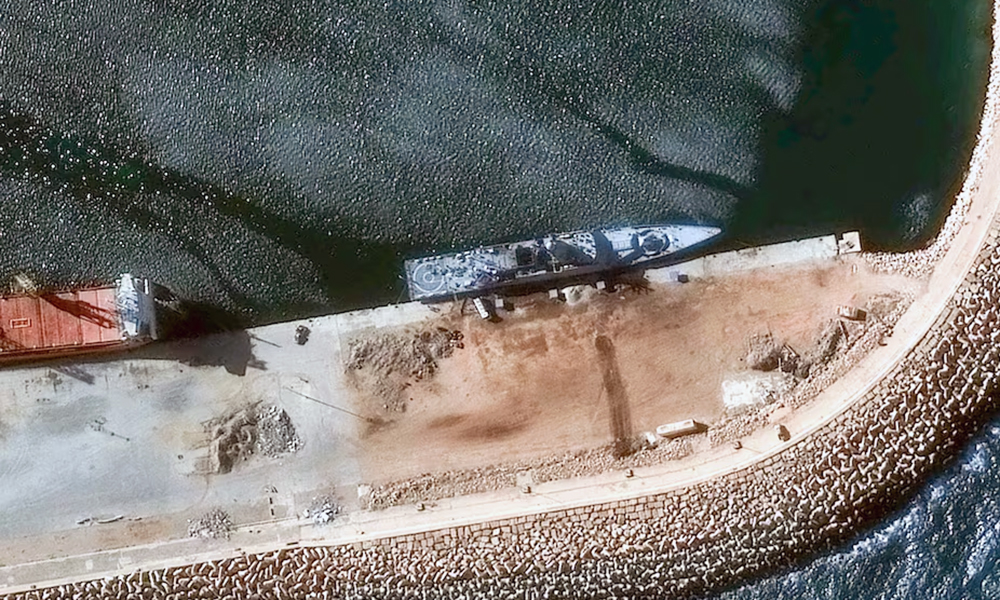
Ukraine sank a Russian naval corvette in a Libyan port using naval drones on Sunday, the day after a drone strike on a Russian military-linked cargo ship in the Gulf of Finland, President Volodymyr Zelenskiy said.
Zelenskiy said on Monday morning that Ukraine used seven naval drones in Sunday’s attack, and had also hit the Russian dry cargo ship MV Angara, which he said Russia had used to transport weapons.
“Despite all the enemy’s attempts to counter the attack, the Russian corvette ‘Mercury’ was sunk,” Zelenskiy posted on Telegram, the first official acknowledgement that Ukraine has carried out an attack in Libya.
“We continue operations in designated waters.”
Zelenskiy said a Russian Ka-27 combat helicopter had been destroyed along with the corvette. Russia’s Defence Ministry did not immediately comment.
After a civil war, eastern Libya is controlled by military commander Khalifa Haftar, whose Libyan National Army has ties with Russia, while the west is controlled by an internationally recognised Government of National Unity based in Tripoli.
Libya’s eastern-based government said the corvette was docked at the Benghazi naval base on Sunday when it was hit.
The Institute for the Study of War said it had stopped for several days, under a cooperation agreement, to refuel and resupply as it escorted Russian cargo ships that can carry military supplies heading for Russia.
Osama Hamad, prime minister of Libya’s eastern-based government, said he had asked the UN to investigate “suspicions that the boats had been launched from western Libya” and to verify the presence of Ukrainian military experts there. No comment was immediately available from the Tripoli government.
Russia’s Transport Ministry said in March that Ukrainian naval drones launched from Libya had attacked the Arctic Metagaz, which was carrying liquefied natural gas from Murmansk. Libya’s maritime agency reported that the vessel had sunk between Libya and Malta after catching fire. Kyiv has not claimed responsibility for that attack.
On Saturday, a drone attack set fire to another Russian cargo ship, the Sparta II, operated by the Russian defence logistics firm Oboronlogistika, in international waters in the Gulf of Finland.
The Finnish military said it was likely to have been carried out by Ukraine, although Kyiv did not immediately comment. All 16 crew were evacuated onto a nearby Russian ship, one of them slightly injured.
Kremlin spokesman Dmitry Peskov responded to a question about the attack by saying there was a “dangerous trend of increasing terrorist activity” in the Baltic Sea. He said Moscow hoped states in the area would warn Kyiv off such operations.
Russian, Estonian and Finnish vessels fought the fire after the Sparta II drifted into Finnish waters, and a Russian ship began towing it away on Sunday.
US-backed talks between Russia and Ukraine resumed this month after a nine-month hiatus in an effort to end the war, Europe’s biggest since World War Two, albeit with little result so far.
Mykola Bielieskov of the National Institute for Strategic Studies in Kyiv said Ukraine was looking to strengthen its position with “horizontal escalation”.
“Since neither side is able to compel the other to accept terms of settlement through the battlefield only, both try to find new ways to pressure each other,” he said.


ASQA stresses standards compliance in Emirati Olive Company products
US Army schedules Iowa explosives detonation despite public outcry
Five killed in Turkish military helicopter crash in western Turkiye

Russia agrees to supply Afghanistan with $200 million worth of goods
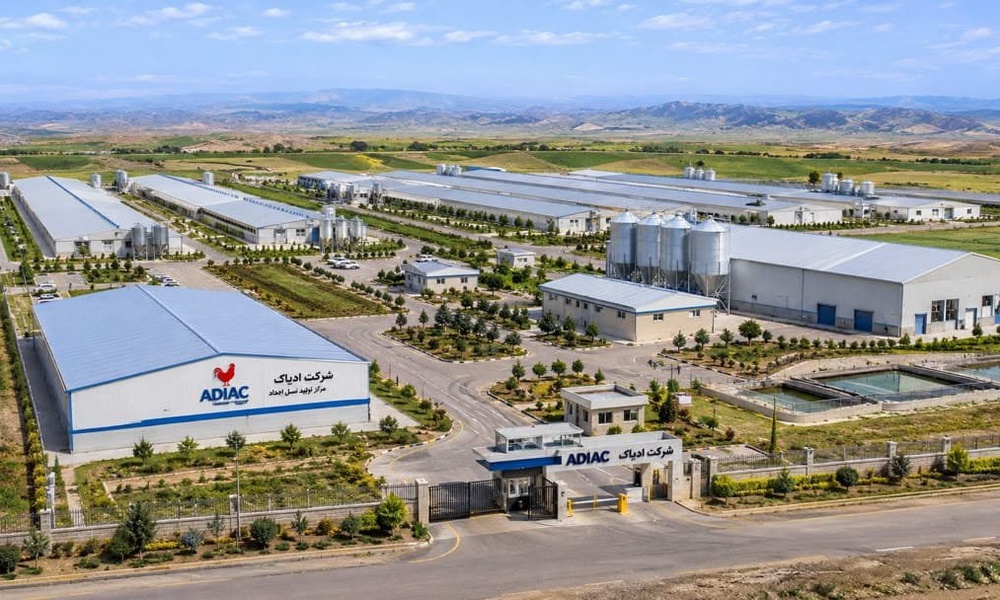
$7 million poultry farm opens in Herat, creating 600 jobs
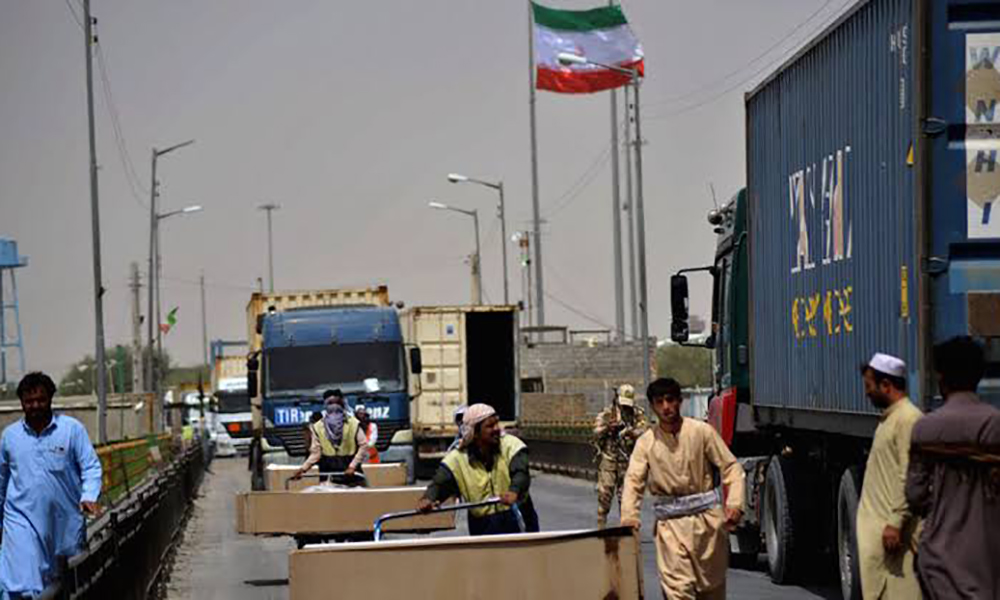
US sanctions and blockade measures disrupt Iran’s trade with Afghanistan and regional neighbors
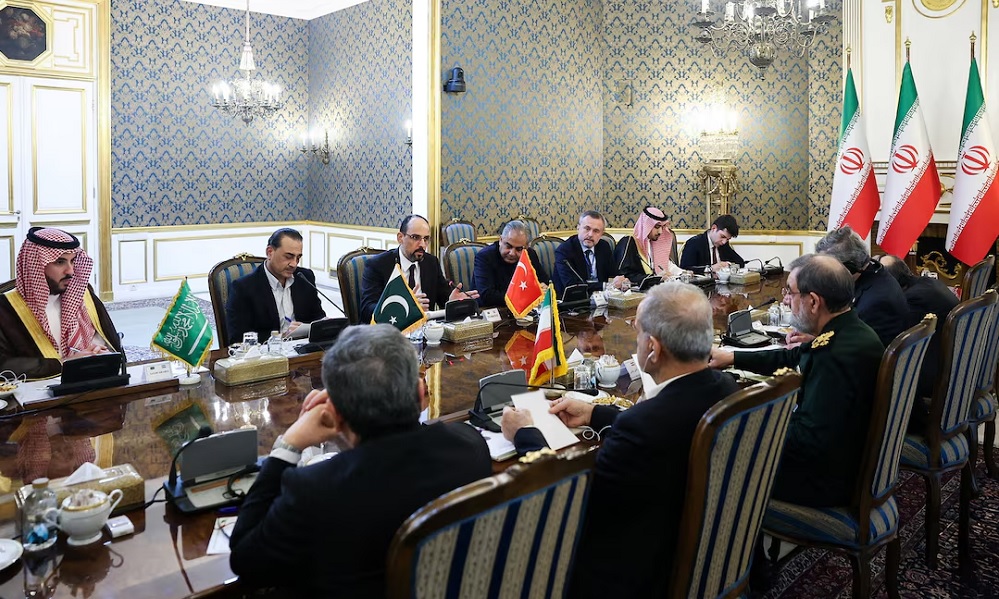
Saudi defence pact countries push for peace in Tehran as Houthis launch more attacks

England forward Kane crowned Ballon d’Or winner

Afghanistan to launch nationwide polio vaccination campaign

Afghanistan futsal team thrash Panama 5-0 in flying start to Dakar Youth Olympics
Five killed in Turkish military helicopter crash in western Turkiye

Tahawol: Discussion on shifting views within Pakistan

Qatar warns Middle East cannot afford renewed US-Iran escalation

Saar: Return of millions of Afghans to their homeland

Saar: Pakistan FM’s remarks on Afghanistan
-
 Latest News4 days ago
US judge questions Trump administration’s policies targeting refugees
-
 Latest News2 days ago
SNEAKO claims US authorities questioned him for eight hours after Afghanistan visit
-
 Sport5 days ago
ATN hosts AFPL Season 5 draw and 2025 futsal awards ceremony
-
 Latest News4 days ago
Russia reiterates readiness to facilitate talks between Afghanistan and Pakistan
-
 Regional5 days ago
Araqchi says Iran wants diplomacy to end war, Trump says terms unacceptable
-
 Science & Technology4 days ago
Astronomers observe a huge puffy star merge with smaller companion
-
 Latest News3 days ago
AfD leader calls for return of 2.6 million foreigners from Germany
-
 Latest News4 days ago
Bagram belongs to Afghanistan, not the United States: Anas Haqqani