
World
Trump endorses Netanyahu in close Israeli election
Polls have suggested no candidate has a clear path to power. Israel’s prime minister is chosen through coalition-building in parliament rather than by direct popular vote.

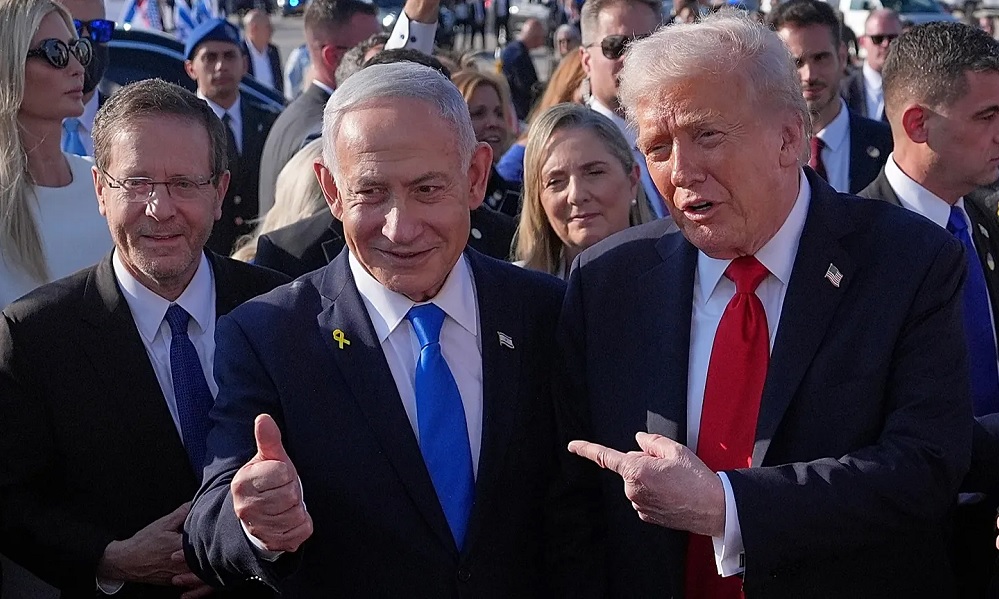
US President Donald Trump on Sunday endorsed his ally Benjamin Netanyahu as the longtime Israeli prime minister struggles for an edge in next week’s parliamentary election.
Trump praised Netanyahu as a “great warrior prime minister” and peace partner, crediting him with joining the United States in launching strikes on Iran in February. The conflict, in its seventh month, has disrupted energy markets globally and wreaked havoc across the Middle East, damaging critical infrastructure and destabilizing regional economies, Reuters reported.
“Bibi Netanyahu has been Strong, Brave, and Brilliant in the face of tremendous opposition, including that coming from even Israel, itself,” Trump wrote in a post on Truth Social.
“Despite all of that, he has endured and, in fact, he has thrived! I have watched Bibi under the most trying of times. Normal men or women in such situations would have wilted under the pressure — But Bibi did not wilt, he actually got stronger, and maintains that same Strength today.”
In his message, addressed to “the Great People of Israel,” Trump added, “Please let this Letter serve to represent my Complete and Total Endorsement of Bibi Netanyahu in his upcoming Race for Re-Election as Prime Minister of Israel.”
The Trump endorsement is not certain to give Netanyahu and his right-wing Likud party a boost in the October 27 national election, as Israeli public support for Trump has diminished amid Israeli-US disagreements over Iran.
Polls have suggested no candidate has a clear path to power. Israel’s prime minister is chosen through coalition-building in parliament rather than by direct popular vote.
It will be Israel’s first vote since the Hamas attack on October 7, 2023, that shook the country and plunged the Middle East into turmoil, as Israel went to war in Gaza, Lebanon and Iran.
The election could determine whether Netanyahu remains in power after one of the most consequential periods in Israel’s history, or is defeated by centrist rivals promising to usher in a new era.
Netanyahu promptly expressed his thanks to his “dear friend Donald” on X, saying, “Together we will complete the mission!”
Most Israelis, even those who are critical of Netanyahu and his government, were largely in favor of the Iran war.
In an election this close, “it couldn’t hurt him, and it might help,” said analyst Aaron David Miller of the Carnegie Endowment for International Peace in Washington.
Netanyahu’s religious-nationalist coalition is projected to lose its governing majority, although the opposition may also struggle to form a government, opinion polls show. That could lead to Netanyahu serving as a caretaker prime minister while another election is held.
The US president passed up earlier opportunities to endorse Netanyahu, perhaps because he wanted to see what leverage he could exercise on issues like Gaza or Lebanon, said Miller. In the end, he said, Trump sided with a leader he sees as strong and unfairly persecuted.
“However angry Trump may be at Netanyahu for pushing this Iran war, this in the end was a Trump decision,” Miller added.
A Trump decision not to endorse Netanyahu would have raised “legitimate questions about whether or not the whole Iran venture was in fact something Trump should have done,” he said.








France was left reeling after Saturday’s demonstrations over the rising cost of living erupted into widespread violence, with clashes between police and protesters, looting and fires reported across the country.
Prime Minister Sébastien Lecornu said 1,200 people had been arrested and 150 police officers injured in what he described as violence of “extreme intensity”.
“It’s a miracle the toll isn’t higher,” Lecornu said.
Authorities estimated that 550,000 people joined the nationwide demonstrations, while the CGT trade union put the figure at 800,000.
The unrest follows weeks of student protests and comes ahead of presidential elections scheduled for April and May.
Police deployed tear gas and water cannons as some demonstrators threw projectiles and fireworks. In the southern city of Saint-Étienne, a 17-year-old boy lost his right hand when a crowd-control grenade exploded.
Widespread looting and destruction
Masked youths targeted businesses in Paris, Marseille, Nice, Nantes, Bordeaux, Limoges, Lille, Toulouse and Strasbourg, looting supermarkets, pharmacies, luxury boutiques and electronics stores.
AFP reporters in Paris witnessed groups disabling security cameras before smashing shop windows and stealing goods.
Public buildings were also attacked. The historic town hall in Limoges, more than 140 years old, was largely destroyed by fire after masked protesters broke in. Town halls in Marseille and Lille were vandalised, while a police compound in Bordeaux was damaged and a tourist office in Lyon set alight.
President Emmanuel Macron condemned the violence, saying those responsible for vandalism, attacks on public buildings and looting would be prosecuted.
US Vice President JD Vance blamed immigration for the unrest, claiming on X that Western countries had neglected questions of integration in the name of diversity and compassion.
Cost of living fuels anger
The demonstrations were called by France’s Yellow Vest movement, which staged major protests eight years ago over planned fuel tax increases.
Rising living costs, exacerbated by inflation linked partly to the war in the Middle East, were a central grievance. Protesters also expressed anger over political leadership and wealth inequality.
“We’re sick of slaving away for poverty wages while our rents keep going up,” teacher Regine Monfroid told AFP in Strasbourg.
In Paris, demonstrators called for Macron to resign, while some invoked the French Revolution of 1789. In Marseille, protesters shouted that they were “taking the Bastille” as they forced their way into the mayor’s offices.
Political tensions intensify
The unrest has heightened political tensions ahead of the presidential election, with opposition figures seeking to capitalise on public frustration.
Far-right candidate Marine Le Pen condemned the rioters and accused the party of left-wing rival Jean-Luc Mélenchon of legitimising violence. She vowed to protect the public from what she described as violence from the extreme left.
Mélenchon, who had supported the demonstrations and earlier student protests, urged participants to avoid looting, describing it as contrary to the movement’s methods.
The scale of the destruction and arrests has raised fresh questions about public order as France approaches a pivotal electoral period.
World
Trump says he is talking to Russia and China about denuclearization
Trump’s comments come months after the Strategic Arms Reduction Treaty expired earlier this year.
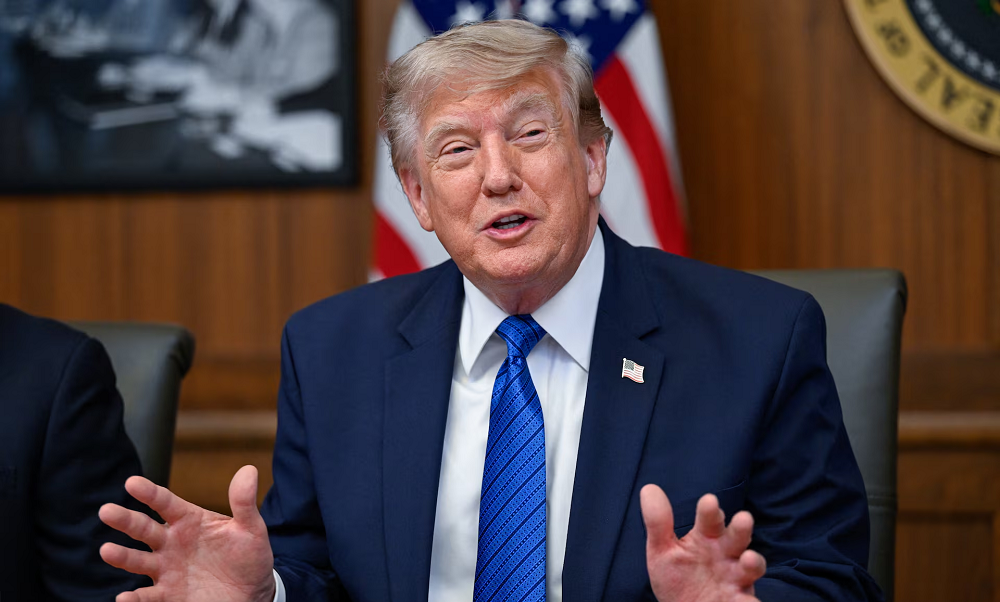
US President Donald Trump said on Thursday Washington is holding talks with Moscow and Beijing aimed at denuclearizing the countries with the biggest stockpiles of nuclear weapons.
Russia has the most stored nuclear warheads followed by the United States and China, according to the Stockholm International Peace Research Institute. The US outpaces Russia on its number of deployed warheads.
During an interview with Newsmax, Trump said he expects China to “catch up” with the US within the next five years.
“The whole thing is a shame, because I’d love to denuclearize if possible, but we’re actually talking to Russia about that, and we’re talking to China about that denuclearization,” Trump told the outlet.
Newsmax reported that Trump had spoken with Chinese President Xi Jinping about denuclearization.
Trump’s comments come months after the Strategic Arms Reduction Treaty expired earlier this year.
The New START treaty signed in 2010 allowed one single extension, which was agreed by former President Joe Biden and Russian President Vladimir Putin for five years. Any new extension would require an executive decision to voluntarily extend the limits of the treaty.
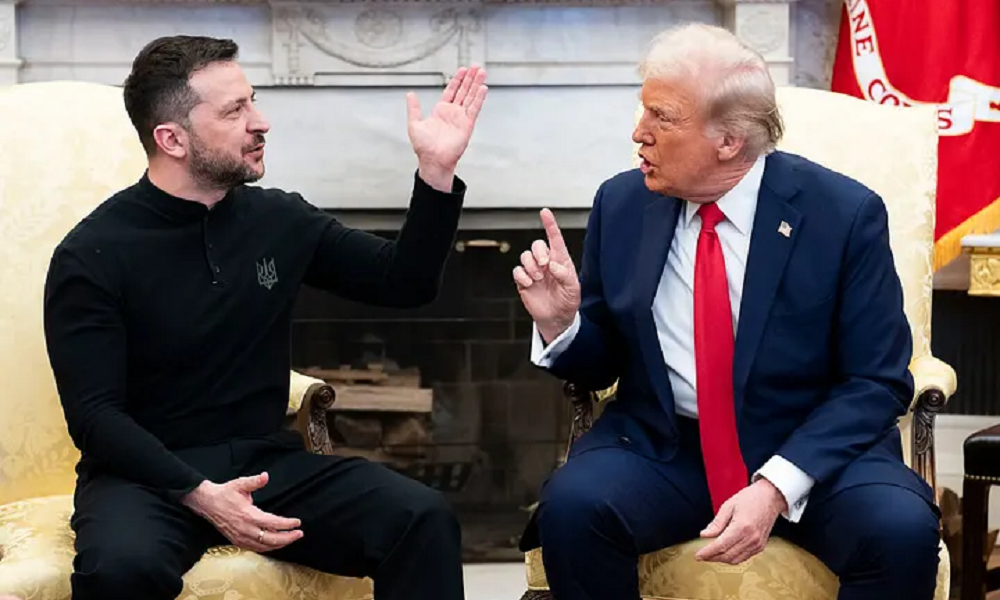
Ukrainian President Volodymyr Zelenskiy said in an interview on Wednesday that it was “painful” when Donald Trump took another side in Ukraine’s ongoing war with Russia, after the US President said Zelenskiy should be replaced.
Zelenskiy told Piers Morgan Uncensored: “It’s painful when President Trump chooses one side, not our side.”
He also said that he was OK with Trump being in the middle of Ukraine and Russia, but added: “If you are in the middle, you have to stay in the middle.”
Asked if he felt betrayed by Trump, who at the weekend called for Ukraine to get a new president having agreed to lift sanctions on Russian diesel exports, Zelenskiy replied: “Really, yes … but it’s a little bit more complicated than just my emotions or my feelings.”
“It’s a pity we are losing (a) strong partner,” he added.
Zelenskiy also said: “We are not selling our country … it’s not about business for us, it’s just our life and this is our country.”


Afghanistan finish runners-up after 6-0 defeat to Brazil in futsal final

Trump endorses Netanyahu in close Israeli election

ACL: League leaders Sorkh Poshan claim another 3 points

Tahawol: Afghanistan’s empty seat at OIC Meeting

Toofan Herat beat Istiqlal Kabul 2-0 in Afghanistan Champions League clash

Cricket Bonanza: Afghanistan set for packed international schedule

Afghanistan says 28 killed, 32 captured in Nuristan operation

Silk Road highway in Wakhan corridor now reaches the China border

CNN, MS NOW and Politico sue Trump, challenging White House ban

Dogharoun handles 60% of Iran’s exports to Afghanistan
Tahawol: Afghanistan’s empty seat at OIC Meeting

Saar: Islamic Emirate–Pakistan clashes discussed

France rocked by nationwide clashes, looting and fires

Tahawol: Russian economic delegation’s visit to Kabul

Saar: Discussion on harsh criticism of Pakistan at Moscow meeting
-

 Sport5 days ago
Afghan futsal coach: Brazil tournament is first step towards new goals and World Cup
-
 Latest News5 days ago
Afghan official says Durand Line crossings to remain closed until Islamabad accepts demands
-

 Latest News4 days ago
India, Russia hold security talks on Afghanistan and Pakistan amid regional tensions
-
 Latest News4 days ago
Uzbekistan gains ground in Afghanistan’s flour market as Kazakhstan loses exports
-
 Latest News5 days ago
Guterres proposes 60 job cuts at UNAMA
-
 World5 days ago
Yemen hospitals overwhelmed by surge in war casualties, Red Cross warns
-
 Latest News5 days ago
OIC envoy briefs Kabul diplomats on talks with Afghan authorities
-

 Regional4 days ago
School roof collapse kills teacher, 21 children in NW Pakistan