
Latest News
Abdullah Calls for Collective Efforts of Regional Countries in Fight Against Terrorism

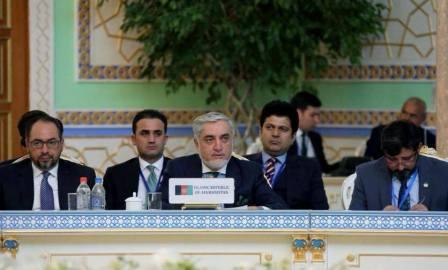
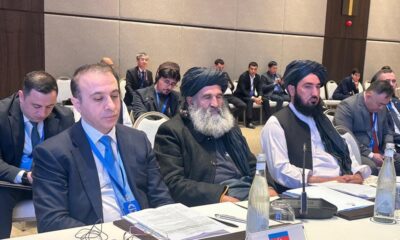
Addressing the 17th Shanghai Cooperation Organization (SCO) summit in Tajikistan on Friday, Chief Executive Abdullah Abdullah called for collective efforts of regional countries in the fight against terrorism.
Abdullah said that terrorism remains the biggest “collective” challenge in the region and that Afghanistan as a frontline state bears the bulk of the burden in the fight against terrorism.
“A common threat is the presence of sanctuaries and support networks bolstered by drug and smuggling funding systems that act as lifelines to most of these [terror] groups,” he said, adding that the Afghan government is working with all involved nations especially Pakistan to eliminate the infrastructure, financial and human resources, and logistics of the insurgent groups – destabilizing Afghanistan and the region as whole.
Abdullah stressed that terrorism continues to threat the social and economic development in Afghanistan and connectively across the region. He said among the international terrorist groups that since 2014 found hideouts in Afghanistan, is Islamic State or Daesh which the Afghan government sees it as a serious threat.
“We use all means to identify and deny their foothold inside our country. Most of their recruits are non-Afghans, they are opportunistic in their dealings and affiliations with other militant groups including certain Taliban groupings,” Abdullah said. “We continue to appeal to our regional friends by stressing that fighting terrorism, extremism, and separatism will require our collective efforts that need close cooperation and coordination.”
However, he said that they need to treat all forms of terrorism as one. “We cannot make the mistake of differentiating between good and bad terrorism,” Abdullah said.
Peace Process
Chief Executive Abdullah Abdullah also welcomed the multinational regional meeting on counter-terrorism at the level of national security officials that was held in Tehran last month.
He also appreciated the countries contributions being made through the Hearth of Asia – Istanbul, and Kabul Processes conferences.
“The National Unity Government in Afghanistan continues to promote an Afghan-led and Afghan-owned peace and reconciliation agenda,” he said. “Earlier, this year, we presented a comprehensive plan for reconciliation and reintegration that was supported by the international community. Meanwhile, we will defend our citizens, their rights and achievements when attacked.”
Abdullah said that the Afghan government has made every effort to provide an enabling environment for expanding the borders of trade, transit, communications, investment in energy transmission to better equip them to fight poverty and unemployment by bringing the different segments of the region close to each other.
In conclusion, he reiterated that Afghanistan is strongly committed to working closely with ECO to enhance cooperation in key areas of interest in order to pave the ground for a peaceful, stable and prosperous region.

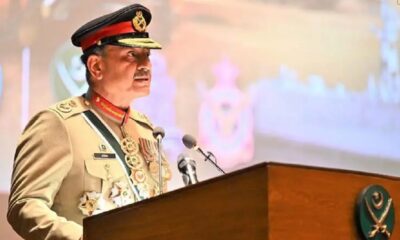





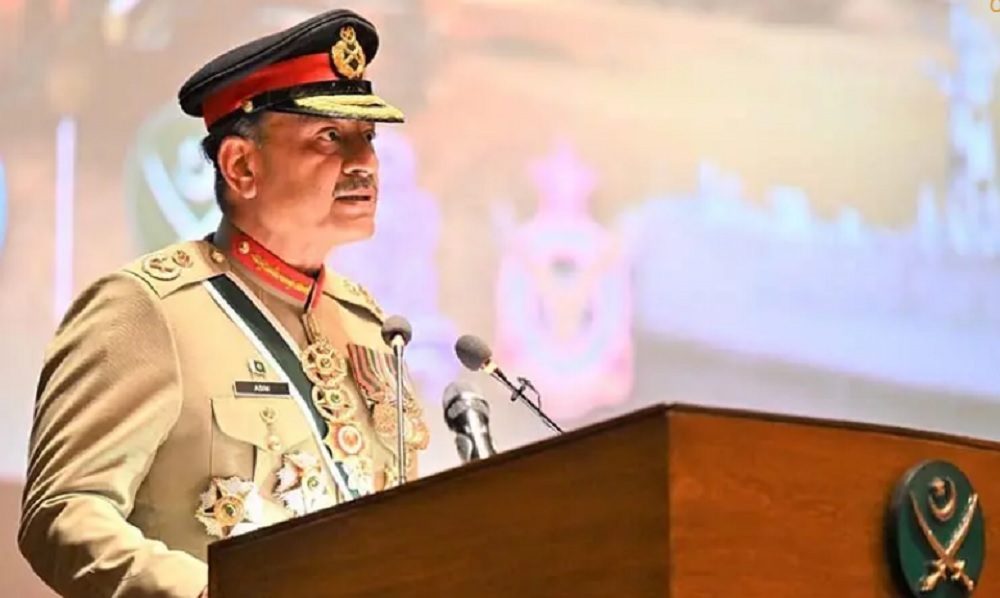
Pakistan’s newly appointed armed forces chief called on the Islamic Emirate of Afghanistan (IEA) on Monday to choose between maintaining ties with Islamabad or supporting the Tehreek-i-Taliban Pakistan (TTP).
Munir made his remarks at his headquarters in the garrison city of Rawalpindi, where he received a guard of honor from all three branches of the military, marking the launch of Pakistan’s new joint military command.
Munir said that the new Defence Forces Headquarters marks a historic step, creating a unified tri-services command to boost coordination across land, air, sea, cybersecurity and information domains amid rising security threats, according to a military statement.
Munir told officers that a “clear message” had been conveyed to the Islamic Emirate in Kabul that it must choose between Pakistan and the TTP.
The Islamic Emirate has not yet responded to Munir’s remarks.
Relations between Afghanistan and Pakistan have been deteriorating since October, when several days of fighting left dozens dead and hundreds injured.
Pakistani officials have consistently claimed that attacks in the country are being organized by militants based in Afghanistan. The Islamic Emirate, however, has rejected this claim and said that Afghanistan cannot be held responsible for Pakistan’s security.

In Kandahar, farmers who established mushroom farms with the support of international organizations have now begun harvesting their crops.
The Directorate of Agriculture, Irrigation, and Livestock of Kandahar stated that, as a result of its efforts and with financial support from the United Nations Office on Drugs and Crime (UNODC) and technical assistance from the Dutch Committee for Afghanistan, essential supplies worth $20,000 were distributed to 30 needy families in Khakrez district to establish mushroom farms. The harvesting process has now started.
Officials say the program aims to promote alternative crops to opium poppy, improve farmers’ livelihoods, introduce high-yield plants, and expand modern and standardized farming practices. According to them, each farmer can produce up to 10 kilograms of mushrooms in one month from just one kilogram of seeds at home—a process that is simple, low-cost, and highly profitable.
Mohammad Hanif Haqmal, spokesperson for the Kandahar Directorate of Agriculture, said: “For around 30 families, 23 types of tools necessary for mushroom farming were distributed. Seeds were also provided so they could establish farms and harvest crops. This is the first time mushroom is being cultivated in Kandahar. The Directorate of Agriculture will continue its efforts to promote this crop in other areas of the country so people can establish farms at home and increase their income. In Kandahar, the price of one kilogram of mushroom ranges between 350 and 400 Afghanis.”
Officials from the Dutch Committee for Afghanistan also confirmed that 23 types of tools and necessary materials for mushroom cultivation were previously distributed to the families, and the harvest is now underway. They consider the plant a suitable alternative to opium poppy and said they will continue supporting the farmers.
Abdulhadi Dawoodzi, representative of the Dutch Committee for Afghanistan in Kandahar, added: “We distributed 20 types of materials and tools necessary for planting and harvesting mushroom to 30 families, worth $20,000. This support serves as an alternative to opium cultivation.”
Farmers view mushroom as a viable substitute for opium poppy. They say the crop requires less effort and yields higher profits, making it a suitable option, especially during drought conditions.
Sibghatullah, a Kandahar farmer, said: “Mushroom can serve as a complete alternative to opium and hashish. Drought is intensifying every year, and this crop is a good substitute. We ask the organization to establish more farms and help market our products.”
Another farmer, Mohammad Naseem, added: “We can sell mushroom in local markets and to neighbors. Compared to opium and other narcotic crops, it is a better cultivation option.”
Officials from the Kandahar Directorate of Agriculture said that in recent months, they have increased efforts to identify and promote alternative crops and have implemented several programs to introduce high-yield plants suitable for Kandahar’s climatic conditions.
Latest News
WFP slashes aid by 80% as Afghanistan’s hunger crisis worsens
According to UN estimates, 3.5 million Afghan children under five are suffering from acute malnutrition, while more than 1.2 million pregnant and breastfeeding women face severe nutritional deficiencies.
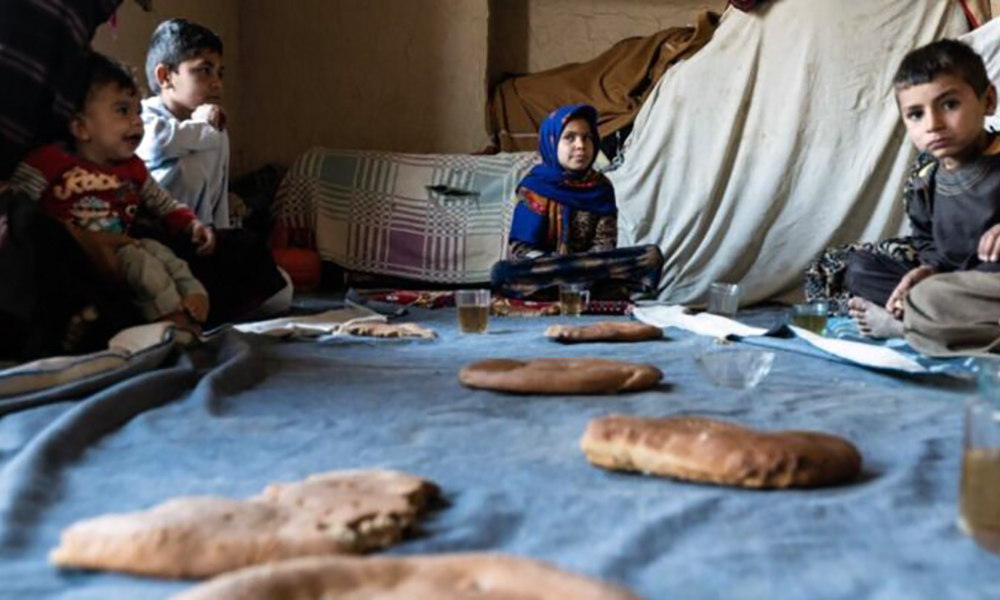
The UN World Food Programme (WFP) has reduced its food assistance in Afghanistan by 80 percent, warning that hunger and malnutrition are escalating at a dangerous pace.
Due to severe funding shortages, the agency has cut support from 10 million vulnerable Afghans to just two million.
WFP officials say the situation is deteriorating rapidly. Deputy Executive Director Carl Skau cautioned that with winter fast approaching, Afghan children face an increased risk of death from severe malnutrition and freezing temperatures.
“Because of budget shortages, we have been forced to reduce our assistance in Afghanistan from 10 million people to two million,” Skau said.
“This winter, we cannot support large numbers of vulnerable families, and many children may lose their lives due to hunger and cold. Last year was one of the worst years for humanitarian aid, and we expect a 40% funding gap again in 2026.”
Skau warned that malnutrition among women and children could reach levels not seen in years.
According to UN estimates, 3.5 million Afghan children under five are suffering from acute malnutrition, while more than 1.2 million pregnant and breastfeeding women face severe nutritional deficiencies.
UN agencies have repeatedly stressed throughout the year that shrinking humanitarian budgets have left them unable to reach millions of Afghans still in urgent need of assistance.


Tahawol: Iran seeking to expand ties with Afghanistan

Saar: Calls for dialogue between Afghanistan, Pakistan

Pakistan’s top general calls on IEA to pick between ties with Islamabad or TTP

Sorkh Poshan Khafi defeats Sarsabz Yashlar 4-0 in Afghanistan Champions League

Mushroom harvest begins in Kandahar

Pakistan will lose big market in both Afghanistan, Central Asia: Sarhadi

Afghanistan records $580m in fruit exports in six months

Türkiye leads Riyadh 2025 Islamic Solidarity Games medal table

Tashkent: Central Asian leaders say regional stability hinges on Afghanistan

Afghan Abdalyan beat Sri Lanka A by 3 wickets in Rising Stars Asia Cup opener
Tahawol: Iran seeking to expand ties with Afghanistan
Saar: Calls for dialogue between Afghanistan, Pakistan

Tahawol: Discussion on Afghanistan at Doha Forum

Saar: Syrian president’s remarks on Afghanistan war

Tahawol: Fresh tensions between Afghanistan-Pakistan discussed
-

 Business4 days ago
Ariana Afghan Airlines boost air trade with arrival of new cargo aircraft
-
 Business4 days ago
IEA demands assurances from Islamabad before trade routes reopen
-

 Sport2 days ago
ILT20: Nissanka fires Gulf Giants to four-wicket win over Dubai Capitals
-

 Latest News4 days ago
Iran offers fully funded virtual education for Afghan students returning from abroad
-

 Latest News4 days ago
Imran Khan accuses Army Chief of ‘igniting’ Pakistan–Afghanistan tensions
-

 Sport3 days ago
FIFA confirms all 12 groups for 2026 World Cup
-

 Latest News5 days ago
Afghanistan occupation mired in corruption, waste and unrealistic goals: SIGAR
-

 Regional4 days ago
Putin questions US punishing India for buying Russian oil