
International Sports
ATN brings AFC U17 Asian Cup action to Afghan audiences
The event promises to be another exciting tournament with berths to the FIFA U17 World Cup Qatar 2026 also at stake.


Ariana Radio and Television Network (ATN) has confirmed it will broadcast the group stage matches and finals of the AFC U17 Men’s Asian Cup Saudi Arabia 2026, bringing coverage of the continent’s premier youth competition to viewers across Afghanistan.
The tournament is set to begin next week in Saudi Arabia and will run from May 5 to May 22, featuring 16 of Asia’s top under-17 national teams competing for continental glory and places at the FIFA U17 World Cup Qatar 2026.
The top two teams from each of the four groups will advance to the quarterfinals and automatically qualify for the World Cup in Qatar.
Hosts Saudi Arabia lead Group A alongside Tajikistan, Thailand and Myanmar.
Group B features defending contenders Japan with Indonesia, China and Qatar.
In Group C, South Korea will face Yemen, Vietnam and the United Arab Emirates.
Group D includes defending champions Uzbekistan, alongside Australia, India and North Korea.
The tournament is expected to showcase some of Asia’s brightest young football talents, with scouts and fans watching closely as the next generation of stars take center stage.
ATN has confirmed coverage will include key group stage matches and the final later this month. Fans are encouraged to follow Ariana Television and Ariana News’ social media pages for updates, team information and schedules.





International Sports
India clinch Asian Games cricket gold after beating Pakistan
The result marked India’s seventh consecutive T20 victory over Pakistan, extending their dominance in the format. India have now won 14 of the 18 T20 meetings between the two sides.
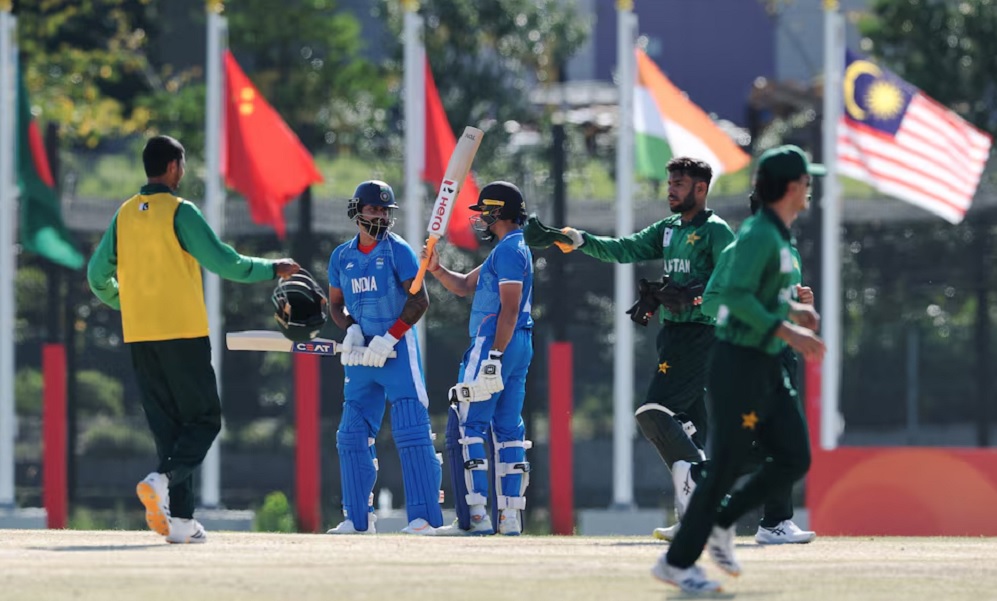
India have won the men’s T20 cricket gold medal at the Asian Games, beating Pakistan by 19 runs in the final in Japan.
India posted an imposing 211-6 from 20 overs, with Abhishek Sharma leading the charge with a blistering 61 off 28 balls.
Abhishek struck seven sixes and three fours, while Tilak Varma added an unbeaten 51 from just 22 deliveries. Shivam Dube also contributed 27 off 15 balls as India finished strongly.
Pakistan struggled early in their chase, falling to 39-3, before Hasan Nawaz launched a counterattack with 96 from 51 balls.
However, Pakistan could only reach 192-6, leaving India to secure a 19-run victory and another Asian Games gold medal.
The result marked India’s seventh consecutive T20 victory over Pakistan, extending their dominance in the format. India have now won 14 of the 18 T20 meetings between the two sides.
India had previously won gold when cricket returned to the Asian Games in China in 2022, making this their second consecutive men’s T20 gold medal.
The 2026 Asian Games in Aichi-Nagoya, Japan, conclude on Sunday, October 4, bringing 16 days of competition to a close.
The Games officially ran from September 19 to October 4, with the closing ceremony taking place in Nagoya on the final day.
The next edition of the Asian Games is scheduled to be held in Qatar in 2030.
International Sports
Afghanistan to face Pakistan, India and Australia at 2027 Cricket World Cup
The Afghan side will begin its World Cup campaign against Pakistan on October 8 in Tshwane of South Africa.
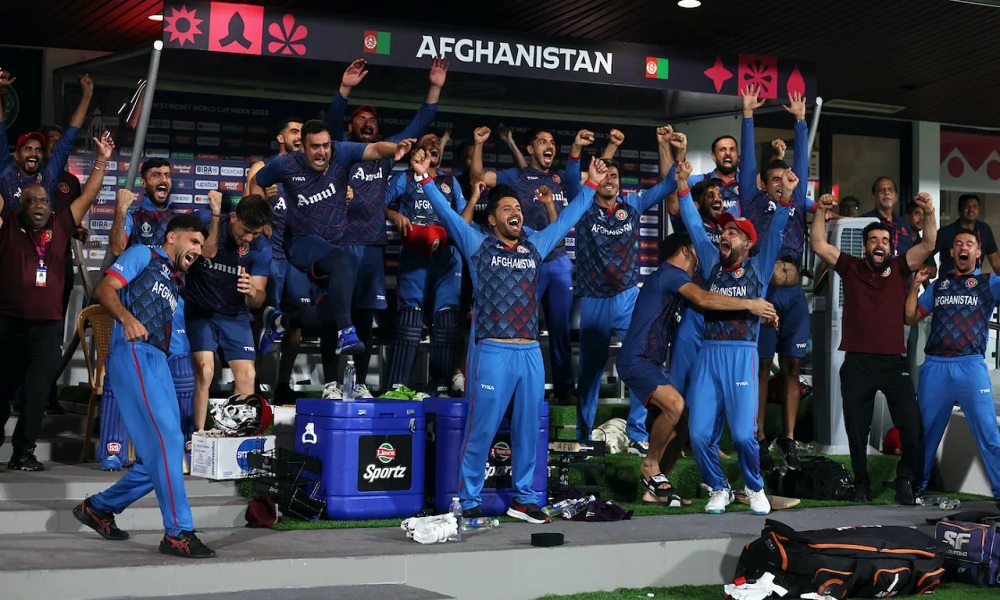
Afghanistan will face Pakistan, Zimbabwe, India and Australia in the group stage of the 2027 Men’s Cricket World Cup, after the International Cricket Council (ICC) announced the tournament schedule.
Afghanistan has been drawn in Group A alongside defending champions Australia, India, Pakistan, Zimbabwe and one qualifier.
The Afghan side will begin its World Cup campaign against Pakistan on October 8 in Tshwane of South Africa.
Afghanistan will then face Zimbabwe on October 11 in Bulawayo of Zimbabwe, followed by a highly anticipated clash with India on October 14 in Tshwane.
The team’s fourth group-stage match will be against Australia on October 18 in KuGompo City of South Africa, before Afghanistan concludes its group campaign against Qualifier A on October 21, also in KuGompo City.
The top three teams from each group will advance to the Super 7 phase, along with the fourth-placed team that has the better record between the two groups.
The Super 7 phase will be played from October 25 to November 14, with the seven teams starting the phase without carrying any points from the group stage. Each team will play six matches.
The top four teams in the Super 7 standings will advance to the semi-finals, scheduled for November 17 and 18 in Cape Town and Tshwane respectively. The final will be played in Johannesburg on November 21.
The 2027 World Cup will be jointly hosted by South Africa, Zimbabwe and Namibia, with the tournament beginning on October 2 with a three-team Super Series in Windhoek.
Afghanistan is among the 12 teams already placed in the group stage. The remaining four World Cup places will be decided through the Cricket World Cup Qualifier, with the qualifier winner advancing directly to the group stage and the other three teams competing in the Super Series for the final spot.
The group stage officially begins on October 7, with Australia facing India in Cape Town in a repeat of the 2023 World Cup final.
International Sports
Crystal Palace cruise into EFL Cup fourth round
Strand Larsen doubled the advantage eight minutes after the restart, meeting Ben Chilwell’s cross from the left to score his second of the night.

Crystal Palace advanced to the fourth round of the English Football League (EFL) Cup with a comfortable 3-0 victory over Championship side Middlesbrough at Selhurst Park.
Jørgen Strand Larsen scored twice with headers, one in each half, before substitute Daichi Kamada added a superb third to seal Palace’s progress.
Palace, who made eight changes from their 3-2 Premier League win over Fulham, took the lead when Óscar Mingueza delivered a cross from the right for Strand Larsen to head home.
Strand Larsen doubled the advantage eight minutes after the restart, meeting Ben Chilwell’s cross from the left to score his second of the night.
Kamada then completed the victory shortly after coming on, expertly chipping the ball over Middlesbrough goalkeeper Sol Brynn from outside the penalty area.
Middlesbrough struggled to create clear chances, with Amario Cozier-Duberry forcing Palace goalkeeper Walter Benítez into a save with 15 minutes remaining.
Strand Larsen was named Player of the Match after a standout performance.
Chelsea vs Leeds live on ATN
Football fans in Afghanistan can watch tonight’s EFL Cup action live and exclusively on Ariana Television Network (ATN), with Chelsea taking on Leeds United.
ATN will broadcast Chelsea vs Leeds live tonight, giving fans across Afghanistan the chance to watch the match exclusively on Ariana Television.


Tahawol: Discussion on outcome of Moscow Format meeting

ACL: Sarbaz Yashlar and Khurasan Faryab play out goalless draw

Saar: Expansion of relations between Kabul and Moscow discussed

Aino Mina Kandahar defeat Istiqlal Kabul 3–2

Muttaqi and Shoigu discuss regional security and Afghanistan-Russia cooperation

Saudi energy group signs major Afghanistan deals covering gas exploration and pipeline plans

Khalilzad: Afghanistan ready to attract major investment

UAE firm eyes investment in Salang’s second tunnel and pharmaceutical factories

US Treasury ratchets up pressure on Iran with sweeping new aviation sanctions

AI could pose ‘existential’ risk to humanity, UN rights chief warns
Tahawol: Discussion on outcome of Moscow Format meeting
Saar: Expansion of relations between Kabul and Moscow discussed

Tahawol: Afghanistan-Iran: shared opportunities and challenges discussed

Saar: Pakistan’s hostile policy toward Afghanistan discussed

Tahawol: Doha process seeks new cooperation opportunities
-

 Sport1 day ago
Cricket Bonanza: Afghanistan set for packed international schedule
-
 Sport4 days ago
ACB announces Afghanistan squads for Bangladesh, Zimbabwe series
-
 Latest News5 days ago
Russia expects to ease Afghanistan-Pakistan tensions at Moscow Format meeting
-
 International Sports5 days ago
Afghanistan to face Pakistan, India and Australia at 2027 Cricket World Cup
-
 Regional5 days ago
Saudi-led coalition says Houthis attacked power station for Prophet’s Mosque in Medina
-
 Regional4 days ago
Cargo stacks up as Pakistan seizes containers to block capital routes
-
 Latest News4 days ago
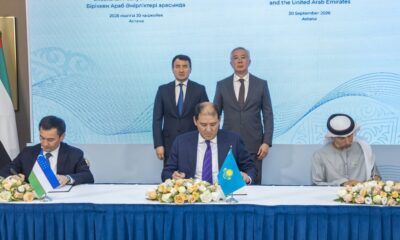
Kazakhstan, Uzbekistan and UAE sign MoU on CASA railway project via Afghanistan
-
 Regional4 days ago
Pakistan says Mecca pact members to hold emergency talks on engaging Houthis