Connect with us

Latest News

AWCC repairs traffic directorate’s building

Published

on

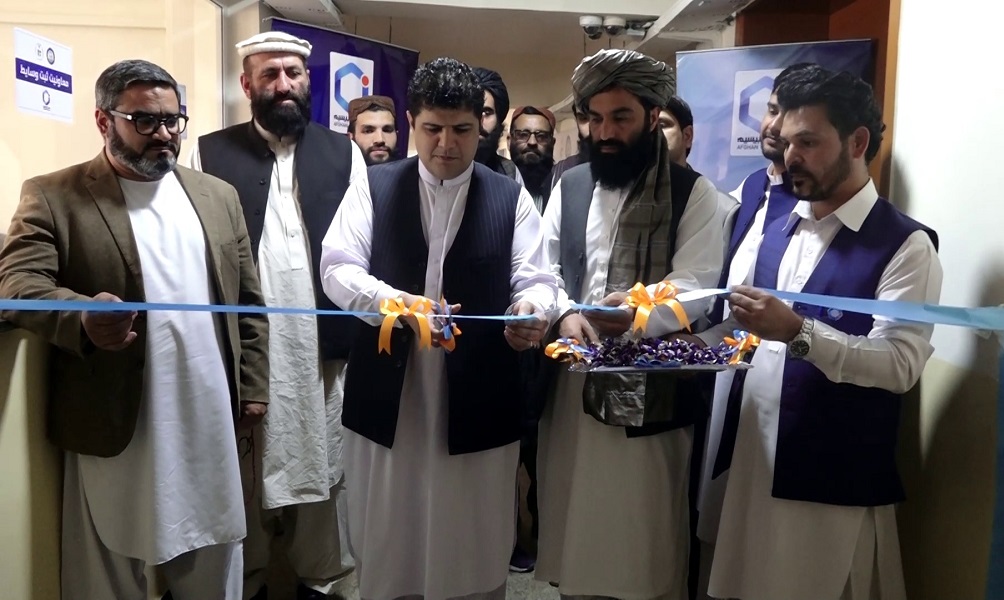
Afghan Wireless Communication Company (AWCC) has repaired part of the building of the General Traffic Police Directorate in Kabul.

AWCC officials said that they have also set up 50 umbrellas and 50 booths for traffic police in the city.

According to the officials, the project has cost 2.5 million afghanis.

“AWCC has always made efforts to advance public interest projects, and it has carried out many public interest projects in the areas of health, education and traffic,” said Sulaiman Khurram, AWCC’s zonal head.

Officials of the General Traffic Police Directorate thanked AWCC for its cooperation, hoping it will continue.

Meanwhile, AWCC officials said that the project to set up booths and umbrellas is ongoing in Herat, Kandahar, Kunduz, Ghazni, Nangarhar and Balkh provinces.


Latest News

Winter threatens more hardship for survivors of Kunar earthquake

For thousands of families the struggle to rebuild their lives now collides with the onset of a bitter winter—threatening to deepen an already severe humanitarian crisis.

Published

on

As winter approaches Afghanistan’s eastern mountains, thousands of people displaced by the devastating 31 August 2025 earthquake in Kunar province are bracing for new challenges.

Kochai, a mother of five from Shomash village in Nurgal district, recalls the night the magnitude 6 quake struck.

“It was between ten and 12 o’clock when my uncle’s wife went to bed. I told her not to lock the door—my senses were telling me an earthquake might happen,” she says. Moments later, a loud boom shook the house.

“I grabbed my two small children and rocks started falling from every direction. As soon as we stepped out the door, the room behind us collapsed. I couldn’t do anything.”

She says the loss around her village has left her deeply traumatized. “Many people have died, and my heart feels blackened. I’m afraid to go back.”

The earthquake was one of Afghanistan’s deadliest in a decade, killing more than 2,200 people and injuring over 3,000 across four provinces, including Kunar and Nangarhar. Thousands of survivors now live in temporary camps after their homes were destroyed.

Emergency medical care on the ground

In the days following the disaster, Médecins Sans Frontières (MSF) delivered medical supplies to hospitals treating the injured. By early September, MSF had set up a 24-hour basic healthcare clinic and a health post in Patan camp in Kunar province. A mobile medical team also began visiting displaced families in Ari Gamba camp in Shomash from mid-October.

MSF teams initially provided trauma care and have since expanded services to outpatient consultations, vaccinations, antenatal and postnatal care, health promotion, and mental health support.

From mid-September to late-October, more than 7,500 people were treated—mostly for diarrhoea, respiratory infections, and skin diseases such as scabies, reflecting harsh camp living conditions.

Psychological toll and rising needs

Patan and Ari Gamba camps are among several temporary settlements sheltering roughly 8,000 people from the hardest-hit areas.

“We are seeing hopelessness among people from the earthquake-affected areas,” says MSF doctor Nahida Noor. “Many lost loved ones, and the sound and destruction of the earthquake remain in their memory.”

MSF provides both individual counselling and psychosocial group sessions, with nearly 250 participants each week.

But mental trauma is only one part of the crisis. With winter nearing, temperatures in the mountainous region will soon drop below freezing. For families living in unheated tents, the cold is already a serious concern.

“Winter is approaching and it will snow,” says Sayed Jalal, displaced in Ari Gamba. “Living in these tents is not possible. When it rained and hailed the other day, our children and women suffered greatly.”

Jalal says all their belongings were buried under rubble. “We were given a few blankets, but they cannot withstand the cold. The tents also cannot resist the cold.”

A race against time before winter

Health workers fear that the falling temperatures will bring a spike in respiratory infections, pneumonia, measles, whooping cough and other seasonal illnesses. The camps have no heating or electricity, and the surrounding terrain makes conditions even harsher.

“More will need to be done to ensure survivors can live safely until a permanent solution is found or until they can return home,” says Dr Esmatullah Esmat, MSF’s medical adviser in Kunar.

For thousands of families like Kochai’s, the struggle to rebuild their lives now collides with the onset of a bitter winter—threatening to deepen an already severe humanitarian crisis.

Continue Reading

Latest News

India may strike across border, says Pakistan’s Defense Minister

Asif alleged that Afghanistan is involved in incursions across the disputed Durand Line and claimed India plays a role in those activities.

Published

on

Pakistan’s Defense Minister Khawaja Asif warned on Tuesday that India may consider launching a cross-border attack, stressing that Islamabad cannot ignore the recent remarks made by the Indian Army Chief.

Speaking on Samaa TV’s Nadeem Malik Live, Asif alleged that Afghanistan is involved in incursions and claimed India plays a role in those activities. He said that regional countries — including Saudi Arabia, the UAE, Iran, and China — want an end to these violations affecting Pakistan. He also reiterated Pakistan’s position that Afghanistan has become a haven for terrorist groups.

However, the Islamic Emirate of Afghanistan (IEA) has repeatedly rejected Pakistan’s accusations, insisting that Afghan soil is not being used against any country. Kabul maintains that Pakistan’s security problems are internal and that blaming Afghanistan is unjustified.

According to Asif, India does not want Pakistan and Afghanistan to resolve their disputes. He cautioned that Pakistan could face pressure on two fronts, and under such circumstances, India might take advantage of the situation to avoid the risk of a wider conflict. He added that Pakistan cannot trust India “in any form,” and that New Delhi could attempt an attack across the border.


Continue Reading

Latest News

Kandahar opens first agricultural testing lab

Published

on

Kandahar has inaugurated its first-ever agricultural products testing laboratory, a $2 million facility launched in the presence of Mullah Abdul Ghani Baradar, the Deputy Prime Minister for Economic Affairs.

Speaking at the opening ceremony, Baradar said the absence of reliable soil and water testing services over many years has harmed Afghanistan’s agricultural sector, reducing productivity and limiting growth. He described the new laboratory as an important milestone that will help improve the quality, safety, and value of domestic agricultural goods.

The state-of-the-art facility is equipped to assess product quality, diagnose plant diseases, and support the standardization of agricultural production across the country. Laboratory officials noted that the center has been built to international standards and can evaluate agricultural goods from multiple scientific and technical perspectives.

Ziaulhaq Waziri, the head of the laboratory, said the new facility will allow Afghanistan’s agricultural exports to be tested and certified inside the country in line with global requirements.

While Afghanistan produces high-quality agricultural goods, officials emphasized that additional testing and compliance with international standards remain essential for strengthening the country’s export capacity and competitiveness.

Continue Reading
Advertisement
Advertisement
Advertisement
Advertisement

Trending

Copyright © 2025 Ariana News. All rights reserved!