
Latest News
China, Pakistan, Afghanistan issue joint statement on trilateral meeting

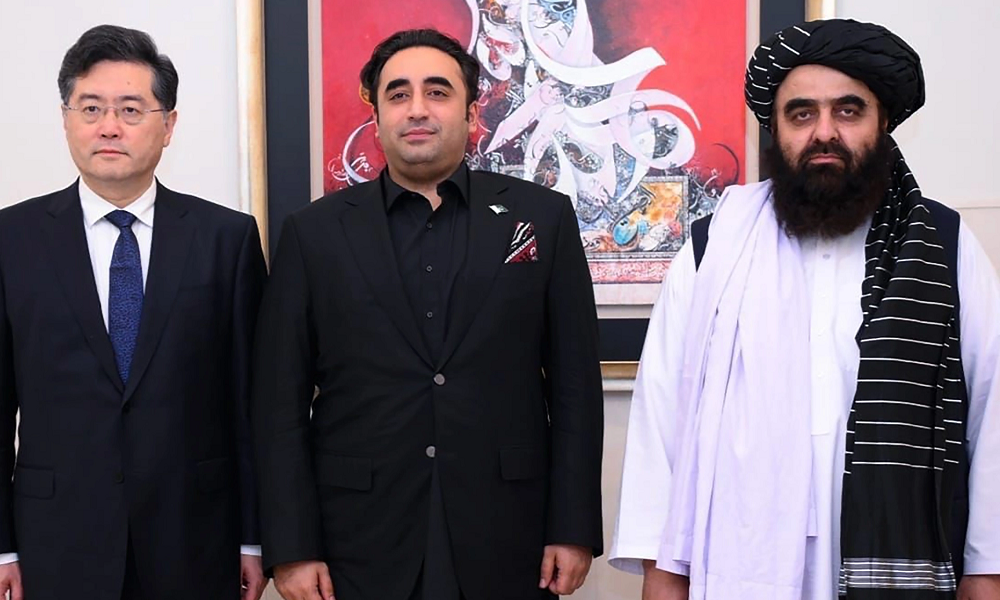
Afghanistan, China and Pakistan have collectively underscored the critical importance of trilateral cooperation in promoting the objective of a peaceful, stable and prosperous Afghanistan.
Following a trilateral meeting between Foreign Minister Bilawal Bhutto Zardari of Pakistan, State Councilor and Foreign Minister Qin Gang of China and the Acting Foreign Minister Mawlawi Amir Khan Muttaqi of Afghanistan, on Saturday, a joint statement was issued noting that the three sides resolved to further deepen and expand their cooperation in the security, development and political domains based on the principles of mutual respect, equal-footed consultation and mutual benefit.
They underscored the need to tackle security challenges posing a serious threat to regional and global security, and directly impacting the stability and economic prosperity of the entire region.
The foreign ministers also agreed to coordinate and cooperate on security, organized crimes, drugs smuggling etc. and called on the international community to strengthen bilateral and multilateral cooperation, and provide necessary supplies, equipment and technical assistance in this regard to the relevant countries.
The statement noted that they would not allow any individual, group or party, to use their territories to harm and threaten regional security and interests, or conduct terrorist actions and activities.
“All three sides underscored the need to refrain from intervening into internal affairs of Afghanistan, and to promote Afghan peace, stability and reconstruction,” the statement read.
They pledged to explore realistic pathways to revive Afghanistan’s economy including investment possibilities aimed at industrialization and job creation.
The foreign ministers highlighted the urgent humanitarian support needed in Afghanistan and stressed the need to “delink” the issue from politics.
The need for increased trade and connectivity was also noted, including the need to extend the China-Pakistan Economic Corridor to Afghanistan. They stressed the importance of existing projects including CASA-1000, TAPI, Trans-Afghan Railways, among others stating these would enhance regional connectivity as well as ensure economic uplift and prosperity for the people of this region.
Expressing satisfaction at the existing trilateral cooperation, the three sides agreed to carry out exchange and training programs and to strengthen people-to-people exchanges by conducting the trilateral programs in line with the List of China-Afghanistan-Pakistan Trilateral Practical Cooperation Projects, adopted by the foreign ministers in this dialogue.
The ministers “called upon the international community to engage constructively with the Afghan side. In this regard, they acknowledged the efforts made under the aegis of various mechanisms and formats, including in particular, the Neighbouring Countries of Afghanistan, to promote dialogue and constructive engagement with the Interim Afghan Government. The three sides also urged the international community to assist Afghanistan in countering narcotics effectively and develop alternative crops to enhance its capacity for independent and sustainable development.”
In addition, they urged the relevant countries to lift their unilateral sanctions against Afghanistan and return the assets overseas for the benefit of the Afghan people, and create opportunities for economic development and prosperity in Afghanistan.


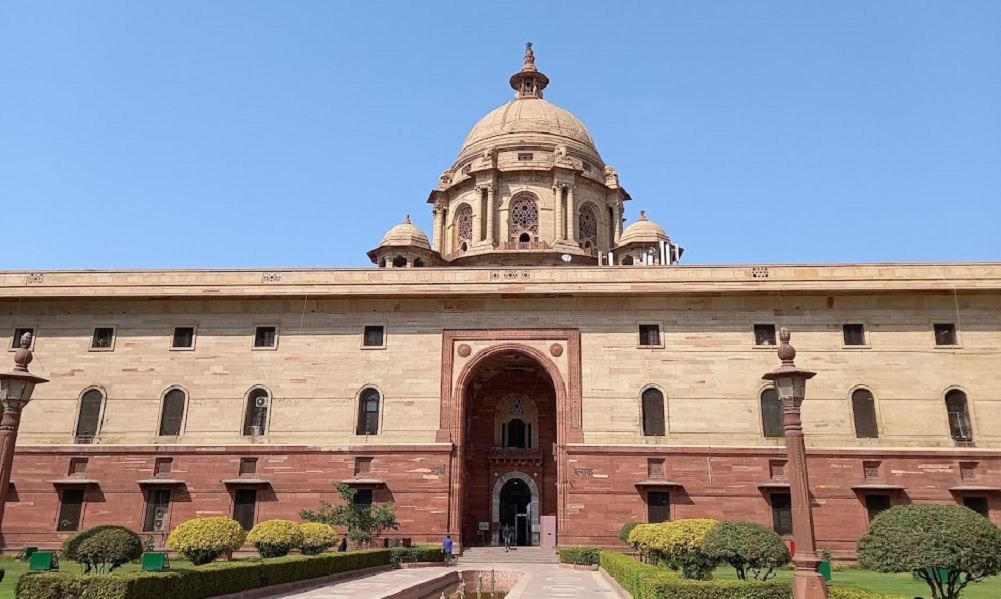
India has made it mandatory for Afghan Hindus and Sikhs who entered the country without valid travel documents to obtain visas to continue their stay.
The Indian Ministry of Home Affairs amended the Immigration and Foreigners (Exemption) Order, 2025, through a notification issued on Wednesday, The Hindu reported.
Under the amendment, Afghan Hindus and Sikhs who entered India on or before December 31, 2024, must obtain an appropriate category of visa to remain in the country.
The provision applies to those who entered India without valid travel documents or whose documents have since expired after seeking shelter due to religious persecution or fear of persecution.
The amendment retains an earlier exemption introduced on September 2, 2025, which allowed members of six non-Muslim communities from Afghanistan, Pakistan and Bangladesh to enter India without valid passports or visas. However, the latest notification requires them to obtain an appropriate visa after entering the country to continue their stay.
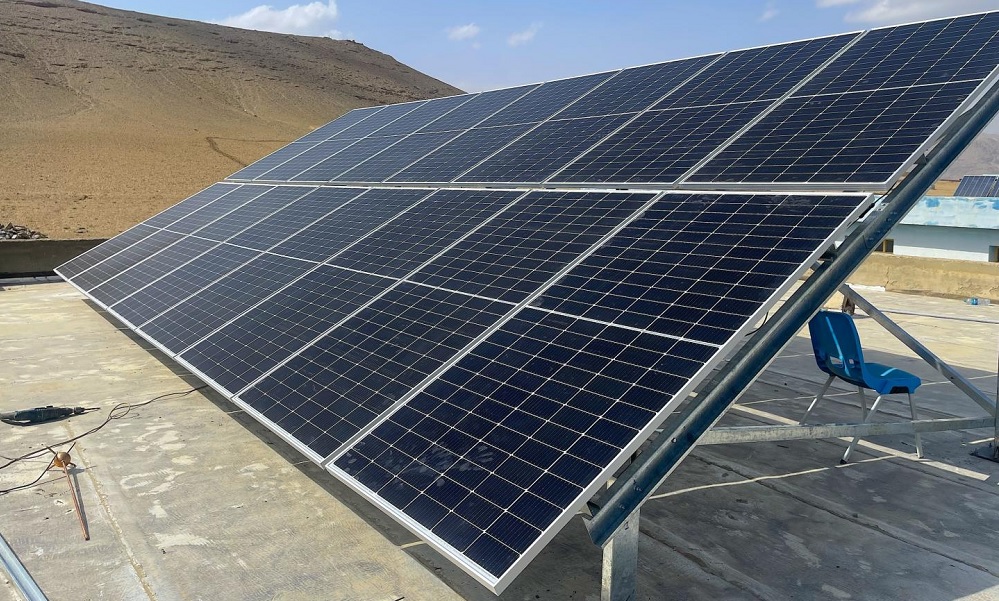
Afghanistan has the potential to generate up to 220 gigawatts of electricity from solar energy, yet it spends more than $280 million annually on electricity imports, the United Nations Development Programme (UNDP) says.
In a post on social media platform X on Thursday, UNDP said tapping into the country’s solar energy potential could reduce its reliance on imported electricity and expand public access to clean and sustainable energy.
According to the agency, more than 80 percent of Afghanistan’s electricity needs are currently met through imports, despite the country’s estimated solar power generation potential of up to 220 gigawatts.
Afghanistan imports most of its electricity from Tajikistan, Uzbekistan, Turkmenistan and Iran. Despite having considerable solar, wind and hydropower resources, the country has remained heavily dependent on foreign electricity supplies.
UNDP said that since 2021, its projects have helped more than 5.5 million people in Afghanistan gain access to clean energy.
The agency stressed the need for greater investment and cooperation among relevant institutions to harness Afghanistan’s solar energy potential and expand sustainable domestic electricity generation.
Latest News
More than half of Afghan primary school-age children out of school: UN report
The report, titled Afghanistan Education Situation 2026, warns that the country’s education system is struggling to meet growing demand amid population growth, recurring emergencies, insufficient investment and the large-scale return of Afghan migrants from Pakistan and Iran.
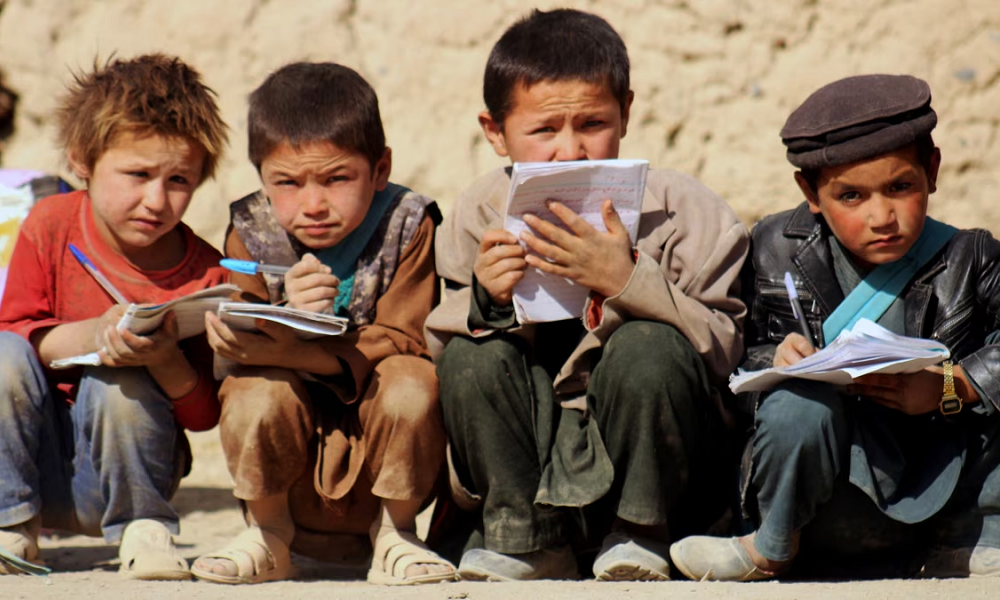
More than half of Afghanistan’s primary school-age children remain outside formal education, while more than 2.6 million girls are unable to continue their studies beyond the sixth grade, according to a new report by the United Nations Educational, Scientific and Cultural Organization (UNESCO) and UNICEF.
The report, titled Afghanistan Education Situation 2026, warns that the country’s education system is struggling to meet growing demand amid population growth, recurring emergencies, insufficient investment and the large-scale return of Afghan migrants from Pakistan and Iran.
According to the report, Afghanistan’s school-age population, comprising children and young people aged seven to 18, increased from approximately 10.4 million in 2019 to 11.5 million in 2024, putting additional pressure on schools, teachers and education services.
More than one million Afghans returned from neighbouring countries this year, including over 245,000 children, further increasing the demand for educational services.
The report highlights significant disparities in access to education, particularly for girls, noting that more than 2.6 million girls have been unable to attend school beyond grade six since August 2021.
It says alternative learning opportunities, including community-based classes, literacy programmes, distance education and private tutoring, remain insufficient to meet the educational needs of teenage girls.
Although around 5,300 community-based classes provide learning opportunities to approximately 162,000 students, with girls accounting for 64 percent of participants, the UN agencies stress that these programmes cannot replace formal, in-person education.
The report also points to declining school participation among boys, estimating that around 53 percent of primary school-age children are currently outside formal general education. Participation rates at lower and upper secondary levels stand at 67 percent and 79 percent, respectively.
Despite these challenges, Afghan families continue to seek educational opportunities for their children.
Around 6.6 million children enrolled in public primary schools last year, approximately 560,000 more than in 2022. However, the report says enrolment growth has not kept pace with the increasing school-age population.
It also raises concerns about the quality of education, noting that a nationwide assessment found fewer than half of fourth-grade students had achieved minimum proficiency in language skills.
Meanwhile, Afghanistan’s higher education sector remains significantly smaller than before 2021. Around 208,000 students are enrolled in universities this year, compared with 189,000 in 2024 and approximately 430,000 in 2020.
UNESCO and UNICEF have called for the full restoration of girls’ and women’s right to education and increased investment in teachers, learning materials and education services.
The agencies warn that without urgent action to address the challenges facing the sector, an entire generation of Afghans risks being left behind, with serious consequences for the country’s future recovery and development.

India makes visas mandatory for Afghan Hindus and Sikhs to continue their stay
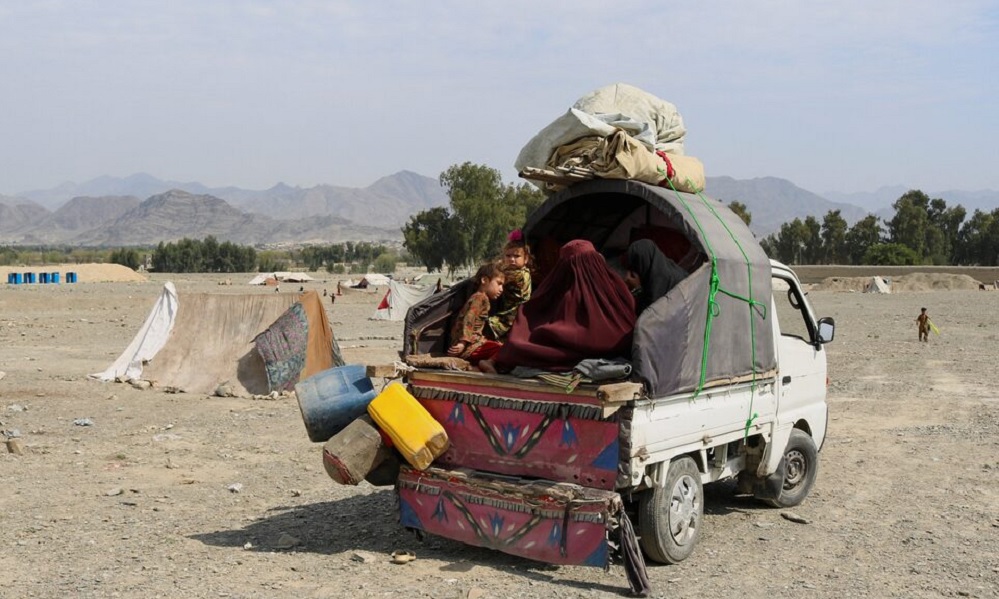
90 million displaced people at risk from climate threats, UN refugee agency says
Afghanistan has potential to generate 220 GW of solar power: UNDP
Tahawol: Calls for stronger joint action against terrorism discussed
Saar: Impact of closing trade routes between Kabul-Pakistan discussed

Afghanistan finish runners-up after 6-0 defeat to Brazil in futsal final

Trump says US will not attack Iran before midterm elections in November

Trump says US may strike Iran’s ‘Pickaxe Mountain’ nuclear facility

Afghan futsal coach: Brazil tournament is first step towards new goals and World Cup

WHO calls for greater mental health support in Afghanistan
Tahawol: Calls for stronger joint action against terrorism discussed
Saar: Impact of closing trade routes between Kabul-Pakistan discussed

El-Sayed’s historic victory opens a new chapter for Muslim Americans
Tahawol: Russia’s Moscow Format for Afghan issues discussed
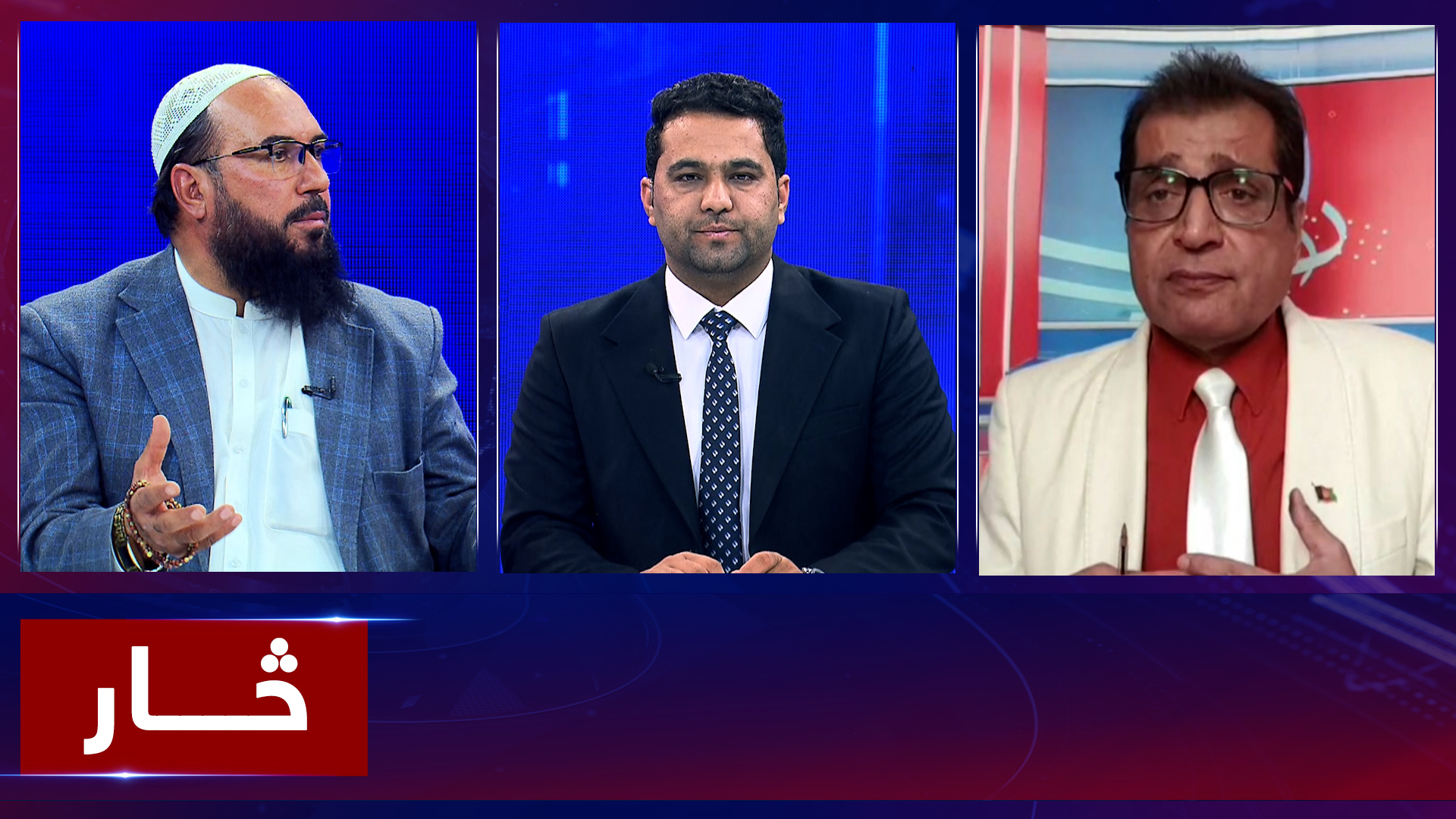
Saar: Afghanistan’s second invitation to Global Climate Summit discussed
-
 Sport4 days ago
Afghanistan futsal team thrash Panama 5-0 in flying start to Dakar Youth Olympics
-
 Sport4 days ago
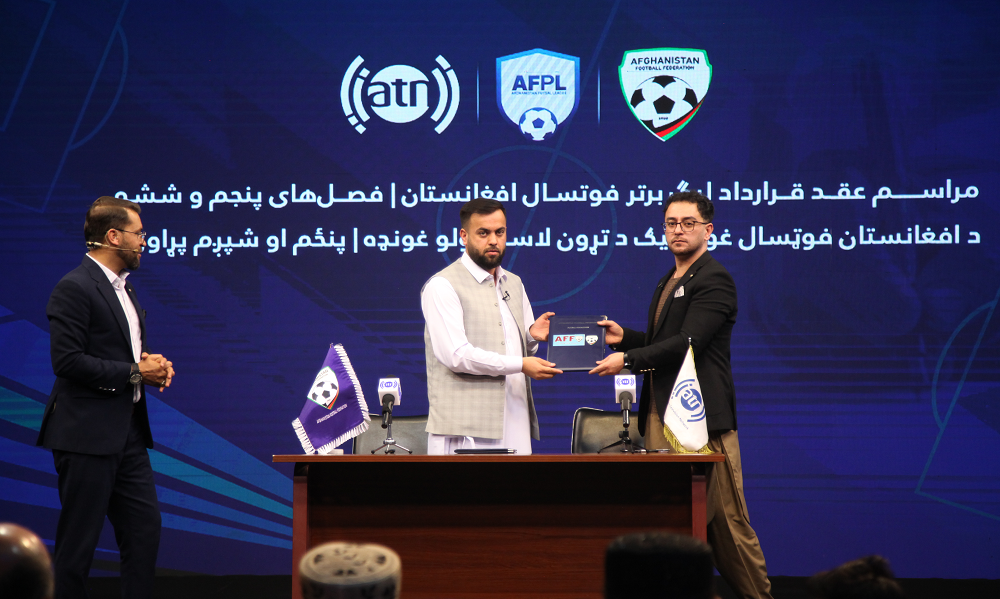
ATN signs deal to broadcast Afghanistan Futsal Premier League seasons 5 and 6
-
 Sport5 days ago
Afghanistan target T20I clean sweep against Zimbabwe in Sharjah
-
 World3 days ago
US carries out ‘defensive’ strikes on Iran’s Qeshm Island, officials say
-
 Sport4 days ago
Afghanistan achieve their highest ICC Men’s ODI team ranking
-
 Latest News4 days ago
Trump claims he could have won Afghanistan war in three weeks
-

 Latest News5 days ago
Pakistan welcomes US offer to facilitate dialogue with Afghanistan, while Kabul rejects Islamabad’s allegations
-

 Latest News5 days ago
US plans to deport Afghans back to their home country via Pakistan