
Latest News
Finance Minister Submits Draft Budget of 1396 to Lower House

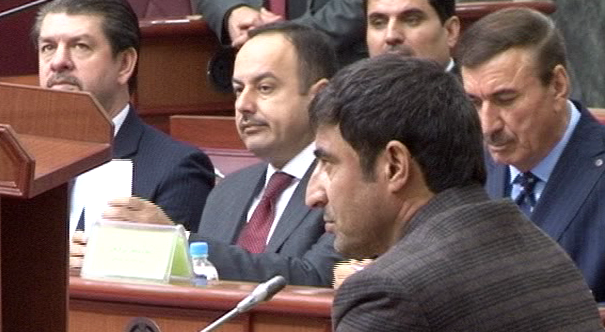
 The proposed draft budget for the solar year 1396, was presented today to the National Assembly by the finance minister for consideration and discussion.
Afghan finance minister, Eklil Hakemi says the draft budget for the next fiscal year is 466 billion AFN which 287 billion allocates to the ordinary budget and 178 billion to the development budget.
The most costs dedicated to security, infrastructure, and training and agriculture sectors.
-36 % for security
-21 % for infrastructure
-13 % for education
-6 % for agriculture
Finance minister noted that the rate of Afghanistan’s economic growth was 2,9 in the current year and the figure is predicted to be 3,5 and 4 for the next two years.
Eklil Hakemi has also said about the domestic revenue that 150 billion AFN is predicted for the upcoming year.
According to Hakemi, the draft budget for 1396 was prepared with the given balance, needs and priorities of development for the country.
“The next year’s budget prepared with regard to financial resources, including Afghanistan’s development programs, economic growth, consumption capacity of offices, within the framework of the Afghanistan National Development and Government’s commitment to the international community and the Afghan people,” said finance minister, Eklil Hakemi.
Finance minister further added that 177 new projects has considered for development budget of next year which is mostly in infrastructure, agriculture, education and health sectors.
However, a number of parliament members called some of the costs of this budget ‘imaginary’.
“The budget should not be imaginary and ministers must not be questioned,” said Khalilulah Shahid Zada, representative of Herat.
Abdul Qader Qalatwall, Member of Parliament has also said, “Justice has not been considered the draft should be rejected.”
Finance minister called the lack of spending development budget one of the serious problems.
He considered the lack of detailed office plans, weak capacity of administrative, weakness in the control of projects, lack of responsibility, corruption and interventions of powerful the main reasons for spending development budget.
Reported by Lida Neyazi

Latest News
Severe rainfall and natural disasters cause heavy casualties across Afghanistan
At least 61 people have been confirmed dead, with 116 others injured. Four individuals remain unaccounted for as search and rescue operations are underway.
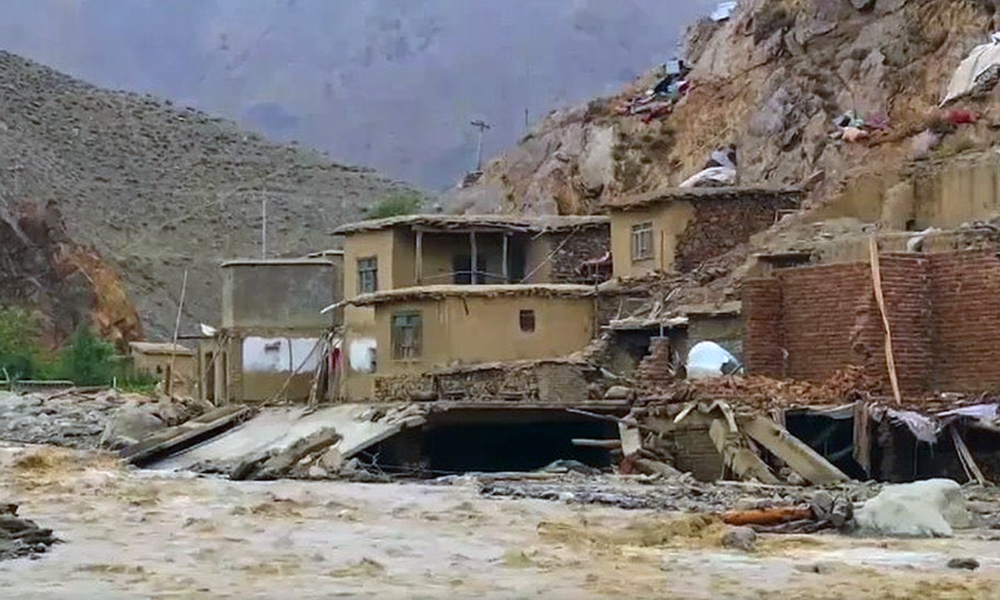
The Spokesperson for the Islamic Emirate of Afghanistan, Zabihullah Mujahid, has confirmed widespread devastation across the country following a series of natural disasters and heavy rainfall. The toll continues to rise as authorities assess the damage.
At least 61 people have been confirmed dead, with 116 others injured. Four individuals remain unaccounted for as search and rescue operations are underway. The disaster has also led to the destruction of 2,448 homes, leaving thousands displaced, while 26,841 acres of agricultural land have been severely damaged. In addition, the storm claimed the lives of 1,045 livestock animals, further exacerbating the already dire situation for rural communities.
In a statement, Mujahid emphasized the ongoing relief efforts. The Islamic Emirate is mobilizing all available resources to assist the hardest-hit regions and ensure the swift recovery of affected communities. The focus remains on providing immediate aid, including shelter, medical supplies, and food, while also beginning the long-term process of reconstruction and recovery.
Authorities have urged citizens in vulnerable areas to remain vigilant as more rain is forecast, adding to the urgency of the ongoing relief operations.
Latest News
Afghan citizens reported among casualties in US, Israeli attacks, Iran says
As of now, authorities of the Islamic Emirate of Afghanistan have not issued an official response to the claims.
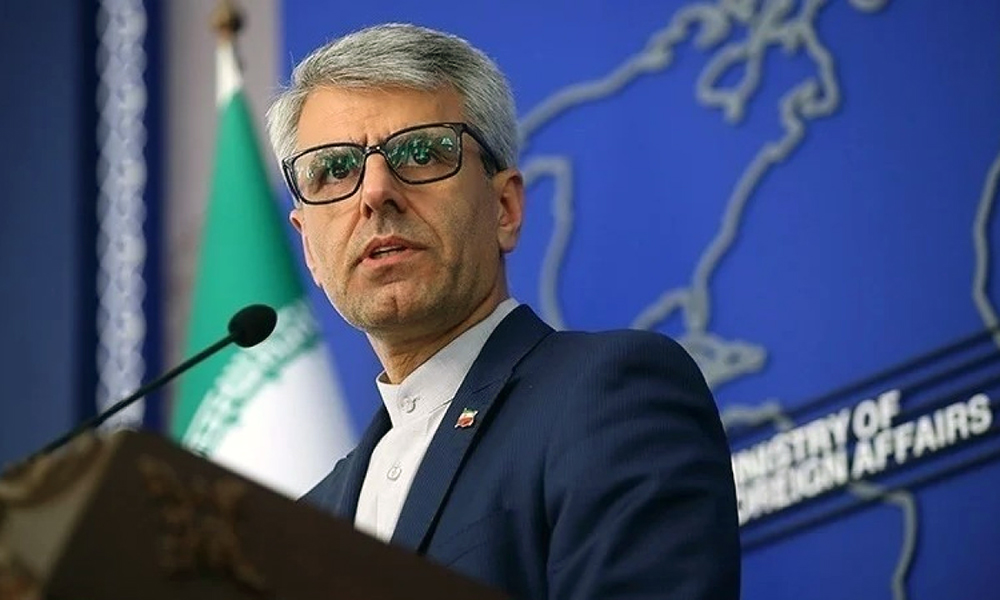
Iran’s Embassy in Kabul, citing Foreign Ministry spokesperson Esmaeil Baghaei, has stated that a number of Afghan citizens were killed or injured during what Tehran described as a 35-day military campaign carried out by the United States and Israel.
According to the statement, the Afghan nationals were living in Iran at the time of the attacks. Baghaei referred to them as “honored guests” of the country, adding that some lost their lives while others sustained injuries during the reported strikes.
He did not provide specific figures regarding the number of Afghan casualties or further details about the incidents.
As of now, authorities of the Islamic Emirate of Afghanistan have not issued an official response to the claims.
Latest News
Save the Children: Nearly one Afghan child killed or injured daily by explosive remnants
Despite the efforts of aid organizations and demining groups, the scale of the contamination remains overwhelming.
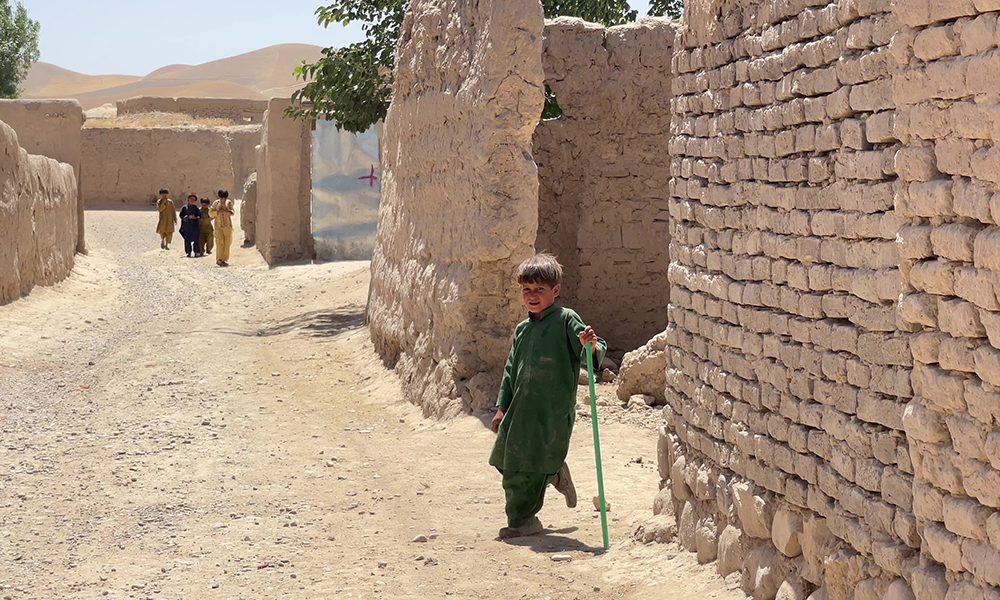
Save the Children has issued a stark warning, revealing that nearly one Afghan child is killed or injured every day by explosive remnants of war (ERW). In its latest report, the global humanitarian organization emphasized the ongoing and deadly impact of landmines and unexploded ordnance scattered across the country, a legacy of decades of conflict.
From January 2025 to January 2026, 338 Afghan children were killed, injured, or permanently disabled by explosive remnants. Shockingly, children represented nearly 70 percent of all casualties from such explosions during this period. Save the Children’s report underscores that Afghanistan continues to have the highest number of child casualties due to explosive remnants worldwide.
The report highlights that vast swathes of Afghanistan remain contaminated with hazardous materials, with more than 2.7 million people – including many children – living within one kilometer of these dangerous zones. These hazardous areas, often located in fields, pastures, and farmlands, remain uncleared despite ongoing demining efforts. Afghanistan is now considered one of the most contaminated countries globally, with nearly 5,000 hazardous sites still awaiting clearance.
The danger is particularly acute for rural and nomadic communities, including the Kuchi, who traverse long distances in search of water and grazing lands. These communities face severe challenges in accessing healthcare, education, and protection services, further compounding the risks posed by unexploded devices.
To address the growing threat, Save the Children has launched mobile awareness programs aimed at teaching children, particularly in remote and underserved regions, how to identify and avoid explosive hazards. These programs are crucial in helping to reduce the number of child casualties, as children are often unaware of the dangers in their environment.
Despite the efforts of aid organizations and demining groups, the scale of the contamination remains overwhelming. Funding shortages continue to hamper the progress of clearance operations, leaving families and children exposed to the deadly remnants of past conflicts.
“Explosive remnants of war are not just a legacy of Afghanistan’s past; they are an ongoing humanitarian emergency that continues to claim innocent lives,” said Save the Children. “The international community must step up its support to ensure the safety of Afghan children and accelerate efforts to clear these life-threatening hazards.”
As the country struggles to recover from years of conflict, the need for comprehensive and sustained demining operations, alongside better access to education and healthcare for at-risk communities, has never been more urgent.


Severe rainfall and natural disasters cause heavy casualties across Afghanistan

Kazakhstan eyes rare metals mining projects in Afghanistan and Rwanda

Afghan citizens reported among casualties in US, Israeli attacks, Iran says

Save the Children: Nearly one Afghan child killed or injured daily by explosive remnants

Eight dead after 5.8-magnitude earthquake hits Afghanistan

Prominent Muslim scholar issues fatwa calling for Afghanistan-Pakistan ceasefire

IEA Supreme Leader issues Eid-ul-Fitr message urging unity and support for Islamic system

14 Pakistani soldiers killed after military post falls along Durand line: MoD

Afghanistan steps in to replace Iran in supplying fruits and vegetables to Russia

Afghan airstrikes target Pakistani military sites in retaliation for air attacks

Tawsia: This week’s key economic developments in Afghanistan discussed

Tahawol: Start of talks between Kabul-Islamabad in China discussed

Saar: Ongoing US and Israeli attacks on Iran discussed

Tahawol: Ongoing US–Israeli war with Iran discussed

Saar: Afghanistan-Pakistan talks in China discussed
-
 Latest News5 days ago
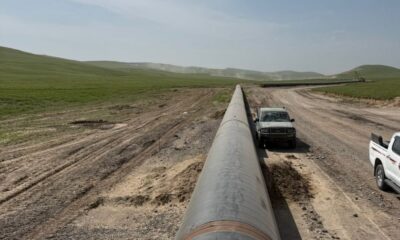
TAPI gas pipeline advances 25 km in Afghanistan
-

 Latest News3 days ago
Baradar approves 17 projects worth over one billion AFN
-

 Business4 days ago
Russia backs Uzbekistan–Afghanistan trade hub, praises regional economic cooperation
-

 Sport4 days ago
ATN secures broadcast rights for inaugural Afghanistan Wrestling Premier League
-

 Sport3 days ago
ATN to broadcast second season of Ariana Snooker Championship
-
 Regional4 days ago
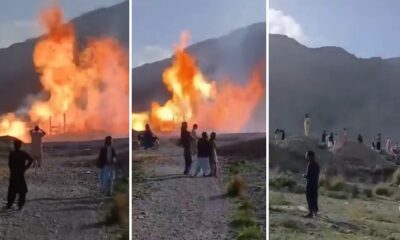
Gas pipeline blown up in southern Pakistan, says official
-

 Sport4 days ago
Rajasthan Royals outclass Chennai Super Kings as IPL action continues
-
 Latest News4 days ago
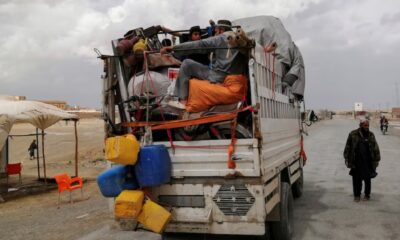
Islamic Relief Worldwide urges Afghanistan–Pakistan de-escalation, calls for aid to displaced