
Regional
Iran can’t enrich uranium, could only import it for civilian program, Rubio says
Iran has denied wanting to develop a nuclear weapon and says its nuclear program is peaceful. U.S. and Iranian officials will meet in Oman on Saturday for a third round of talks.

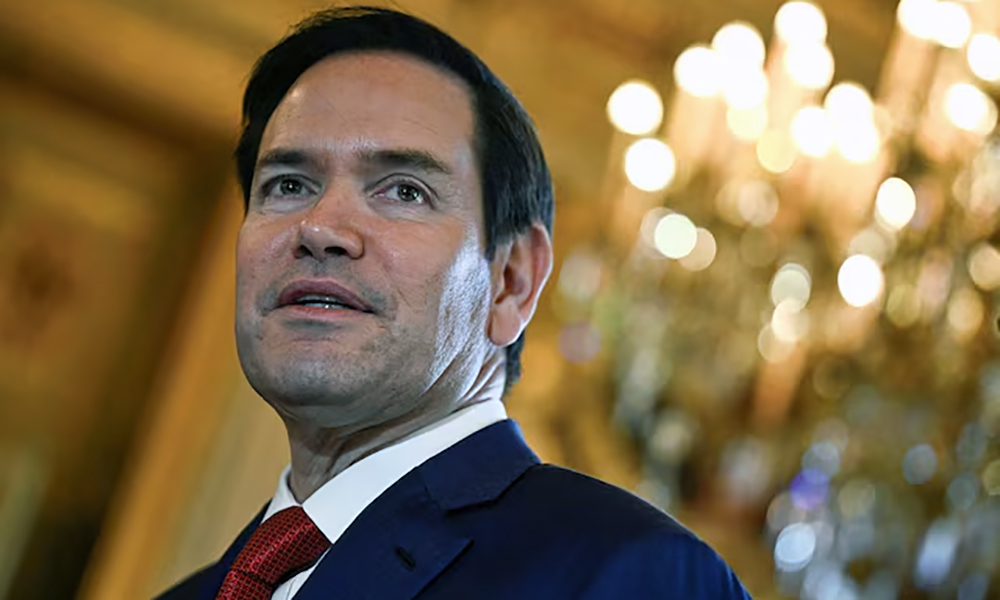
Iran will have to stop enriching uranium under any deal with the United States and could only import what is needed for a civilian nuclear program, U.S. Secretary of State Marco Rubio said ahead of talks between Tehran and Washington on Saturday, Reuters reported.
However, Iran has already made clear that its right to enrich uranium is not negotiable. When asked about Rubio’s comments, a senior Iranian official, close to Iran’s negotiating team, again said on Wednesday “zero enrichment is unacceptable.”
The U.S. is seeking to prevent Iran from developing a nuclear bomb and President Donald Trump has imposed a “maximum pressure” campaign of sanctions and threatened to use military force if Iran does not end its nuclear program.
Iran has denied wanting to develop a nuclear weapon and says its nuclear program is peaceful. U.S. and Iranian officials will meet in Oman on Saturday for a third round of talks on Tehran’s disputed nuclear program.
“There’s a pathway to a civil, peaceful nuclear program if they want one,” Rubio told the “Honestly with Bari Weiss” podcast on Tuesday.
“But if they insist on enriching, then they will be the only country in the world that doesn’t have a ‘weapons program,’ … but is enriching. And so I think that’s problematic,” he said.
U.S. Middle East envoy Steve Witkoff last week said Iran does not need to enrich past 3.67% – a remark that raised questions as to whether Washington still wanted Tehran to dismantle its enrichment program, read the report.
Witkoff then said a day later that Iran must “stop and eliminate its nuclear enrichment.”
Rubio said on Tuesday that Witkoff was initially talking about “the level of enriched material that they would be allowed to import from outside, like multiple countries around the world do for their peaceful civil nuclear programs.”
“If Iran wants a civil nuclear program, they can have one just like many other countries in the world have one, and that is they import enriched material,” he said.
The U.N. nuclear watchdog – the International Atomic Energy Agency – has said that Iran is “dramatically” accelerating enrichment of uranium to up to 60% purity, close to the roughly 90% weapons-grade level.
Western countries say there is no need to enrich uranium to such a high level for civilian uses and that no other country has done so without producing nuclear bombs.


Regional
Flames, smoke seen near Riyadh airport; Houthis claim attacks on Saudi capital
The Saudi-led military coalition fighting the Houthis said its air defences had destroyed a missile fired by the Yemeni group toward Riyadh early on Saturday.
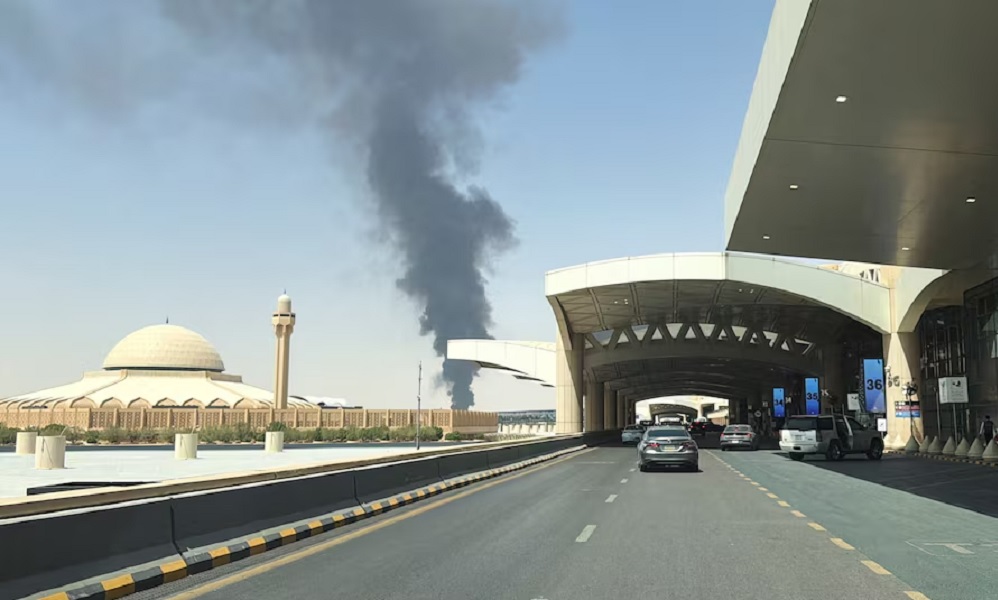
Yemen’s Houthis said they attacked “sensitive” sites in the Saudi capital Riyadh on Saturday with missiles and drones, hours after flames and a large plume of smoke were seen near the city’s main airport.
Saudi Arabia had sent alerts overnight warning of potential danger around Riyadh, amid an escalation in attacks by the Houthis in the kingdom, Reuters reported.
Reuters video and photographs showed a huge pillar of black smoke rising in the area, with the airport highway, main terminal building and other facilities in the foreground. At one point in the video, flames were visible rising from behind what appeared to be fuel tanks.
While the Iranian-backed Houthis have launched repeated attacks against Saudi Arabia since July, Saturday’s claim appeared to be their first reported strike on Riyadh since the current escalation began.
The Houthis did not specify what they had targeted in Riyadh, but said they had also attacked an Aramco facility in the Red Sea city of Yanbu, a key Saudi oil export hub.
They said the operation came as a response to an attack in the Yemeni capital Sanaa.
The Saudi-led military coalition fighting the Houthis said its air defences had destroyed a missile fired by the Yemeni group toward Riyadh early on Saturday.
In a statement, the coalition also said it had foiled attacks targeting civilians in the Saudi cities of Bish and Farasan in the southwest and Taif in the west, as well as Yanbu on the Red Sea coast. It did not say whether there was any damage.
Saudi civil defence sent the alerts by phone overnight for potential danger of aerial attacks in Riyadh and the city of Al-Kharj east of the capital, before issuing an all-clear on Saturday morning. A Reuters journalist in Riyadh’s Olaya area heard booms before the all-clear was sent.
Although some alerts had been issued in Riyadh this year after the start of the US-Iran war, these were the first since the escalation with the Houthis began in July.
The fighting between the Houthis and Saudi Arabia has developed as a new theatre of conflict in the wider war that began with US and Israeli strikes against Iran at the end of February. US President Donald Trump has rebuffed Saudi requests for direct US military intervention against the Houthis.
A US State Department security alert issued on Saturday for Americans in the Middle East cited Houthi attacks. The State Department urged US citizens in the region to “exercise heightened vigilance” and that Americans outside the Middle East “should seriously reconsider travel to and through the region.”
HOUTHI WARNING
The Houthis, who control the most populous parts of Yemen and much of the north, have been launching attacks against Saudi Arabia since declaring a naval blockade against Riyadh in July, with strikes targeting Saudi vessels in the Red Sea.
The attacks have targeted Saudi cities, energy infrastructure and shipping, creating new threats to global oil supplies and putting at risk the main alternative Red Sea route for Gulf exports while traffic through the Strait of Hormuz remains blockaded.
Turkish Foreign Minister Hakan Fidan said Saudi Arabia may have military needs due to the ongoing Houthi attacks and Turkey was ready to help under a trilateral defence pact that also includes Pakistan.
It was unclear what kind of support Turkey might provide but Fidan, in an interview with broadcaster NTV, said Saudi needs could include “some technical issues.”
The trilateral agreement signed last month stipulates that an armed attack on any of the three countries would be regarded as an attack on all of them.
Mohsen Rezaei, secretary of Iran’s Supreme National Security Council, told Al Jazeera in an interview aired on Saturday that Tehran wanted the war between Saudi Arabia and the Houthis to end, adding that he believed Yemenis also wanted a settlement with Saudi Arabia.
Rezaei also said Iran had conveyed its conditions to mediators for re-engaging in stalled negotiations with the United States, including “ending the war on all fronts”.
Consultations were continuing with Qatari and Pakistani mediators and Tehran was awaiting a response from Trump, Rezaei said.
The UN Security Council in a statement on Friday “condemned in the strongest terms continued Houthi attacks against the Kingdom of Saudi Arabia, including attacks impacting civilian and energy infrastructure, which have resulted in the injury of civilians, including women and children.”
In the statement, the Security Council also condemned “Houthi military escalation in Yemen”.
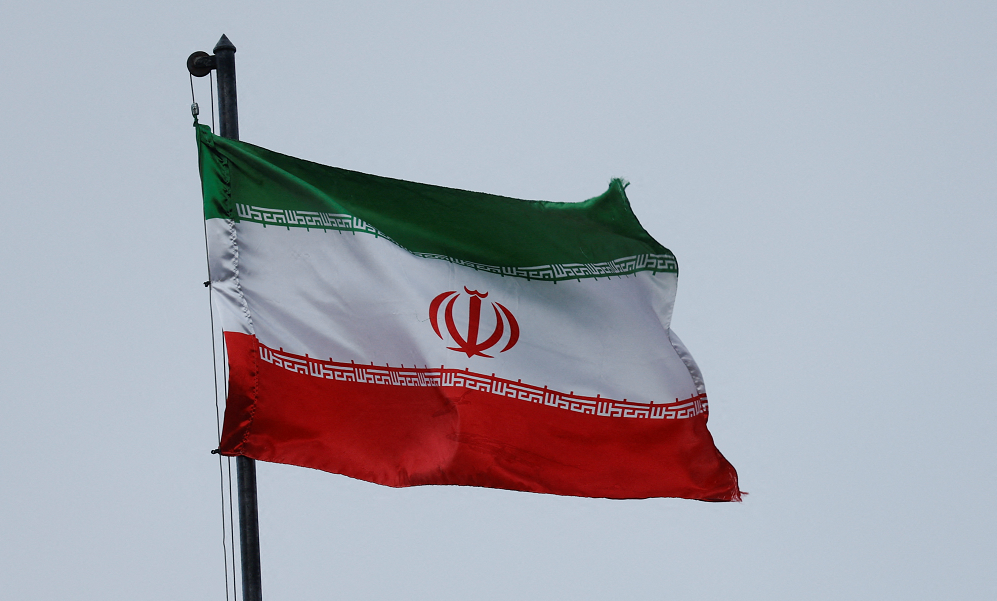
Iran executed a man convicted of passing missile site intelligence to Israel during the 12-day war, according to the judiciary.
Iran’s judiciary-run Mizan news agency said Hossein Pedaran was hanged after the Supreme Court upheld his death sentence on charges of espionage and intelligence cooperation with Israel, Reuters reported.
It said Pedaran had provided Israel’s Mossad intelligence service with information on sensitive military sites in the central province of Isfahan, and had carried out the espionage for financial gain.
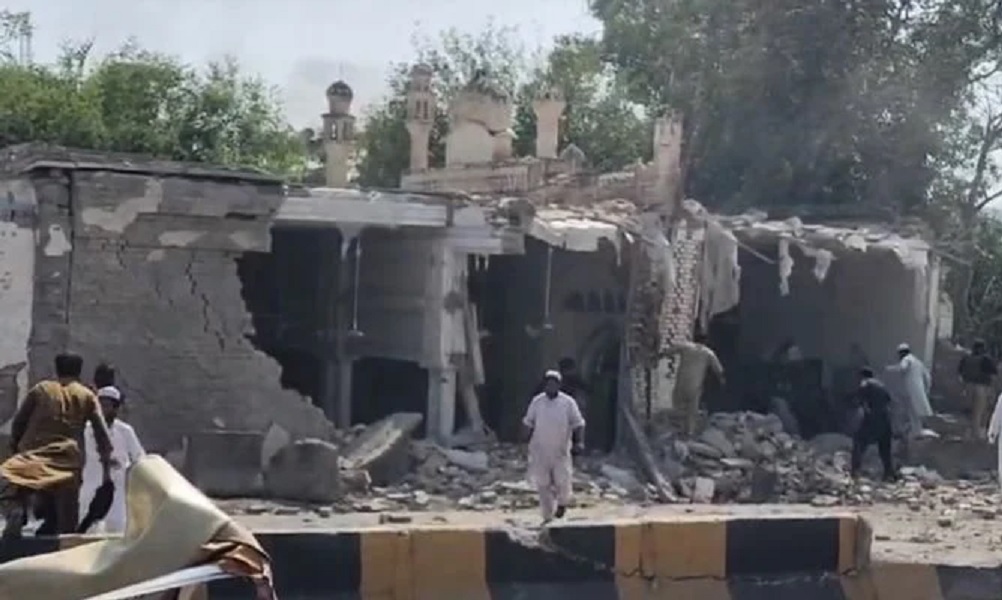
At least 15 people were killed and more than 50 others injured in a blast near a mosque in Kohat district of Khyber Pakhtunkhwa province on Friday, Pakistan’s Geo News reported.
Police said the blast occurred during Friday prayers and damaged the outer section of the mosque. Several police personnel were among those injured.
Khyber Pakhtunkhwa’s Inspector General of Police, Zulfiqar Hameed, said an explosives-laden vehicle struck the gate of the old Police Lines before exploding. He said the incident was followed by gunfire and another explosion at a Special Branch building.
Security forces and rescue teams were deployed at the scene, while emergency measures were declared at the district hospital to treat the injured.
There was no immediate claim of responsibility for the bombing.


Badakhshan official calls on traders to help prevent drug trafficking

World leaders return to UN amid wars in Middle East and Ukraine

Asian Games open in Japan as Afghanistan sends 34 athletes

Seven Afghan migrants killed in traffic accident in Iran’s Sistan and Baluchestan

OIC to hold Afghanistan Contact Group meeting on sidelines of UN General Assembly

Four mediators struggle to secure lasting Pakistan-Afghanistan ceasefire

Syria and Saudi Arabia condemn Kabul bombing, express solidarity with Afghanistan

Afghanistan’s trade diversification challenges Pakistan

Saudi energy group signs major Afghanistan deals covering gas exploration and pipeline plans

ATN secures exclusive rights to broadcast T20I series in India across Afghanistan

Tahawol: Kabul’s warning over any threat from Pakistan discussed

Debate on Afghanistan and New Investment Opportunities

Tahawol: Reasons behind Qatari, Turkish security officials’ Kabul visit discussed

Saar: Outcome of UN Security Council meeting on Afghanistan discussed

Tahawol: Afghanistan’s readiness for US relations discussed
-
 Latest News4 days ago
UN warns of mounting humanitarian and human rights pressures in Afghanistan
-

 Regional4 days ago
Saudi Arabia calls alleged Mecca attack a ‘red line’ as Houthis deny involvement
-
 Latest News4 days ago
Five Years On: IEA touts economic growth despite international isolation
-

 Sport4 days ago
India take 2-0 lead in 3-match series against Afghanistan
-

 Sport5 days ago
Nabi reaches 2,500 T20I runs
-

 Latest News3 days ago
Five years out of school: Amnesty raises alarm over Afghan girls’ education
-
 Latest News3 days ago
Russia urges dialogue and economic support for Afghanistan, warns against excessive pressure
-

 Sport4 days ago
ACL: Ariana Khost win, Aino Mina and Khurasan Faryab draw