
Latest News
Iranian envoy says Afghanistan and Iran face common opportunities and threats
He said Iran and Afghanistan should closely examine their common challenges and take practical steps to safeguard the interests of both countries and the wider Muslim community.

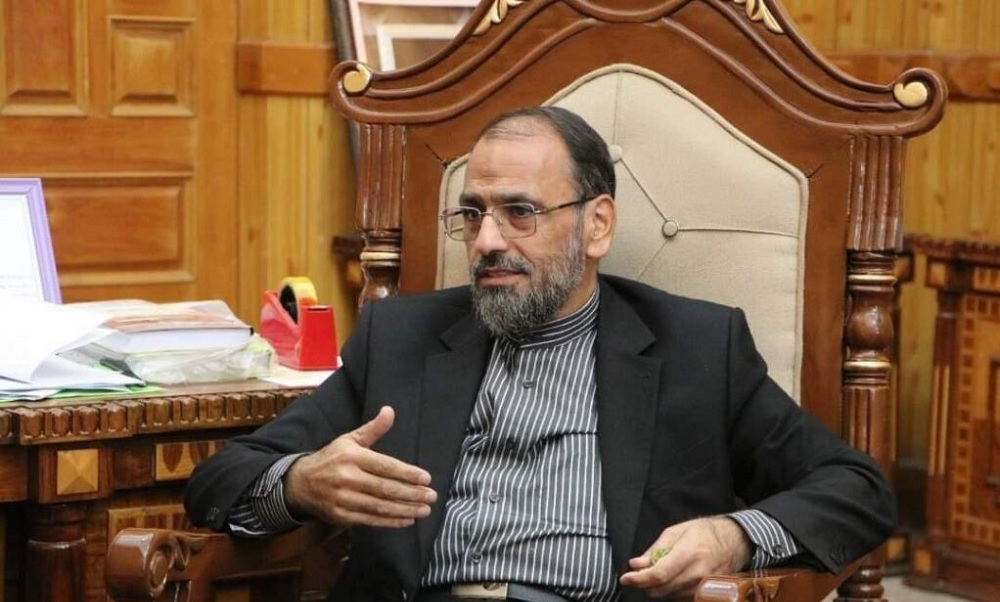
Seyed Hassan Mortazavi, Iran’s deputy ambassador in Kabul, says Iran and Afghanistan are facing common opportunities and threats amid current regional and global developments, making close cooperation between the two countries essential to address these issues.
Speaking to Radio Dari, Mortazavi said his recent visits to Kandahar and Balkh provinces and meetings with local officials were aimed at following up on shared issues more closely and strengthening relations between the two countries.
He said Iran and Afghanistan should closely examine their common challenges and take practical steps to safeguard the interests of both countries and the wider Muslim community.
Mortazavi described Kandahar as particularly important due to the presence of the Islamic Emirate’s leadership, saying Iran, like other regional countries, follows key issues not only in Kabul but also in Kandahar.
He added that during his several-hour meeting with Kandahar Governor Mullah Shirin, the two sides discussed bilateral and regional issues, including security, economic matters and border cooperation.
Mortazavi also said he met with Islamic Emirate spokesman Zabihullah Mujahid in Kandahar, where they discussed bilateral cooperation in the media sector.
Regarding his visit to Balkh and meeting with the province’s governor, Yusuf Wafa, Mortazavi said the talks covered not only issues of mutual interest in Mazar-e-Sharif but also broader matters concerning relations between Iran and Afghanistan.
He added that the two sides stressed ensuring mutual security, opposing destabilizing and security-threatening actions, and strengthening joint efforts to combat terrorism and security threats.
Economic issues and regional economic cooperation were also discussed during the meeting with the Balkh governor, he said.

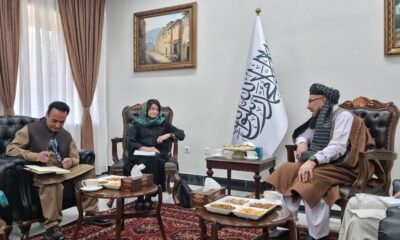




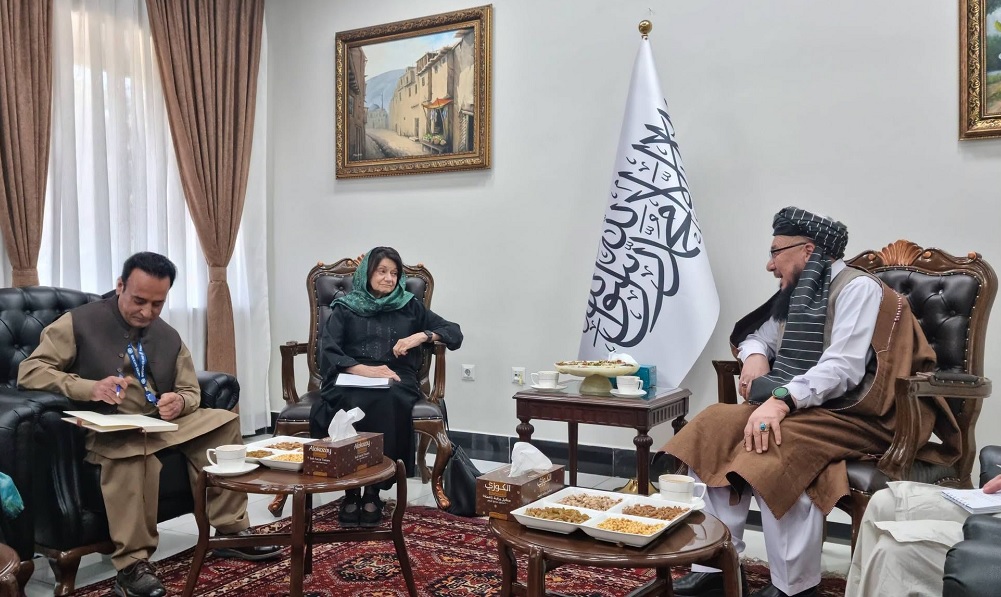
UN Deputy Secretary-General for Political and Peacebuilding Affairs Rosemary DiCarlo met with Afghanistan’s Deputy Minister of Urban Development and Housing Sheikh Madar Ali Karimi Bamiani during her visit to Kabul, with the two sides discussing a range of key issues concerning Afghanistan.
The meeting focused on governance, regional peace and stability, housing, the return of Afghan migrants, the Kuchi issue, and the closure of transit and transportation routes between Afghanistan and Pakistan, according to Bamiani’s office.
The two sides also exchanged views on other social challenges facing Afghanistan.
DiCarlo emphasized the United Nations’ continued support and cooperation with the people of Afghanistan, saying the UN will remain alongside the Afghan people and will not forget them.
Latest News
Muttaqi heads to Moscow for 8th Moscow format meeting
Takal added that the Moscow Format meeting is scheduled to begin on Monday, October 5, in Moscow.
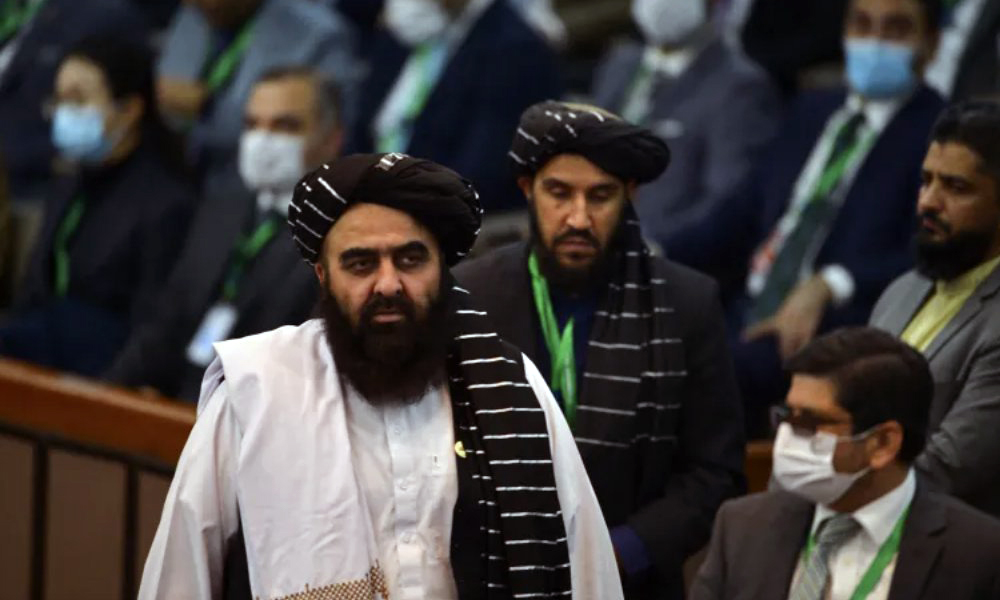
Afghanistan’s Foreign Minister Amir Khan Muttaqi has traveled to Moscow to participate in the eighth meeting of the Moscow Format on Afghanistan.
According to Afghanistan’s Ministry of Foreign Affairs, Muttaqi is expected to meet with Russian Foreign Minister Sergey Lavrov and other senior officials during his visit to discuss issues related to Afghanistan.
Hafiz Zia Ahmad Takal, head of the ministry’s public relations department, said discussions at the eighth consultative meeting will focus on Afghanistan’s current situation and the country’s relations with the region.
Takal added that the Moscow Format meeting is scheduled to begin on Monday, October 5, in Moscow.
Latest News
Mansour: Unjustified bloodshed is forbidden, whether Afghan or Pakistani
At the same time, Mansour stressed that the situation should not escalate into indiscriminate bloodshed.
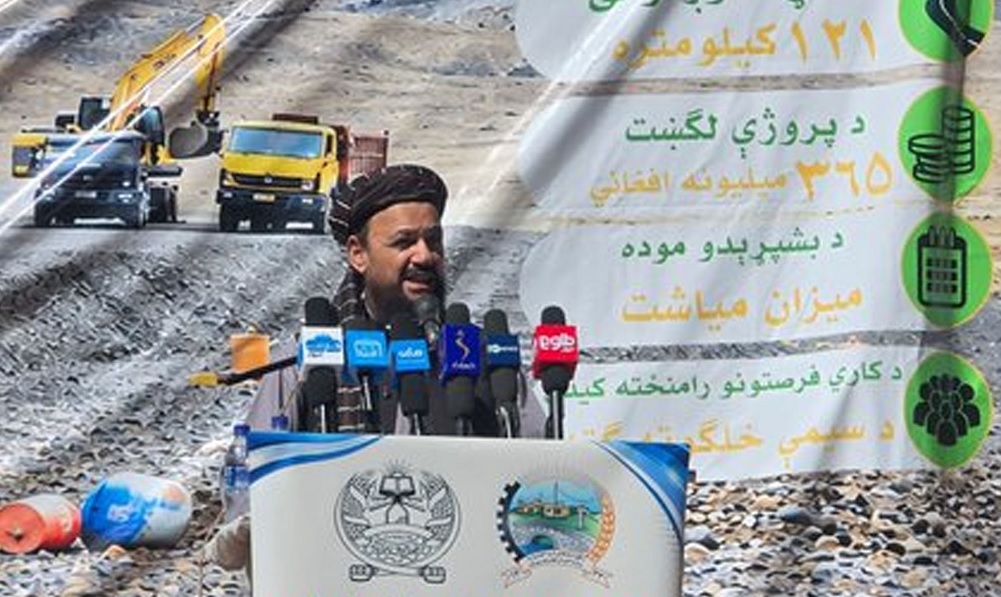
Abdul Latif Mansour, Afghanistan’s Minister of Rural Rehabilitation and Development, says the Islamic Emirate considers the unjustified shedding of Afghan and Pakistani blood forbidden, as both sides are Muslims.
Mansour made the remarks at the inauguration of the Wakhan road in Badakhshan on Sunday, while responding to Pakistan’s recent attacks on Afghanistan.
He said some people become emotional over Pakistani bombings, but stressed that Afghanistan needs to become self-reliant enough to defend its citizens.
“We must build this system to the point where we become self-reliant and can defend every Afghan in such a way that we can neutralize the person causing harm in his own country,” Mansour said.
He acknowledged that the current system has not yet achieved full self-reliance, but said efforts are underway to strengthen Afghanistan’s ability to defend its people.
At the same time, Mansour stressed that the situation should not escalate into indiscriminate bloodshed.
“We consider the unjustified shedding of our own people’s blood forbidden, and we also consider the shedding of Pakistani blood forbidden because they are Muslims,” he said.
Pakistani military officials have repeatedly accused Afghanistan of allowing militant attacks on Pakistan to be planned or carried out from Afghan territory.
The Islamic Emirate has rejected the allegations, saying Afghanistan is not responsible for Pakistan’s security problems.


Trump picks John Coale as special presidential envoy for hostage affairs

Iranian envoy says Afghanistan and Iran face common opportunities and threats

UN political affairs chief meets Afghan urban development deputy minister in Kabul

Afghanistan U19 to face Bangladesh, Oman in Youth ODIs

Yemeni government launches offensive to seize all areas from Iran-backed Houthis

Saudi energy group signs major Afghanistan deals covering gas exploration and pipeline plans

Khalilzad: Afghanistan ready to attract major investment

Messi returns to Inter Miami after Argentina retirement

Imam Abu Hanifa exhibition to draw exhibitors from more than 20 countries

Maryam Nawaz says Punjab faces greater security threats from neighbouring provinces

Tahawol: Doha process seeks new cooperation opportunities

Saar: Moscow forum 8th consultative meeting on Afghanistan

Tahawol: Escalation of internal political crisis in Pakistan discussed

Saar: Continuation of crisis in the Middle East discussed

Tawsia: Review of three key economic developments in Afghanistan
-
 Latest News4 days ago
Four members of one family killed in Helmand in Pakistan airstrike
-
 Sport3 days ago
ACB announces Afghanistan squads for Bangladesh, Zimbabwe series
-
 Latest News4 days ago
Moscow to host 8th meeting of Afghanistan consultations on October 5
-
 Latest News3 days ago
Russia expects to ease Afghanistan-Pakistan tensions at Moscow Format meeting
-

 Sport4 days ago
Rashid Khan, Azmatullah Omarzai maintain top spots in ICC ODI rankings
-
 International Sports3 days ago
Afghanistan to face Pakistan, India and Australia at 2027 Cricket World Cup
-
 Regional3 days ago
Saudi-led coalition says Houthis attacked power station for Prophet’s Mosque in Medina
-
 Latest News5 days ago
DHS review finds errors in 40% of Biden-era Afghan asylum files