
Regional
Israel approves plan to take control of Gaza City

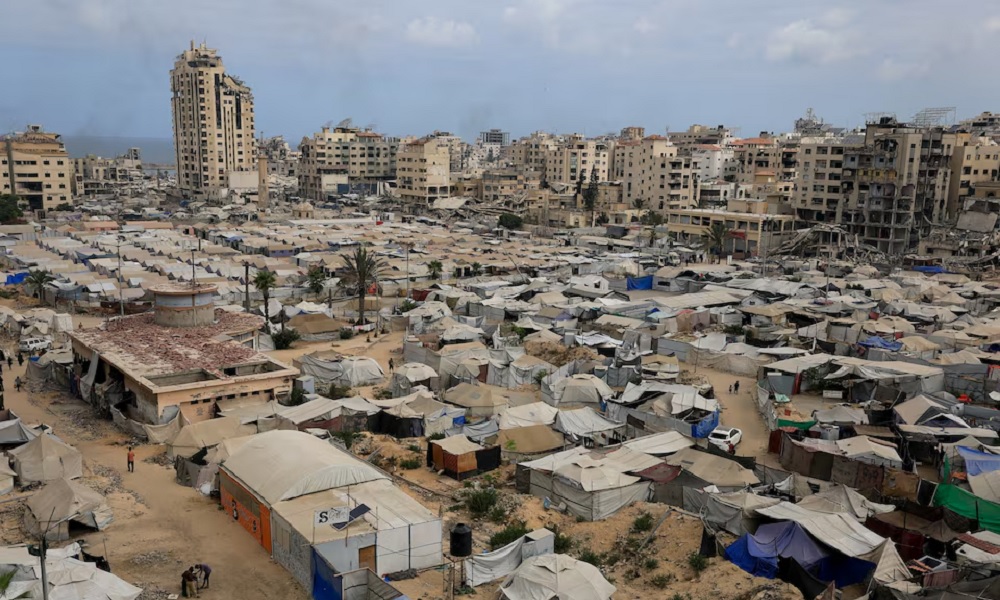
Israel’s political-security cabinet approved a plan to take control of Gaza City early on Friday, hours after Prime Minister Benjamin Netanyahu said Israel intended to take military control of the entire strip despite intensifying criticism at home and abroad over the devastating almost two-year-old war.
“The IDF will prepare to take control of Gaza City while providing humanitarian aid to the civilian population outside the combat zones,” Netanyahu’s office said in a statement, referring to the Israeli Defence Forces, Reuters reported.
Gaza City, in the north of the strip, is the largest city in the enclave.
Axios reporter Barak Ravid, citing an Israeli official, said on X the plan involved evacuating Palestinian civilians from Gaza City and launching a ground offensive there.
Netanyahu on Thursday told Fox News Channel’s Bill Hemmer in an interview “we intend to” when asked if Israel would take over the entire coastal territory.
“We don’t want to keep it. We want to have a security perimeter. We don’t want to govern it. We don’t want to be there as a governing body.”
He said Israel wanted to hand over the territory to Arab forces that would govern it. He did not elaborate on the governance arrangements or which Arab countries could be involved.
Netanyahu made the comments to Fox News ahead of a meeting with a small group of senior ministers to discuss plans for the military to take control of more territory in Gaza.
Israeli officials described a previous meeting this week with the head of the military as tense, saying military chief Eyal Zamir had pushed back on expanding Israel’s campaign.
In its Friday statement, Netanyahu’s office said the vast majority of the political-security cabinet members believed that “the alternative plan presented in the cabinet would not achieve the defeat of Hamas nor the return of the hostages.”
Two government sources said any resolution by the security cabinet would need to be approved by the full cabinet, which may not meet until Sunday.
Among the scenarios being considered ahead of the security meeting was a phased takeover of areas in Gaza not yet under military control, one of the sources said, speaking on condition of anonymity.
Evacuation warnings could be issued to Palestinians in specific areas of Gaza, potentially giving them several weeks before the military moves in, the person added.
Total control of the territory would reverse a 2005 decision by Israel by which it withdrew Israeli citizens and soldiers from Gaza, while retaining control over its borders, airspace and utilities.
Right-wing parties blame that withdrawal decision for the militant Palestinian group Hamas gaining power there in a 2006 election.
It was unclear whether Netanyahu was foreseeing a prolonged takeover or a short-term operation. Israel has repeatedly said it aims to dismantle Hamas and free Israeli hostages.
Hamas in a statement called Netanyahu’s comments “a blatant coup” against the negotiation process.
“Netanyahu’s plans to expand the aggression confirm beyond any doubt that he seeks to get rid of his captives and sacrifice them,” the statement said.
Arab countries would “only support what Palestinians agree and decide on,” a Jordanian official source told Reuters, adding that security in Gaza should be handled through “legitimate Palestinian institutions.”
Hamas official Osama Hamdan told Al Jazeera the group would treat any force formed to govern Gaza as an “occupying” force linked to Israel.
Earlier this year Israel and the United States rejected an Egyptian proposal, backed by Arab leaders, that envisaged the creation of an administrative committee of independent, professional Palestinian technocrats entrusted with the governance of Gaza after the war.
Opinion polls show most Israelis want the war to end in a deal that would see the release of the remaining hostages.
The White House had no immediate comment. President Donald Trump has declined to say whether he supported or opposed a potential full military takeover of Gaza by Israel.
Netanyahu’s government has insisted on total victory over Hamas, which ignited the war when it staged a deadly October 2023 attack on Israel from Gaza.
The U.N. has called reports about a possible expansion of Israel’s military operations in Gaza “deeply alarming” if true.
The idea, pushed especially by far-right ministers in Netanyahu’s coalition, of Israeli forces moving into areas they do not already hold in the enclave has also generated alarm in Israel.
PROTESTERS DEMAND END TO WAR
Outside the prime minister’s office in Jerusalem on Thursday evening, hundreds of demonstrators protested against an expanded war, demanding an immediate end to the military campaign in return for the release of all the hostages.
Protesters held signs bearing the faces of hostages still held in Gaza and voiced deep frustration with the government’s handling of the crisis.
“I’m here because I am sick and tired of this government. It’s ruined our life,” said 55-year-old Noa Starkman, a Jerusalem resident who was born in a southern Israeli community close to where Hamas attacked in October 2023.
The Hostages Families Forum, which represents captives held in Gaza, urged military Chief of Staff Eyal Zamir to oppose widening the war. Defence Minister Israel Katz said on Wednesday that the military would carry out the government’s decisions until all war objectives were achieved.
REMAINING HOSTAGES
There are 50 hostages still held in Gaza, of whom Israeli officials believe 20 are alive. Most of those freed so far emerged as a result of diplomatic negotiations. Talks toward a ceasefire that could have seen more hostages released collapsed in July.
A senior Palestinian official said Hamas had told Arab mediators an increase in humanitarian aid entering Gaza would lead to a resumption in ceasefire negotiations.
Israeli officials accuse Hamas of seizing aid to hand to its fighters and to sell to finance its operations, accusations the militant group denies.
Videos released last week of two living hostages showed them emaciated and frail, stirring international condemnation.
Recent images of starving children from Gaza have also shocked the world and fuelled international criticism of Israel over the sharply worsening conditions in the enclave.
Hamas, which has ruled Gaza for nearly two decades but now controls only fragmented parts, insists any deal must lead to a permanent end to the war. Israel says the group has no intention of going through with promises to give up power afterwards.
The Israeli military says it controls about 75% of Gaza. Most of Gaza’s population of about 2 million has been displaced multiple times over the past 22 months and aid groups are warning that the enclave’s residents are on the verge of famine.
“Where should we go? We have been displaced and humiliated enough,” said Aya Mohammad, 30, who, after repeated displacement, has returned with her family to their community in Gaza City.









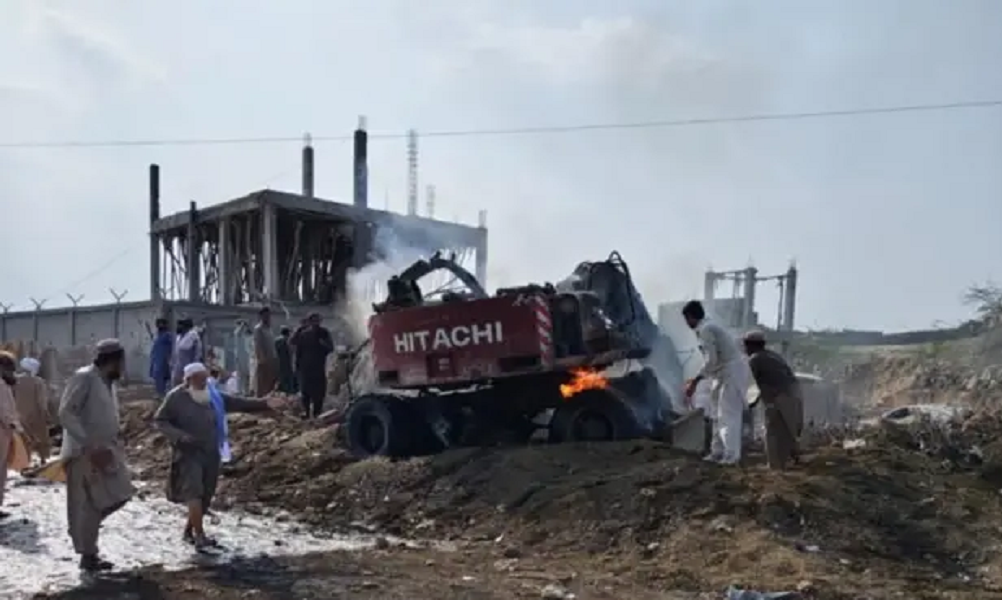
Eleven people were killed and 30 injured in a blast in Dera Ismail Khan in northwestern Pakistan on Saturday, emergency service Rescue 1122 said.
The Tehreek-e-Taliban Pakistan claimed responsibility for Saturday’s attack.
The blast occurred near Aman Mela in the Darazinda area of the district, Rescue 1122 said in a statement.
Rescue teams from the Darazinda station reached the scene and began relief operations, providing medical assistance to the wounded and taking them to hospital, the service said.
Security incidents have continued in the district this month, including attacks involving the Pakistani Taliban.
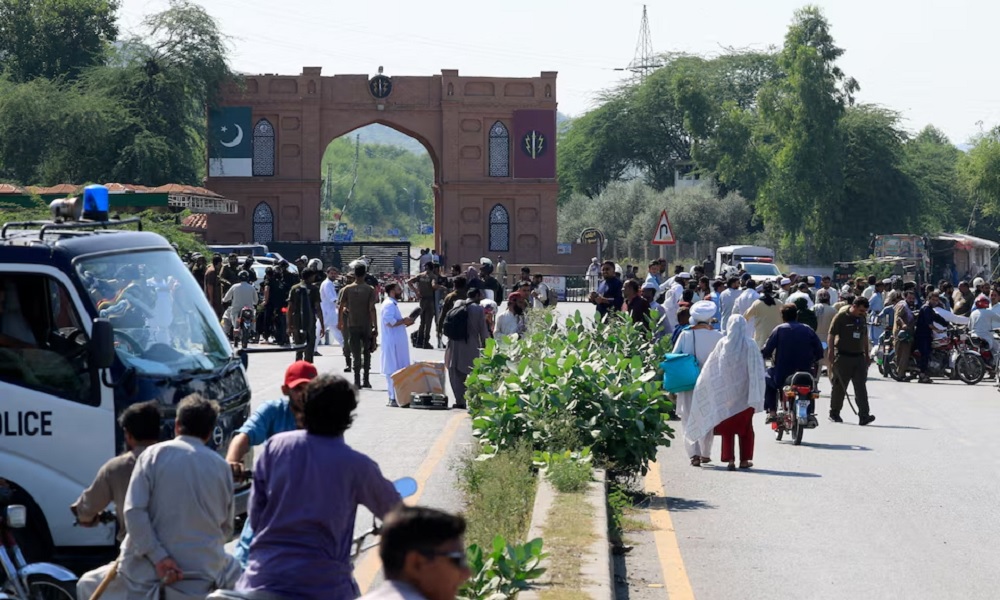
Jailed former prime minister Imran Khan’s Pakistan Tehreek-e-Insaf party has postponed a planned long march from Peshawar to Islamabad until October 4, the chief minister of the PTI-ruled Khyber Pakhtunkhwa province, Sohail Afridi, told reporters on Friday.
PTI had planned to begin the march on September 27 to press for the release of Khan, who has been in jail since 2023. The PTI’s last large-scale protest two years ago ended in deadly clashes with security forces, Reuters reported.
Earlier this week, Pakistan curbed access to its capital, Islamabad, by blocking major highways with shipping containers and deploying tens of thousands of security forces, ahead of the march planned by Khan’s supporters.
Party spokesperson Zulfi Bukhari, however, told Reuters that although they had moved the planned date to October 4, they could launch the march earlier.
“We can now do it whenever we deem fit. The question is to the government, as to how long they’re willing to keep the country closed off?”, Bukhari said.
Authorities have detained three of Khan’s sisters and hundreds of party activists in recent days, citing a need to maintain public order.
Khan, 73, a former cricket star ousted by parliament in a 2022 no-confidence vote, has claimed to be a political prisoner.
Regional
Saudi Grand Mufti tells troops to be ready to sacrifice their lives fighting Houthis
State TV has in recent weeks aired footage of an alleged Houthi strike on a mosque in the kingdom’s south, and authorities have also accused the Houthis of launching an attack on Mecca, Islam’s holiest site.
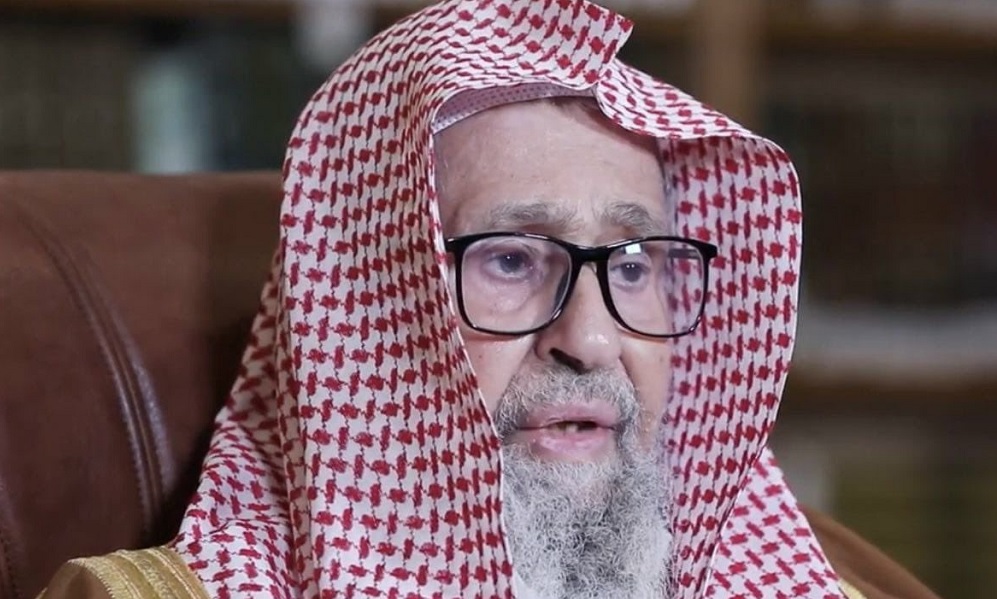
Saudi Arabia’s top religious authority called on soldiers in the kingdom to be ready to lay down their lives to fight the Iran-backed Houthis until the group is ousted from power, a statement posted on the Saudi state news agency said.
The rare and strongly worded message by Saudi Grand Mufti Sheikh Saleh bin Fawzan Al-Fawzan was addressed to soldiers stationed at the country’s borders and drew heavily on Quranic verses and recorded sayings of the Prophet Mohammad related to sacrifice and struggle in defence of God, Reuters reported.
It comes after weeks of escalating violence between Saudi Arabia and the Houthis which has seen the Iran-backed group attack the kingdom with salvos of missiles and drones and Saudi Arabia respond with airstrikes.
Observers have been questioning whether Saudi Arabia will launch a broader military operation along with Yemeni government forces it backs.
“Protecting this great nation… and punishing anyone who seeks to lay a hand on even an inch of its territory are among the greatest duties and most virtuous acts of devotion, for which lives and souls may be sacrificed in seeking God’s pleasure,” said the statement, issued late Thursday.
Asserting the authority of the Saudi-backed internationally recognized Yemeni government over the entire country was “among the most pressing obligations,” it added.
Those government forces lost control of the vital Bab el-Mandeb waterway to the Houthis two weeks back, a blow to the kingdom, which has been mired in the conflict since 2015 after it launched an unsuccessful operation to oust the Houthis from the Yemeni capital Sanaa.
The recent fighting is the latest episode in 12 years of civil war in Yemen which had largely been frozen since a 2022 but has escalated again and has become linked to the wider Iran war.
“We ask God Almighty to grant you all his support, and to protect our countries and beloved Yemen from all harm. We also ask him to bring about the complete defeat of the Houthi group and those who assist and support them,” the statement said.
The Mufti’s letter adds to a growing religiously centered narrative by authorities in the conservative Sunni Muslim kingdom aimed at discrediting the Houthis, who follow a different sect of Islam.
State TV has in recent weeks aired footage of an alleged Houthi strike on a mosque in the kingdom’s south, and authorities have also accused the Houthis of launching an attack on Mecca, Islam’s holiest site.
“It is incumbent upon you, brothers serving on the front lines, to remain constantly prepared to perform your duty, to obey the rulers and your field commanders, and to carry out orders with the utmost precision, as God Almighty commanded the companions of his Prophet to do,” the statement said.
“You are following in the footsteps of the Prophet’s companions, defending the sacred sites of Muslims.”


Abu Muslim Farah defeat Khurasan Faryab 2-0 in ACL season six

Saar: Concerns over Pakistan’s political crisis discussed

Afghanistan Champions League: Omar Zawak Herat beat Toofan Herat 1-0

Blast in Pakistan’s Dera Ismail Khan kills 11, injures 30

Ariana Afghan Airlines increases Kabul-Delhi cargo flights

Saudi energy group signs major Afghanistan deals covering gas exploration and pipeline plans

Trump floats idea of renaming Atlantic or Pacific Ocean

US hits Egyptian bank branches with Iran sanctions as war marks six months

Nepal flood rescue mission enters critical phase as thousands remain missing

Iranian clubs to face Gulf opponents at neutral venues in Asian Champions League Elite
Saar: Concerns over Pakistan’s political crisis discussed

Exclusive interview with Abdul Latif Mansoor, Minister of MRRD

Tawsia: Overview of Afghanistan’s iron mines

Tahawol: Discussion on fresh Pakistani airstrikes on Afghanistan

Saar: Calls for international support for Afghanistan discussed
-

 World5 days ago
CNN, MS NOW and Politico sue Trump, challenging White House ban
-

 Latest News3 days ago
Ariana Afghan Airlines ranks seventh among 45 Central Asian airlines
-

 Latest News4 days ago
UN reiterates call for respect for international law after Kunar airstrikes
-

 Regional3 days ago
US and Iran hold first talks since June after Trump’s ‘annihilation’ threat
-

 Latest News3 days ago
Silk Road highway in Wakhan corridor now reaches the China border
-

 Latest News4 days ago
Afghan Official: Pakistan’s airstrikes will not go unanswered
-

 Sport4 days ago
Afghan boxing referee heads to China for international festival
-

 Regional5 days ago
G7 foreign ministers call on Iran to stop arming Houthis