
Latest News
Khalilzad calls on Afghan leaders to start talks with Pakistan on peace issue

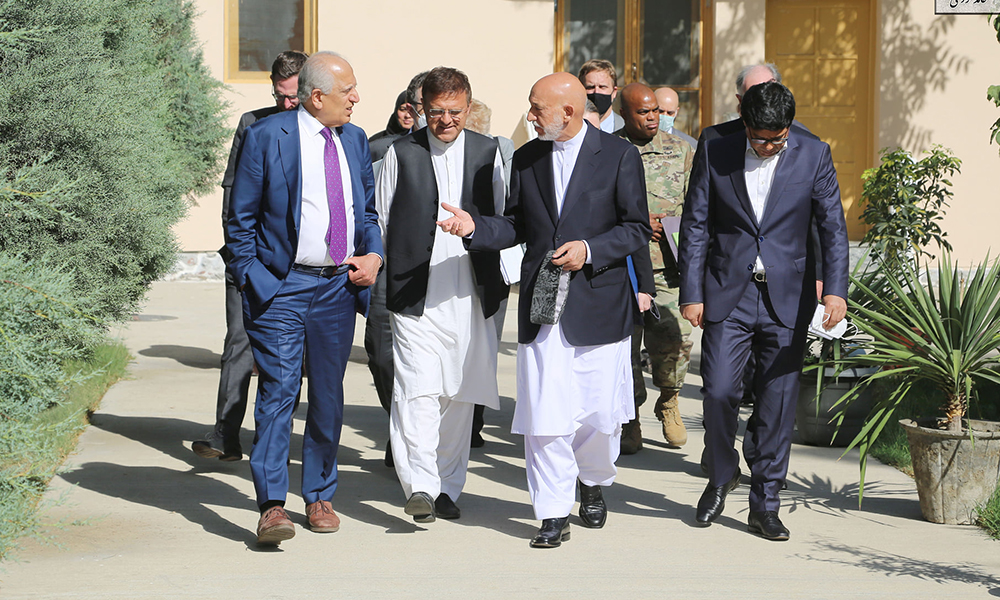
Zalmay Khalilzad, US Special Representative for Afghanistan Reconciliation, has urged Afghan leaders and politicians to start “serious negotiations” with Pakistan in order to resolve the Afghan peace issue, sources said.
A number of Afghan politicians, who have recently met with Khalilzad, stated that Khalilzad has urged Afghanistan to send a high-ranking delegation to negotiate with Pakistan.
Pakistan has played a key role in the Afghan peace process since the beginning of US efforts to find a political settlement for long-term conflict in Afghanistan.
The country has repeatedly been accused of supporting terrorist groups and the Taliban inside Afghanistan. The country, however, denies the claims, stating peace and stability in Afghanistan are beneficial to Pakistan and that the country itself has been a victim of terrorism.
Shah Mahmood Qureshi, Pakistan’s Foreign Minister, last month stated: “Pakistan has paid a huge price because of the unstable environment in Afghanistan; we have paid a huge human price and we’ve paid a huge economic price that is why we feel a stable peaceful Afghanistan is in Pakistan’s national interest.”
Khalilzad’s appeal to Afghans comes during his visit to the region, which includes Kabul, Qatar and other regional states, and appears to be aimed at pushing all stakeholders to restart serious peace talks.
“It is too late for the US to show decisiveness to force the Taliban to come to the negotiating table. Khalilzad said he will go to Doha and will force the Taliban to hold serious negotiations,” said Abdul Basir Salangi, an Advisor for the High Council for National Reconciliation.
In a meeting with former president Hamid Karzai, the US delegation led by Khalilzad, called for serious negotiations to address issues with Pakistan and suggested they send a high-ranking delegation to Islamabad, sources said.
“Khalilzad has emphasized [the need for] political consensus, convening of a Loya Jirga and resolving issues with Pakistan,” Jafar Mahdawi, head of Hizb-e-Millat-e-Afghanistan said.





Latest News
UN reiterates call for respect for international law after Kunar airstrikes
The victims included a man, a woman and a girl, according to UNAMA.

The United Nations has reiterated its call on all parties to respect international humanitarian law after at least three civilians were killed and four others injured in apparent airstrikes in Afghanistan’s eastern Kunar province.
UN spokesperson Stéphane Dujarric said at the UN Daily Press Briefing on Monday that the UN Assistance Mission in Afghanistan (UNAMA) had confirmed the civilian casualties following the reported strikes early Monday.
The victims included a man, a woman and a girl, according to UNAMA.
“We reiterate our call for respect for international humanitarian law to prevent civilian casualties,” Dujarric said, adding that the United Nations continues to monitor the situation closely.
Dujarric also said the UN Office for the Coordination of Humanitarian Affairs (OCHA) had received reports of airstrikes in Barmal district of Paktika province, where residential structures were reportedly damaged. No serious civilian casualties had been reported there, he added.
The UN said UNAMA has documented more than 1,100 civilian deaths and injuries in Afghanistan so far this year linked to cross-border armed violence.
The comments followed Pakistan’s announcement that it had carried out what it described as “calibrated” strikes against militant targets along the border with Afghanistan. Pakistan said 28 militants were killed and claimed the targets included militant hideouts and a training facility.
Afghan authorities have condemned the strikes. Afghanistan’s Foreign Ministry summoned Pakistan’s chargé d’affaires in Kabul and lodged a formal protest, while Afghan officials have rejected Pakistan’s allegations that attacks inside Pakistan are being carried out from Afghan territory.
The latest escalation has renewed concerns over the impact of cross-frontier hostilities on civilians in Afghanistan’s border provinces, with the UN again stressing the need for all parties to uphold their obligations under international humanitarian law and take measures to protect civilians.
Latest News
22 Russian tourists arrive in Badakhshan’s Wakhan
The visitors are expected to explore several of Badakhshan’s natural landscapes and tourism sites during their stay.
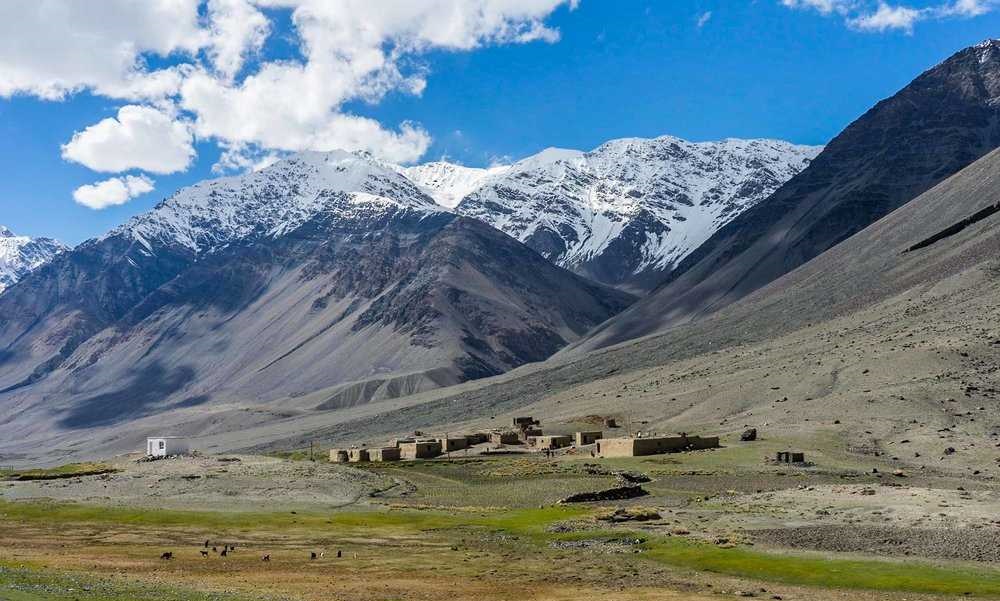
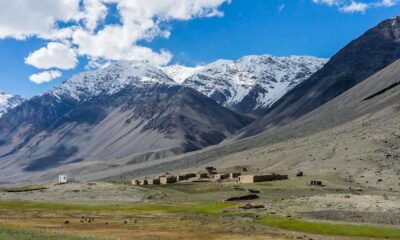
A group of 22 Russian tourists has arrived in Afghanistan’s northeastern Badakhshan province to explore the scenic Wakhan District and other major tourist attractions in the region.
According to Zohurullah Fakhri, an official with the state-run Afghan Tour company in Badakhshan, the group entered the province through Panjshir and Kiran wa Manjan district before travelling toward Wakhan.
The visitors are expected to explore several of Badakhshan’s natural landscapes and tourism sites during their stay.
The arrival comes as the Islamic Emirate seeks to expand Afghanistan’s tourism sector and attract more international visitors. The Ministry of Information and Culture has said it is working to improve tourism facilities and services, standardise the sector and promote Afghanistan’s natural, historical and cultural attractions.
Officials have also reported a rise in foreign visitors to Badakhshan. State-owned Afghan Tour said it facilitated visits by over 150 foreign tourists to the province during the second quarter of 2026, with visitors travelling to historical, archaeological and natural attractions.
Wakhan Corridor
The Wakhan Corridor is a narrow, remote strip of northeastern Afghanistan that extends eastward through Badakhshan to Afghanistan’s border with China. It lies between Tajikistan to the north and Pakistan to the south and forms part of the historic routes linking Central and South Asia.
The region is characterised by rugged mountains, high-altitude valleys, glaciers, rivers and wide open landscapes. The Hindu Kush and Pamir mountain systems meet in the area, which is also known for its distinctive wildlife, including Marco Polo sheep, ibex and snow leopards.
Wakhan has historically been one of Afghanistan’s most isolated regions because of its difficult terrain and limited road access. In May, Afghanistan’s Ministry of Rural Rehabilitation and Development said basic construction work on the Wakhan road had been completed, providing a direct land connection between Afghanistan and China, although further work remained under way.
The combination of its dramatic mountain scenery, wildlife and location along an ancient Central Asian route has made Wakhan one of Afghanistan’s emerging destinations for adventure and nature tourism.
Latest News
Afghan Official: Pakistan’s airstrikes will not go unanswered
Speaking at a meeting on Tuesday, Farahi said the strikes had killed and wounded civilians, including women and children.
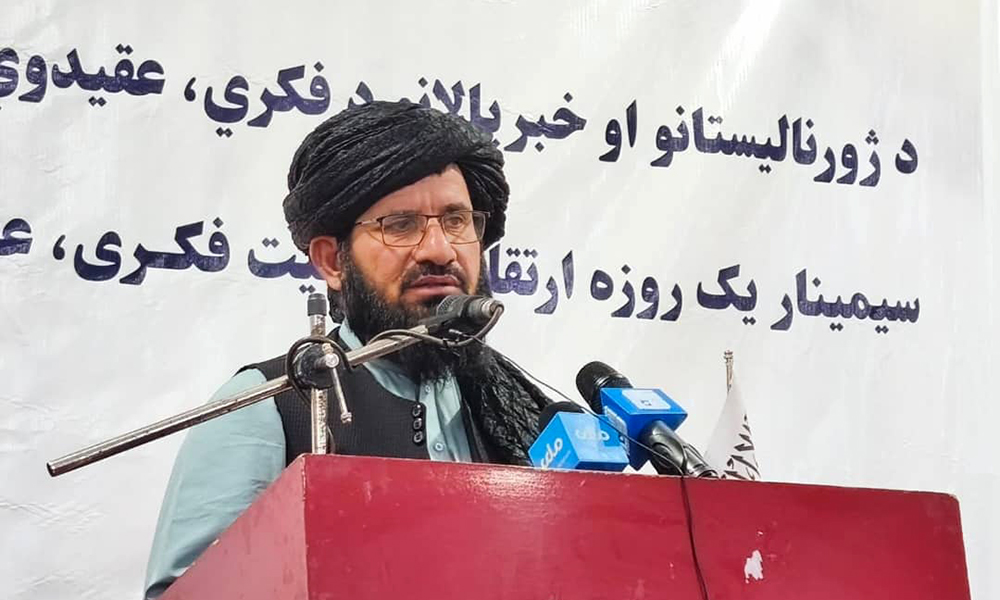
Hayatullah Muhajir Farahi, Deputy Minister for Publications at Afghanistan’s Ministry of Information and Culture, has condemned Pakistan’s latest airstrikes on Afghanistan, warning that the attacks “will not go unanswered.”
Speaking at a meeting on Tuesday, Farahi said the strikes had killed and wounded civilians, including women and children.
“Unfortunately, Pakistan has once again attacked and bombed our beloved country Afghanistan, resulting in the deaths and injuries of innocent people, particularly women and children,” Farahi said.
He said the Islamic Emirate would respond to the attacks at an appropriate time.
The remarks came a day after Pakistani fighter jets carried out airstrikes in Afghanistan’s eastern Kunar and Paktika provinces. Afghan authorities said three civilians were killed and four others were wounded in Kunar. The United Nations Assistance Mission in Afghanistan (UNAMA) separately confirmed the deaths of three civilians — a man, a woman and a girl.
Pakistan said the strikes targeted militant hideouts in the border region and claimed that 28 militants were killed. Islamabad said the operation followed recent attacks on Pakistani security forces and was aimed at what it described as militant positions inside Afghanistan.
The latest strikes have further heightened tensions between the two neighbours after nearly three months of relative calm. Pakistan has repeatedly accused armed groups operating from Afghan territory of carrying out attacks inside Pakistan, while the Islamic Emirate has rejected the allegations and accused Pakistan of violating Afghanistan’s sovereignty.
Afghanistan’s Foreign Ministry also summoned Pakistan’s chargé d’affaires in Kabul on Monday and handed him a formal protest over the strikes, according to Afghan officials.


Pezeshkian heads to UN as Iran vows to defend its position

Afghan boxing referee heads to China for international festival

UN reiterates call for respect for international law after Kunar airstrikes

22 Russian tourists arrive in Badakhshan’s Wakhan

Afghan Official: Pakistan’s airstrikes will not go unanswered

Afghanistan’s trade diversification challenges Pakistan

Saudi energy group signs major Afghanistan deals covering gas exploration and pipeline plans

ATN secures exclusive rights to broadcast T20I series in India across Afghanistan

Afghanistan squad announced for three-match T20I series against India

China evacuates thousands as Typhoon Narra brings torrential rain

Tahawol: Uncertain future of Afghanistan’s permanent UN seat

Saar: Pakistan military strikes Afghan provinces discussed

Tahawol: Impact of middle East war on Afghanistan

Saar: Pakistan blames Afghanistan for deadly attack

Tahawol: Kabul’s warning over any threat from Pakistan discussed
-
 Latest News4 days ago
Afghanistan seeks stronger ties with Saudi Arabia, dialogue with Pakistan: Mujahid
-
 Latest News4 days ago
Afghan man in Germany kills wife and goes to police station
-
 Regional4 days ago
China presses Iran to help rein in Houthis after Saudi appeal
-
 World3 days ago
US and Denmark reach deal on Greenland, Trump says
-
 Latest News2 days ago
Pakistan says Kohat attackers had roots in Afghanistan
-
 Latest News3 days ago
Afghan official meets Iranian oil minister to discuss energy cooperation
-
 World4 days ago
UN allows Palestinian president to again speak via video after US denies visa
-
 Latest News3 days ago
Afghanistan condemns mosque attack in Khyber Pakhtunkhwa