
Latest News
CIA scrambles for new approach in Afghanistan: NYT reports

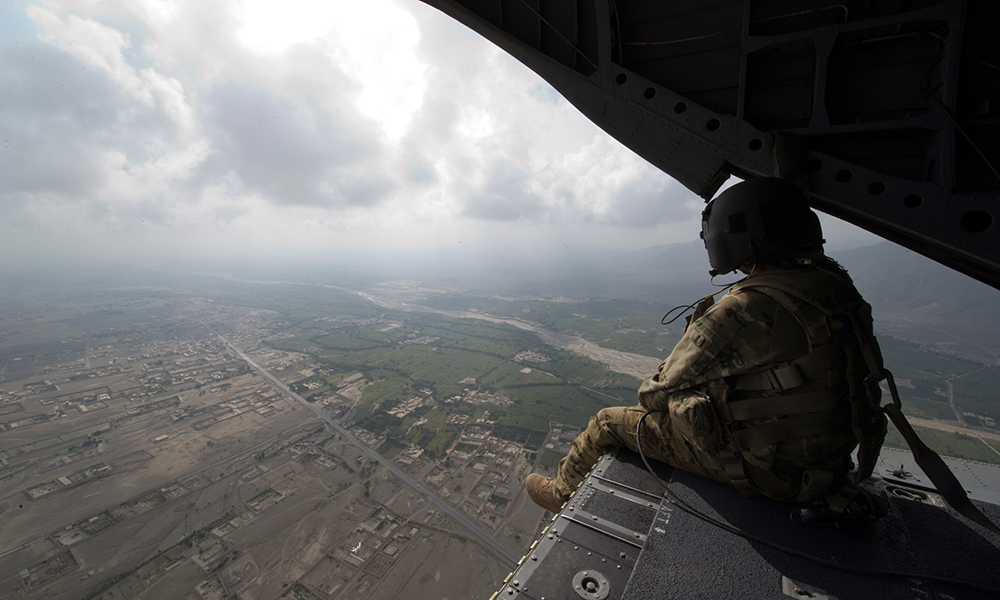
As US troops withdraw from Afghanistan, the CIA is reportedly under intense pressure to find new ways to gather intelligence and carry out counterterrorism strikes in the country, the New York Times reported Monday.
But, according to the report, the spy agency has few good options.
The CIA, has been at the heart of the 20-year American presence in Afghanistan, will soon lose bases in the country from where it has run combat missions and drone strikes while closely monitoring the Taliban and other groups such as al-Qaeda and the Islamic State (Daesh).
However, the agency’s analysts are warning of the ever-growing risks of a Taliban takeover, the Times reported.
United States officials are in last-minute efforts to secure bases close to Afghanistan for future operations with one focus on Pakistan.
According to the Times, the CIA used a base there for years to launch drone strikes against militants in the country’s western mountains, but was kicked out of the facility in 2011, when US relations with Pakistan soured.
The Times reported that diplomats are also exploring the option of regaining access to bases in former Soviet republics that were used for the Afghanistan war, although they expect that Russia’s President Vladimir Putin would fiercely oppose this.
As the search continues, recent CIA and military intelligence reports on Afghanistan have been increasingly pessimistic, the Times reported.
Intel reports have highlighted gains by the Taliban and other militant groups in the south and east, and warned that Kabul could fall to the Taliban within years and return to becoming a safe haven for militants.
The Times reported that the scramble for bases illustrates how US officials still lack a long-term plan to address security in a country where they have spent trillions of dollars and lost more than 2,400 troops over nearly two decades.
William J. Burns, the CIA director, has acknowledged the challenge the agency faces. “When the time comes for the US military to withdraw, the US government’s ability to collect and act on threats will diminish,” he told senators in April.
Burns meanwhile visited Islamabad last month to meet with the chief of the Pakistani military and the head of the directorate of Inter-Services Intelligence, the country’s military intelligence agency.
In addition to this, Defense Secretary Lloyd J. Austin has had frequent calls with the Pakistani military chief about getting the country’s help for future US operations in Afghanistan, the Times reported.
But according to the report, Burns did not bring up the base issue during his trip to Pakistan, and the visit focused on broader counterterrorism cooperation between the two countries.
However, the Times reported that at least some of Austin’s discussions have been more direct.
Douglas London, a former head of CIA. counterterrorism operations for Afghanistan and Pakistan, told the Times that the agency was likely to rely on a “stay behind” network of informants in Afghanistan who would collect intelligence on the Taliban, al-Qaeda, the stability of the central government and other topics. But without a large CIA presence in the country, he said, vetting the intelligence would be a challenge.
In the short term, the Pentagon is using an aircraft carrier to launch fighter planes in Afghanistan to support the troop withdrawal. But the carrier presence is unlikely to be a long-term solution, and military officials said it would probably redeploy not long after the last US forces leave, the Times reported.
The United States is also stationing MQ-9 Reaper drones in the Persian Gulf region, aircraft that can be used by both the Pentagon and the CIA for intelligence collection and strikes.
But, according to the Times, some officials are wary of these so-called over the horizon options that would require plane and drones to fly as many as nine hours each way for a mission in Afghanistan, which would make the operations more expensive because they require more drones and fuel, and also riskier because reinforcements needed for commando raids could not arrive swiftly during a crisis.
The Times also stated that as Pakistan is a longtime patron of the Taliban, Islamabad is unlikely to sign off on any US strikes against the Taliban that are launched from a base in Pakistan.
The Times also stated that while some American officials believe Pakistan wants to allow US access to a base as long as it can control how it is used, public opinion in the country has been strongly against any renewed presence by the United States.
This comes after Pakistan’s foreign minister, Shah Mehmood Qureshi, said last month that the government would not allow the US military to return to the country’s air bases.
The Times reported that American diplomats have been exploring options to restore access to bases in Central Asia, including sites in Kyrgyzstan and Uzbekistan but that any negotiations with those countries are likely to take considerable time to work out.
According to the Times, US military and intelligence analysts are now in broad agreement that the Afghan government is likely to have trouble holding on to power.
They believe the Afghan security forces have been depleted by high casualty rates in recent years and that the announcement of the US withdrawal is a psychological blow that could weaken the force.
In addition, the Times reported that some current and former officials are skeptical that remote advising or combat operations will succeed.












Kazakhstan’s Foreign Minister Mukhtar Tileuberdi has called for pragmatic and coordinated international engagement with Afghanistan, saying the country’s long-term stability is closely linked to the security and sustainable development of Central Asia.
Speaking during the general debate of the 81st session of the United Nations General Assembly in New York on Friday, Tileuberdi said humanitarian assistance to Afghanistan remains essential but alone cannot break the cycle of poverty, displacement and dependency.
He said Kazakhstan supports a “pragmatic, coordinated and step-by-step” approach to international engagement with Afghanistan, with the United Nations playing a central role.
Tileuberdi also said Kazakhstan is working with the UN to operationalize the United Nations Regional Centre for the Sustainable Development Goals for Central Asia and Afghanistan in Almaty.
He said the success of the centre should be measured by the results and assistance it delivers to the region.


Abu Muslim Farah defeat Khurasan Faryab 2-0 in ACL season six

Saar: Concerns over Pakistan’s political crisis discussed

Afghanistan Champions League: Omar Zawak Herat beat Toofan Herat 1-0

Blast in Pakistan’s Dera Ismail Khan kills 11, injures 30

Ariana Afghan Airlines increases Kabul-Delhi cargo flights

Saudi energy group signs major Afghanistan deals covering gas exploration and pipeline plans

Trump floats idea of renaming Atlantic or Pacific Ocean

US hits Egyptian bank branches with Iran sanctions as war marks six months

Nepal flood rescue mission enters critical phase as thousands remain missing

Iranian clubs to face Gulf opponents at neutral venues in Asian Champions League Elite
Saar: Concerns over Pakistan’s political crisis discussed

Exclusive interview with Abdul Latif Mansoor, Minister of MRRD

Tawsia: Overview of Afghanistan’s iron mines

Tahawol: Discussion on fresh Pakistani airstrikes on Afghanistan

Saar: Calls for international support for Afghanistan discussed
-

 World5 days ago
CNN, MS NOW and Politico sue Trump, challenging White House ban
-

 Latest News3 days ago
Ariana Afghan Airlines ranks seventh among 45 Central Asian airlines
-

 Latest News5 days ago
UN reiterates call for respect for international law after Kunar airstrikes
-

 Regional4 days ago
US and Iran hold first talks since June after Trump’s ‘annihilation’ threat
-

 Latest News4 days ago
Silk Road highway in Wakhan corridor now reaches the China border
-

 Regional3 days ago
Iran airlines cancel flights as US sanctions hit
-

 Latest News5 days ago
Afghan Official: Pakistan’s airstrikes will not go unanswered
-

 Sport5 days ago
Afghan boxing referee heads to China for international festival