
Latest News
NATO Defense Ministers agree to keep civilian footprint in country

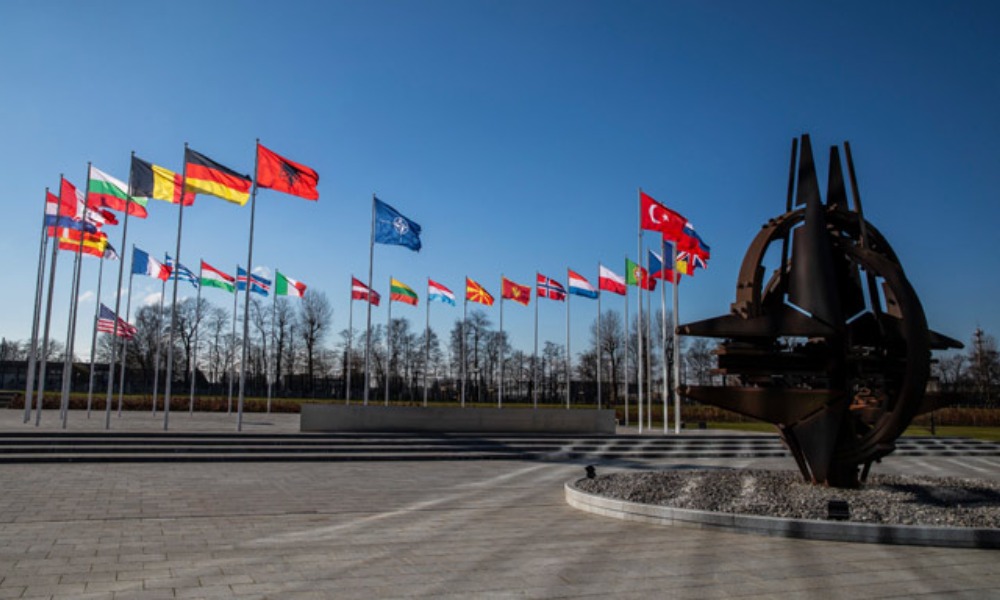
NATO Defence Ministers on Tuesday agreed that continued support for the Afghan forces, the government and the people is the best way for them to contribute towards the peace process and that they will keep a civilian diplomatic presence in Kabul.
In a virtual meeting Tuesday, the ministers also agreed to continue providing advice and capacity-building support to Afghan security forces.
Following the virtual meeting, which was convened to discuss preparations for the upcoming NATO Summit and the way forward in Afghanistan, NATO Secretary General Jens Stoltenberg said: “We are ending our military mission, but we are not ending our support to the Afghans.”
“We are also looking at how we can provide military education and training outside Afghanistan, focused on Special Operations Forces, and we are looking at how to fund the provision of services enabling Allies and the international community to stay in Kabul, including support for the airport.”
He said the drawdown of NATO forces is progressing in an orderly and coordinated way “and at every step, the safety of our personnel remains paramount.”
He also stated that NATO will continue its civilian diplomatic presence in Kabul.
“And we are also now working on how we can establish out of country training for the Afghan forces, especially the special operation forces. And then, on top of that, we are now working together with all the Allies, NATO Allies are working together to make sure that we can provide support to important infrastructure, to support the international community at large.
“We are fully aware that the situation in Afghanistan is challenging, fragile and difficult,” he said.
Stoltenberg said that over the past two decades, NATO Allies have provided substantive support to the Afghan security forces and helped to build a professional, strong Afghan army and security force, “which has proven very capable. And that has enabled [NATO] to gradually decrease our presence from more than 100,000 troops not so many years ago, to, at the beginning of this year,10,000 troops, and then we will end our military presence within a short time.”

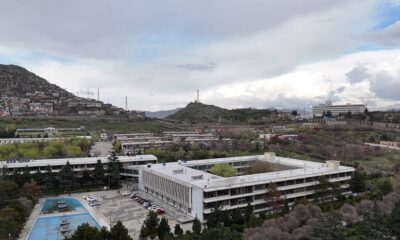





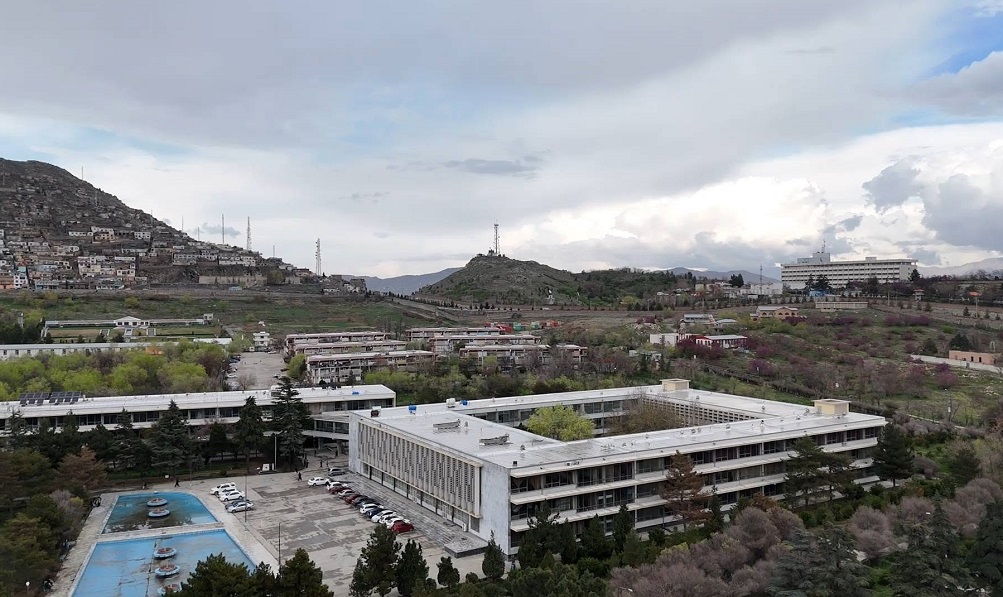
The Ministry of Higher Education says a Faculty of Aerospace Engineering and Advanced Aviation Systems has been established for the first time in Afghanistan’s higher education system at Kabul Polytechnic University.
According to the ministry, the new faculty will have four departments: Unmanned Aircraft Engineering, Aircraft Engineering, Aerospace Engineering, and Radar and Avionics Engineering.
The ministry says the faculty is part of efforts to train specialized professionals in fields needed by the country.
Speaking at a meeting of the Higher Education Council, the Minister of Higher Education discussed the achievements of the past five years and emphasized greater support for university lecturers and improving educational opportunities.
Military affairs experts say the establishment of the faculty could help strengthen Afghanistan’s scientific and technical capacity. They believe training students in aerospace, unmanned aircraft, radar and avionics could contribute to the development of domestic technical industries and strengthen the country’s capabilities in these fields.
A number of students have also welcomed the establishment of the faculty, saying it will provide young people with opportunities to study modern and specialized fields.
The Ministry of Higher Education says it is working to provide specialized training in areas considered important for the country, with the new faculty at Kabul Polytechnic University being part of these efforts.
Latest News
Khalilzad: Afghanistan ready to attract major investment
Describing the agreement as a “positive and promising development,” Khalilzad said Afghans have endured decades of war and now face substantial economic needs.
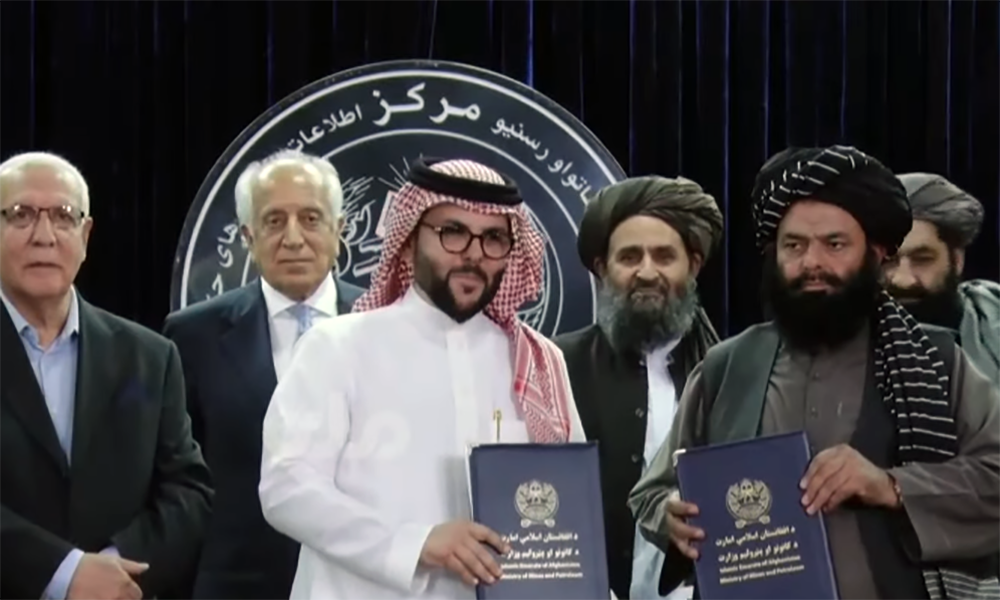
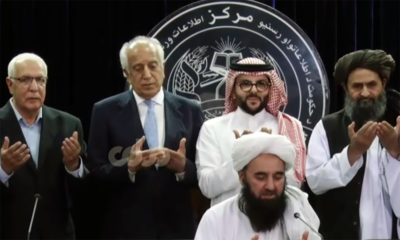
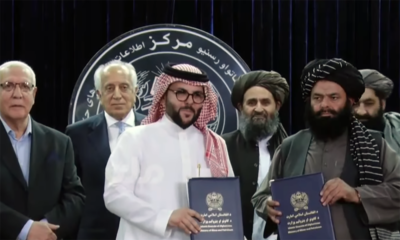
Former U.S. Special Representative for Afghanistan Zalmay Khalilzad has said Afghanistan is ready to attract major international investment, describing a newly signed agreement with a Saudi Arabian oil and gas company as a positive signal for the country’s economy.
Speaking at a contract-signing ceremony between Afghanistan’s Ministry of Mines and the Saudi company in Kabul, Khalilzad said the agreement demonstrates that Afghanistan is increasingly ready for business and large-scale investment.
He said Afghanistan has long been viewed as a potential land bridge linking resource-rich Central Asia with the large markets and growing demand of South Asia.
Khalilzad also said Afghanistan itself has significant natural resources that could supply regional and international markets, potentially creating new opportunities for economic growth.
Describing the agreement as a “positive and promising development,” Khalilzad said Afghans have endured decades of war and now face substantial economic needs.
He congratulated both sides on the agreement and said he was pleased to witness what he described as an important development for Afghanistan’s investment prospects.
Latest News
UNAMA urges increased and timely humanitarian aid for Afghanistan
Abdul Wase, meanwhile, praised UNAMA’s activities and said the Islamic Emirate would continue cooperating with the UN mission.
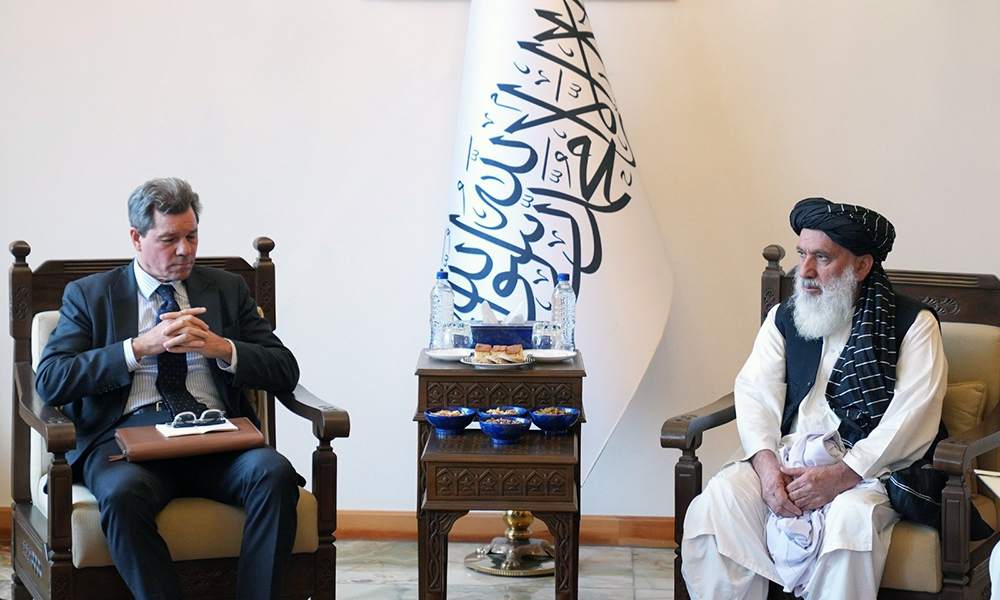
The United Nations Assistance Mission in Afghanistan (UNAMA) has called for increased and timely humanitarian assistance to Afghanistan, with priority given to vulnerable Afghans and people affected by natural disasters.
UNAMA Political Affairs Chief Scott Smith made the remarks during a meeting with Abdul Wase, head of the General Office of Administrative Affairs of the Office of the Prime Minister.
Smith said coordination and cooperation between the Islamic Emirate and UNAMA had improved in recent years, describing the continued extension of UNAMA’s mandate in Afghanistan as a positive indication of ongoing cooperation.
He also thanked the Islamic Emirate for facilitating the transfer of 1,000 containers of food and medicine into Afghanistan through the Torkham crossing. Smith said the supplies could have been lost had they not been transported into the country in time.
According to Smith, UNAMA is working to strengthen Afghanistan’s engagement with the international community. He stressed the importance of maintaining political stability and continuing joint efforts to support the country’s economic development.
Smith also proposed establishing a joint mechanism between the Islamic Emirate and the United Nations to improve communication over Afghanistan’s concerns and requests and help resolve challenges through greater coordination.
Abdul Wase, meanwhile, praised UNAMA’s activities and said the Islamic Emirate would continue cooperating with the UN mission.
He called on UN agencies to increase assistance to vulnerable Afghans and people affected by natural disasters, urging them to give priority to humanitarian needs.
Abdul Wase also asked UNAMA to better reflect Afghanistan’s current situation, particularly developments related to security, stability and economic opportunities in the country.


Tahawol: Possible future scenarios for Ukraine crisis

New faculty of aerospace engineering established at Kabul Polytechnic University

Saar: Afghanistan’s relations with international community

Afghanistan end AFC U20 Asian Cup qualifying campaign with 3-1 win over Bahrain

Saudi energy group signs major Afghanistan deals covering gas exploration and pipeline plans

Four mediators struggle to secure lasting Pakistan-Afghanistan ceasefire

HesabPay unveils new visa card and digital payment app in Kabul

AFC Champions League Elite draw nears as Al-Nassr seeded above Al-Hilal

Afghanistan secure direct qualification for 2027 Men’s ODI World Cup

Abasin Defenders stun Kabul Zalmi in Kabul Premier League
Tahawol: Possible future scenarios for Ukraine crisis
Saar: Afghanistan’s relations with international community

Tahawol: Hopes for improved relations between Kabul and Washington

Saar: Afghan refugee returns discussed

Tahawol: Afghanistan and great power rivalry in Central Asia discussed
-
 Latest News4 days ago
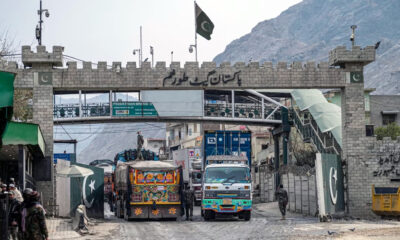
Khyber Chamber demands reopening of Torkham crossing
-

 Regional4 days ago
Syria begins destroying Assad-era chemical weapons
-
 Latest News3 days ago
Russian official: West seeks military infrastructure in Central Asia, citing Afghanistan threat
-
 Latest News2 days ago
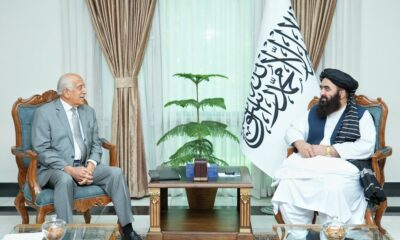
Muttaqi and Khalilzad discuss expanding Afghanistan-US relations
-
 World4 days ago
South Korea reviews military options for Strait of Hormuz
-
 Latest News3 days ago
Pakistan’s envoy to Afghanistan discusses regional security with top officials in Islamabad
-
 Climate Change4 days ago
El Niño likely to intensify, may become strongest ever recorded, WMO says
-
 Latest News5 days ago
Aisha Wahab sworn in as first Afghan American in U.S. Congress