
World
NATO takes over coordination of military aid to Kyiv from US, source says
Trump, who will take office in January, has said he wants to end the war in Ukraine swiftly but not how he aims to do so. He has long criticised the scale of U.S. financial and military aid to Ukraine, read the report.

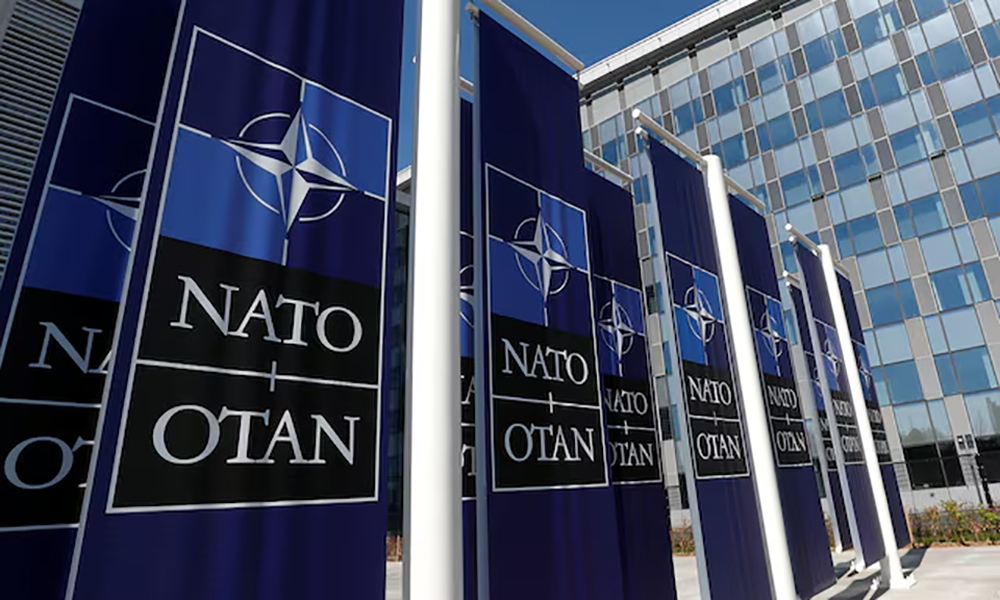
NATO has taken over coordination of Western military aid to Ukraine from the U.S. as planned, a source said on Tuesday, in a move widely seen as aiming to safeguard the support mechanism against NATO sceptic U.S. President-elect Donald Trump, Reuters reported.
The step, coming after a delay of several months, gives NATO a more direct role in the war against Russia’s invasion while stopping well short of committing its own forces.
Diplomats, however, acknowledge that the handover to NATO may have a limited effect given that the U.S. under Trump could still deal a major setback to Ukraine by slashing its support, as it is the alliance’s dominant power and provides the majority of arms to Kyiv.
Trump, who will take office in January, has said he wants to end the war in Ukraine swiftly but not how he aims to do so. He has long criticised the scale of U.S. financial and military aid to Ukraine, read the report.
The headquarters of NATO’s new Ukraine mission, dubbed NATO Security Assistance and Training for Ukraine (NSATU), is located at Clay Barracks, a U.S. base in the German town of Wiesbaden.
A person familiar with the matter told Reuters it was now fully operational. No public reason has been given for the delays.
NATO’s military headquarters SHAPE said its Ukraine mission was beginning to assume responsibilities from the U.S. and international organizations.
“The work of NSATU … is designed to place Ukraine in a position of strength, which puts NATO in a position of strength to keep safe and prosperous its one billion people in both Europe and North America,” said U.S. Army General Christopher G. Cavoli, the Supreme Allied Commander Europe.
“This is a good day for Ukraine and a good day for NATO.”
In the past, the U.S.-led Ramstein group, an ad hoc coalition of some 50 nations named after a U.S. air base in Germany where it first met, has coordinated Western military supplies to Kyiv.
Trump threatened to quit NATO during his first term as president and demanded allies must spend 3% of national GDP on their militaries, compared with NATO’s target of 2%.
Meanwhile, the outgoing Biden administration in Washington is scrambling to ship as many weapons as possible to Kyiv amid fears that Trump may cut deliveries of military hardware to Ukraine.
NSATU is set to have a total strength of about 700 personnel, including troops stationed at NATO’s military headquarters SHAPE in Belgium and at logistics hubs in Poland and Romania, read the report.
Russia has condemned increases in Western military aid to Ukraine as risking a wider war.







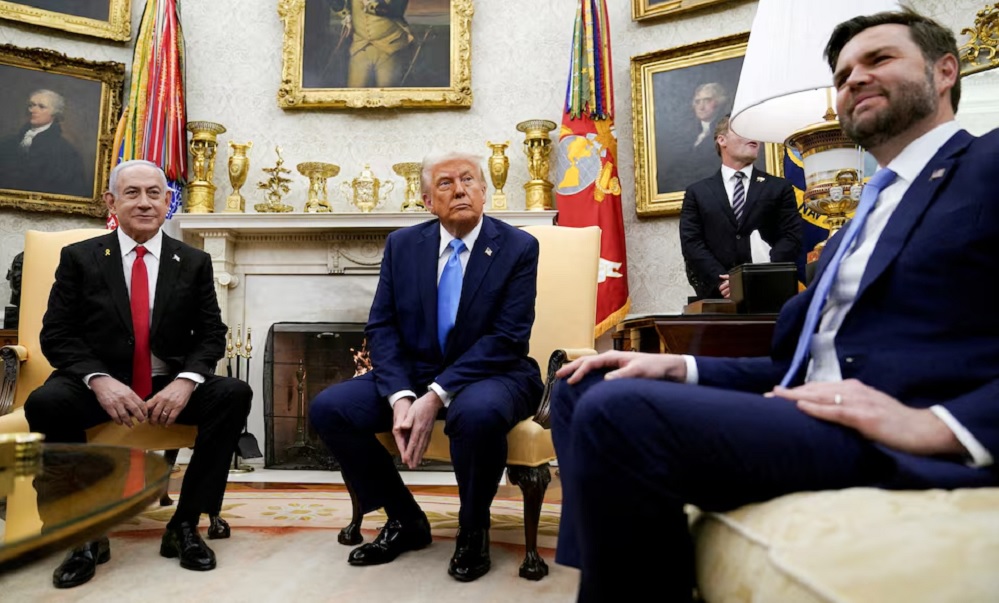
Israel has rejected U.S. President Donald Trump’s Board of Peace 15-point plan for Gaza, and will not withdraw until Hamas fully disarms, Prime Minister Benjamin Netanyahu said on Sunday, Reuters reported.
World
US Senate passes Russia sanctions championed by Graham; US House next
In a statement, the Ukrainian embassy in Washington welcomed passage, calling it “a timely and significant step that strengthens pressure on Russia.”
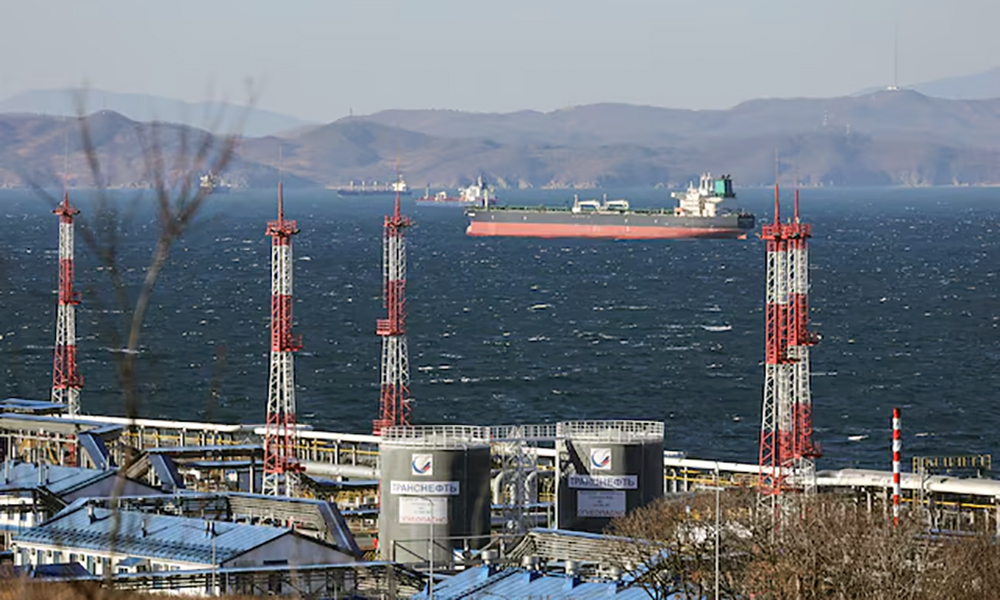
The U.S. Senate easily passed sweeping Russia sanctions legislation on Friday, advancing a long-delayed measure backed by late Senator Lindsey Graham and setting the stage for consideration by the House of Representatives within weeks, Reuters reported.
Graham, a South Carolina Republican who died last month, was among Kyiv’s most outspoken allies in Congress in its four-year-long war with Russia, and the bill aims to increase economic pressure on Moscow over its invasion of Ukraine.
It also includes expanded sanctions on Iran sought by President Donald Trump as lawmakers pushed for a vote on the measure well over a year since it was introduced in 2025.
The Senate’s Republican leaders had not brought the bill up because of resistance from Trump, who had kept decisions on sanctions at the White House, not Congress, since starting his second term in January 2025.
The Senate voted 86-11 to pass the “Lindsey O. Graham Sanctioning Russia and Iran Act of 2026,” to sanction Russian officials and authorize stiff tariffs on China, India and other countries to reduce their dependence on Russian oil and gas.
In a statement, the Ukrainian embassy in Washington welcomed passage, calling it “a timely and significant step that strengthens pressure on Russia.”
However, broad support may not be enough to secure House passage, with some lawmakers and industries wary that new tariff powers for Trump could raise costs for U.S. importers and consumers while exposing Republicans to political blowback.
Representatives Gregory Meeks of New York and Don Beyer of Virginia said in a statement they still had “fundamental concerns” about the tariff powers for Trump, who has made them a central piece of his “America First” approach to foreign policy, read the report.
“What the bill does grant … are sweeping new tariff authorities that the president could weaponize with abandon, as he has repeatedly done in the past,” said Meeks, the top Democrat on the House Foreign Affairs Committee, and Beyer, the senior Democrat on the Joint Economic Committee.
Trump’s fellow Republicans control only slim majorities in both the House and Senate.
Only one Senate Republican, Rand Paul of Kentucky, voted against the bill, likening tariffs to taxes on American consumers.
The chamber erupted into applause after Graham’s sister, Darline Graham, who was appointed to fill his seat, read out the final tally.
The Senate rejected an amendment sponsored by Paul and Democratic Senator Ron Wyden of Oregon that would have removed the tariff powers.
Democratic Senator Raphael Warnock of Georgia, who also sought to change the tariff language, said he had received a written commitment from Trump’s U.S. trade representative, Jamieson Greer, to put guardrails on the tariff authorities, Reuters reported.
If it is approved by the House and signed into law by Trump, the measure would allow the president to impose tariffs of up to 100% on countries that are major consumers of Russian energy, including India, Japan and some countries in the European Union, and leave it to his discretion to lift them.
The legislation’s backers insist that the tariffs are narrow enough that they would do their intended job of reducing Russian energy revenue that funds its war on Ukraine without negative consequences.
Supporters called the legislation the best opportunity to support Ukraine, and the strong bipartisan Senate vote provided momentum for it to pass the House after it returns from its summer recess on August 31.
Graham had announced shortly before his sudden death on July 11 that he and Trump agreed finally to move forward with the legislation.
The legislation lets the president impose targeted tariffs on imported goods from countries that buy the vast majority of Russian oil or gas and enable Russia’s evasion of sanctions.
The bill limits these tariffs to the five largest importers of Russian crude oil or gas and the top five countries that aid Russia’s energy sanctions evasion. The measure includes a provision to prevent a lapse in sanctions authority that restricts funding for Iranian energy and weapons.


Iran ties Hormuz reopening to US concessions on several demands

Tahawol: Afghanistan: An Alternative to the Strait of Hormuz?

Saar: Pakistan-Saudi-Turkey Pact: Regional Impact

Ariana Airlines brings $2.3 million Boeing 737 engine from US to Kabul

Israel rejects Trump’s 15-point plan for Gaza, PM Netanyahu says

Pakistan’s governance system has ‘collapsed’: Mohsin Naqvi

India offers 1,000 online scholarships for Afghan students for 2026-27 academic year

Turkey spent over $120 million to prepare airport for Qatar-donated U.S. presidential aircraft

FIFA’s inaugural YouTube Creator Cup to stream live on Ariana Television and Ariana Sport YouTube channels

FIFA World Cup semi-final line-up confirmed
Tahawol: Afghanistan: An Alternative to the Strait of Hormuz?
Saar: Pakistan-Saudi-Turkey Pact: Regional Impact

Tahawol: Escalating disputes over Iran war discussed

Saar: Turkey, Saudi Arabia and Pakistan defense pact reviewed

Tahawol: End of US sanctions waiver for Chabahar Port discussed
-
 Latest News5 days ago
Khalilzad says Pakistan needs ‘reset’ amid economic crisis and rising instability
-

 Latest News5 days ago
First Afghanistan-Ireland ODI abandoned without a ball bowled
-

 Sport5 days ago
Afghanistan aim for winning start against Ireland
-

 Sport4 days ago
Afghanistan holds Russia to 3-3 draw, earns first point at Continental Futsal Championship
-

 Latest News5 days ago
Afghan boxer appears in Greek court over death of Scottish woman
-
 Business4 days ago
Uzbekistan’s Fergana region strengthens economic ties with Afghanistan
-
 Regional4 days ago
Iran threatens to hit Gulf states if US launches new strikes
-
 World2 days ago
US Senate passes Russia sanctions championed by Graham; US House next