
Latest News
Needy families in Herat receive much-needed Ramadan aid from Bayat Foundation

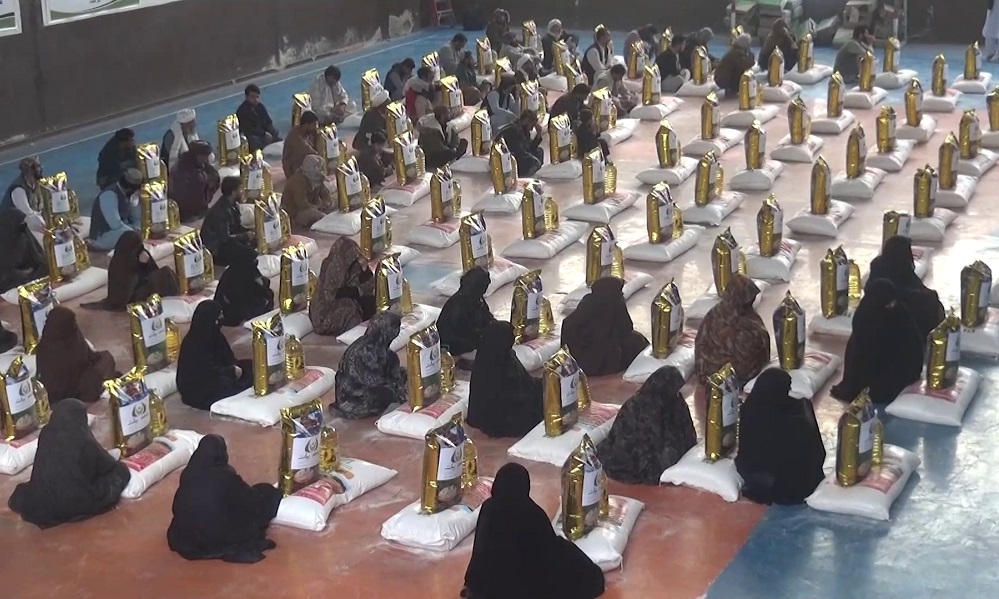
The Bayat Foundation has distributed Ramadan food assistance to dozens of needy families in Herat province, seeking to ease the burden on households struggling with deepening economic hardship.
Foundation officials said the food parcels — containing rice, flour, and cooking oil — have been delivered to impoverished families across the province.
The packages are designed to cover at least one month of essential food needs during the holy month of Ramadan, a time when many low-income families face increased expenses.
Afghanistan continues to confront widespread poverty, high unemployment, and food insecurity, with humanitarian agencies warning that millions remain in urgent need of assistance.
In Herat, local authorities say demand for basic food support remains particularly high, especially among returnees, daily wage laborers, and families without steady income.
Speaking during the distribution process, Sayed Noor Ahmad Shah Sadat, the Bayat Foundation’s representative in Herat, said the initiative is part of the organization’s annual Ramadan campaign.
“Today, on the occasion of the holy month of Ramadan, the Bayat Foundation provided assistance to deserving families. These packages include rice, flour, and oil. The goal of this program is to support poor families and help meet their basic needs, especially during Ramadan,” he said.
Recipients described the aid as timely and essential.
Jan Mohammad, a beneficiary, said the food parcels would sustain his family for weeks. “These packages help us a lot. They cover our needs for at least a month. I hope this continues. We are poor people — we have nothing,” he said.
Humaira, another recipient, emphasized the importance of ongoing support. “The poor should always be considered. If this assistance continues, no Muslim will be forced into hardship,” she said.
Faqir Ahmad, also among those assisted, expressed gratitude, noting that the supplies would meet his family’s needs for a month.
Local officials welcomed the initiative and encouraged other organizations to expand similar efforts. Baz Mohammad Sarwari, head of the Telecom Regulatory Authority in Herat, praised the foundation’s work.
“The Bayat Foundation is distributing aid to deserving families, and this is truly commendable. We hope these efforts continue and call on other humanitarian organizations to assist the needy,” he said.
Founded by Afghan businessman and philanthropist Dr Ehsanullah Bayat, the Bayat Foundation has long been involved in humanitarian activities across Afghanistan. In addition to its annual Ramadan food drives, the organization has provided emergency relief to communities affected by natural disasters, supported healthcare initiatives, and assisted returnee migrants and other vulnerable groups.
The foundation says its Ramadan campaign is ongoing not only in Herat but also in several other provinces, aiming to reach thousands of families in need across the country.







Latest News
Helmand governor, UNAMA discuss province’s key challenges
The UNAMA deputy also highlighted the importance of providing farmers with legal and sustainable alternatives to poppy cultivation, alongside efforts to prevent poppy production.
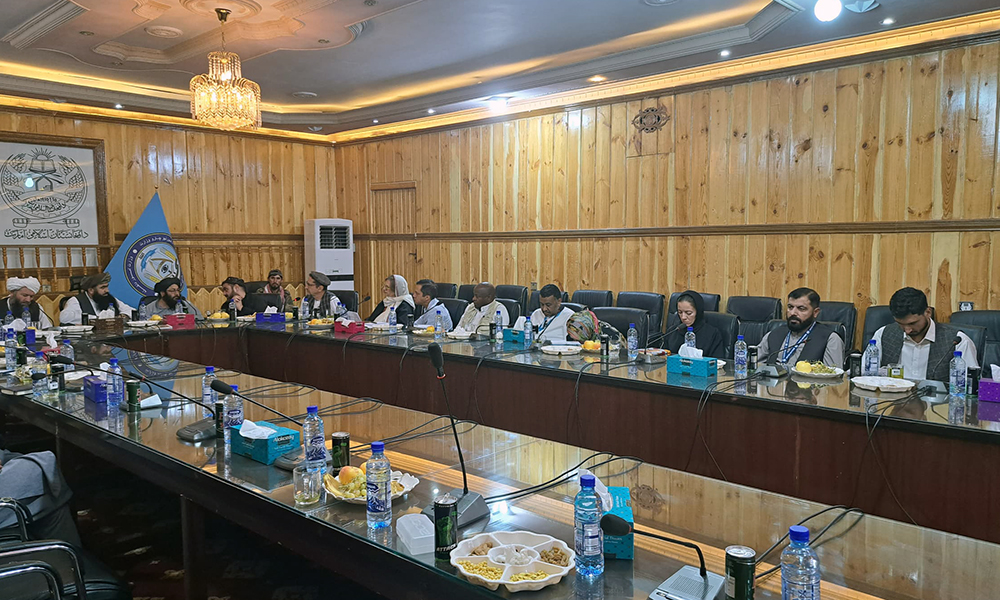
Helmand Governor Amanuddin Mansour met with UNAMA Deputy Special Representative Bruno Lemarquis and his delegation on Sunday to discuss security, economic development and humanitarian needs in the province.
The meeting at the Helmand Provincial Governor’s Office covered a range of issues, including security and stability, development projects, healthcare, agriculture, alternative livelihoods to poppy cultivation, project funding and markets for agricultural and industrial products.
Mansour briefed the UNAMA delegation on the situation in Helmand and called for greater cooperation to address the needs of local communities and expand development opportunities.
Lemarquis thanked provincial officials for their cooperation and praised what he described as efforts to improve administration, maintain security and stability and prevent corruption.
He said the security situation had created a favourable environment for economic and development activities, while stressing that further work and joint efforts were needed to improve people’s economic conditions.
The UNAMA deputy also highlighted the importance of providing farmers with legal and sustainable alternatives to poppy cultivation, alongside efforts to prevent poppy production.
The two sides discussed mobilising funding for development projects and expanding healthcare services, with Lemarquis calling for stronger coordination between relevant institutions.
The meeting also focused on marketing Helmand’s agricultural and industrial products, including cotton. According to the Helmand Governor’s Office, Uzbekistan has expressed strong interest in purchasing Afghan cotton, making access to foreign markets an important opportunity for farmers and producers in the province.
Members of the UN delegation raised issues and questions concerning different sectors of Helmand and discussed possible solutions with provincial officials.
Mansour responded to the issues raised and outlined the province’s major challenges, needs and proposed solutions. He also called for increased cooperation to expand economic and development projects, improve livelihoods, strengthen healthcare and find markets for agricultural products.
Both sides agreed on the need to continue and strengthen cooperation in support of Helmand’s population and its economic and development priorities.
Lemarquis was accompanied by Susan Ferguson, UN Women’s country representative in Afghanistan; Mihyung Park, head of the International Organization for Migration office in Afghanistan; Polleak Ok Serei, head of the UN Office on Drugs and Crime in Afghanistan, as well as representatives from UNICEF, the UN Refugee Agency and other officials.
Latest News
Trump dismisses report China entities helped Iran before attack that killed US troops
Trump on Sunday reiterated his view that he has a good relationship with Xi.
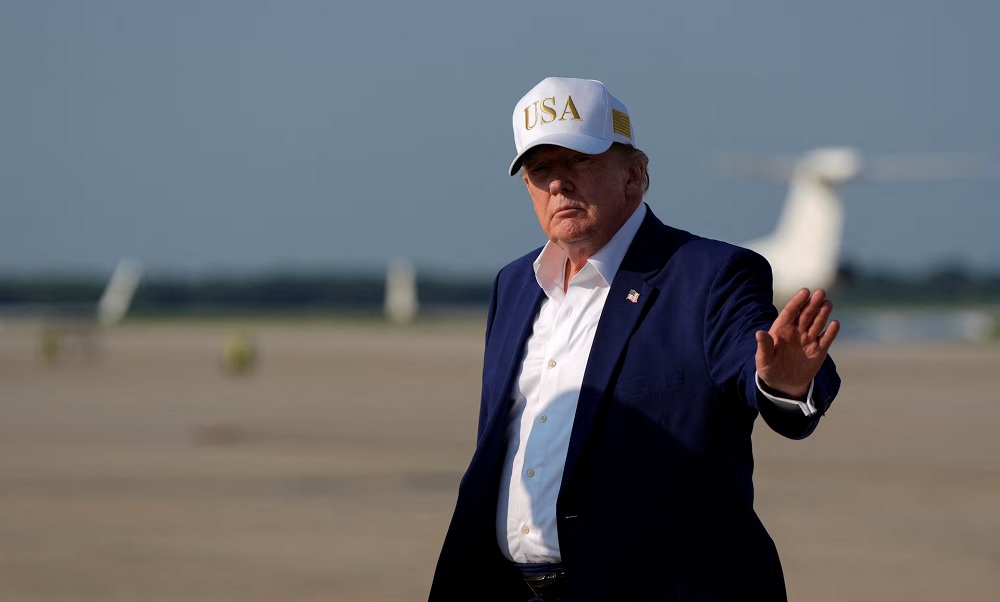
U.S. President Donald Trump on Sunday brushed aside a report that Iran acquired satellite images of a base in Jordan from Chinese entities before an attack that killed three U.S. troops there in July, Reuters reported.
A recent report in the Wall Street Journal cited unnamed U.S. officials about the attack in Jordan. Asked whether he would mention the issue at an upcoming meeting with Chinese President Xi Jinping, Trump did not directly answer, and instead equated the surveillance activities of China and the United States.
“They basically do what we do,” he told reporters aboard Air Force One. “When they say China spies on us, I say you’re right and we spy on them too.”
The Chinese and U.S. presidents are expected to meet in the United States on September 24, although China has yet to officially confirm that the meeting will take place.
Trump on Sunday reiterated his view that he has a good relationship with Xi.
“I think he’s behaved reasonably well, and we behave reasonably well,” Trump said as he flew back to the United States after a weekend trip to Ireland.
The Wall Street Journal report, which Reuters could not immediately verify, said the U.S. officials declined to identify the Chinese entities that supplied the imagery to Iran and did not allege direct involvement by Beijing.
Trump’s comments appeared consistent with the administration’s recent efforts to play down wide-ranging tensions between Washington and Beijing, despite U.S. frustration over Beijing’s close ties to Tehran.

The Islamic Emirate of Afghanistan (IEA) has rejected reports alleging that al-Qaeda and other militant groups are regrouping in the country, saying such groups are no longer present and that there is no evidence supporting the claims.
Hamdullah Fitrat, deputy spokesman for the Islamic Emirate, said groups that had previously been present in Afghanistan were linked to the circumstances and jihad of an earlier period, but that major regional developments had since changed the situation.
“Those groups are no longer present in Afghanistan, nor is there any need for their presence. There is also no evidence to prove the claims about their presence,” Fitrat said.
The comments came after The Washington Post reported Saturday, citing US and Western security officials and a United Nations organization, that al-Qaeda and other militant groups have been rebuilding their networks in Afghanistan since the Islamic Emirate returned to power in 2021.
Fitrat said such claims are made by certain intelligence circles that seek to portray Afghanistan as insecure and to make the region insecure.
He reiterated that the IEA will not allow Afghanistan’s soil to be used against any other country.


Helmand governor, UNAMA discuss province’s key challenges

Hormuz shipping traffic remains below 10-day average at weekend, data shows

Trump dismisses report China entities helped Iran before attack that killed US troops

India beat Afghanistan by seven wickets in first T20I

Tahawol: Calls for U.S. engagement with Afghanistan

Four mediators struggle to secure lasting Pakistan-Afghanistan ceasefire

Juma Khan Fateh surrenders to IEA forces in Badakhshan

Afghanistan’s trade diversification challenges Pakistan

Syria and Saudi Arabia condemn Kabul bombing, express solidarity with Afghanistan

Afghanistan crowned champions of five-match ODI series against Ireland
Tahawol: Calls for U.S. engagement with Afghanistan

Saar: End of Chinese ambassador’s mission in Kabul

Tahawol: Norwegian delegation’s call for engagement with Afghanistan discussed

Saar: Pakistan’s dual policy towards Afghanistan reviewed

Exclusive interview with ACB CEO Naseeb Khan
-
 Latest News5 days ago
Muttaqi and Bangladeshi delegation discuss expansion of bilateral ties
-

 Sport4 days ago
Afghanistan Champions League Season 6 kicks off today: Abu Muslim Farah face Sarsabz Yashlar
-
 Business5 days ago
UAE firm eyes investment in Salang’s second tunnel and pharmaceutical factories
-
 Latest News5 days ago
Afghanistan, Bangladesh discuss expanding economic ties
-
 Latest News5 days ago
Mujahid calls Pakistan’s order to expel Afghan medical students ‘inhumane’
-

 Sport3 days ago
Omar Zawak, Toofan Herat secure victories in Afghanistan Champions League
-
 Regional4 days ago
Pakistan warns Iran to rein in Houthis as Riyadh strikes back
-
 Latest News5 days ago
Russia says strengthening Tajik-Afghan border is security priority