
Latest News
Rights group warns of growing legal exclusion facing Afghan migrants in Iran

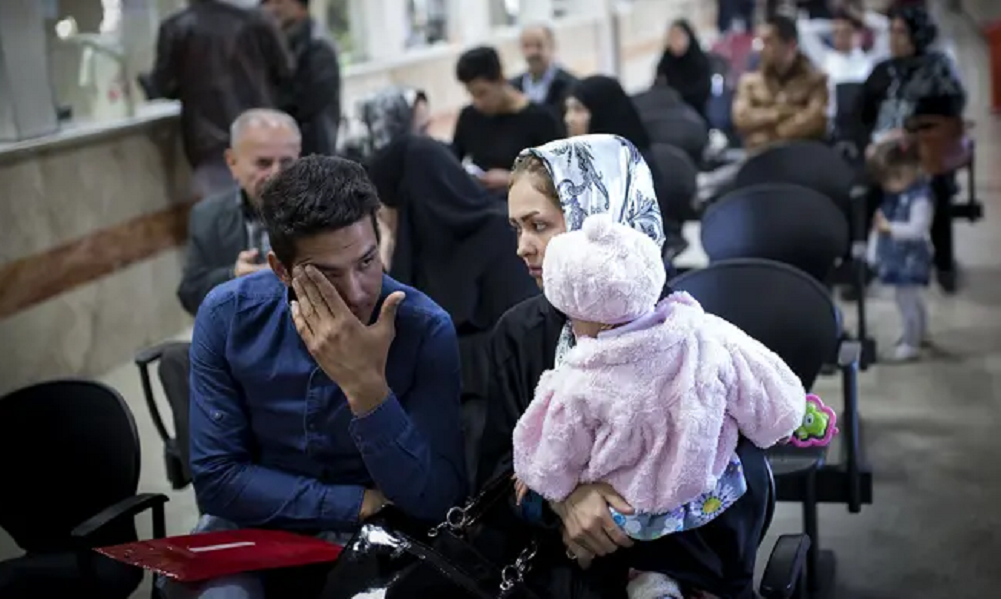
The HANA Human Rights Organization has expressed serious concern over what it describes as an increasing pattern of legal exclusion affecting Afghan migrants in Iran, particularly women and children who face growing obstacles in accessing civil registration and judicial protection.
In a detailed statement, the organization said many Afghan migrants struggle to obtain legal recognition of key personal-status matters, including marriage, divorce, birth registration, custody, inheritance, and maintenance claims. It warned that these issues have worsened following recent armed conflict, tighter security measures, disruption of public services, internet shutdowns, and increased administrative pressure.
HANA said the absence of an effective and accessible civil-registration system has left many Afghan migrants in a situation of “legal invisibility,” limiting their ability to prove family relations, access public services, and seek legal remedies.
The organization stressed that civil-status registration is essential for basic rights such as legal identity, family recognition, inheritance, and access to justice. It warned that failures in registration systems can lead to wider violations of civil, social, and economic rights.
According to the statement, Afghan women are particularly affected, especially in cases involving domestic violence, unregistered marriages, informal divorces, abandonment, or custody disputes, where access to courts and legal protection is often limited.
HANA also highlighted risks faced by Afghan children, including lack of birth registration and identity documents, which may result in denial of education, healthcare, and social protection, and increase vulnerability to child labour, exploitation, and early marriage.
The organization said these challenges raise concerns under Iranian domestic law and constitutional guarantees of access to justice and equality before the law, as well as Iran’s obligations under international human rights treaties, including protections for children and the right to legal identity.
HANA urged Iranian authorities to establish transparent civil-registration procedures for Afghan nationals, ensure equal access to courts regardless of migration status, protect migrant women and children from legal and social harm, and create emergency mechanisms during crises to maintain access to justice and essential services.
It also called for an end to practices that may lead to detention, deportation, or intimidation of migrants seeking legal or administrative assistance.
The group warned that the combined effect of administrative and security barriers risks creating a system of structural legal exclusion, preventing many Afghan migrants from securing basic rights and legal recognition in Iran.










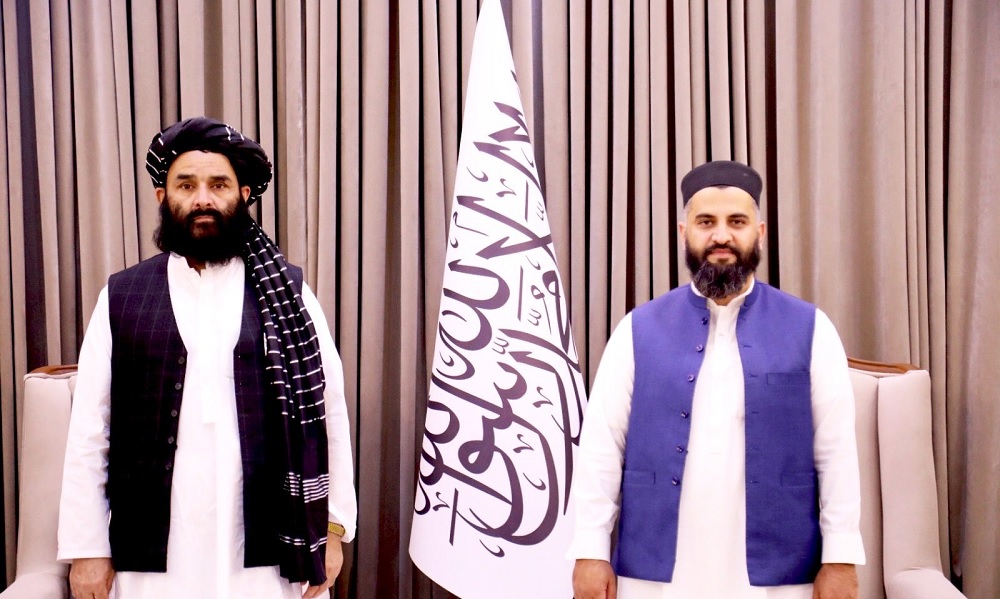
A delegation of the Islamic Emirate of Afghanistan, led by Mohammad Amin Jan Omari, Deputy Minister for Finance and Administration at the Ministry of Communications and Information Technology, has traveled to Moscow to attend the Second Global Digital Forum.
Abdul Rahman Safi, Director General of the Digital Governance Directorate, is also part of the Afghan delegation.
The three-day forum, which opened in Moscow on Thursday, brings together government representatives, international organizations, information technology experts and private-sector representatives from various countries.
Discussions at the forum will focus on digital technology, digital governance, artificial intelligence, cybersecurity, digital infrastructure and ways to expand international technological cooperation.
Afghanistan’s delegation is expected to present the country’s experience and achievements in telecommunications and information technology, as well as its efforts toward digital transformation.
The Afghan delegation will also hold bilateral meetings with representatives of various countries and organizations on the sidelines of the forum to discuss opportunities for expanding cooperation in information technology and digital development.
Latest News
Nearly half of the MENAAP’s poorest population lives in Pakistan: World Bank
According to the report, Afghanistan, Syria and Yemen together account for another 47% of the region’s population living below the same poverty line.
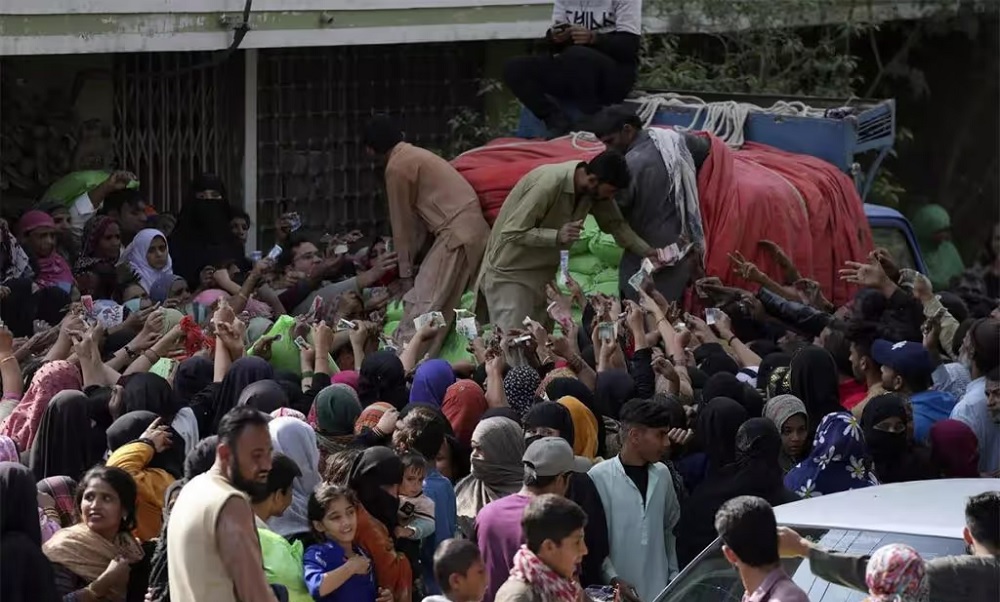
The World Bank says nearly half of the people in the Middle East, North Africa, Afghanistan and Pakistan region (MENAAP) who live on less than $3 a day are in Pakistan.
In its latest economic report, released on Tuesday, the bank said that 48% of the region’s population living on less than $3 a day is in Pakistan.
According to the report, Afghanistan, Syria and Yemen together account for another 47% of the region’s population living below the same poverty line.
The World Bank said the rise in poverty across the region has been driven largely by the situation in Pakistan. MENAAP is now the only region in the world where poverty remains above pre-COVID-19 levels and continues to rise.
Pakistan’s poverty rate increased by 6.4 percentage points between 2018-19 and 2024-25, based on the $3-a-day poverty line. Under the $4.20-a-day poverty line, poverty increased by 3.2 percentage points, pushing the rate above 20%.
The World Bank attributed the worsening situation to the COVID-19 pandemic, widespread floods in 2022, high inflation, the depreciation of Pakistan’s currency and prolonged economic reforms, which it said have reduced household incomes and job opportunities.
The report said that poverty rates based on the $3-a-day threshold have approached or exceeded 20% in Djibouti, Pakistan, Syria and Yemen.
The World Bank said the MENAAP region now accounts for 14% of the world’s poor population, making it the second-largest region in terms of poverty after Sub-Saharan Africa.
Latest News
Afghan national pleads guilty to suicide attack threat in Texas
Alokozay faces up to five years in federal prison, a fine of up to $250,000 and up to three years of supervised release.
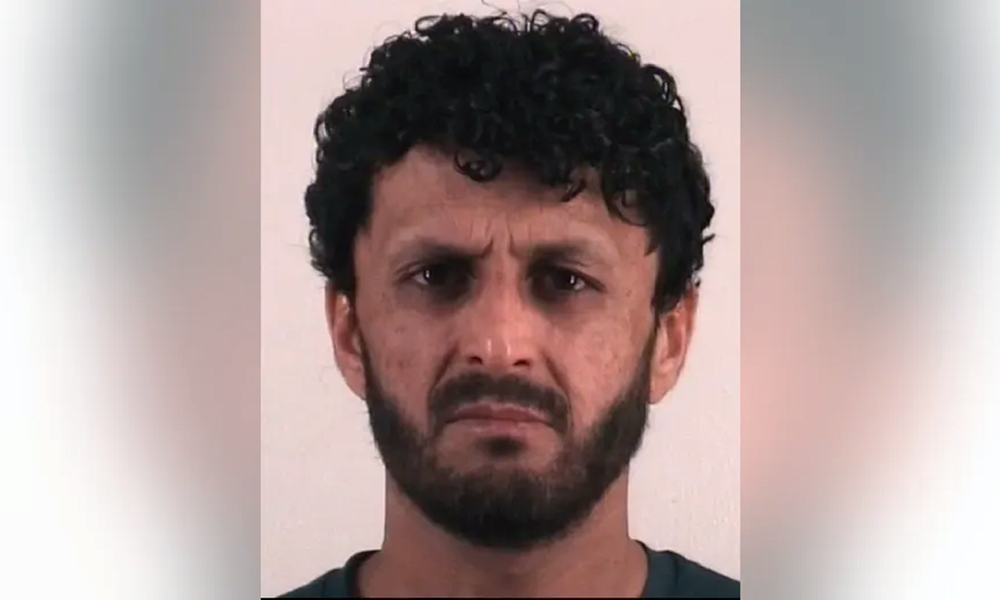
A 32-year-old Afghan national living in Fort Worth, Texas, has pleaded guilty to transmitting a threatening communication after making an online threat to carry out a suicide attack.
Mohammad Dawood Alokozay was charged in November 2025 after a portion of a social media livestream in which he made the threat was recorded and circulated on TikTok and other platforms.
According to U.S. court documents, Alokozay made the threat during a livestream on November 23, 2025, following an exchange involving several people, including another Afghan national. Authorities said the discussion included offensive remarks linked to longstanding tribal tensions.
Members of the public reported the video to authorities, after which federal agents and local law enforcement identified and located Alokozay, according to the U.S. Attorney’s Office for the Northern District of Texas.
No explosives found
Authorities searched Alokozay’s home and cellphone but found no explosives or bomb-making materials. Prosecutors said investigators determined that he did not intend to carry out an actual attack.
Alokozay nevertheless admitted in court documents that he knowingly transmitted a threat to injure another person through interstate and foreign commerce.
He pleaded guilty before U.S. Magistrate Judge Jeffrey L. Cureton.
Alokozay faces up to five years in federal prison, a fine of up to $250,000 and up to three years of supervised release.
The FBI said the case demonstrates the seriousness with which authorities treat online threats of violence. FBI Dallas Special Agent in Charge R. Joseph Rothrock also thanked members of the public who reported the video.
The investigation was conducted by the FBI offices in Dallas and Fort Worth, with assistance from Homeland Security Investigations, the Texas Department of Public Safety and the Fort Worth Police Department.
A sentencing date has not yet been announced.


Trump says US will not attack Iran before midterm elections in November

Tahawol: CSTO meeting on Afghanistan reviewed

Saar: Guterres’s talks with Pakistani officials on Afghanistan discussed

Arman FC defeat Istiqlal Kabul 3-2 in thrilling comeback

Russia-Afghanistan trade surges 150% in first seven months of 2026

UAE firm eyes investment in Salang’s second tunnel and pharmaceutical factories

EU and FAO launch €5m programme to strengthen Afghanistan’s agrifood sector

Omar Zawak, Toofan Herat secure victories in Afghanistan Champions League

Crystal Palace cruise into EFL Cup fourth round

Houthi advance in Yemen puts U.S. in a new bind
Tahawol: CSTO meeting on Afghanistan reviewed
Saar: Guterres’s talks with Pakistani officials on Afghanistan discussed

Tahawol: Consequences of US war in Afghanistan reviewed

Saar: Expulsion of Afghan refugees from Pakistan discussed

Tahawol: Discussion on outcome of Moscow Format meeting
-

 Sport4 days ago
Cricket Bonanza: Afghanistan set for packed international schedule
-
 Latest News5 days ago
Afghanistan inaugurates 121 km Wakhan road to China border
-

 Sport5 days ago
ACL: Sorkh Poshan extend perfect run with 1-0 win over Khurasan
-

 Sport4 days ago
Afghanistan U19 to face Bangladesh, Oman in Youth ODIs
-

 Sport5 days ago
ACL: Toofan Herat crush Sarsabz Yashlar 3-0
-
 Regional4 days ago
Yemeni government launches offensive to seize all areas from Iran-backed Houthis
-

 Latest News3 days ago
Ariana Afghan Airlines ends 15-year control of ticketing and operational systems by Pakistani firm
-
 International Sports5 days ago
India clinch Asian Games cricket gold after beating Pakistan