
Latest News
UN Security Council hears how IEA bans on women are ‘obscuring’ positive achievements

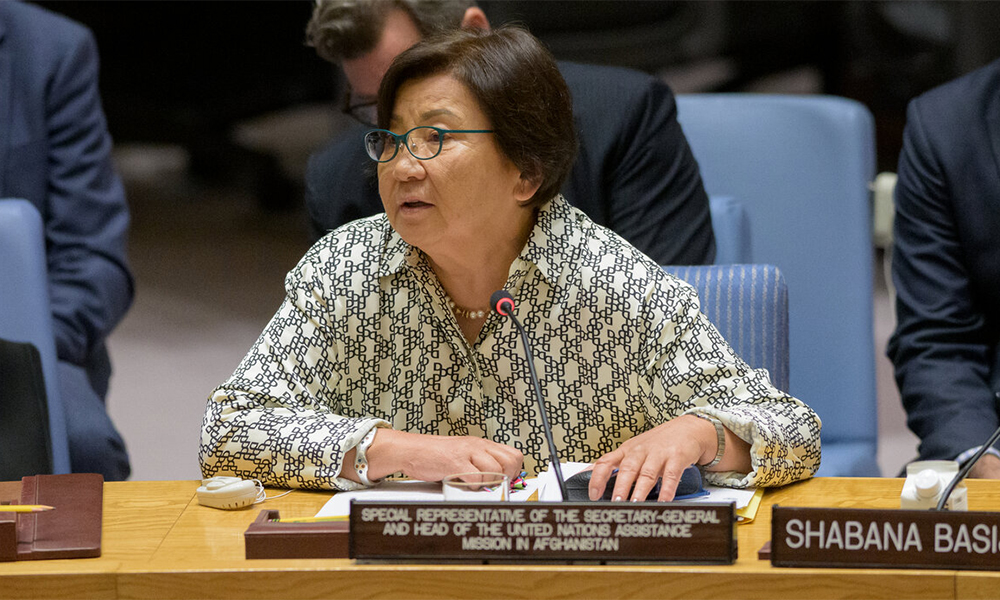
The UN Secretary-General’s Special Representative for Afghanistan, Roza Otunbayeva said on Wednesday that the bans affecting women and girls in the country were “obscuring” some of the other more positive achievements that have taken place under the Islamic Emirate of Afghanistan (IEA).
She said UNAMA continues to face a “complicated situation in Afghanistan,” and that restrictions against Afghan women working for the United Nations places a question mark over the organization’s activities across the country.
Briefing the UN Security Council, Otunbayeva said: “We have been given no explanations by the de facto authorities for this ban and no assurances that it will be lifted.”
She stated UNAMA will not put their national female staff in danger, and therefore have stopped them from reporting to work since the ban was imposed in April. All male national staff performing non-essential tasks are also still at home.
Otunbayeva went on to say, the UN in Afghanistan is “steadfast” over their decision that “female national staff will not be replaced by male national staff as some de facto authorities have suggested.”
She said: “The Taliban (Islamic Emirate) ask to be recognized by the United Nations and its members, but at the same time they act against the key values expressed in the United Nations Charter.”
On positive changes identified, she said: “One of these is the growing evidence that the Taliban’s ban on opium cultivation, announced in April last year, has been effectively enforced in many parts of the country. According to initial media reports, cultivation of opium has significantly decreased.”
She added however that at the same time, the opium economy has helped sustain parts of the rural economy in Afghanistan. “Donors should consider allocating funding to alternative livelihood programmes that address the specific needs of farmers affected by the ban,” she said.
Otunbayeva also pointed out that the Afghan economy remains stable, albeit at a low equilibrium and that according to the World,
inflation is declining and the exchange rate remains steady.
“In part this is due to the welcome reduction of high-level corruption. The de facto authorities continue to report the collection of sufficient revenues to finance government operations, including paying civil service salaries,” she said.
However, this macro-economic stability, coexists with severe household poverty. She said 58 percent of households struggle to satisfy basic needs and that humanitarian efforts continue to address the needs of the nearly 20 million people.
She warned that given the drop in donor funding, United Nations cash shipments, required for humanitarian operations, are expected to decrease.
She went on to say that the IEA is making concerted counter-terrorism efforts, particularly with Daesh. Despite this, attacks have taken place, she said.
Otunbayeva also stated that while the end of the armed conflict has greatly reduced the number of civilian casualties since the IEA came to power, the United Nations Mine Action Service in Afghanistan estimates around 100 casualties per month from unexploded ordnance.
According to her, UNAMA is “greatly concerned by Afghanistan’s vulnerability to climate change. Years of drought have compounded the effects of conflict and poverty. Climate change is fostering population displacements inside Afghanistan that could be destabilizing,” she said adding that in order to address Afghanistan’s lack of water and consequent food insecurity, the IEA has begun digging a canal that will divert waters from the northern Amu Darya river, raising the concerns of neighboring countries.
“Overall the need to mitigate the effects of climate change requires a more specific dialogue between the de facto authorities and the international community,” she said.


Latest News
Iran’s Qaani: We must strengthen the belt of defense and dignity from Afghanistan to Yemen
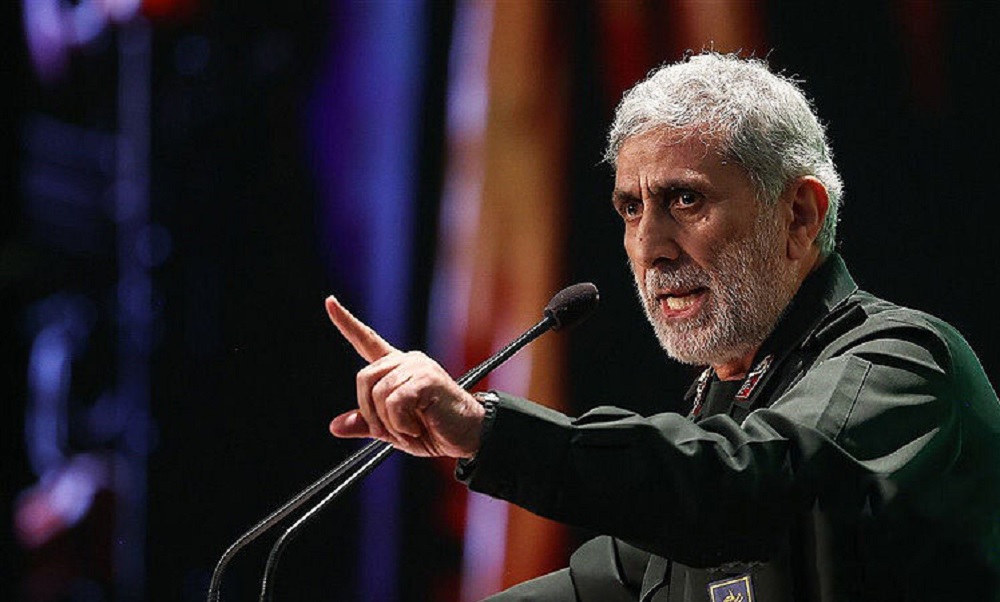
Esmail Qaani, commander of Iran’s Islamic Revolutionary Guard Corps Quds Force, has called for strengthening what he described as a “belt of defense, independence and dignity” from Afghanistan to Yemen.
Speaking at a ceremony in Tehran on Thursday, Qaani said: “We must strengthen the belt of defense, independence and dignity from Afghanistan to Yemen, and from Iran to Gaza and Lebanon, across the Muslim world.”
He also claimed that the so-called “resistance axis” continues on its path despite the killing of a number of its commanders.
The Quds Force commander further claimed that the United States had been expelled from Iraq despite its extensive capabilities and equipment, and had suffered a defeat against Iran.
Qaani added that the U.S. had believed it could force Iran to surrender within four days or, at most, two weeks, but instead faced circumstances that were different from its calculations.
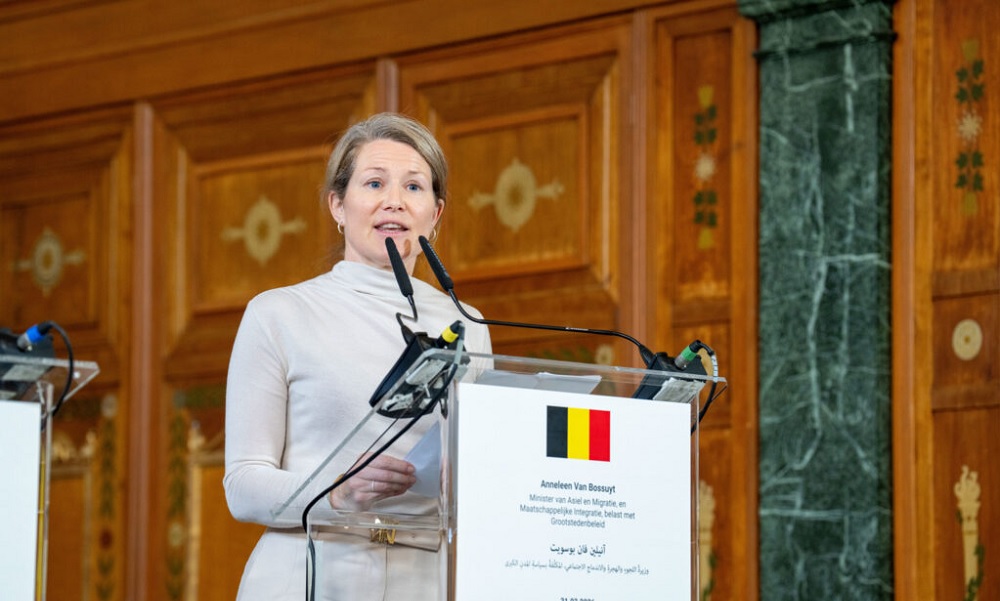
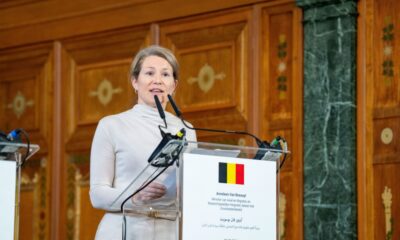
Belgium’s Minister for Asylum and Migration Anneleen Van Bossuyt has said Afghan nationals convicted of crimes and staying in Belgium illegally should be returned to Afghanistan after completing their prison sentences.
“I do not want them walking freely around our territory,” Van Bossuyt said.
She added that discussions with the Islamic Emirate of Afghanistan (IEA) over the return of such individuals do not amount to supporting the IEA.
“Afghan criminals who are staying illegally and are in our prisons, for example for the rape of minors, must return after serving their sentences,” she said.
Van Bossuyt said such contacts were aimed at addressing security concerns, including the safety of women and girls in Belgium.
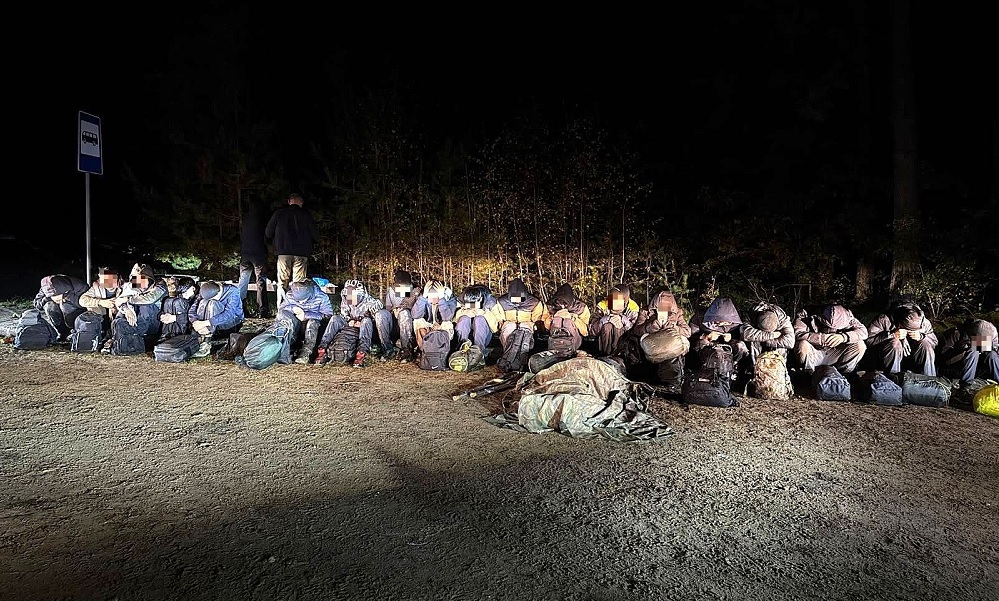
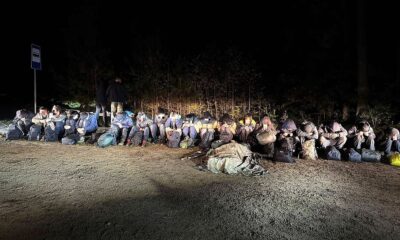
Lithuanian border guards have detained 35 Afghan and Iraqi migrants who crossed into Lithuania from Belarus, the Lithuania’s State Border Guard Service (VSAT) said.
The group was detected on Thursday evening after crossing the border near Katras village in the Varėna district, part of the Čepkeliai nature reserve.
Lithuanian authorities launched a large-scale operation to locate the migrants, deploying a VSAT helicopter, border guards, special forces and sniffer dogs. Police also assisted in the operation.
The migrants split into several groups but were detained before they could travel deeper into Lithuanian territory.
All 35 detainees were men aged approximately 20 to 30. Eleven had identification documents, while the others had none.
The VSAT said individual assessments found no security threats among the group. By Friday morning, 29 of the migrants had been denied entry and returned to Belarus in accordance with Lithuanian law.
Interviews with five others were still underway, while another migrant was taken to a medical facility for examination after reporting health problems.
Lithuanian border authorities said they have prevented 1,661 migrants from illegally entering the country from Belarus so far this year.


Afghan, Russian health ministers discuss cooperation

Iran’s Qaani: We must strengthen the belt of defense and dignity from Afghanistan to Yemen

Rashid Khan plans to build cricket academy and stadium in Nangarhar

Belgian minister says convicted Afghan criminals should return after serving sentences

Lithuania detains 35 Afghan and Iraqi migrants crossing from Belarus

Saudi energy group signs major Afghanistan deals covering gas exploration and pipeline plans

Khalilzad: Afghanistan ready to attract major investment

Khyber Chamber demands reopening of Torkham crossing

Messi returns to Inter Miami after Argentina retirement

Imam Abu Hanifa exhibition to draw exhibitors from more than 20 countries

Tawsia: Review of three key economic developments in Afghanistan

Tahawol: Pakistan’s airstrikes on civilians in Afghanistan discussed

Tahawol: Improvement in Afghanistan-China relations discussed

Saar: Expanding ties with regional and global countries discussed

Tahawol: Absence of Afghanistan’s envoy at UNGA discussed
-
 Sport5 days ago
Afghanistan vs India Asian Games quarter-final abandoned without a toss
-
 Regional4 days ago
US, Iran separately talk with mediators in latest bid to end war
-
 Regional3 days ago
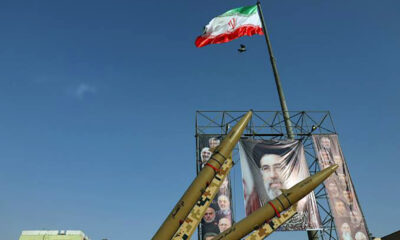
US imposes sanctions on 13 tied to Iran weapons procurement
-
 Health5 days ago
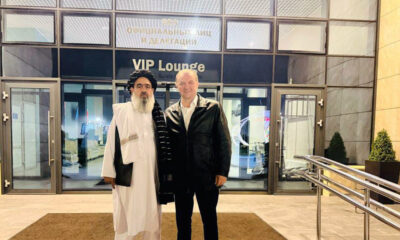
Health minister visits Belarus to expand medical cooperation
-
 Sport5 days ago
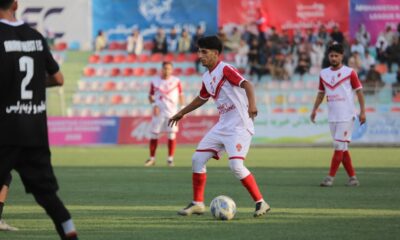
ACL: Sorkh Poshan Khafi maintain perfect record with 1-0 win over Ariana Khost
-
 Latest News2 days ago
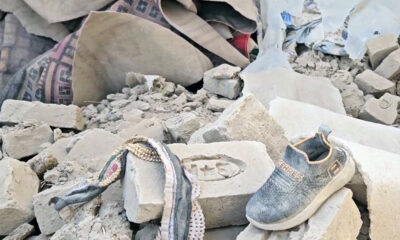
Four members of one family killed in Helmand in Pakistan airstrike
-

 Climate Change4 days ago
Afghanistan on climate front line as Kabul faces groundwater warning
-

 Sport4 days ago
Istiqlal Kabul beat Khurasan Faryab 2-0 with late goals