
Latest News
UNDP warns curbs on women’s rights will worsen economic catastrophe in Afghanistan

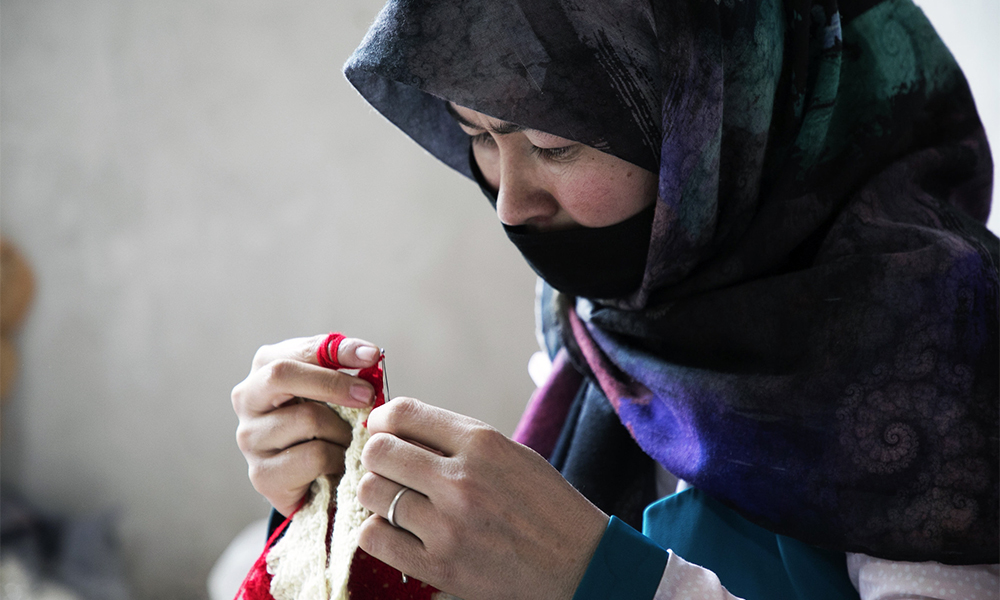
A new study of Afghanistan’s economy shows that without continuity for girls’ education and women’s ability to work, prospects for the country’s recovery will remain grim.
The study, “Afghanistan Socio-Economic Outlook 2023”, released Tuesday in Kabul by the United Nations Development Programme (UNDP), details how Afghanistan’s economic output collapsed by 20.7 percent following the Islamic Emirate of Afghanistan’s takeover in 2021. “This unparalleled shock has kept Afghanistan among the poorest countries in the world,” the agency said.
Despite tentative signs of recovery, such as a relatively stable exchange rate, an increase in exports, growing demand for labor, and muted inflation, GDP is estimated to have further declined by 3.6 percent in 2022, the report noted.
“A sustained inflow of foreign aid, to the tune of $3.7 billion in 2022, has helped avert the total collapse of Afghanistan,” said UNDP Resident Representative in Afghanistan Abdallah Al Dardari.
The United Nations (UN) contributed $3.2 billion of the overall $3.7 billion in foreign aid to Afghanistan in 2022. UN assistance directly reached 26.1 million Afghans with some form of aid, while helping to stabilize the exchange rate, curb inflation and affect other economic indicators.
The new report projects that the 2023 GDP in Afghanistan could increase by 1.3 percent if the level of foreign aid remains at $3.7 billion. However, prospects for economic recovery remain weak and insufficient over the long term, especially if foreign aid is withheld as a result of restrictive IEA policies, UNDP stated.
“There will be no sustainable recovery without the active participation of Afghan women in the economy and in public life, which includes delivering on humanitarian and livelihoods-saving projects,” said UNDP Regional Director for Asia and the Pacific, Kanni Wignaraja. “Only the full continuity of girls’ education and women’s ability to pursue work and learning can keep the hope of any real progress alive.”
The new UNDP paper analyzes the potential impact of a hypothetical aid cut on Afghanistan’s economy. Using an indicative value of a 30 percent reduction in aid from $3.7 billion to $2.6 billion, UNDP projects that Afghanistan’s GDP would further contract by 0.4 percent, a decline that would send the country hurtling to the bottom of the global poverty scale.
The study notes that impoverished Afghans are already taking extreme measures to survive. “Some have been compelled to sell their homes, land, or assets that generate income; others have resorted to the distressing practice of commodifying their own family members, turning children into laborers and young daughters into brides,” the report states.
“Afghanistan is on the brink of economic collapse, exacerbated with the takeover in August 2021. The effects of the pandemic, followed by an extraordinary 20.7 percent contraction of the economy, and an unusually severe drought, have resulted in the loss of food, livelihoods and access to basic services,” said UNDP Administrator Achim Steiner in a statement. “Only the continued provision of international aid and basic services to millions of Afghans have prevented a full collapse.”
The research finds that the number of people living in poverty skyrocketed from 19 million in 2020 to 34 million in 2022. “If foreign aid is reduced this year, Afghanistan may fall from the cliff edge into the abyss,” Al Dardari cautioned.












Kazakhstan’s Foreign Minister Mukhtar Tileuberdi has called for pragmatic and coordinated international engagement with Afghanistan, saying the country’s long-term stability is closely linked to the security and sustainable development of Central Asia.
Speaking during the general debate of the 81st session of the United Nations General Assembly in New York on Friday, Tileuberdi said humanitarian assistance to Afghanistan remains essential but alone cannot break the cycle of poverty, displacement and dependency.
He said Kazakhstan supports a “pragmatic, coordinated and step-by-step” approach to international engagement with Afghanistan, with the United Nations playing a central role.
Tileuberdi also said Kazakhstan is working with the UN to operationalize the United Nations Regional Centre for the Sustainable Development Goals for Central Asia and Afghanistan in Almaty.
He said the success of the centre should be measured by the results and assistance it delivers to the region.


Abu Muslim Farah defeat Khurasan Faryab 2-0 in ACL season six

Saar: Concerns over Pakistan’s political crisis discussed

Afghanistan Champions League: Omar Zawak Herat beat Toofan Herat 1-0

Blast in Pakistan’s Dera Ismail Khan kills 11, injures 30

Ariana Afghan Airlines increases Kabul-Delhi cargo flights

Saudi energy group signs major Afghanistan deals covering gas exploration and pipeline plans

Trump floats idea of renaming Atlantic or Pacific Ocean

US hits Egyptian bank branches with Iran sanctions as war marks six months

Nepal flood rescue mission enters critical phase as thousands remain missing

Iranian clubs to face Gulf opponents at neutral venues in Asian Champions League Elite
Saar: Concerns over Pakistan’s political crisis discussed

Exclusive interview with Abdul Latif Mansoor, Minister of MRRD

Tawsia: Overview of Afghanistan’s iron mines

Tahawol: Discussion on fresh Pakistani airstrikes on Afghanistan

Saar: Calls for international support for Afghanistan discussed
-

 World5 days ago
CNN, MS NOW and Politico sue Trump, challenging White House ban
-

 Latest News3 days ago
Ariana Afghan Airlines ranks seventh among 45 Central Asian airlines
-

 Latest News5 days ago
UN reiterates call for respect for international law after Kunar airstrikes
-

 Regional4 days ago
US and Iran hold first talks since June after Trump’s ‘annihilation’ threat
-

 Latest News3 days ago
Silk Road highway in Wakhan corridor now reaches the China border
-

 Latest News5 days ago
Afghan Official: Pakistan’s airstrikes will not go unanswered
-

 Sport5 days ago
Afghan boxing referee heads to China for international festival
-

 Regional3 days ago
Iran airlines cancel flights as US sanctions hit