
Latest News
UNICEF report highlights progress and ongoing challenges for Afghan children
In addition, around 10 million children and mothers benefited from essential nutrition services and supplies aimed at preventing malnutrition.

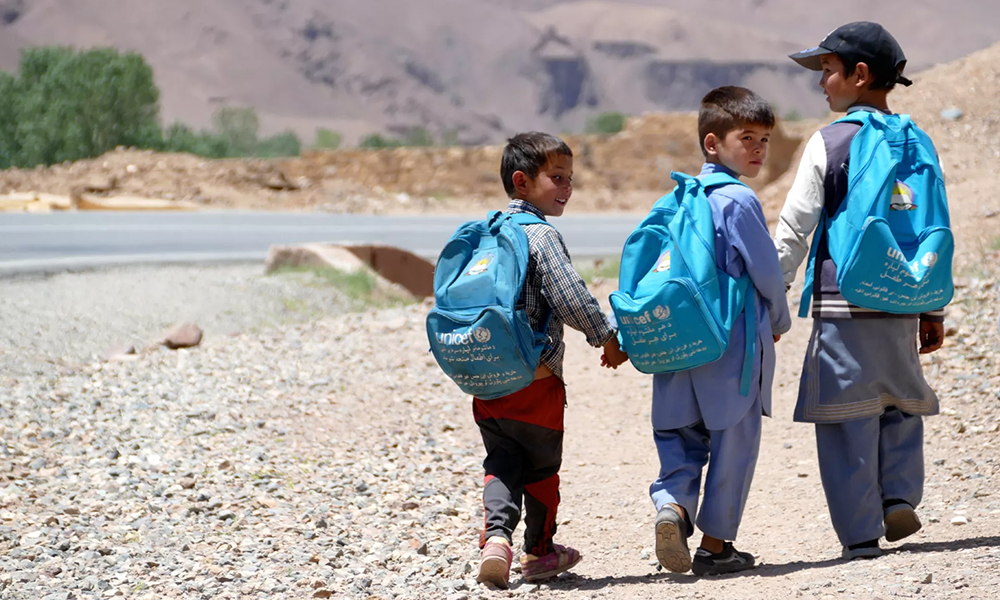
UNICEF Afghanistan Annual Report 2025 has outlined significant gains in support for children and families, while warning that serious challenges persist across the country.
According to the report, more than 20 million people — including 5.6 million children — accessed primary healthcare services through UNICEF-supported facilities over the past year.
In addition, around 10 million children and mothers benefited from essential nutrition services and supplies aimed at preventing malnutrition.
Education support also remained a key focus, with four million children receiving teaching and learning materials across schools, community-based programmes, and emergency settings.
Meanwhile, 2.7 million people were provided with emergency water, sanitation, and hygiene (WASH) services.
UNICEF said the results reflect both the scale of humanitarian needs in Afghanistan and the impact of sustained international support. The agency expressed gratitude to its partners and donors, as well as to the Afghan people, whose resilience and determination continue to underpin progress.
Despite these achievements, the report stresses that ongoing investment and assistance are critical to addressing persistent gaps and ensuring a more stable future for Afghanistan’s children.

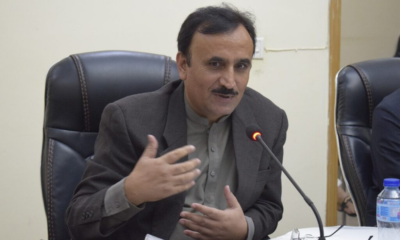


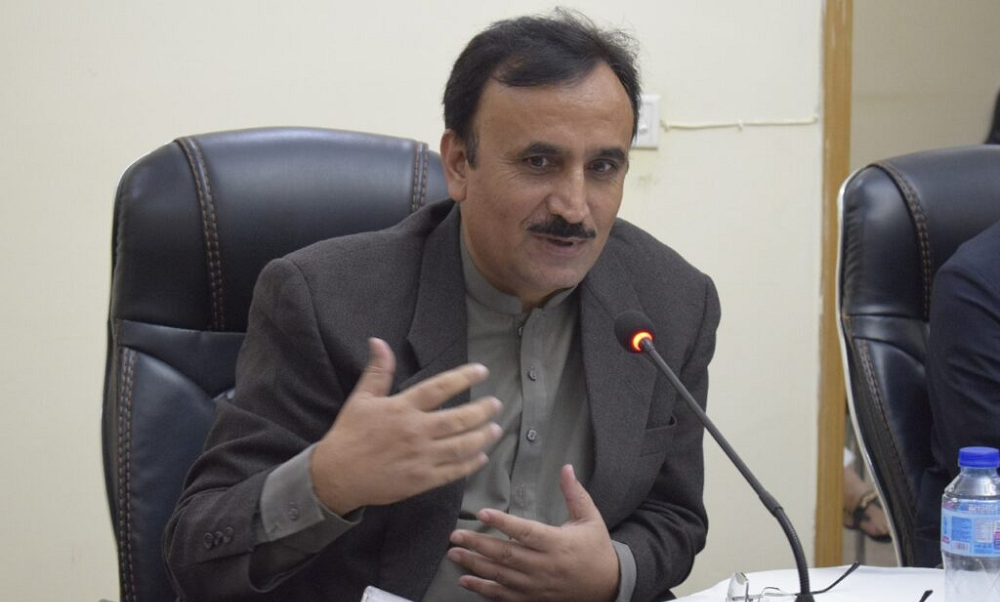
Abdullah Khan, Director of the Pakistan Institute of Conflict and Security Studies, has called for an open and meaningful national dialogue on Pakistan’s Afghan policy, arguing that the current approach is not weakening the Islamic Emirate but is increasingly pushing ordinary Afghans away from Pakistan.
In a statement, Khan said the people who formulated Pakistan’s current Afghan policy may be highly capable, but the direction and objectives of the policy appear difficult for ordinary citizens to understand.
“If Pakistan’s conflict is with the Taliban (IEA), why are measures being taken that could turn the entire Afghan population against Pakistan?” he questioned.
Khan also questioned proposals for supporting armed groups against the IEA. He said he personally did not support backing armed groups against the IEA, but if Pakistan ever considered such a strategy, an important question would be whether it still had reliable Afghan partners.
He argued that after Pakistan repatriated large numbers of Afghan citizens and continued measures encouraging those remaining in the country to leave, it would be difficult to persuade Afghan groups to trust Pakistan or work with it.
Khan further criticised what he described as Pakistan’s decision to treat the IEA as an enemy on a level comparable to India, calling it a dangerous strategic direction. He warned that such an approach could create space for India to rebuild its influence in Afghanistan and potentially use Afghan territory against Pakistan.
He questioned whether Pakistan could afford to open two fronts simultaneously along its eastern and western borders while already facing a serious terrorism challenge.
According to Khan, terrorism in Pakistan has increased significantly since the adoption of a hardline Afghan policy in October 2023. He also said border closures and other measures had adversely affected Pakistani and Afghan traders.
He called for an immediate national debate on Afghanistan policy to develop a workable strategy capable of addressing Pakistan’s security concerns while protecting its broader national interests.
Khan stressed that Pakistan’s Afghan policy should not be driven by the preferences of one individual or a limited group, but should instead be based on the broader national interest, Pakistan’s security and the lives of its security personnel.
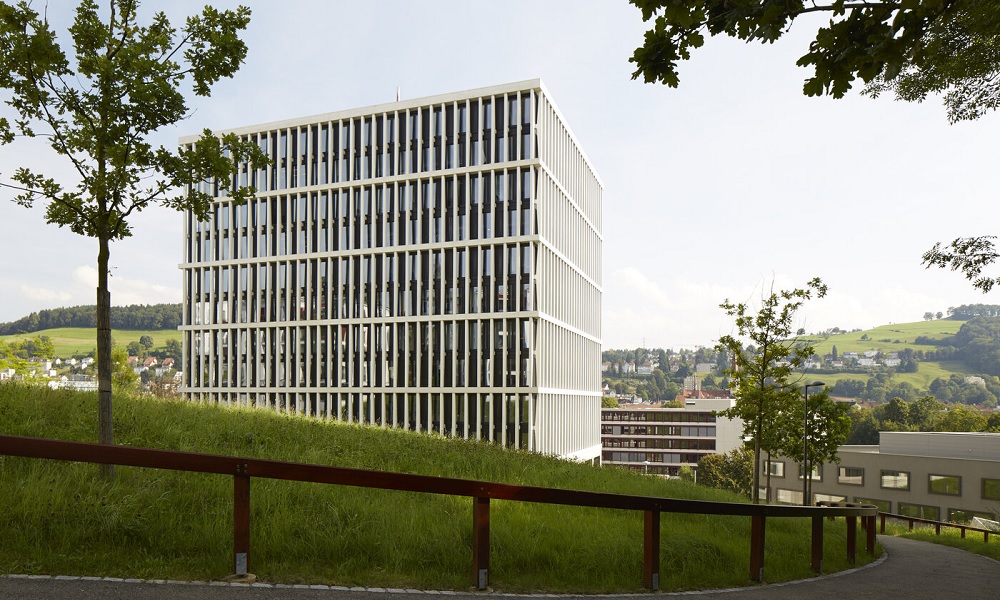
Switzerland’s Federal Administrative Court has ruled that some Afghan refugees can be returned to Afghanistan under “favorable individual circumstances,” according to Swiss media.
The ruling came after the court rejected an appeal by a young Afghan man against his deportation, SWI reported on Wednesday.
The court reassessed the security and humanitarian situation in Afghanistan and concluded that deportations could be allowed in cases involving people with favorable individual circumstances.
The case concerned a young, healthy Afghan man who has work experience and reportedly has family support in Kabul.
Switzerland’s migration authorities rejected his asylum application in late 2025 and ordered him to leave the country.
The court said returns to Afghanistan should remain limited but could be permitted in certain individual cases.
Latest News
Iran, China and Turkey rank as IEA’s top three diplomatic partners since 2021
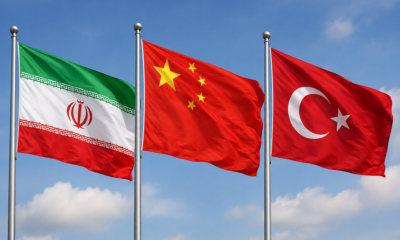
Iran ranked first with 494 country-level engagements, followed by China with 432 and Turkey with 394. Qatar and Uzbekistan ranked fourth and fifth, with 347 and 316 engagements respectively.
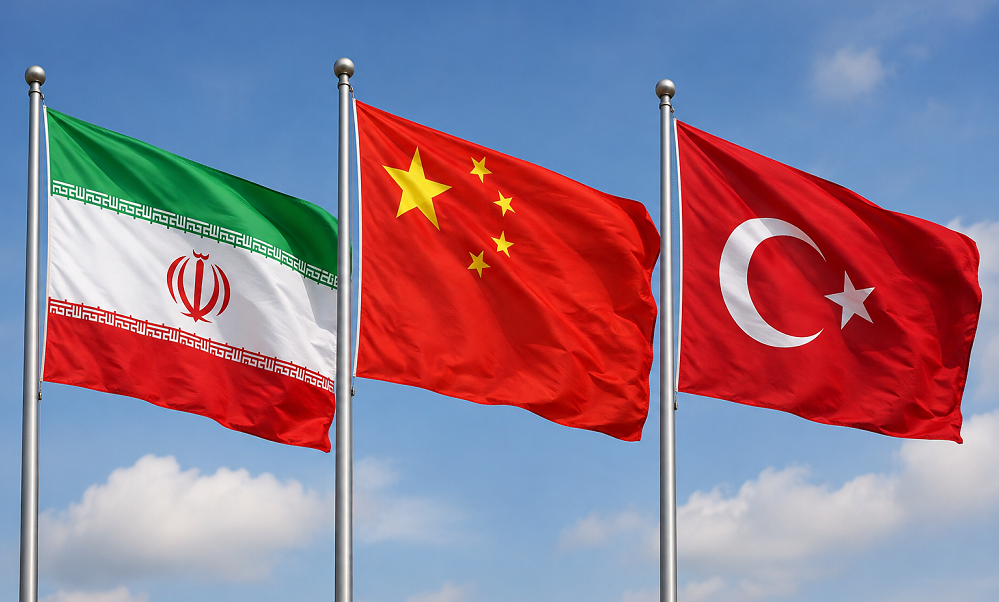
Iran, China and Turkey have been the Islamic Emirate’s three most frequent diplomatic partners since IEA returned to power in Afghanistan in 2021, according to a new analysis by Aaron Y. Zelin, a senior fellow at the Washington Institute for Near East Policy.
The analysis covers the IEA’s diplomatic engagements between August 15, 2021, and August 15, 2026. During this period, the IEA publicly announced 3,651 diplomatic engagements with 103 countries and entities.
Iran ranked first with 494 country-level engagements, followed by China with 432 and Turkey with 394. Qatar and Uzbekistan ranked fourth and fifth, with 347 and 316 engagements respectively.
None of these countries have formally recognized the IEA government.
Russia remains the only country to have formally recognized the Taliban government, doing so in July 2025. Turkey is among a broader group of countries, including Persian Gulf and Central Asian states, that have accepted Taliban-appointed diplomats without formally recognizing the government.
The analysis says the IEA has increasingly focused on strengthening existing relationships through consulates, joint commissions and trade councils, rather than establishing ties with new countries.
Meanwhile, Western diplomatic engagement has declined significantly, accounting for about 16 percent of IEA diplomatic activity in the first year after the takeover, compared with only 5 percent in the fifth year.
Zelin argues that the IEA has expanded its international relations without making major concessions on issues including restrictions on women and girls and security concerns.


Pakistan needs national dialogue on Afghan policy: security expert

Iran’s president calls for facilitation of trade with Afghanistan

Swiss court says some Afghan asylum seekers can be returned

Iran, China and Turkey rank as IEA’s top three diplomatic partners since 2021

Trump warns of economic consequences for any country that supports Iran

Pakistan’s governance system has ‘collapsed’: Mohsin Naqvi

AFC confirms clubs for 2026/27 competitions; draw set for August 18

Afghanistan exports first stone shipment to US in $100,000 trade milestone

Germany defends Afghan deportation policy after fatal Trier knife attack

New AI tool helps Afghans identify visa pathways

Tahawol: Marking Afghanistan’s 107th independence anniversary

Saar: 107th anniversary of Afghanistan’s independence discussed

Tahawol: Iran’s position on recognizing Islamic Emirate discussed

Saar: Afghanistan’s policy of avoiding confrontation discussed

Tahawol: U.S. non-recognition of IEA
-
 Latest News3 days ago
Juma Khan Fateh surrenders to IEA forces in Badakhshan
-
 Latest News5 days ago
Afghanistan expresses regret over civilian death in Tajikistan border incident
-
 Business4 days ago
Azizi: Afghanistan ready to attract Chinese and Uzbek investment
-
 Sport5 days ago
Afghanistan crowned champions of five-match ODI series against Ireland
-
 Latest News4 days ago
Iran eyes Afghanistan as key economic opportunity amid sanctions
-
 Climate Change4 days ago
US Midwest reels from deadly storms and historic floods
-
 Latest News4 days ago
Pakistan allows 724 humanitarian aid trucks into Afghanistan via Torkham
-
 Regional4 days ago
Qatar denies detaining Iranian pilots, says it found remains of one