
Regional
Urgency mounts in search for survivors of Tibet earthquake
People trapped under rubble would have endured a night in sub-zero temperatures, adding to the pressure on rescuers looking for earthquake survivors

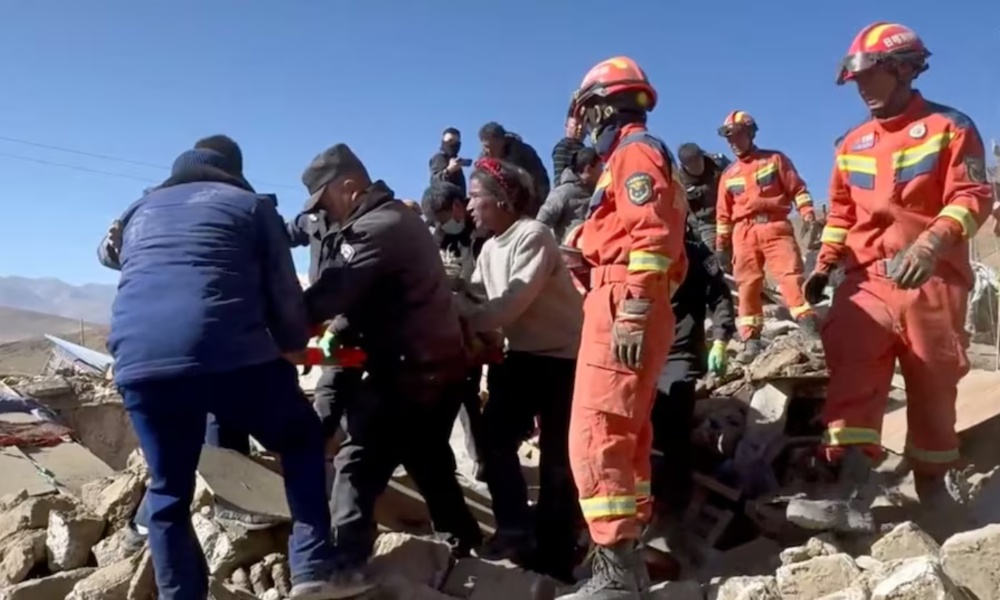
More than 400 people in Tibet trapped by a deadly earthquake in the foothills of the Himalayas have been rescued, Chinese officials said on Wednesday, but an unknown number remained unaccounted for in severe cold weather.
The epicentre of Tuesday’s magnitude 6.8 quake, one of the region’s most powerful tremors in recent years, was located in Tingri in China’s Tibet, about 80 km north of Mount Everest, the world’s highest mountain. It also shook buildings in neighbouring Nepal, Bhutan and India.
Reuters reported that 24 hours after the temblor struck, those trapped under rubble would have endured a night in sub-zero temperatures, adding to the pressure on rescuers looking for survivors in an area the size of Cambodia.
Temperatures in the high-altitude region dropped as low as minus 18 degrees Celsius overnight.
People trapped or those without shelter are at risk of rapid hypothermia and may only be able to live for five to 10 hours even if uninjured, experts say.
At least 126 people were known to have been killed and 188 injured on the Tibetan side, state broadcaster CCTV reported.
No deaths have been reported in Nepal or elsewhere.
Chinese authorities have yet to announce how many people are still missing.
In Nepal, an official told Reuters the quake destroyed a school building in a village near Mount Everest, which straddles the Nepali-Tibetan border, but no one was inside at the time.
Jost Kobusch, a German climber, said he was just above the Everest base camp on the Nepali side when the quake struck.
“I’m climbing Everest in the winter by myself and…looks like basically I’m the only mountaineer there, in the base camp there’s nobody”
His tent shook violently and he said he saw several avalanches crash down, although he was unscathed.
“I’m climbing Everest in the winter by myself and…looks like basically I’m the only mountaineer there, in the base camp there’s nobody,” he told Reuters in a video call.
His expedition organising company, Satori Adventure, said Kobusch had left the base camp and was descending to Namche Bazaar on Wednesday on the way to Kathmandu.
An initial survey showed 3,609 homes had been destroyed in Tibet’s Shigatse region, home to 800,000 people, state media reported late on Tuesday, citing local officials.
Over 1,800 emergency rescue personnel and 1,600 soldiers had been dispatched to the region.
More than 500 aftershocks with magnitudes of up to 4.4 had followed the quake as of 8 a.m. on Wednesday, the China Earthquake Networks Centre said.
In 2008, an 8.0 magnitude earthquake hit Sichuan’s Chengdu, claiming the lives of at least 70,000 people, the deadliest quake to hit China since the 1976 Tangshan quake that killed at least 242,000 people.





Arab states in the Gulf called off a meeting with Iran planned for Monday, while Yemen’s Houthis launched a new attack on Saudi Arabia after fighting that has extended the Middle East war to another theatre and further jeopardised global oil supplies.
The Iran-aligned Houthis in Yemen said they fired dozens of missiles and drones on Monday at a Saudi military airbase in Khamis Mushait, near the border, hitting aircraft hangars, radar systems, runways and ammunition depots. They described the attack as retaliation for hundreds of Saudi airstrikes on Yemen in recent days, Reuters reported.
Saudi authorities announced brief emergency alerts there and in three other southern cities which have previously come under Houthi fire.
The Houthis launched a lightning advance last week in Yemen, culminating in the seizure of an island in the mouth of the Red Sea on Friday. A separate attack that day, which Riyadh blamed on Iran-backed fighters in Iraq, knocked out Saudi Arabia’s east-west pipeline, the main route for Middle East oil bypassing the blockaded Strait of Hormuz.
OIL PRICES JUMP
Crude oil prices rose more than 3% on Monday, when the market reopened after the weekend, while the politically sensitive average retail price of diesel in the United States hit a new all-time high above $6.23 a gallon.
Traders say the closure of the Saudi pipeline could cut off as much as 4% of global oil supply unless it is reopened within days. Images from space show sections of the pipeline damaged by blazes. Riyadh has not given a firm estimate for how long it will be shut.
Oman had been due to host a meeting on Monday with Iran and Gulf states to discuss negotiations aimed at reopening Hormuz, the world’s most important oil shipping lane, largely closed since the U.S. and Israel attacked Iran at the end of February.
But Oman’s Foreign Minister Sayyid Badr Albusaidi announced overnight that the meeting had been postponed “in the interests of consensus”. Iran said the postponement was at the request of Saudi Arabia.
Meanwhile, Iran issued a list of 77 ships it said had violated its protocols for operating in the Strait of Hormuz. Any ship on the list would face “restrictions on future passages, including fines, detention, or confiscation”, and other ships that assisted them by accepting transfers of cargo would be added to the list.
EXPANSION OF WAR TO YEMEN POSES DILEMMA FOR TRUMP
The upsurge of fighting in Yemen poses a dilemma for Washington, which is under pressure to aid its Saudi allies but anxious not to expand the costly war to a new theatre.
Saudi Arabia has led an Arab coalition battling the Houthis for more than a decade, after the mountain fighters captured Yemen’s capital in 2014. The war there had largely been quiet under a ceasefire for the past few years, but fighting has now resumed, with the Houthis driving back forces from a Saudi-backed government based in the south.
Thousands of Yemenis have fled inland from the coast to escape fighting as the Houthis swept into cities including the historic Red Sea port of Mocha last week.
Aisha Muhammad, an elderly woman burning twigs to heat a kettle in government-held territory near Taiz, told Reuters she had left behind two daughters and three sons who had been unable to escape.
“They can’t even go out to the market to get food and drinking water. They are being blocked and shot at, so they are trapped inside their homes,” she said. “They cannot reach us, and we cannot return to them. This is a trial from God.”
On Friday the Houthis captured Perim Island, inside the Bab el-Mandeb, the “Gate of Tears” strait, at the mouth of the Red Sea.
U.S. President Donald Trump is under pressure to end the war to relieve the global energy shortage and lower prices that are hurting the fortunes of his Republican Party ahead of mid-term elections in November.
Three sources have told Reuters that Washington has so far rebuffed pleas from Saudi Arabia’s Crown Prince Mohammed bin Salman to intervene in Yemen. Trump confirmed over the weekend that he had spoken to the prince, and said the Houthis had also phoned asking Washington to keep out of the dispute.
The United States bombed the Houthis in 2025 for two months, but Trump called off that campaign after reaching a ceasefire with the group, which he said had promised not to attack ships in the Red Sea.
Trump, who attended a golf tournament at one of his resorts in Ireland, said he expected the Iran war to end shortly after the elections in November, after which the price of oil would “drop like a rock”.
Regional
Hormuz shipping traffic remains below 10-day average at weekend, data shows
A U.S. blockade of Iran-related shipping has halted Iranian crude oil exports since it was reimposed in mid-July.
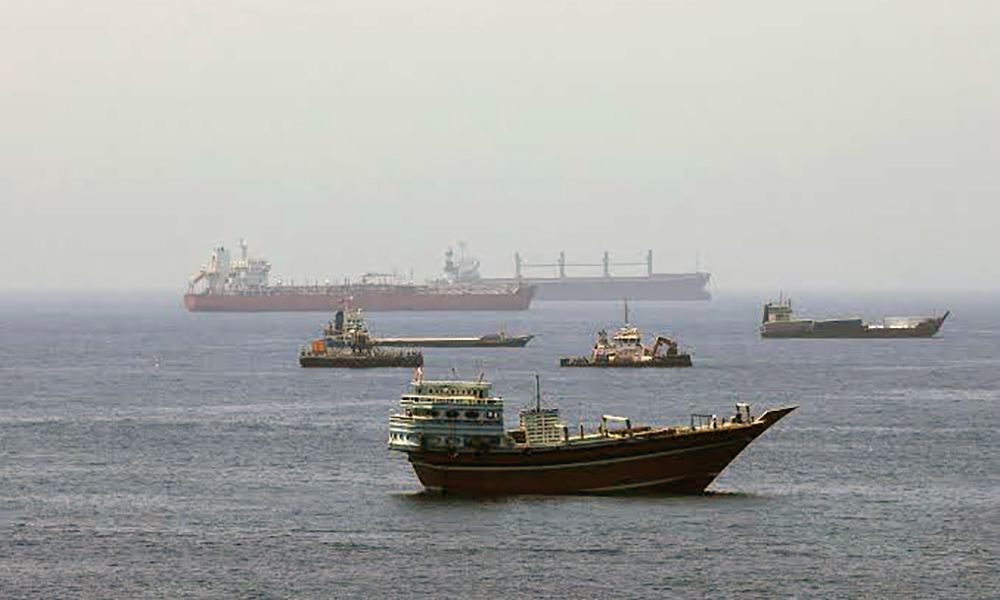
Commodity vessel transits through the Strait of Hormuz fell to a single digit per day at the weekend, preliminary shiptracking data showed on Monday, well below a 10-day average of 14, Reuters reported.
Over the weekend, four vessels exited the Gulf through the strait, including a Handysize vessel sailing in ballast, a Handy vessel carrying LPG, a Supramax carrying fertilizer and a Suezmax laden with crude or condensate.
Ten vessels entered the Gulf, including a mini-bulker carrying minor bulk commodities, a Handymax carrying grain, a Panamax carrying metals and a Supramax carrying dry bulk cargo, the data showed.
The figures exclude any vessels that might have crossed the strait with their Automatic Identification System transponders turned off to avoid detection.
A vessel was struck by an unknown projectile while transiting the Strait of Hormuz, the United Kingdom Maritime Trade Operations said early on Sunday.
It said the crew’s status, damage assessment and environmental impact were unknown.
Meanwhile, the vital East-West oil pipeline in Saudi Arabia, which has helped relieve the logjam in the Strait of Hormuz, was temporarily shut down by a drone attack coming from Iraq, Saudi officials said.
Before the Iran war started on February 28, the strait typically handled about 125 large, commercial vessels per day, including tankers, gas carriers, bulkers and container vessels, accounting for some 20% of the world’s daily crude oil and liquefied natural gas supply, read the report.
A U.S. blockade of Iran-related shipping has halted Iranian crude oil exports since it was reimposed in mid-July.
In the Bab el-Mandeb strait, 24 and 27 commodity vessels travelled through respectively on Saturday and Sunday, tracking data showed, compared with an average of around 27 ships over the last 10 days.
Regional
Iran and UAE back joint BRICS statement urging restraint in war
Summit organisers and diplomats have been focused on bridging the Iran-UAE divide, even as the United States and Iran resume tit-for-tat strikes in the six-month-old war.
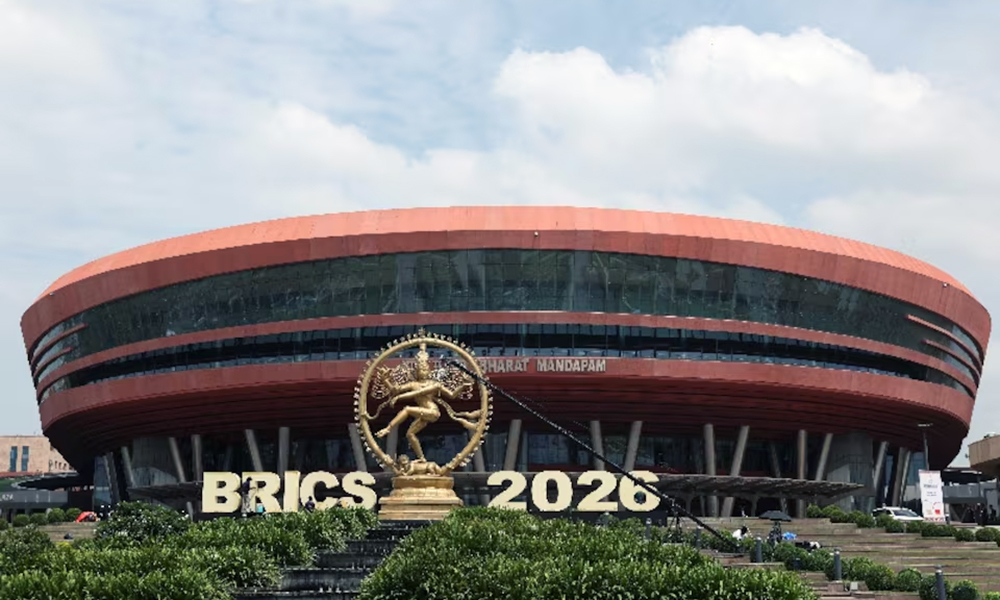
Iran and the United Arab Emirates signed up to a joint statement from the BRICS group of nations that called for restraint in the Middle East war on Saturday, in what was seen as a sign of diplomatic progress between the countries divided by the war, Reuters reported.
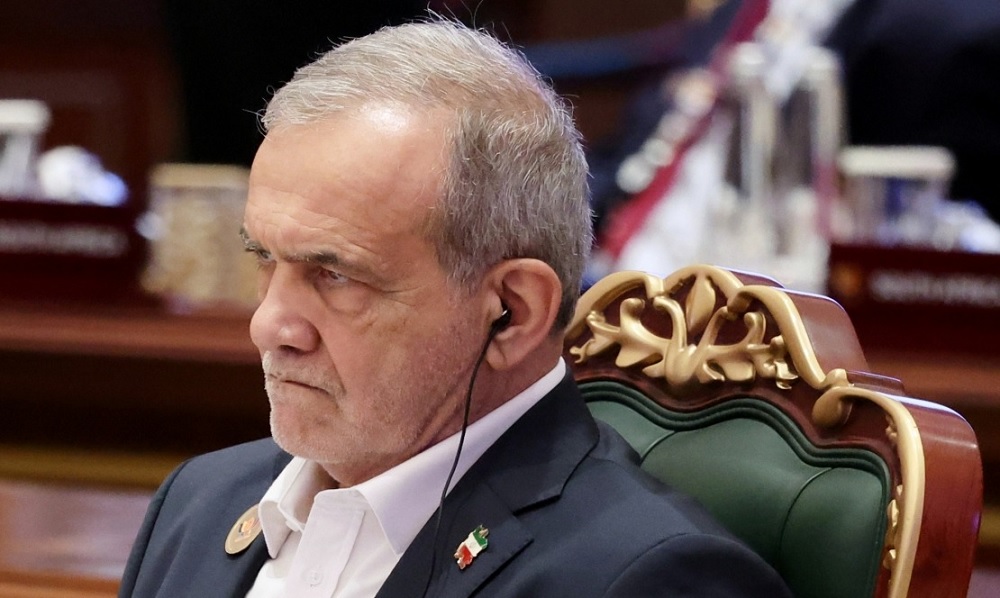
Iranian President Masoud Pezeshkian also met the Crown Prince of Abu Dhabi on the sidelines of the first day of the New Delhi summit, in the countries’ highest-level meeting since the start of the conflict.
The two leaders discussed regional and international issues, de-escalation, stability, and efforts to advance regional peace and development, the Abu Dhabi media office said on X, without referring to any resolution to the discussions.
The BRICS summit is a test of the diplomatic clout of a bloc set up in 2009 to challenge a world order dominated by the United States and its Western allies. It originally comprised Brazil, Russia, India, China and South Africa and expanded to include Egypt, Ethiopia and Indonesia as well as Iran and the UAE.
Summit organisers and diplomats have been focused on bridging the Iran-UAE divide, even as the United States and Iran resume tit-for-tat strikes in the six-month-old war.
Iran has launched repeated attacks on the UAE during the conflict, most recently in late August when it targeted the Al Minhad Air Base that housed U.S. forces and helicopters.
“We express deep concern over the continued escalation of tensions in Middle East/West Asia … call for exercising maximum restraint, as well as avoiding actions that could further aggravate the situation,” the joint BRICS declaration read.
It called for the protection of civilians, urged respect for the sovereignty and territorial integrity of states, and stressed the need to protect global trade, supply chains, energy flows and maritime security.
Foreign policy experts had said the key test for the bloc would be finding language on the Middle East crisis that both Abu Dhabi and Tehran could accept, clearing the way for the joint declaration.
Such a joint statement was unlikely to influence the current geopolitical landscape, but would demonstrate unity by a grouping of emerging nations, they said.
The Iranian embassy in India posted a photo of the meeting between its president and Abu Dhabi Crown Prince Sheikh Khaled bin Mohamed bin Zayed Al Nahyan, the eldest son of the president of the country and the next in line to succeed him, read the report.
But it did not say anything about what they discussed.
“The key to ending the war lies with the U.S. and Israel,” Sunjay Sudhir, a former Indian ambassador to the UAE, told Reuters.
“What India has done is keep the difficult conversations going, by showing that countries of the region can sit at the same table, engage diplomatically, and build on where their interests converge.”
Host India’s Prime Minister Narendra Modi said that the bloc had come of age and it was time to translate its unity and consensus into concrete results on the global stage, as he opened the meeting.
The BRICS bloc is seeking to raise its profile by influencing international rules and demanding the reform of institutions such as the World Bank, International Monetary Fund and World Trade Organization, which some members view as being dominated by Western powers.
Leaders attending the summit include Russia’s Vladimir Putin, China’s Xi Jinping and South Africa’s Cyril Ramaphosa.
Chinese President Xi said BRICS countries should firmly stand on the right side of history by steering the international order toward greater equity and justice.
Xi also said China was ready to play its “due role” in achieving peace and stability in the Middle East.
“Relevant parties must remain committed to a political settlement and work towards achieving a permanent and comprehensive ceasefire,” he said, according to state broadcaster CCTV.
New Delhi, which has strong ties with the United States, Russia, Israel, Iran and the Gulf Arab states, is engaged in a diplomatic balancing act, with Modi pushing BRICS members to boost trade cooperation, reduce barriers and expand business opportunities.


Tahawol: Afghanistan at the center of UN discussions

Nabi reaches 2,500 T20I runs

Economic Commission approves 66 draft national standards

Saar: Afghanistan’s relations with regional countries discussed

Petition filed in Islamabad High Court against PMDC directive affecting Afghan students

Four mediators struggle to secure lasting Pakistan-Afghanistan ceasefire

Juma Khan Fateh surrenders to IEA forces in Badakhshan

Afghanistan’s trade diversification challenges Pakistan

Syria and Saudi Arabia condemn Kabul bombing, express solidarity with Afghanistan

Saudi energy group signs major Afghanistan deals covering gas exploration and pipeline plans
Tahawol: Afghanistan at the center of UN discussions
Saar: Afghanistan’s relations with regional countries discussed

Tahawol: Houthis’ return to regional power dynamics

Tahawol: Calls for U.S. engagement with Afghanistan

Saar: End of Chinese ambassador’s mission in Kabul
-

 Sport4 days ago
Omar Zawak, Toofan Herat secure victories in Afghanistan Champions League
-

 Sport3 days ago
Zadran calls on Afghan fans to rally behind team against India
-
 Latest News3 days ago
Khalilzad warns US risks losing influence in Afghanistan to China and Russia
-

 Regional4 days ago
Saudis shut down oil pipeline as Houthis tighten grip on Red Sea shipping
-

 Latest News5 days ago
Kabul to host tripartite meeting on Afghan migrants’ problems
-

 Latest News4 days ago
Pakistan court blocks expulsion of Afghan medical students
-
 Business3 days ago
EU and FAO launch €5m programme to strengthen Afghanistan’s agrifood sector
-
 World3 days ago
Houthi advance in Yemen puts U.S. in a new bind