
Business
US and China reach deal to temporarily slash tariffs, easing slump fears


The United States and China have agreed to temporarily slash reciprocal tariffs in a deal that surpassed expectations as the world’s two biggest economies seek to end a damaging trade war that has stoked fears of recession and roiled financial markets.
The U.S. will cut extra tariffs it imposed on Chinese imports in April this year to 30% from 145% and Chinese duties on U.S. imports will fall to 10% from 125%, the two sides said on Monday. The new measures are effective for 90 days, Reuters reported.
The dollar rose and stock markets lifted following the news, which helped allay concerns about a downturn triggered last month by U.S. President Donald Trump’s escalation of tariff measures aimed at narrowing the U.S. trade deficit.
“Both countries represented their national interest very well,” U.S. Treasury Secretary Scott Bessent said after talks with Chinese officials in Geneva. “We both have an interest in balanced trade, the U.S. will continue moving towards that.”
Striking a conciliatory tone towards China, Bessent was speaking alongside U.S. Trade Representative Jamieson Greer after the weekend talks in Switzerland in which both sides hailed progress on narrowing differences.
“The consensus from both delegations this weekend is neither side wants a decoupling,” Bessent said. “And what had occurred with these very high tariffs … was the equivalent of an embargo, and neither side wants that. We do want trade.”
The tariff dispute had brought nearly $600 billion in two-way trade to a standstill, disrupting supply chains, sparking fears of stagflation and triggering some layoffs.
The Geneva meetings were the first face-to-face interactions between senior U.S. and Chinese economic officials since Trump returned to power and launched a global tariff blitz, imposing particularly hefty duties on China.
Bessent said the deal did not include sector-specific tariffs and that the U.S. would continue strategic rebalancing in areas including medicines, semiconductors and steel where it had identified supply chain vulnerabilities.
The accord went further than many analysts had expected following weeks of confrontational rhetoric on trade.
“This is better than I expected. I thought tariffs would be cut to somewhere around 50%,” said Zhiwei Zhang, chief economist at Pinpoint Asset Management in Hong Kong.
“Obviously, this is very positive news for economies in both countries and for the global economy, and makes investors much less concerned about the damage to global supply chains in the short term,” Zhang added.
REPRIEVE
Since taking office in January, Trump had hiked the tariffs paid by U.S. importers for goods from China to 145%, in addition to those he imposed on many Chinese goods during his first term and the duties levied by the Biden administration.
China hit back by putting export curbs on some rare earth elements, vital for U.S. manufacturers of weapons and electronic consumer goods, and raising tariffs on U.S. goods to 125%.
Shares in European firms hit by the trade war rallied after the deal. Shipping company Maersk was the biggest gainer in Europe, up more than 12%. It warned last week that container volumes between the U.S. and China had plunged due to the dispute.
Meanwhile, shares in luxury firms LVMH and Gucci-owner Kering were up 7.4% and 6.7% respectively.
U.S. planemaker Boeing did not respond to requests for comment on how the deal would affect deliveries of aircraft to Chinese customers. In April, it said it was looking to resell potentially dozens of planes locked out of China by tariffs.
Wall Street stock futures climbed as the talks boosted hopes a global recession might be averted.
Trump gave a positive reading of the talks before they had concluded, saying the two sides had negotiated “a total reset… in a friendly, but constructive, manner.”
The president levied the tariffs in part after declaring a national emergency over fentanyl entering the United States, and Greer said conversations over curbing the deadly opioid were “very constructive” though on a separate track.
U.S. and Chinese officials met over two days at the Swiss U.N. ambassador’s gated villa overlooking Lake Geneva. Greer said many of the most challenging issues were settled outside, sitting on patio furniture beneath the shade of a tall tree.
“Having this setting, as opposed to … a sterile hotel conference situation or conference rooms, I think, let us develop personal relationships with our counterparts and lead to the successful conclusion,” he said.






Business
Afghanistan-Kazakhstan trade reaches $581 million in six months
The latest discussions come as Kabul and Astana work on a bilateral economic cooperation roadmap, with the two countries aiming to increase annual trade to $3 billion.
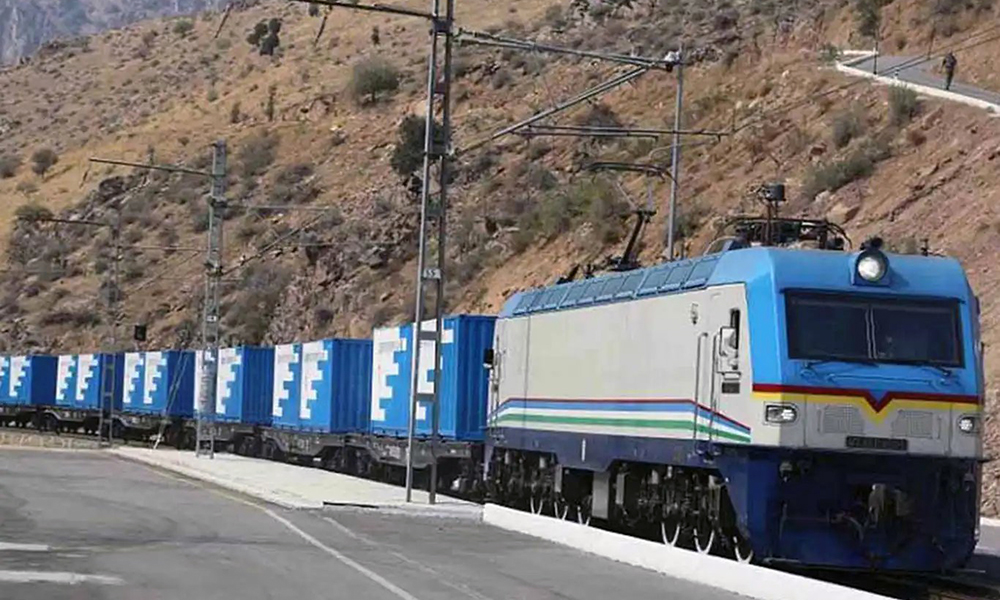
Trade between Afghanistan and Kazakhstan reached $581 million in the past six months, officials in Afghanistan’s western Herat province said.
The figure was discussed during a meeting between Herat Governor Noor Ahmad Islam Jar and a Kazakh delegation led by Yerkin Tukumov, Kazakhstan’s special representative for Afghanistan.
Tukumov stressed the need to expand transit capacity and remove customs barriers to facilitate increased trade between the two countries. He also invited Afghan officials to attend a joint economic meeting scheduled to take place in Kazakhstan.
Islam Jar highlighted Herat’s strategic location and security, describing the province as having significant potential to serve as a hub for investment and regional trade.
Afghanistan and Kazakhstan have previously discussed expanding trade in agricultural products, including Afghan agricultural exports in exchange for flour imports from Kazakhstan.
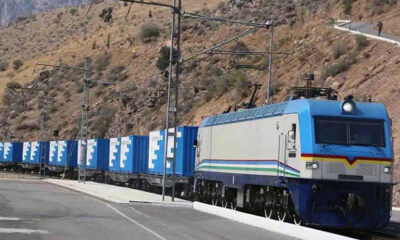
The two sides have also reached understandings on cooperation over the Torghundi-Herat railway project, which is intended to strengthen transport and trade links.
The latest discussions come as Kabul and Astana work on a bilateral economic cooperation roadmap, with the two countries aiming to increase annual trade to $3 billion.
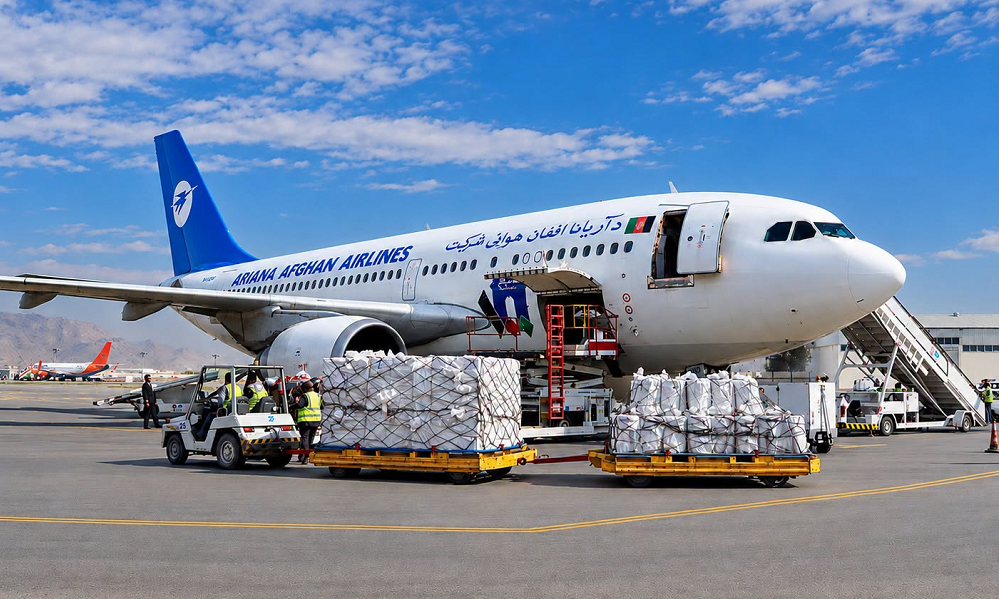
Ariana Afghan Airlines has increased cargo flights between Kabul and Delhi to facilitate the transportation of commercial goods and support Afghan traders.
In a statement issued Saturday, the airline said it will now operate two scheduled cargo flights daily on the Kabul-Delhi route, up from one flight per day previously.
The airline said Afghan traders and commercial companies can use the daily cargo services to transport their goods quickly, safely and reliably between Afghanistan and India.
Ariana Afghan Airlines said it is working to further expand and improve its air cargo services to support trade, meet the needs of Afghan traders and facilitate Afghanistan’s exports and imports.
Business
Afghanistan, Turkmenistan agree to establish joint road transport commission
The sides also agreed to establish a joint commission to address road transport issues and improve coordination.
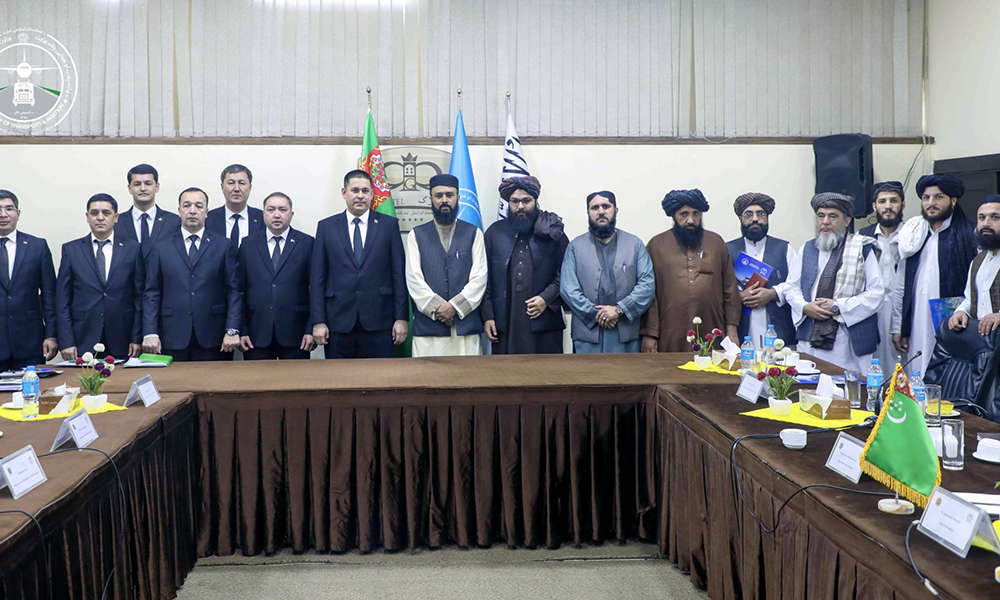
Afghanistan and Turkmenistan have agreed to establish a joint commission on road transport and facilitate transit between the two countries following two days of talks in Herat.
Afghanistan’s Ministry of Transport and Civil Aviation said the meeting brought together technical delegations from both countries to strengthen bilateral transport and transit cooperation.
The talks focused on easing visa procedures for Afghan and Turkmen drivers and traders, operationalising the Lapis Lazuli transit corridor and increasing the movement of transit vehicles between the two countries.
The sides also agreed to establish a joint commission to address road transport issues and improve coordination.
Representatives from Afghanistan’s ministries of foreign affairs, industry and commerce and the railway authority attended the talks, alongside the Ministry of Transport and Civil Aviation. Railway links, bilateral trade and wider transit cooperation were also discussed, with private-sector representatives expected to participate in future discussions.
The agreement comes as Turkmenistan works to strengthen its role as a regional transport and logistics hub, using its road, rail and Caspian Sea infrastructure to connect Central Asia with markets to the west and south.
A key part of that network is the International Seaport of Turkmenbashi, which links Turkmenistan with Azerbaijan and onward routes towards the South Caucasus and Europe.
Turkmenistan’s transport infrastructure also forms part of the wider Middle Corridor, or Trans-Caspian International Transport Route, connecting China and Central Asia with Azerbaijan, Georgia and Türkiye before reaching European markets.
For Afghanistan, the Lapis Lazuli Corridor is particularly important. It connects Afghanistan through Turkmenistan and across the Caspian Sea to Azerbaijan, Georgia and Türkiye, providing a potential route towards European markets.
Rail links such as the Herat-Torghundi line could further connect Afghanistan’s markets with Turkmenistan’s wider transport network.
The latest agreement puts road transport and transit facilitation at the centre of efforts by the two neighbours to expand trade and strengthen regional connectivity.


Afghanistan-Kazakhstan trade reaches $581 million in six months

Trump says men arrested at UK air base used by US planned ‘big damage’

Serbia’s President Vucic resigns ahead of October parliamentary elections

Floods, landslides kill 56 in India and 14 in Nepal

Afghanistan central bank and ACGF sign cooperation agreement

Saudi energy group signs major Afghanistan deals covering gas exploration and pipeline plans

Trump floats idea of renaming Atlantic or Pacific Ocean

Nepal flood rescue mission enters critical phase as thousands remain missing

Iranian clubs to face Gulf opponents at neutral venues in Asian Champions League Elite

Khalilzad: Afghanistan ready to attract major investment

Saar: Afghanistan’s image at UNGA

Saar: Concerns over Pakistan’s political crisis discussed

Exclusive interview with Abdul Latif Mansoor, Minister of MRRD

Tawsia: Overview of Afghanistan’s iron mines

Tahawol: Discussion on fresh Pakistani airstrikes on Afghanistan
-

 Latest News5 days ago
Ariana Afghan Airlines ranks seventh among 45 Central Asian airlines
-

 Regional4 days ago
Iran airlines cancel flights as US sanctions hit
-

 Latest News5 days ago
Silk Road highway in Wakhan corridor now reaches the China border
-

 Sport4 days ago
Afghanistan open Asian Games cricket campaign with win over Japan
-
 World4 days ago
Trump welcomes Chinese President Xi as US-China summit gets underway
-
 Latest News5 days ago
OIC Contact Group reaffirms support for Afghan people
-

 Latest News5 days ago
Refugees minister, UNAMA deputy discuss challenges facing returnees
-
 Latest News4 days ago
Khalilzad warns Pakistan-Afghanistan tensions likely to worsen after fresh airstrikes