
Latest News
US slaps sanctions on two former Afghan officials for corruption


The United States said on Monday it put sanctions on two former Afghan officials and 44 related entities for a corruption scheme in which they allegedly siphoned off millions of dollars in U.S. government funds meant for Afghan security forces, Reuters reported.
The Treasury named the two as Mir Rahman Rahmani, who served in parliament before the Afghan government collapsed in 2021 when U.S. forces withdrew and the Islamic Emirate took over, and his son Ajmal Rahmani, another legislator nicknamed “Armored Ajmal” for his business selling bulletproof vehicles to the Kabul elite.
“Through their Afghan companies, the Rahmanis perpetrated a complex procurement corruption scheme resulting in the misappropriation of millions of dollars from U.S. Government-funded contracts that supported Afghan security forces,” the Treasury Department said in a statement.
The sanctions, imposed one day after Human Rights Day, block U.S. assets of those targeted and generally bars Americans from dealing with them. Those who engage in certain transactions with them also risk being hit with sanctions, Reuters reported.
The sanctions come under an executive order that builds on and implements the Global Magnitsky Human Rights Accountability Act and targets perpetrators of serious human rights abuse and corruption around the world.
In its statement, the Treasury described several alleged schemes under which the Rahmanis enriched themselves.
It accused them of rigging bids for contracts to provide fuel to the Afghan National Defense and Security Forces (ANDSF), artificially inflating prices.
“In 2014, several families involved in the fuel business, including the Rahmanis, colluded to drive up the price of fuel on U.S.-funded contracts by more than $200 million and eliminate competitor bids,” the Treasury Department said.
In another scheme, it accused them of fraudulently importing and selling tax free fuel and also of under-delivering fuel they were under contract to supply, read the report.
“After bribing their way into the Afghan Parliament, the Rahmanis used their official positions to perpetuate their corrupt system,” the Treasury added.
The Treasury also sanctioned 44 companies, 23 of them German, eight Cypriot, six Emirati, two Afghan, two Austrian, two Dutch and one Bulgarian.
Separately, the White House issued a proclamation expanding the U.S. government’s authority to limit the entry of foreigners involved in significant corruption as well as their family members, Reuters reported.




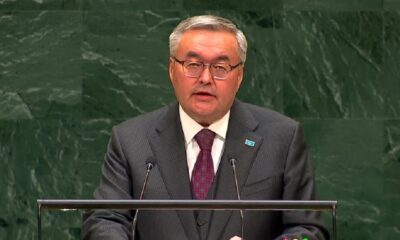




Kazakhstan’s Foreign Minister Mukhtar Tileuberdi has called for pragmatic and coordinated international engagement with Afghanistan, saying the country’s long-term stability is closely linked to the security and sustainable development of Central Asia.
Speaking during the general debate of the 81st session of the United Nations General Assembly in New York on Friday, Tileuberdi said humanitarian assistance to Afghanistan remains essential but alone cannot break the cycle of poverty, displacement and dependency.
He said Kazakhstan supports a “pragmatic, coordinated and step-by-step” approach to international engagement with Afghanistan, with the United Nations playing a central role.
Tileuberdi also said Kazakhstan is working with the UN to operationalize the United Nations Regional Centre for the Sustainable Development Goals for Central Asia and Afghanistan in Almaty.
He said the success of the centre should be measured by the results and assistance it delivers to the region.


Ariana Afghan Airlines increases Kabul-Delhi cargo flights

Khalilzad questions Pakistan’s commitment to Afghan welfare

India, UN envoy discuss Afghanistan’s humanitarian needs

Kazakhstan calls for coordinated international engagement with Afghanistan

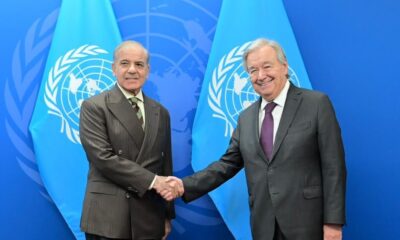
Pakistan PM, UN chief discuss Afghanistan amid rising Kabul-Islamabad tensions

Saudi energy group signs major Afghanistan deals covering gas exploration and pipeline plans

Trump floats idea of renaming Atlantic or Pacific Ocean

US hits Egyptian bank branches with Iran sanctions as war marks six months

Nepal flood rescue mission enters critical phase as thousands remain missing

Iranian clubs to face Gulf opponents at neutral venues in Asian Champions League Elite

Exclusive interview with Abdul Latif Mansoor, Minister of MRRD

Tawsia: Overview of Afghanistan’s iron mines

Tahawol: Discussion on fresh Pakistani airstrikes on Afghanistan

Saar: Calls for international support for Afghanistan discussed

Tahawol: Opening of the 81st UN General Assembly Session
-

 Sport5 days ago
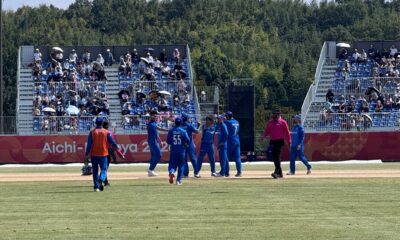
Afghanistan to face Japan and Nepal in Asian Games cricket group stage
-

 World4 days ago
CNN, MS NOW and Politico sue Trump, challenging White House ban
-

 Latest News3 days ago
Ariana Afghan Airlines ranks seventh among 45 Central Asian airlines
-

 Latest News4 days ago
UN reiterates call for respect for international law after Kunar airstrikes
-
 Latest News5 days ago
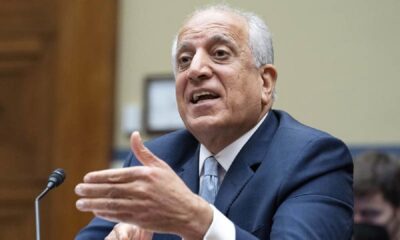
Khalilzad condemns Pakistan airstrikes, says current strategy is not working
-

 Regional3 days ago
US and Iran hold first talks since June after Trump’s ‘annihilation’ threat
-

 Latest News3 days ago
Silk Road highway in Wakhan corridor now reaches the China border
-

 Latest News4 days ago
Afghan Official: Pakistan’s airstrikes will not go unanswered