
We are not silencing the lawful frees and freedoms: Saleh

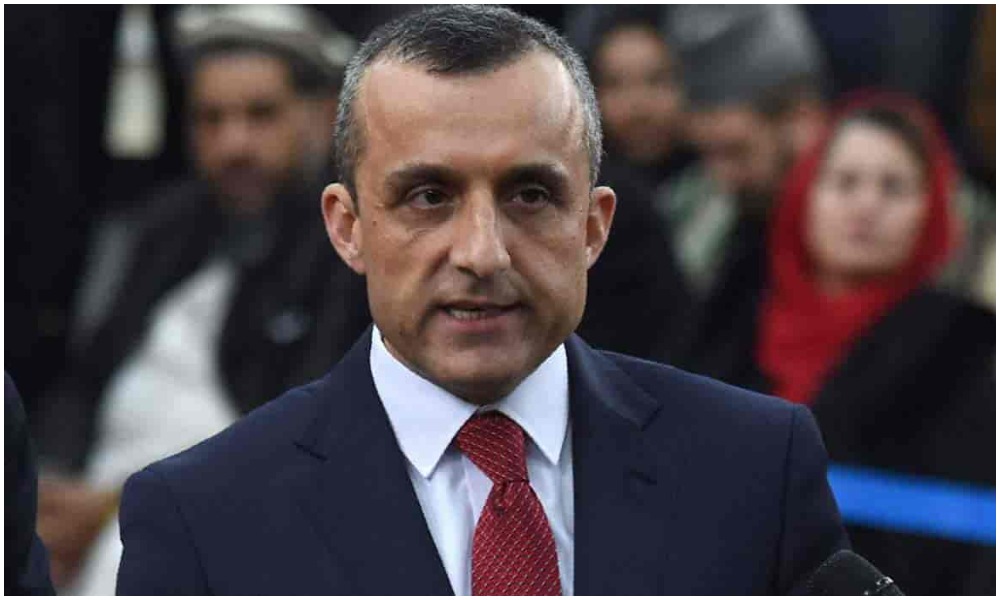
Vice President Amrullah Saleh has ordered the arrest of the individual who reported civilian casualties from an Afghan government airstrike on October 22, 2020, Human Rights Watch said Thursday.
The Afghan air forces targeted a Taliban gathering at a mosque in Hazara Qarluq village in Takhar on Wednesday morning in which at least 12 children were killed and 18 civilians were wounded, sources said.
Saleh, however, rejected claims, stating: “No child was killed in Afghan Air Force strike in Takhar.”
VP stated that the Taliban sniper unit “responsible four massacre of our special forces a day earlier was targeted.”
“The person responsible for spread of this venomous and fake news was arrested immediately. Talibs use houses and mosques as shield,” Saleh tweeted.
Saleh also wrote on Facebook that legal action would be taken against those “who make false allegations.”
Meanwhile, Human Rights Watch said in a report on Thursday that the Afghan government ordered an investigation into the incident. However, findings from investigations into other incidents of civilian casualties have not been made public and no one has been held accountable.
“Vice President Amrullah Saleh is trying to silence those who reported a potentially unlawful airstrike that killed civilians, including many children,” said Patricia Gossman, associate Asia director. “The government should immediately release anyone detained under Saleh’s order and carry out a thorough and impartial investigation of the airstrike.”
In #Afghanistan, “Vice President Amrullah Saleh is trying to silence those who reported a potentially unlawful airstrike that killed civilians, including many children.” – @pagossman https://t.co/Tgjs2KnFrk pic.twitter.com/Y01doFIcMO
— Human Rights Watch (@hrw) October 23, 2020
In response to the Human Rights Watch’s report, Saleh stated that the Afghan government has no intent to restrict the absolute rights of the people.
“We are standing against freedom to kill, freedom to kidnap, freedom to harass, freedom to rape, freedom to steal, freedom to a massacre, freedom to grab public land, freedom to extort & freedom to cage the defender of the freedom.”
“We aren’t silencing the lawful frees and freedoms,” he tweeted.
We are standing against freedom to kill, freedom to kidnap, freedom to harass, freedom to rape, freedom to steal, freedom to massacre, freedom to grab public land, freedom to extort & freedom to cage the defender of the freedom. We aren’t silencing the lawful frees and freedoms. https://t.co/JsycUuvn32
— Amrullah Saleh (@AmrullahSaleh2) October 23, 2020
In recent weeks, Afghan government forces have sustained many casualties during intense fighting in Takhar province. The uptick in fighting comes amid rising numbers of Taliban attacks and little progress on the Afghan peace talks in Doha.
The laws of war permit attack only against military objectives, which include enemy fighters, weapons, and equipment. Warring parties are prohibited from deliberately attacking civilians, except those directly participating in hostilities. For a specific attack on a military objective to be lawful, it must discriminate between combatants and civilians, and the expected loss of civilian life and property must be proportionate to the anticipated military gain from the attack. Attacks that target civilians, that are indiscriminate, or that cause disproportionate civilian loss are unlawful.
It is not clear if Taliban forces were in the vicinity of the mosque. Mosques and schools are civilian objects not subject to attack unless being used for military purposes. Any Taliban fighters present would be required to take all feasible precautions to remove civilians from the vicinity.
The United Nations Assistance Mission in Afghanistan (UNAMA) has reported that women and children comprised 65 percent of the civilian casualties from airstrikes by the Afghan air force for the first half of 2020. The Afghan government has a poor record of investigating such incidents.
“The Afghan government is obligated to investigate possible laws-of-war violations by their forces,” Gossman said. “The free expression rights of those reporting on alleged violations should be respected.”

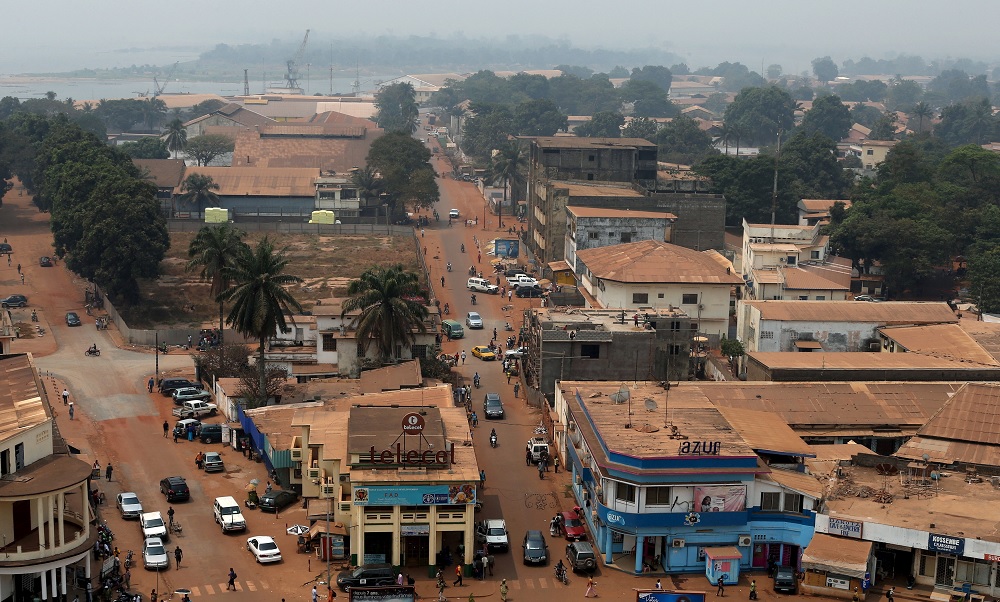
The United States has deported dozens of people to the Central African Republic, including a young Afghan whose family members had worked with US forces, according to his lawyer and human rights organizations.
The Afghan man, who is in his early 20s, had been protected by a US court from being sent back to Afghanistan, his lawyer, Alma David, said.
AfghanEvac, which supports Afghans who assisted the United States, as well as the American Civil Liberties Union and Human Rights First, confirmed that he was among those deported.
One of his brothers, who now lives in the United States, served in the former Afghan National Army alongside US forces. Another brother was a US-trained pilot.
The New York Times, which referred to the Afghan man as Khalil, reported that his father and sister had also worked with US forces.
The deportation flight arrived in Bangui, the Central African Republic’s capital, on Saturday. It carried 12 Afghans and eight Iranians, as well as several nationals from Nepal and Nicaragua, according to Savi Arvey of Human Rights First.
Human Rights First said the flight was the third deportation operation from the United States to the Central African Republic this year.
The deportations are part of the Trump administration’s broader immigration crackdown, which has included sending migrants to countries with which they have little or no connection under agreements reached with third governments.
The US State Department currently advises Americans against traveling to the Central African Republic, warning of potential risks including unrest, crime, kidnapping, health concerns and terrorism.
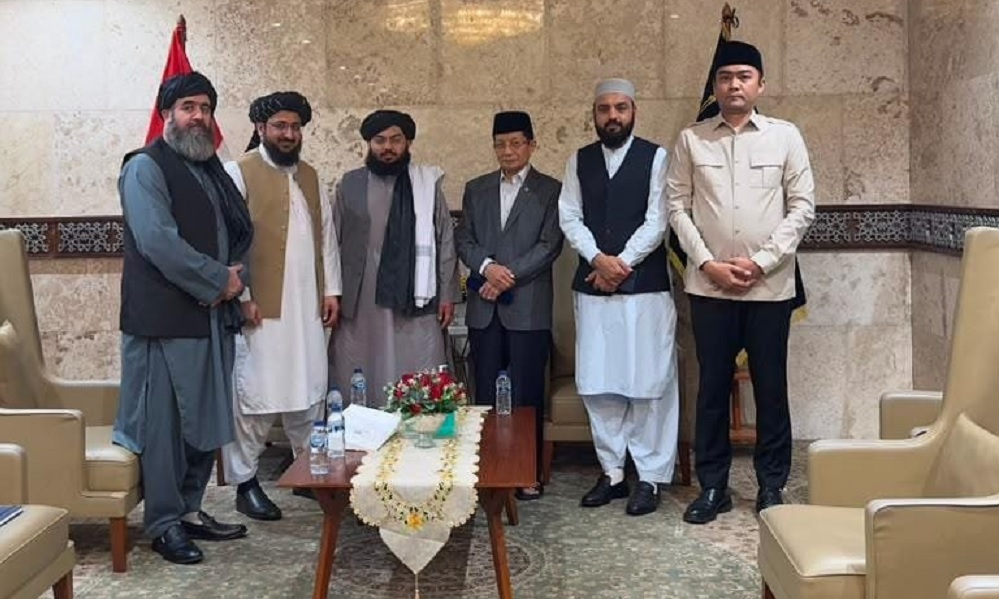
According to a statement from the Afghan Embassy in Indonesia, the two sides discussed expanding bilateral relations, religious and cultural cooperation, exchanging experiences between scholars from the two countries, and holding joint programs and meetings.
They also emphasized strengthening ties between religious institutions in Afghanistan and Indonesia and continuing contacts and joint cooperation.
Saadullah Baluch, Afghanistan’s acting ambassador to Jakarta, was also present at the meeting.
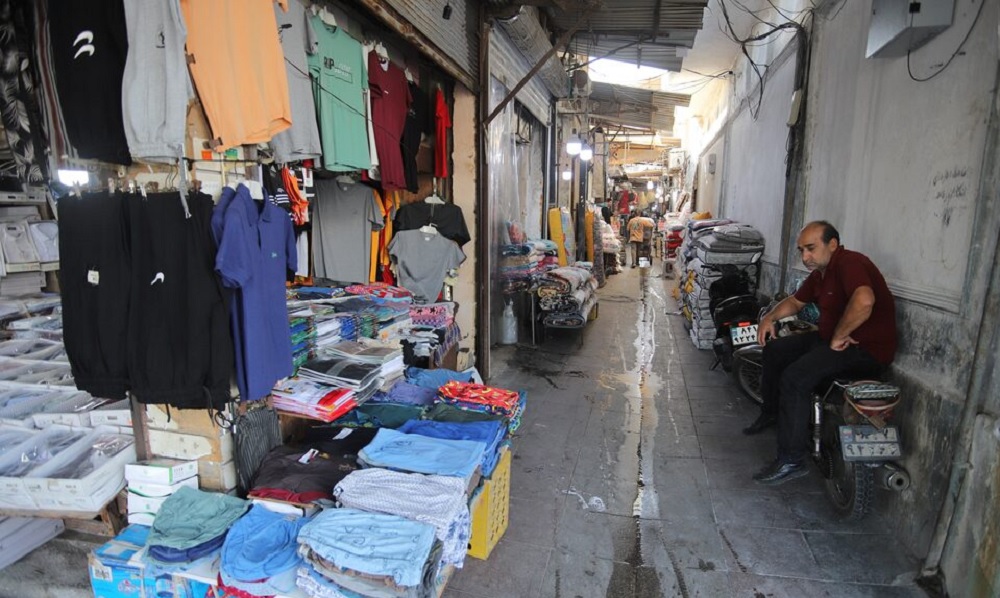
Iranian leaders are acknowledging the economic toll of war with the U.S., with the supreme leader urging the government to address the hardship and the president saying foreign trade has shrunk by a third due to the American sanctions and blockade.
Yet Tehran signalled no retreat on Saturday, vowing to withstand U.S. pressure, pursue diplomacy and maintain what it said was control over the Strait of Hormuz, the strategic waterway giving Iran leverage through its ability to disrupt global energy markets, Reuters reported.
The government said in a statement on state media that addressing economic pressures caused by sanctions and war was a central focus, including curbing inflation, managing markets, creating jobs, directing investment towards domestic production and gradually reducing dependence on the dollar.
Six months after the U.S. and Israel launched the war, negotiations are at an impasse and President Donald Trump’s administration has stepped up efforts to punish Iran financially with what it has billed as an “economic D-Day”.
SANCTIONS COMPOUND TOLL ON IRAN’S ECONOMY
Washington has warned countries to cut business ties with Iran or face secondary sanctions, though the Treasury Department stopped short of imposing penalties against major Iranian trade partners such as China and India, which could have repercussions for the U.S. and global economies.
The Treasury imposed sanctions on Egypt’s Banque Misr for doing business with Tehran, proposing a rule that would cut off the bank’s branches in the United Arab Emirates from dollar transactions.
Egypt’s central bank said it and the foreign ministry were in contact with U.S. officials concerning the matter, adding the measure was limited to Banque Misr UAE’s U.S. dollar transactions with correspondent banks only.
Banque Misr said on Saturday it was reviewing the U.S. Treasury notice, adding that its branch in the UAE continued to provide banking services to its customers.
The U.S. has also issued sanctions targeting an entity based in Hong Kong and a person linked to Iran’s Bank Melli, according to a notice on the Treasury website.
The sanctions drive compounds the toll of the war on Iran’s economy, where annual inflation hit 66% last month.
Supreme Leader Ayatollah Mojtaba Khamenei — who has not been seen publicly since he was injured in the initial February 28 attack that killed his father and former Supreme Leader, Ayatollah Ali Khamenei — called on the government to tackle the economic hardship.
“There is the need to seriously address the chain of economic and livelihood challenges, such as inflation, unemployment, management of prices and the market for goods and services,” he said, according to a written statement attributed to Khamenei.
President Masoud Pezeshkian told state media that Iranian exports and imports had slumped nearly 35% because of U.S. sanctions and a naval blockade of Iranian ports.
But he said Iran was able to sell about 90 million barrels of oil during the short-lived memorandum of understanding that the U.S. and Iran signed in June, when Washington permitted Iranian oil sales.
Later on Saturday, Pezeshkian called on state TV for a revival of the interim deal, which was signed on June 17 but quickly unravelled amid disagreements over what had been agreed, especially on the status of the Strait of Hormuz.
“We can solve our problems and gain our privileges with the memorandum of understanding,” he said of a document that had offered Iran, among other things, immediate relief from U.S. sanctions and the release of its frozen assets.
IRAN VOWS TO PURSUE DIPLOMACY AND DEFENCE
With the U.S. focused on its economic pressure campaign, others have sought to revive diplomatic efforts to end the war.
Qatari Prime Minister Sheikh Mohammed bin Abdulrahman Al Thani met with Iranian leaders in Tehran on Thursday. He said he had stressed during the meeting the importance of returning to the pre-war status of open shipping through the Strait of Hormuz.
Iranian Foreign Minister Abbas Araqchi on Friday described the talks with Al Thani as “creative”.
In Saturday’s statement, Iran said diplomacy and defence were “two complementary, coordinated and inseparable wings” for protecting the country’s national interests, security and territorial integrity. It said it would pursue both tracks in a balanced manner.
Qatar, a U.S. ally and Gulf neighbour to Iran, and Pakistan helped broker the June memorandum of understanding.
Before the war, the Strait of Hormuz carried 20% of the world’s oil and LNG. U.S. military commanders say American forces have cleared sea mines from the strait that had been laid months ago by Iran’s Islamic Revolutionary Guard Corps.
Trump has repeatedly said the strait is open, but the Revolutionary Guards’ navy said in a statement that such claims “are an obvious lie”, reiterating that the waterway remained closed to ships without Iranian permission.


US deports relative of Afghans who helped US military to Africa

Afghan and Indonesian officials discuss expanding religious and cultural cooperation

War weighs on Iran’s economy as US intensifies sanctions

Tahawol: Islamic Emirate seeks to normalize US ties

Saar: Discussion on ensuring Afghanistan’s border security

AFC confirms clubs for 2026/27 competitions; draw set for August 18

Only two days to go before Afghanistan and Ireland begin ODI series

Four mediators struggle to secure lasting Pakistan-Afghanistan ceasefire

Heavy monsoon rains claim lives across India as flooding and landslides continue

Kabul opens cardiac hospital for children
Tahawol: Islamic Emirate seeks to normalize US ties
Saar: Discussion on ensuring Afghanistan’s border security

Tawsia: Afghanistan’s efforts to boost production and exports disucssed

Tahawol: Fifth anniversary of America’s defeat in Afghanistan discussed

Saar: Ongoing expulsion of Afghans from Iran and Pakistan discussed
-
 Latest News3 days ago
Pakistan open to state-to-state dialogue with Afghanistan on terrorism
-

 International Sports5 days ago
Watford face Peterborough in EFL Cup; ATN to bring live action to Afghan fans
-

 Latest News5 days ago
Germany deports 30 Afghan refugees to Kabul
-
 Climate Change5 days ago
China evacuates thousands as Typhoon Narra brings torrential rain
-
 Latest News5 days ago
Qatar Ambassador holds farewell meeting Turkish diplomat in Kabul
-
 Tahawol5 days ago
Tahawol: Aisha Wahab’s emphasis on US ties with IEA
-

 World4 days ago
Trump administration issues pause on visa appointments for applicants worldwide
-
 Sport3 days ago
ATN secures exclusive rights to broadcast T20I series in India across Afghanistan