
Latest News
AWCC expands communication, internet services in southern Afghanistan

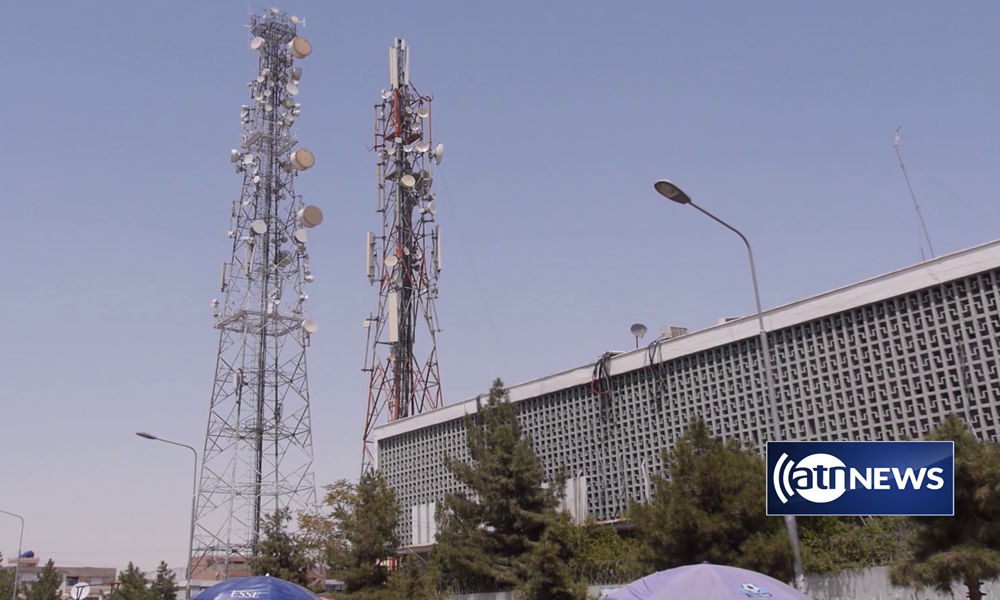
The Afghan Wireless Communication Company (AWCC) has expanded communication and high speed internet services to remote parts of southern Afghanistan.
AWCC officials said on Thursday people can now access 3G and 4G internet as well as communication services in five districts of Helmand its provincial capital Lashkargah, Spin Boldak of Kandahar, Zabul capital Qalat and Uruzgan.
The AWCC is the only communications company that provides communication services in remote areas of Afghanistan.
AWCC officials also said that an internet cable between Kandahar and Uruzgan provinces that had been inactive for several years is active again.
“Following the recent developments, we tried to expand our services for people of Afghanistan, and went to remote areas, for instance, five district of northern Helmand, to provide communication services. We launched 4G services in Lashkargah of Helmand province. We launched 4G services in Spin Boldak which is a port town. We launched 4G in Zabul capital Qalat,” said Aliullah Sarwari, the director of AWCC.
AWCC officials said that they will continue to expand coverage of its services. According to them, expanding coverage and providing more services will also bring job opportunities for citizens.
“Our goal is to provide nationwide services for all the people of Afghanistan, facilitate balanced development and job opportunities for the people. We are committed to this and we will continue to provide services in Afghanistan,” he said.
Meanwhile, residents have welcomed the launch of AWCC’s communication and internet services in their localities.
This comes after AWCC and Afghan Post recently signed a memorandum of understanding (MOU) for facilities in the fields of communication, internet and postal services.





Latest News
Afghanistan buries first cosmonaut Abdul Ahad Momand with State Honors
During the mission, Momand spent nearly nine days in orbit, conducting scientific experiments and Earth observation activities.
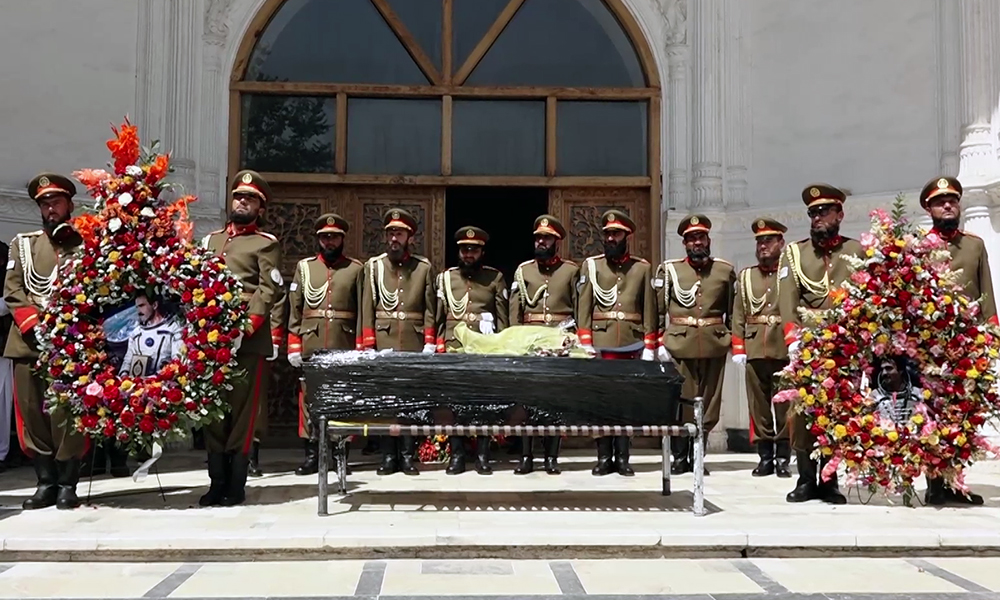
Afghanistan on Monday bid farewell to its first and only cosmonaut, Abdul Ahad Momand, whose body was returned from Germany and laid to rest in Kabul with full state honors.
Momand died on June 21 in Stuttgart, Germany, following a battle with cancer. He was 67 years old.
Funeral prayers were held at Kabul’s historic Eidgah Mosque, attended by his family, members of the public and senior officials of the Islamic Emirate.
Following the prayers, his body was taken to Maranjan Hill, where he was buried during an official ceremony honoring one of Afghanistan’s most celebrated national figures.
Officials paid tribute to Momand as a pioneering scientist and national hero, describing his achievements as a source of pride for Afghanistan and encouraging young Afghans to follow his example in the fields of science, education and exploration.
Momand made history on August 29, 1988, when he became the first – and to date the only – Afghan to travel into space. Selected from hundreds of candidates, the former Afghan Air Force pilot joined the then Soviet Intercosmos programme and launched aboard the Soyuz TM-6 spacecraft to the Mir space station alongside Soviet cosmonauts Vladimir Lyakhov and Valery Polyakov.
During the mission, Momand spent nearly nine days in orbit, conducting scientific experiments and Earth observation activities.
He also made history by speaking in Pashto from space during a live conversation with Afghanistan’s then-president, Mohammad Najibullah, becoming the first Afghan – and one of the first people – to use the language beyond Earth.
The mission nearly ended in tragedy when a malfunction delayed the Soyuz spacecraft’s return to Earth, leaving the crew stranded in orbit for an extra day while engineers worked to restore the landing system. The spacecraft eventually landed safely in Kazakhstan, and Momand returned to Kabul to a hero’s welcome.
Following his spaceflight, he served as Afghanistan’s deputy minister of civil aviation. However, after the collapse of the Soviet-backed government in 1992 and the outbreak of civil war, Momand left the country and eventually settled in Germany, where he lived with his family for more than three decades.
Although he built a new life abroad, Momand continued to express hope for Afghanistan’s future and remained an enduring symbol of what Afghans could achieve in science and technology.
His death has also renewed discussion about Afghanistan’s dormant space ambitions. Despite producing the country’s only cosmonaut, Afghanistan’s national space institute has remained largely inactive for years, with many observers calling for renewed investment in science, education and technological development to build on Momand’s historic legacy.
For many Afghans, Abdul Ahad Momand’s journey from a young boy fascinated by the skies to the nation’s first cosmonaut remains one of the country’s greatest scientific achievements and a lasting source of national pride.
Latest News
Afghanistan announces 2026 Kankor results; Rashid tops National exam with perfect score
Among graduates of religious schools, Abdul Majid from Ghor province ranked first with 327.19 marks, Khalid from Badakhshan province placed second with 320 marks, and Hamed from Laghman province ranked third with 319 marks.
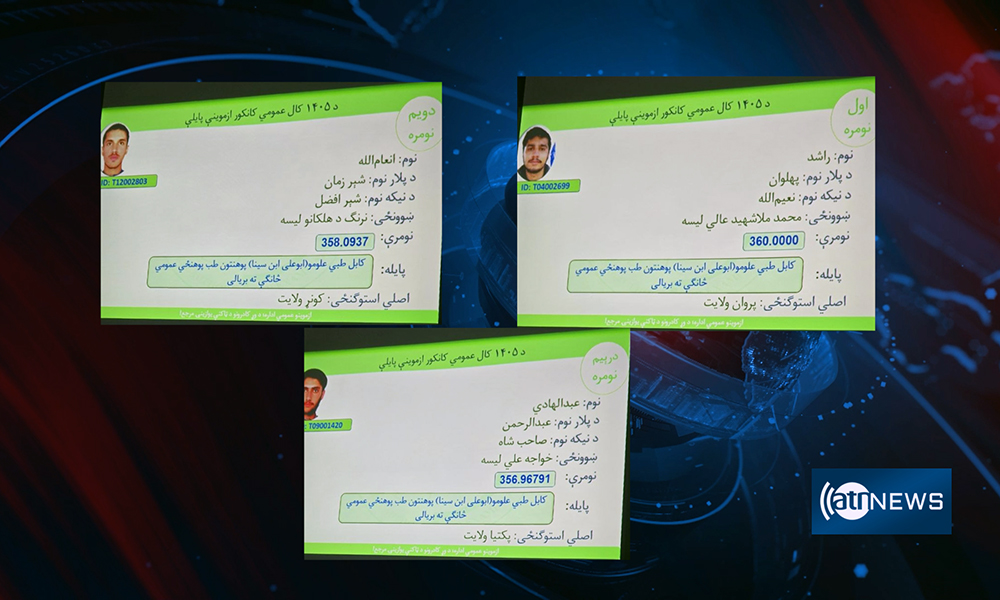
Afghanistan’s General Directorate of Examinations on Monday announced the results of the 2026 Kankor (national university entrance) examination during a ceremony held at the Government Media and Information Center (GMIC).
According to the results, Rashid, son of Pahlawan, from Parwan province, secured first place after scoring a perfect 360 marks.
Enamullah, son of Shir Zaman, from Kunar province, ranked second with 358.0937 marks, while Abdul Hadi, son of Abdul Rahman, from Paktia province, claimed third place with 356.96791 marks.
Mohammad Ayman, son of Mohammad Bashir, from Maidan Wardak province, ranked fourth with 356.96790 marks, followed by Bismillah Jan, son of Mohammad Omar, also from Maidan Wardak, who secured fifth place with 356.8579 marks.
Among graduates of religious schools, Abdul Majid from Ghor province ranked first with 327.19 marks, Khalid from Badakhshan province placed second with 320 marks, and Hamed from Laghman province ranked third with 319 marks.
The General Directorate of Examinations said the 2026 Kankor was successfully conducted in four phases, with nearly 120,000 applicants participating nationwide. In line with the Ministry of Higher Education’s admission plan, 74,500 candidates will be admitted to public universities and higher education institutions across the country.
The directorate stated that the examination process was organized to ensure equal opportunities for all eligible candidates throughout Afghanistan. The first phase covered applicants from 15 provinces, the second phase included candidates from 18 provinces, the third phase was held for Grade 12 graduates in Kabul, while the fourth phase included candidates who missed previous rounds, graduates from abroad, graduates from tribal communities, religious school graduates in Kabul, and Grade 14 graduates.
Officials said all four phases were conducted in an organized manner with transparency, effective management, and without any reported problems. They added that the process was managed according to established standards, helping strengthen public confidence in the examination system.
The General Directorate of Examinations said the 2026 Kankor, one of the country’s most important academic examinations, was successfully held based on the principles of transparency, fair assessment, and effective management. With the announcement of the results, tens of thousands of young Afghans will now have the opportunity to continue their higher education in various academic fields.
During the ceremony, officials from various government institutions also praised the General Directorate of Examinations for effectively managing the process, congratulated the successful candidates, and urged them to make the best use of the opportunity to advance their education and serve the people and the country.
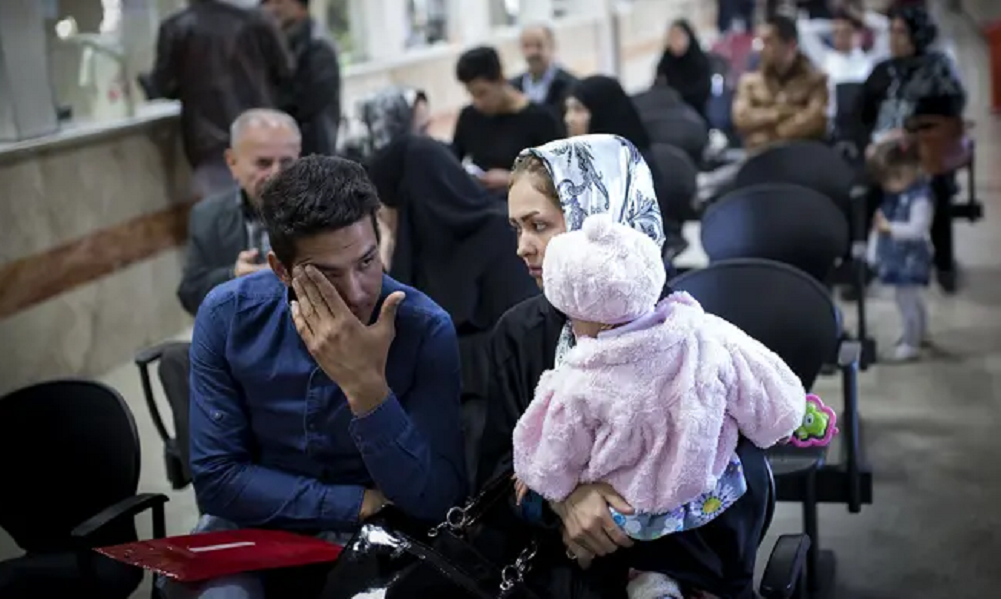
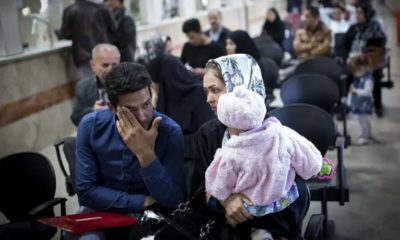
The HANA Human Rights Organization has expressed serious concern over what it describes as an increasing pattern of legal exclusion affecting Afghan migrants in Iran, particularly women and children who face growing obstacles in accessing civil registration and judicial protection.
In a detailed statement, the organization said many Afghan migrants struggle to obtain legal recognition of key personal-status matters, including marriage, divorce, birth registration, custody, inheritance, and maintenance claims. It warned that these issues have worsened following recent armed conflict, tighter security measures, disruption of public services, internet shutdowns, and increased administrative pressure.
HANA said the absence of an effective and accessible civil-registration system has left many Afghan migrants in a situation of “legal invisibility,” limiting their ability to prove family relations, access public services, and seek legal remedies.
The organization stressed that civil-status registration is essential for basic rights such as legal identity, family recognition, inheritance, and access to justice. It warned that failures in registration systems can lead to wider violations of civil, social, and economic rights.
According to the statement, Afghan women are particularly affected, especially in cases involving domestic violence, unregistered marriages, informal divorces, abandonment, or custody disputes, where access to courts and legal protection is often limited.
HANA also highlighted risks faced by Afghan children, including lack of birth registration and identity documents, which may result in denial of education, healthcare, and social protection, and increase vulnerability to child labour, exploitation, and early marriage.
The organization said these challenges raise concerns under Iranian domestic law and constitutional guarantees of access to justice and equality before the law, as well as Iran’s obligations under international human rights treaties, including protections for children and the right to legal identity.
HANA urged Iranian authorities to establish transparent civil-registration procedures for Afghan nationals, ensure equal access to courts regardless of migration status, protect migrant women and children from legal and social harm, and create emergency mechanisms during crises to maintain access to justice and essential services.
It also called for an end to practices that may lead to detention, deportation, or intimidation of migrants seeking legal or administrative assistance.
The group warned that the combined effect of administrative and security barriers risks creating a system of structural legal exclusion, preventing many Afghan migrants from securing basic rights and legal recognition in Iran.


Tahawol: UN Officials Visit Kabul — Political Impact & Consequences

Saar: The Impact of the Middle East Crisis on the Region and the World

Afghanistan buries first cosmonaut Abdul Ahad Momand with State Honors

Afghanistan announces 2026 Kankor results; Rashid tops National exam with perfect score

NASA recruiting volunteers for year-long simulated moon and mars mission

Norway’s Viking-inspired World Cup team photo goes viral

TAPI project advances in Afghanistan as 84kms of pipeline laid

Iran banks hit by major cyber attack

Final round of 1405 Kankor exam concludes in Afghanistan

Afghanistan signs $67 million contract for cement production in Samangan
Tahawol: UN Officials Visit Kabul — Political Impact & Consequences
Saar: The Impact of the Middle East Crisis on the Region and the World

Saar: Great Power Rivalry Over Ukraine and the Middle East

Tahawol: International legitimacy of IEA reviewed

Saar: Ongoing condemnation of Pakistan’s attacks on Afghanistan discussed
-
 Latest News5 days ago
Senior Afghan delegation travels to Iran for funeral of Ayatollah Ali Khamenei
-

 International Sports5 days ago
2026 World Cup sees surge in red cards as referees enforce stricter discipline
-
 Latest News5 days ago
Afghanistan must become a co-author of regionalization processes in Central Asia: Vakhabov
-

 International Sports2 days ago
FIFA World Cup 2026 knockout bracket set as race to the final intensifies
-
 Latest News5 days ago
Afghan, Russian officials discuss expanding bilateral cooperation in Kabul
-
 Latest News4 days ago
Afghanistan ranks last in 2026 Global Passport Index
-
 Sport2 days ago
Afghanistan claims 10 medals, team bronze at South Asian bodybuilding championships
-

 International Sports3 days ago
Argentina survive Cape Verde scare after extra-time own goal to reach last 16