
Regional
Pakistan hits out at US and India after Biden-Modi meeting

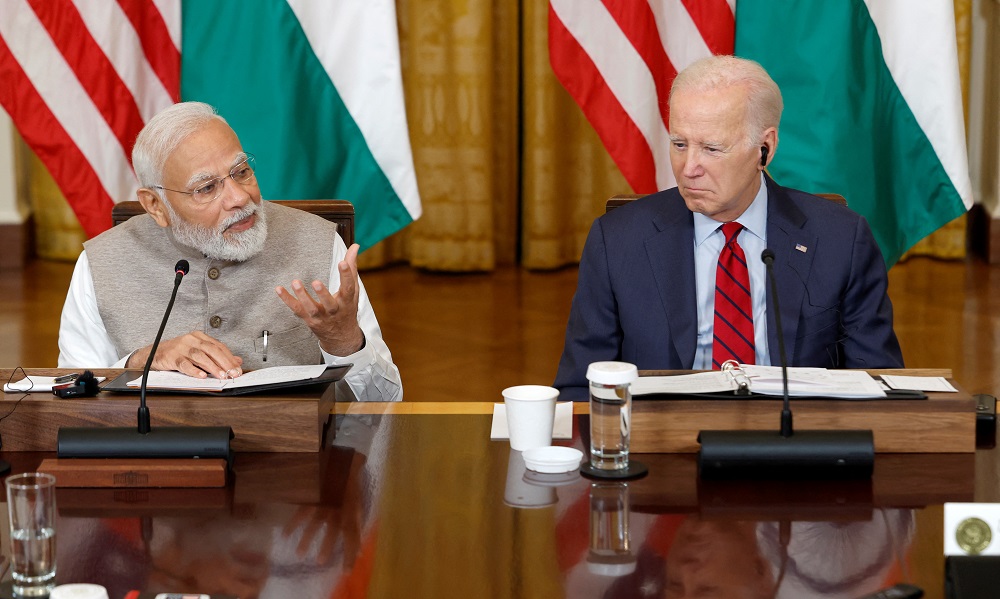
Pakistan on Friday criticized the United States and India after US President Joe Biden met India’s Prime Minister Narendra Modi at the White House and both leaders called on Pakistan to ensure its territory was not used as a base for militant attacks.
Pakistan’s foreign ministry said a joint US-Indian statement was “unwarranted, one-sided, and misleading”. The reference to Islamabad in it was “contrary to diplomatic norms,” it said.
The ministry added that it was surprised by the joint statement and said it had “close counterterrorism cooperation” with the United States.
Relations between India and Pakistan have been fraught for years. Since independence from Britain in 1947, India and Pakistan have fought three wars, two of them over the Muslim-majority Himalayan region of Kashmir, which they both claim in full but rule in part, Reuters reported.
The joint US-Indian statement said: “They (Biden and Modi) strongly condemned cross-border terrorism, the use of terrorist proxies and called on Pakistan to take immediate action to ensure that no territory under its control is used for launching terrorist attacks.”
Pakistan’s foreign ministry said India was using the allegations of extremism against Islamabad to deflect from the situation in Kashmir and the treatment of minorities in India.
New Delhi has for years accused Pakistan of launching militant attacks in India, including the one in 2008 in Mumbai that killed over 165 people.
India also says Pakistan has helped Islamist militants who have battled Indian security forces in its part of Kashmir since the late 1980s. Pakistan denies the accusation and says it only provides diplomatic and moral support for Kashmiris seeking self-determination.
The special status given to the Indian state of Jammu and Kashmir was revoked in 2019 when New Delhi split it into two federally controlled territories. Pakistan calls the moves illegal and wants them rolled back.
Biden rolled out the red carpet for Modi on Thursday, with both leaders touting deals their countries reached on defense and commerce aimed at countering China’s global influence.
Pakistan also said it was “deeply concerned” over the planned transfer of advanced military technologies to India, saying such steps would not prove helpful in achieving peace in South Asia.





Regional
Qatar PM to visit Tehran to pursue mediation efforts
The U.N.’s International Maritime Organization has reported 70 incidents in the Strait of Hormuz since February 28 that have killed 19 seafarers.
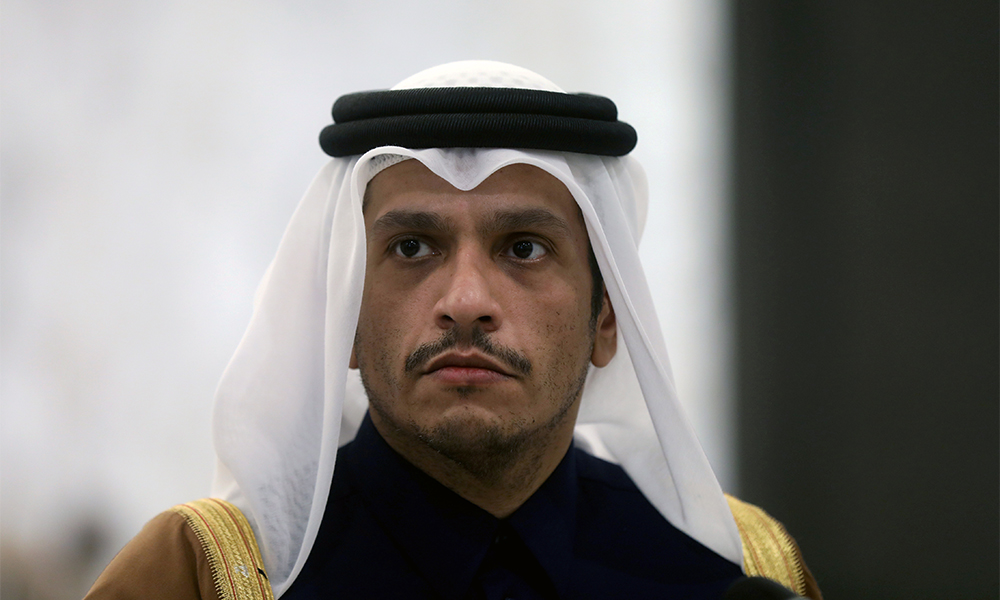
Qatar’s prime minister will visit Tehran on Thursday in an effort to relaunch diplomacy after the U.S. and Iran traded recriminations over Washington’s promise to increase economic pressure on Tehran by targeting its trade partners for sanctions, Reuters reported.
Qatar, a Gulf neighbour of Iran and a US ally, has served as a back-channel negotiator for the warring parties and played a direct role in securing the June ceasefire that briefly led to a cessation of hostilities.
The visit comes as the war nears its sixth month with fighting largely paused but no diplomatic breakthrough in sight. The two sides remain at odds over control of the Strait of Hormuz, a chokepoint for global oil supplies that Tehran has used as leverage.
The memorandum of understanding broke down in part because of differences over the narrow waterway between Iran and Oman where one-fifth of the world’s oil supplies passed before the war began on February 28.
The guns have gone mostly silent — the US military’s Central Command has not reported any attacks on Iran for nearly a month. Washington appears to be leaning more on economic pressure by announcing plans to cut Iran off from its trading partners with increased sanctions.
Hormuz oil flows have fallen to a three-month low, with just 5 million barrels per day transiting on Monday, according to the latest ship-tracking data. Before the war, the strait carried roughly 20 million barrels per day of crude oil.
Iran’s Revolutionary Guards said on Wednesday that Iran and Oman had agreed how to share the waterway and its revenues, but a senior Iranian source later said the two countries were still working on the details of an agreement.
Despite an aerial bombardment earlier in the war that severely diminished Iran’s conventional forces, Tehran has maintained enough missile and drone capability to attack Gulf neighbours that house US military bases and disrupt oil tankers in the strait, read the report.
The U.N.’s International Maritime Organization has reported 70 incidents in the Strait of Hormuz since February 28 that have killed 19 seafarers.
Thousands of others have died, mostly in Iran and Lebanon, since the US and Israel attacked Iran with the stated goals of denying Iran a nuclear weapon, helping Iranians topple their government, and destroying Iran’s missile programme.
Qatari Prime Minister Sheikh Mohammed bin Abdulrahman al-Thani will discuss the continuation of Qatar’s mediation efforts and other developments in the region during his visit to Tehran on Thursday, Iranian Foreign Ministry spokesperson Esmaeil Baghaei said.
Qatar’s Foreign Ministry spokesperson said on X that Sheikh Mohammed would also address freedom of navigation in the Strait of Hormuz and the need to return to the status quo before February 28, while also discussing with Iranian officials ways to “de-escalate tensions and create the conditions conducive to dialogue.”
The international waterway was open to free navigation before the war, but Iran has since clung to its control of the strait as leverage and a revenue source, seeking to charge ships a commission, which the US has opposed.
“An agreement with Oman over the Strait of Hormuz has not been finalised,” the senior Iranian source told Reuters, adding that the talks were continuing on the details of an accord.
That seemed to contradict a statement by Brigadier General Hossein Mohebbi, a spokesperson for the Islamic Revolutionary Guard Corps, who said Iran and Oman had “reached results that are acceptable to both sides” on controlling the strait and its revenues, Reuters reported.
Mohebbi said the strait would remain shut unless the US met Tehran’s conditions under the interim ceasefire, or memorandum of understanding, that the two sides signed in June before it unravelled. Those conditions include an end to the US blockade on Iranian ports, compensation and removal of sanctions.
Iran and Oman have held on-and-off talks for weeks about controlling traffic through the strait. Tehran and Washington have each tried to assert control over the channel, imposing separate blockades.
Regional
At least 15 infants killed in Islamabad hospital fire
WATCH VIDEO: There were 16 newborns at the hospital’s gynaecology ward when the fire broke out, one of whom was rescued.
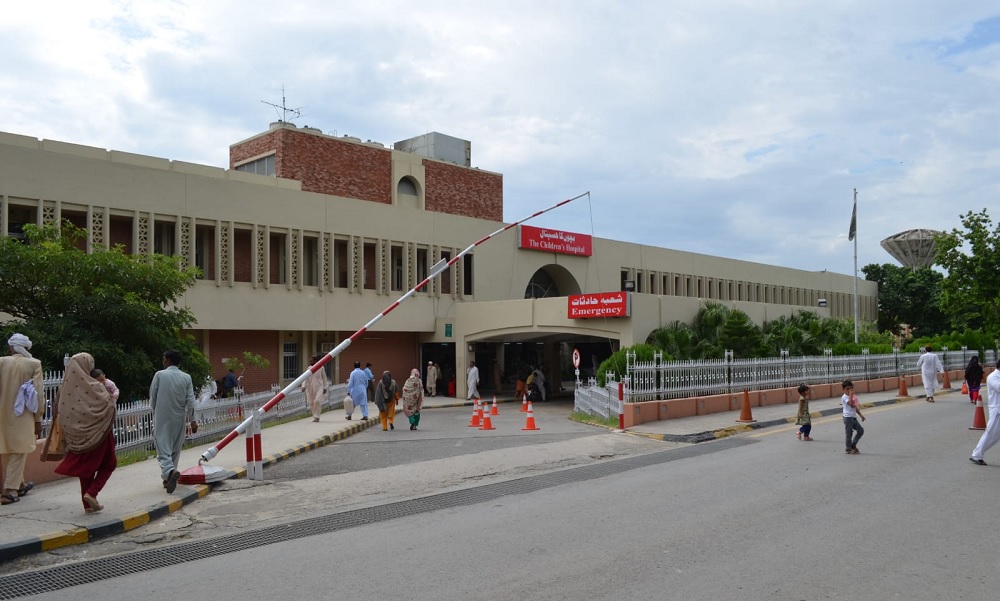
At least 15 infants were killed when a fire broke out at a state-run hospital in Pakistan’s capital city Islamabad, triggered by a fault in air conditioning systems, local broadcaster Geo TV reported on Wednesday.
The fire, which broke out at the Pakistan Institute of Medical Sciences (PIMS) hospital, started around two hours ago, the broadcaster said, adding that “cooling operations” were ongoing, Reuters reported.
There were 16 newborns at the hospital’s gynaecology ward when the fire broke out, one of whom was rescued, according to Geo.
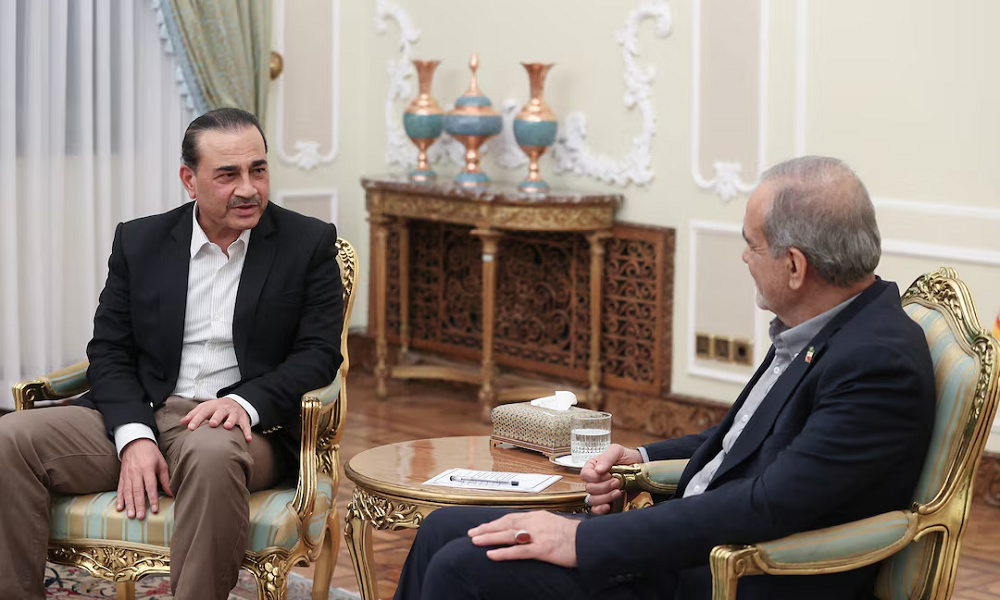
Pakistan and Iran have made “significant progress” in talks focused on the U.S.-Israeli war on Iran and efforts to find a path toward peace, Pakistan’s interior minister said on Tuesday after a visit to Tehran.
The discussions focused on measures to prevent further escalation, reopening the Strait of Hormuz and accelerating an end to the conflict, according to a statement from the Pakistani military following a meeting between army chief General Asim Munir and Iranian leaders.
The two sides also discussed regional peace and possible ways to reach a negotiated settlement to the conflict, the statement said.
“Iranian President candidly shared his government’s perspective and we had a very constructive exchange on the issues involved,” Interior Minister Mohsin Naqvi, who accompanied Munir, said in a post on X.
Munir spoke with U.S. President Donald Trump before travelling to Tehran, Reuters reported on Monday.
Trump last week warned of economic consequences for countries providing “any type of lifeline to Iran” as Washington seeks to isolate Tehran. Iran, meanwhile, has threatened to halt all oil exports from the Gulf.


Tahawol: Fifth anniversary of America’s defeat in Afghanistan discussed

Saar: Ongoing expulsion of Afghans from Iran and Pakistan discussed

Afghanistan, Russia discuss special economic zone and expanded trade cooperation

Pakistan open to state-to-state dialogue with Afghanistan on terrorism

Standardized orthography for Dari and Pashto languages is essential: official

Pakistan’s governance system has ‘collapsed’: Mohsin Naqvi

Afghanistan exports first stone shipment to US in $100,000 trade milestone

AFC confirms clubs for 2026/27 competitions; draw set for August 18

Only two days to go before Afghanistan and Ireland begin ODI series

Four mediators struggle to secure lasting Pakistan-Afghanistan ceasefire
Tahawol: Fifth anniversary of America’s defeat in Afghanistan discussed
Saar: Ongoing expulsion of Afghans from Iran and Pakistan discussed

Tahawol: Calls for US engagement with the Islamic Emirate discussed

Saar: Call for dialogue to resolve issues with Afghanistan discussed

Tahawol: Aisha Wahab’s emphasis on US ties with IEA
-
 Latest News4 days ago
Four mediators struggle to secure lasting Pakistan-Afghanistan ceasefire
-
 Business4 days ago
Afghanistan’s trade diversification challenges Pakistan
-
 Latest News4 days ago
AfghanEvac warns US court ruling does not reopen door for Afghans
-
 Latest News3 days ago
SCO summit to be held without confirmed Afghan invitation
-
 Sport3 days ago
Afghanistan squad announced for three-match T20I series against India
-
 Business5 days ago
Afghan, UAE buyers purchase $1.44 million worth of Turkmenistan diesel
-

 Latest News3 days ago
Former US ambassador says Washington could eventually reopen embassy in Kabul
-
 Regional4 days ago
Iran says new sanctions threatened by ‘desperate’ US will fail