
Latest News
Protecting the current system is obligatory, like prayer: Dilawar

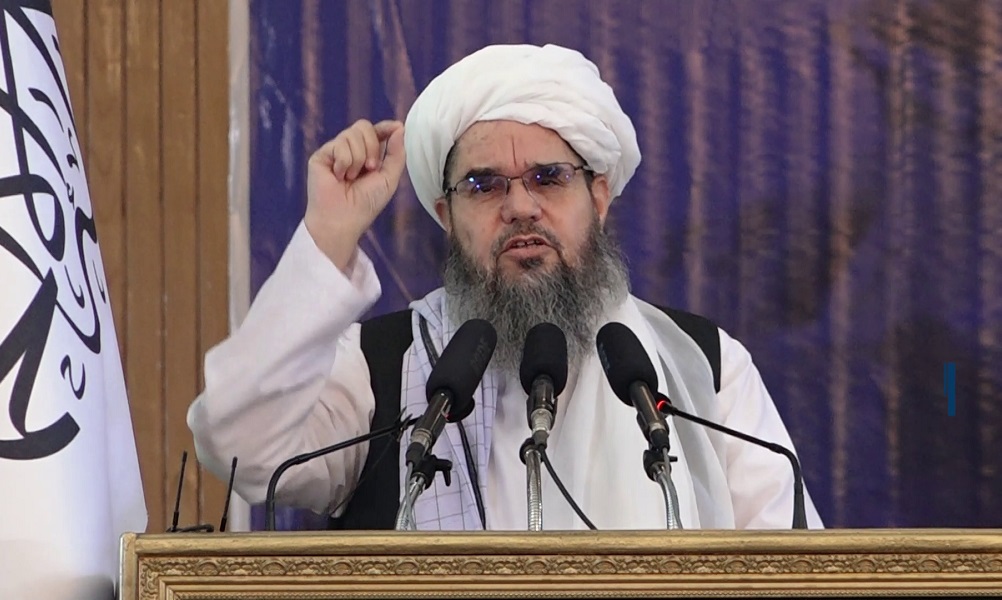
Acting Minister of Mines and Petroleum Shahabuddin Delawar said at the ceremony commemorating the second anniversary of the Islamic Emirate’s takeover of Afghanistan, that protecting the current system is as obligatory as prayer.
“From A to Z, protecting this system is obligatory like prayer. If there is a violation from our side, there will be a heavy punishment, because it is an intrinsic sin,” Dilawar said.
Meanwhile, Deputy Prime Minister for Administrative Affairs Abdul Salam Hanafi recalled that during the 20 years of American forces and its allies’ presence, Afghanistan suffered various crimes and thousands of Afghans were killed.
“What kind of situation prevailed over the Afghan nation here? Thousands of our youths were martyred. Thousands of youths were deprived of their freedom without any kind of trial in different parts of the world,” Hanafi said.
Acting Minister of Information and Culture Khairullah Khairkhah stated that the rule of the Islamic Emirate, in addition to preventing the country’s disintegration, put an end to the 20-year presence of America, corruption and islands of power in Afghanistan.
“Our homeland was saved from misery, it was saved from divisions, it was saved from ethnic, linguistic and regional discrimination. We have received many benefits. May Allah make it possible for us to be thankful for it. There is still a lot of work left,” Kairkhah said.
Acting Minister of Foreign Affairs Amir Khan Muttaqi also said that despite the propaganda against the government, the Islamic system is still in place. He claimed that the economic situation in the country is improving day by day.
“During the last 20 years, we resisted physically, no one complained, if they would be martyred and injured and their houses would be destroyed, they would not complain to anyone except Almighty Allah. In the last two years, when there was an attempt to make trouble, we didn’t complain to anyone and we didn’t ask anyone for help. Alhamdulillah, all opponents were removed, security has been ensured, the system is in place, economy is developing day by day,” Muttaqi said.
A number of other officials of the Islamic Emirate also said at the ceremony that the Islamic Emirate has laid the foundation for a movement that will lead Afghanistan to permanent peace and stability, control of crises and a better future.
According to them, no power will be able to create a gap between the people and the government.
“Without stability, progress and development in the country is not possible. First, there should be stability so that development is facilitated,” Madar Ali Karimi Bamiani, Deputy Minister of Urban Development and Housing, said.
“No power can create a gap between the people and the system. This system won with the sacrifice of the Afghan people, and with the support of the Afghan people, it will be permanent, strong, stable and dynamic,” Abdul Latif Nazari, deputy minister of economy, said.

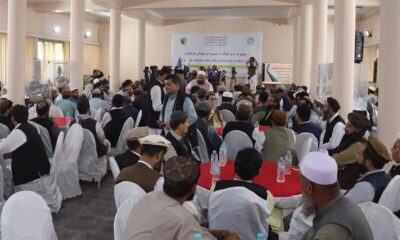




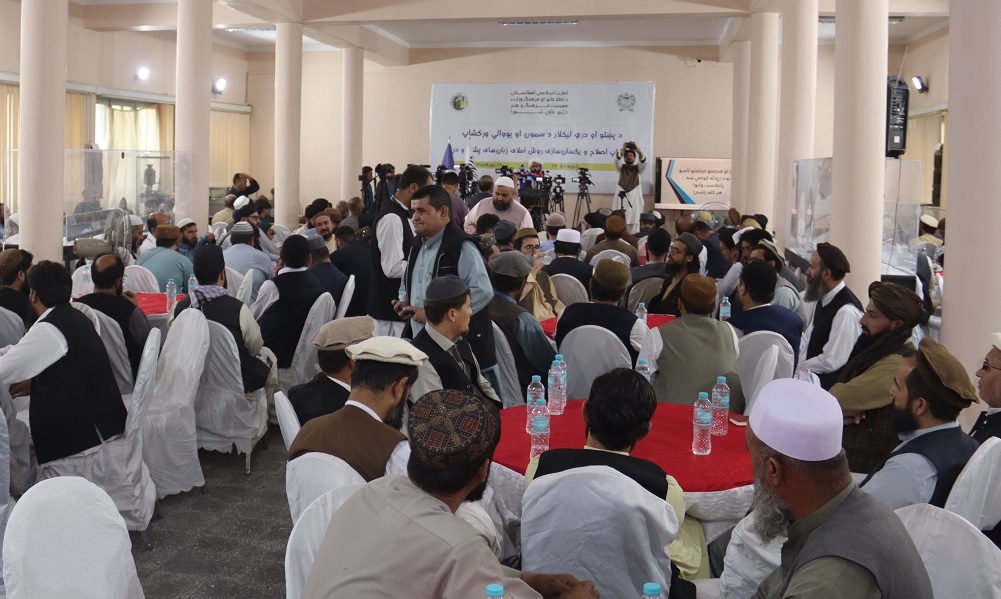
The Ministry of Information and Culture has launched a five-day scientific and cultural workshop in Kabul aimed at reviewing and standardizing the writing systems of Afghanistan’s Pashto and Dari languages.
The workshop is being organized by the High Council of Languages Commission under the ministry’s Deputy Ministry of Culture and Arts at the National Museum of Afghanistan.
Officials say the initiative seeks to strengthen the academic foundations of the two languages, harmonize writing practices and improve literary and cultural standards.
Sheikh Abdul Rahman Tayebi, Deputy Minister of Culture and Arts, attended the opening ceremony alongside ministry officials, representatives of the ministries of Higher Education and Education, the Academy of Sciences, Kabul University and the University of Education, as well as linguists, researchers, writers, academics and media representatives.
Hafiz Saifur Rahman Mohammadi, head of Public Culture at the Ministry of Information and Culture, said the High Council of Languages Commission was established to support the country’s languages and develop standardized writing systems for national and other languages.
Tayebi said the Islamic Emirate is committed to strengthening and developing all languages in Afghanistan, adding that there should be no discrimination based on language, ethnicity, region or religion.
During the workshop, university professors, education officials and an Academy of Sciences representative discussed differences in the current writing systems of Pashto and Dari.
Participants said the workshop will examine these differences and work toward developing standardized and harmonized orthographic guidelines for the two languages, with the aim of promoting their consistent use in academic, educational, administrative and cultural settings.
Latest News
Four mediators struggle to secure lasting Pakistan-Afghanistan ceasefire
The involvement of four mediators has provided important diplomatic channels, but the article argues that their efforts have not always operated within a single framework.
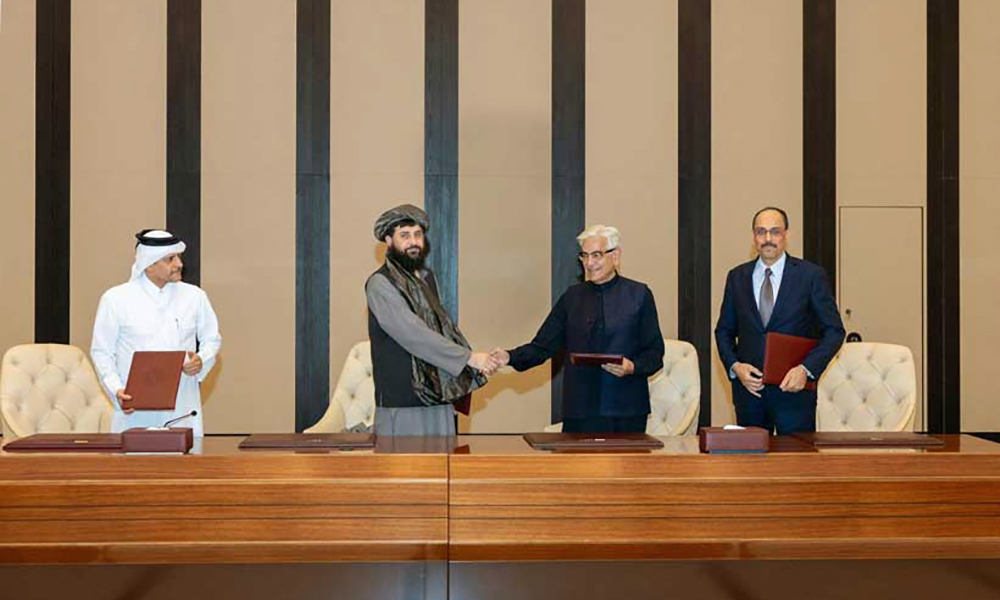
A ceasefire between Pakistan and Afghanistan remains fragile despite sustained diplomatic efforts by Qatar, Türkiye, Saudi Arabia and China, according to an analysis published by Modern Diplomacy.
The article by Sher Ali Ranjha, published on August 22, says the four countries have helped contain tensions at critical moments but have so far been unable to resolve the underlying security disagreements between Islamabad and Kabul.
The diplomatic process intensified after serious border clashes in October 2025, when Türkiye and Qatar helped facilitate a ceasefire in Doha. Subsequent talks in Istanbul explored ways to strengthen the agreement, including a possible monitoring and verification mechanism.
However, the two sides continue to differ over what constitutes a ceasefire violation. Pakistan has raised concerns about attacks by the Tehreek-e-Taliban Pakistan (TTP), which it says are carried out from Afghan territory. The Islamic Emirate of Afghanistan has rejected allegations that it provides a safe haven to the group and has maintained that Pakistan should address its own security challenges.
The article says this disagreement remains at the centre of the diplomatic impasse. Pakistan is seeking verifiable measures to prevent militant activity from Afghan territory, while Kabul has expressed concern over Pakistani military actions inside Afghanistan and the impact on its sovereignty.
The relationship between Afghanistan and India has added another dimension to the dispute. India has increased its engagement with Kabul, including through diplomatic and trade initiatives and cooperation involving Iran’s Chabahar Port.
The article notes that Pakistan views closer Afghan-Indian relations through the wider context of its rivalry with New Delhi. Pakistani allegations that India supports militant groups operating from Afghanistan remain disputed and have not been independently established, but they contribute to Islamabad’s security concerns.
The involvement of four mediators has provided important diplomatic channels, but the article argues that their efforts have not always operated within a single framework.
Qatar has strong access to Afghan officials and extensive experience in negotiations, Türkiye maintains relations with both sides, Saudi Arabia has financial and diplomatic influence, while China has significant economic and strategic interests in both countries.
China subsequently hosted Pakistani and Afghan representatives in Urumqi in 2026, helping bring the two sides back to negotiations.
The article argues that these efforts should not be considered complete failures. Rather, the mediators have been more successful in managing periods of tension than in addressing the deeper causes of the dispute.
For a more durable arrangement, the article proposes measurable security commitments, including restrictions on militant movement, disruption of financing, intelligence cooperation and measures to prevent cross-border attacks.
It also suggests that any Afghan commitments could be accompanied by greater restraint from Pakistan, including reducing reliance on unilateral military action.
The article says an independent verification mechanism could help both sides address their competing concerns. Such a mechanism could allow Kabul to demonstrate that Afghan territory is not being used for attacks against Pakistan while providing Islamabad with a process for raising specific security concerns.
Among the four mediators, the article identifies China as potentially best placed to coordinate such a framework because of its relationships with both Pakistan and Afghanistan and its interest in regional stability and economic connectivity.
It suggests that China could coordinate the overall process, with Qatar supporting diplomatic engagement, Türkiye assisting with technical negotiations and Saudi Arabia providing economic incentives.
The article concludes that another temporary ceasefire may not be enough to prevent renewed confrontation. A lasting arrangement would require clear definitions of violations, credible verification, measurable security commitments and corresponding restraint from both sides.
It argues that the four mediators have helped keep diplomacy alive, but a more coordinated framework may be needed to turn repeated crisis management into a longer-term peace process.
Latest News
UNAMA highlights need for alternative livelihoods during Badakhshan visit
Gagnon reaffirmed the United Nations’ support for communities across Afghanistan and stressed the importance of expanding sustainable economic opportunities, particularly for communities affected by the challenges of illicit narcotics.
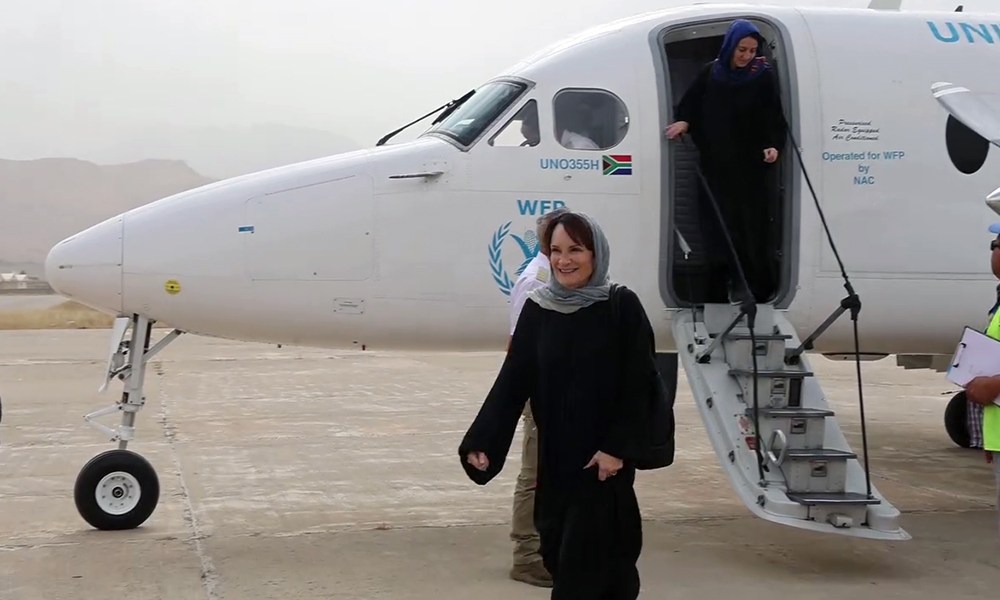
The UN Assistance Mission in Afghanistan (UNAMA) has called for greater investment in alternative development opportunities and sustainable livelihoods during a visit by its Acting Head and Deputy Special Representative of the Secretary-General, Georgette Gagnon, to Badakhshan province.
According to UNAMA, Gagnon met with local authorities, community leaders and other stakeholders to discuss issues affecting residents of the province, particularly women and efforts to address the impact of narcotics.
In Faizabad, she met with women entrepreneurs and visited a UN-supported drug rehabilitation centre. She also travelled to Khash district, where she toured a women’s safe space and a women-led dairy processing enterprise providing an alternative source of income to poppy cultivation.
Gagnon reaffirmed the United Nations’ support for communities across Afghanistan and stressed the importance of expanding sustainable economic opportunities, particularly for communities affected by the challenges of illicit narcotics.


Tahawol: IEA seeking Afghanistan seat at UN

Saar: U.S. sanctions against Iran

Five-day workshop launched in Kabul to standardize Pashto and Dari orthography

Four mediators struggle to secure lasting Pakistan-Afghanistan ceasefire

UNAMA highlights need for alternative livelihoods during Badakhshan visit

Pakistan’s governance system has ‘collapsed’: Mohsin Naqvi

AFC confirms clubs for 2026/27 competitions; draw set for August 18

Afghanistan exports first stone shipment to US in $100,000 trade milestone

Only two days to go before Afghanistan and Ireland begin ODI series

Iran seeks to establish free trade zone with Afghanistan and China
Tahawol: IEA seeking Afghanistan seat at UN
Saar: U.S. sanctions against Iran

Saar: Ongoing return of Afghan refugees from Iran and Pakistan discussed

Tahawol: Expansion of IEA’s diplomatic ties with countries discussed

Saar: Ongoing tensions between Iran and US discussed
-
 Latest News2 days ago
Syria and Saudi Arabia condemn Kabul bombing, express solidarity with Afghanistan
-
 Latest News2 days ago
US judge strikes down Trump visa suspension for 75 countries, including Afghanistan
-
 Latest News15 hours ago
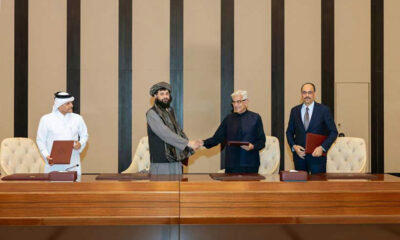
Four mediators struggle to secure lasting Pakistan-Afghanistan ceasefire
-
 Regional5 days ago
Turkey slams Israel’s ‘untenable’ claims after strikes on Syrian base
-
 Latest News3 days ago
Qatar and UAE condemn Kabul school bombing that injured dozens
-
 World5 days ago
Trump says no talks planned with Iran, Tehran says Strait of Hormuz still shut
-
 Latest News2 days ago
Achakzai urges Pakistan to end hostility towards Afghanistan
-
 Latest News4 days ago
Pakistan needs national dialogue on Afghan policy: security expert