
World
US strikes may have set back Iran nuclear program only months, sources say
A U.S. official, speaking on condition of anonymity, said the U.S. did not yet know the true extent of the damage.

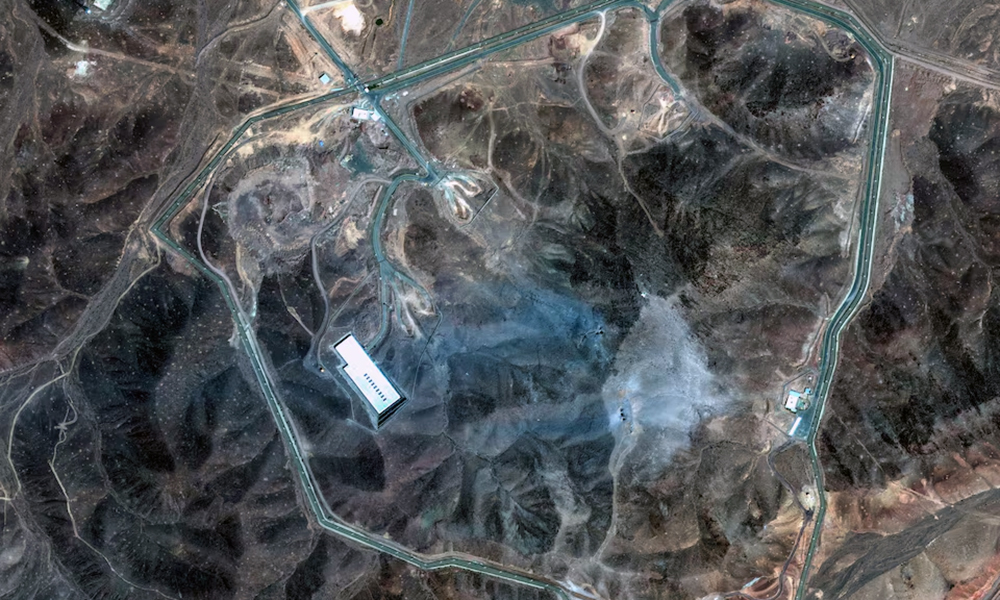
A preliminary U.S. intelligence assessment has determined that U.S. strikes over the weekend on Iranian nuclear facilities have set back Tehran’s program by only a matter of months, three sources with knowledge of the matter told Reuters.
The initial report was prepared by the Defense Intelligence Agency, the Pentagon’s main intelligence arm and one of 18 U.S. intelligence agencies, said two of the sources, who requested anonymity to discuss classified matters.
The assessment found that Iran could restart its nuclear program in a matter of months, according to the three sources, one of whom said it estimated the earliest restart could be in one to two months.
The classified assessment is at odds with the statements of President Donald Trump and high-ranking U.S. officials – including Defense Secretary Pete Hegseth. They have said the weekend strikes, which used a combination of bunker-busting bombs and more conventional weapons, essentially eliminated Iran’s nuclear program.
Trump’s administration on Tuesday told the U.N Security Council that its weekend strikes had “degraded” Iran’s nuclear program, short of Trump’s earlier assertion that the facilities had been “obliterated.”
Asked for comment, the White House pointed to a statement by spokesperson Karoline Leavitt to CNN, which first reported the assessment, that the “alleged” conclusion was “flat-out wrong.”
“Everyone knows what happens when you drop fourteen 30,000 pound bombs perfectly on their targets: total obliteration,” she said.
A U.S. official who read the assessment noted that it contained a number of caveats and “ifs” and said a more refined report was expected in the coming days and weeks.
Analysts said that, if the assessment was based on satellite imagery, the extent of damage to the deeply buried Fordow uranium enrichment facility would not necessarily be revealed.
Trump has said the attacks were necessary to prevent Iran from developing a nuclear weapon. Iran denies it is seeking such a weapon and says its nuclear program is for peaceful purposes.
Assessing the damage at the Fordow, Isfahan and Natanz nuclear sites is expected to be a difficult task, and the DIA is not the only agency tasked with the job. One source said the assessment was not universally accepted and had generated significant disagreement.
A U.S. official, speaking on condition of anonymity, said the U.S. did not yet know the true extent of the damage.
Still, the initial assessment indicated the strikes may not have been nearly as successful as the Trump administration has claimed.
The sources said that the report found that the U.S. attack had caved in facility entrances and destroyed or damaged infrastructure. However, one added, the strike did not collapse underground buildings.
Restarting operations would basically depend on “how long it takes them to dig out and build or repair” power and water supply facilities, said the second source.
The Washington Post, citing a person familiar the report, said some centrifuges for enriching uranium were intact.
The Pentagon disputed the notion that the damage was insignificant, though it did not dispute that the DIA assessment exists.
“Based on everything we have seen — and I’ve seen it all — our bombing campaign obliterated Iran’s ability to create nuclear weapons,” Hegseth said in a statement to Reuters.
“Our massive bombs hit exactly the right spot at each target—and worked perfectly. The impact of those bombs is buried under a mountain of rubble in Iran; so anyone who says the bombs were not devastating is just trying to undermine the President and the successful mission.”
One source, however, said Iran’s enriched uranium stocks had not been eliminated.
David Albright, a former U.N. nuclear inspector, said that based on post-strike commercial satellite imagery, he believed the U.S. attack effectively destroyed Iran’s uranium enrichment program for now, but failed to eliminate the longer-term threat.
“Iran retains an ability to break out and produce weapon-grade uranium,” said Albright, the head of the Institute for Science and International Security, in a post on X.
He noted that Iran’s stock of near-weapons grade highly enriched uranium – enough for about nine warheads – is unaccounted for as are advanced centrifuges for a new enrichment facility that Iran this month told the IAEA it was preparing.
Initial military assessments can change as more information comes to light and it is not uncommon for opinions to vary across different U.S. intelligence agencies.
Democrats have previously said Trump’s claims that the weekend strikes eliminated or seriously set back Iran’s nuclear program were not yet backed by evidence.
“There’s zero evidence that I’ve seen that the nuclear program was completely and totally obliterated as Donald Trump has claimed,” House of Representatives Democratic Leader Hakeem Jeffries said on Monday.
Classified briefings on the matter for members of the House of Representatives and Senate were canceled on Tuesday.





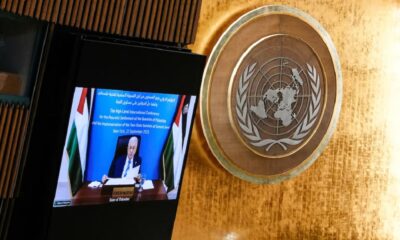

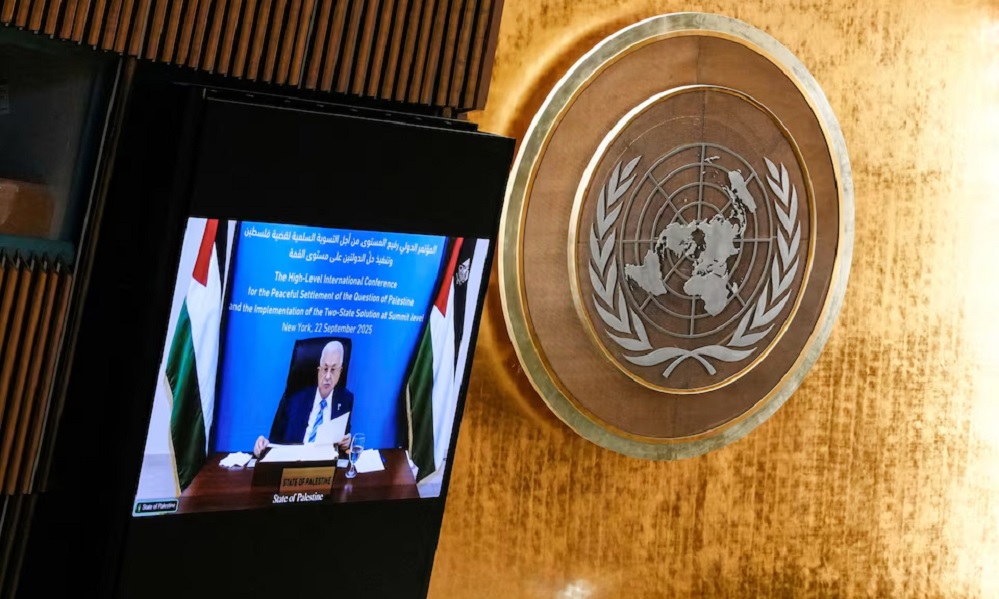
The United Nations General Assembly voted on Thursday to allow Palestinian President Mahmoud Abbas to address the annual gathering of world leaders next week via video – for the second year in a row – after the United States again denied him a visa to travel to New York.
The resolution received 152 votes in favor and three votes against, while four countries abstained. It also allows Abbas and any other high-level Palestinian officials to take part in U.N. meetings or conferences via video over the next year if they are prevented from traveling to the United State, Reuters reported.
The US said last year that Abbas and about 80 other Palestinians would be affected by its decision to deny and revoke visas from members of the umbrella Palestine Liberation Organization and the West Bank-based Palestinian Authority. Washington announced on Wednesday that it had extended the visa bans.
“If the PA wants to be treated as a partner, it must stop subsidizing terror and stop using diplomatic theater as a substitute for serious governance,” Deputy US Ambassador to the United Nations Tammy Bruce told the assembly before the vote.
Palestinian leaders rejected and condemned the move by the United States, Palestinian UN envoy Riyad Mansour told the General Assembly.
Without naming specific officials, the US State Department said on Wednesday it would extend visa sanctions against Palestinian officials over actions they took to “internationalize the Israeli-Palestinian conflict,” including pursuing cases against Israel at international tribunals.
A Palestinian official, who spoke on condition of anonymity, confirmed Abbas’ visa had been denied.
Under a 1947 U.N. “headquarters agreement,” the U.S. is generally required to allow access for foreign diplomats to the UN in New York. However, Washington has said it can deny visas for security, extremism and foreign policy reasons.
World
North Korea’s Kim vows to expand ties with Russia, backs victory in ‘sacred war’
Kim delivered a similar message to Chinese President Xi Jinping in a reply published by KCNA on Sunday.

North Korean leader Kim Jong Un said he would “expand and deepen” joint work with Russia in a message to Russian President Vladimir Putin, state media KCNA reported on Tuesday.
In a reply sent on Monday to Putin’s congratulations for North Korea’s 78th founding anniversary, Kim said Pyongyang’s government had a firm will to broaden cooperation with Russia “in a comprehensive way” based on friendship, mutual assistance, and what he described as the countries’ alliance relations.
Kim also said he was convinced of Russia’s victory in the current “sacred war for defending the security interests of the country and international justice”, language that appeared to refer to Russia’s war in Ukraine.
He pledged his “invariable support” for Putin and the Russian people.
The remarks come as Moscow and Pyongyang have drawn markedly closer, with North Korea sending troops to fight alongside Russian forces in Ukraine in 2024 and deepening military cooperation under a mutual defence pact.
Kim delivered a similar message to Chinese President Xi Jinping in a reply published by KCNA on Sunday, saying North Korea would work with China to further develop their traditional friendship and advance their shared socialist cause.
Both messages were responses to congratulatory letters sent by Putin and Xi on September 9, when North Korea marked the 78th anniversary of its founding.
World
Houthi advance in Yemen puts U.S. in a new bind
The U.S. administration can’t afford to have the Houthis close the strait, driving up energy prices and disrupting global trade.
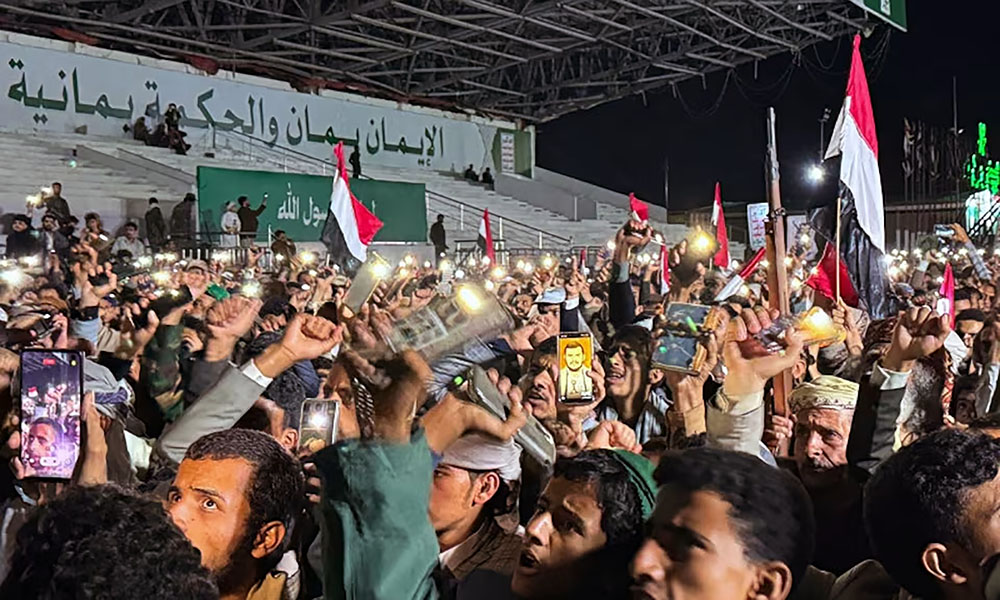
A lightning offensive by the Iran-aligned Houthis has put the militants in a position to control a crucial Middle East waterway, creating a major new problem for U.S. President Donald Trump as his war with Iran grinds on in its seventh month, Reuters reported.
Widening the Middle East conflict, Houthi fighters have advanced south along Yemen’s coast, increasing their ability to choke off the Bab el-Mandeb Strait — the “Gate of Tears” at the mouth of the Red Sea — giving Tehran potential leverage over both of the region’s main oil-shipping corridors.
The militants reached the island of Perim on Friday, in the middle of the strait between Yemen and Africa. That is bad news for Saudi Arabia, which has been shipping much of its oil from Red Sea ports since the war effectively closed the Strait of Hormuz, on the opposite side of the Arabian Peninsula.
It also comes at a difficult time for Trump, who is already grappling with record-low approval ratings and searching for a way out of the conflict, most recently by announcing an economic pressure campaign designed to force concessions from Iran’s government.
High U.S. gasoline prices driven by the conflict have jeopardized his Republican Party’s chances of keeping control of Congress in the November midterm elections. Iran remains defiant despite being hurt militarily and economically.
“Just weeks ago, Trump adopted a strategy of squeezing Iran’s economy while keeping military conflict at levels too low to squeeze the American economy,” said Stephen Wertheim, a senior fellow at Carnegie Endowment for International Peace. “The Houthis have shattered Trump’s plan.”
The U.S. administration can’t afford to have the Houthis close the strait, driving up energy prices and disrupting global trade.
But at the same time, entering a fight with a foe that has withstood previous attacks by Saudi Arabia and the U.S. would be a dangerous new mission for a U.S. military already stretched by the fighting in Iran.
Saudi Arabia’s de facto ruler, Crown Prince Mohammed bin Salman, phoned Trump on Thursday and asked for U.S. military help fighting the Houthis, three sources told Reuters. He was told Washington would not intervene directly for now but would help with intelligence, the sources said.
Trump confirmed on Saturday that he had spoken to the crown prince, and said the Houthis had also phoned his administration and asked for Washington not to become directly involved in the conflict, read the report.
A senior Trump administration official declined to address specific questions, but said the U.S. is focused on national security interests such as ensuring freedom of navigation in the Red Sea “while empowering our regional partners to take the lead in managing and resolving regional security challenges”.
Saudi Arabia, Iran and the Houthis did not respond to a request for comment. Iran’s foreign ministry said in a statement on Thursday that the Yemen conflict could not be solved by blockade or military action against the Houthis and called for dialogue, without addressing Iran’s own role.
Iran responded to U.S. and Israeli attacks earlier this year by disrupting the Strait of Hormuz, the outlet to the Gulf through which around a fifth of global oil supplies flowed before the war.
If the Houthis close the Bab el-Mandeb, that would deal another economic blow, constraining another 7% of global petroleum supplies and about 12% of global trade.
“This was always the worst-case scenario, that the Iranians exert control not only of Strait of Hormuz but Bab el-Mandeb, two of the leading energy choke points in the world,” said David Schenker, who served as Assistant Secretary of State for Near East Affairs during Trump’s first term and is now at the Washington Institute for Near East Policy, a think tank.
“It’s an enormous amount of leverage that [the Iranians] have in hand.”
Analysts and former officials say Trump now faces a choice: devote U.S. forces and scarce air-defense munitions to pushing back the Houthis, or leave Saudi Arabia and its allies, a Yemeni government based in the south, to confront them alone.
The Houthis seized Yemen’s capital 12 years ago, and a Saudi-led military intervention has failed to dislodge them since.
Taking on the Houthis would effectively end a deal Trump struck last year in which the U.S. would stop bombing the group in exchange for a halt to strikes on Red Sea shipping. That would be likely to expose U.S. forces to missile attacks from Yemen.
It would also be another burden for the U.S. military.
U.S. officials say a fight with the Houthis could require significant naval and aerial resources and divert U.S. intelligence assets, given the need to pinpoint Houthi positions that have changed since last year.
If U.S. Navy vessels and aircraft have to start shooting down Houthi drones and missiles, it could also worsen diminished stockpiles of U.S. munitions and air-defense interceptors.
The senior administration official denied that the U.S. was concerned about its resources being stretched. “The United States Military has more than enough munitions, ammo, and stockpiles to serve all of the Commander-in-Chief’s strategic goals and beyond,” the official said.
Tim Lenderking, who served as U.S. special envoy on Yemen under former President Joe Biden and is now a principal at law firm Squire Patton Boggs, said that with Trump signaling an unwillingness to get directly involved militarily against the Houthis, the U.S. needs to do more to share intelligence with the Saudis for their air campaign and step up diplomatic and material support for Yemen’s internationally recognized government.
“This administration came in asking the question, ‘What can Yemen do for us?’” Lenderking said during a webcast sponsored by the Middle East Institute think-tank in Washington. “Well, Yemen can spoil our day.”


ACL: Sarsabz Yashlar edge Isteqlal Kabul 2–1

Debate on Afghanistan and New Investment Opportunities

Sorkh Poshan Khafi beat Arman FC 2–0 in ACL season six

At least 15 killed in blast near mosque in Khyber Pakhtunkhwa

Afghanistan seeks stronger ties with Saudi Arabia, dialogue with Pakistan: Mujahid

Four mediators struggle to secure lasting Pakistan-Afghanistan ceasefire

Syria and Saudi Arabia condemn Kabul bombing, express solidarity with Afghanistan

Afghanistan’s trade diversification challenges Pakistan

Saudi energy group signs major Afghanistan deals covering gas exploration and pipeline plans

ATN secures exclusive rights to broadcast T20I series in India across Afghanistan
Debate on Afghanistan and New Investment Opportunities

Tahawol: Reasons behind Qatari, Turkish security officials’ Kabul visit discussed

Saar: Outcome of UN Security Council meeting on Afghanistan discussed

Tahawol: Afghanistan’s readiness for US relations discussed

Saar: UN Security Council meeting on Afghanistan discussed
-
 Regional5 days ago
Hormuz shipping traffic remains below 10-day average at weekend, data shows
-
 Latest News5 days ago
Helmand governor, UNAMA discuss province’s key challenges
-
 Latest News5 days ago
Muttaqi defends Afghanistan’s policies, calls for stronger international ties
-

 Sport5 days ago
Farooq Khan Ahmadzai makes international umpiring debut
-
 Latest News3 days ago
UN warns of mounting humanitarian and human rights pressures in Afghanistan
-

 Sport4 days ago
ACL: Abu Muslim Farah 4-0 Istiqlal Kabul; Omar Zawak 3-1 Sarsabz Yashlar
-
 Latest News5 days ago
Mujahid: Afghanistan’s reconstruction must rely on domestic investment
-
 Latest News5 days ago
Afghan doctors barred from Peshawar hospital over visa issues