
Latest News
Karzai strongly condemns attempted attack on Mecca

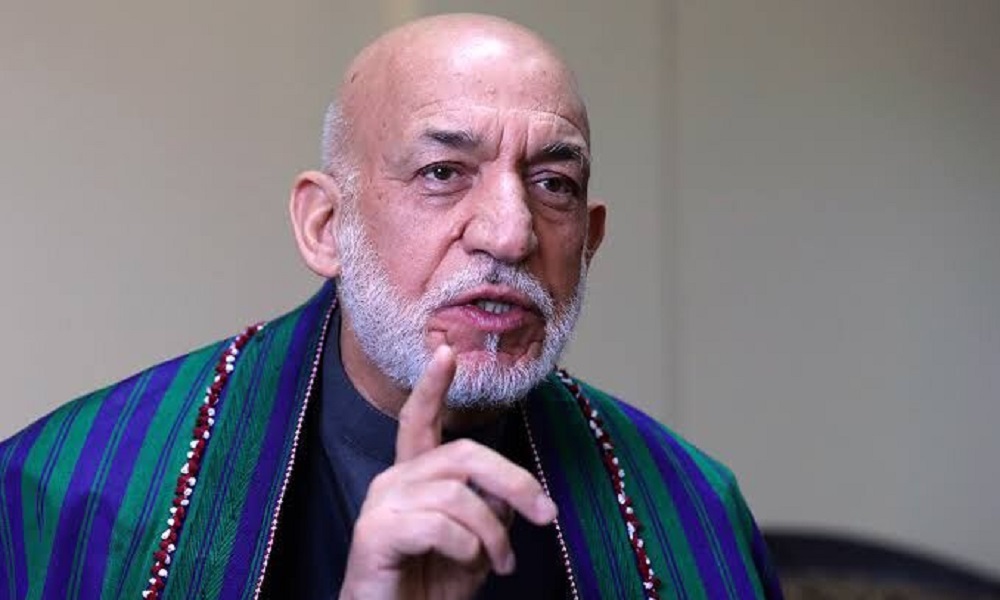
Afghanistan’s former president Hamid Karzai has condemned in the “strongest terms” an attempted drone attack near Mecca, emphasizing the need to preserve the sanctity of Islam’s two holiest sites.
Saudi Arabia said its air defenses intercepted and destroyed a drone south of Mecca on Tuesday evening, September 15, before it entered the restricted airspace over the holy city.
Saudi-led coalition spokesman Turki al-Malki said the drone had been launched by Yemen’s Houthi group and described the incident as the second attempt to target Mecca since a ballistic missile launch in 2017.
The Houthis, however, have denied targeting Mecca or any Islamic holy site.
In a post on X, Karzai expressed his sympathy with Saudi Arabia, describing the country as a friend and brother of Afghanistan, and stressed that the sanctity of the Two Holy Mosques must be respected under all circumstances.
He also expressed hope that, through the prudence and foresight of the countries involved, further escalation of tensions and conflict can be prevented and the way paved for lasting peace and stability in the region.
The incident comes amid a sharp escalation in fighting involving Saudi Arabia and the Houthis, with a series of recent drone and missile attacks across Saudi Arabia.
Saudi officials have warned that the security of Mecca and the Two Holy Mosques is a “red line.”



Latest News
Five Years On: IEA touts economic growth despite international isolation
He said that conditions had improved across the economy, trade, transit and international relations.
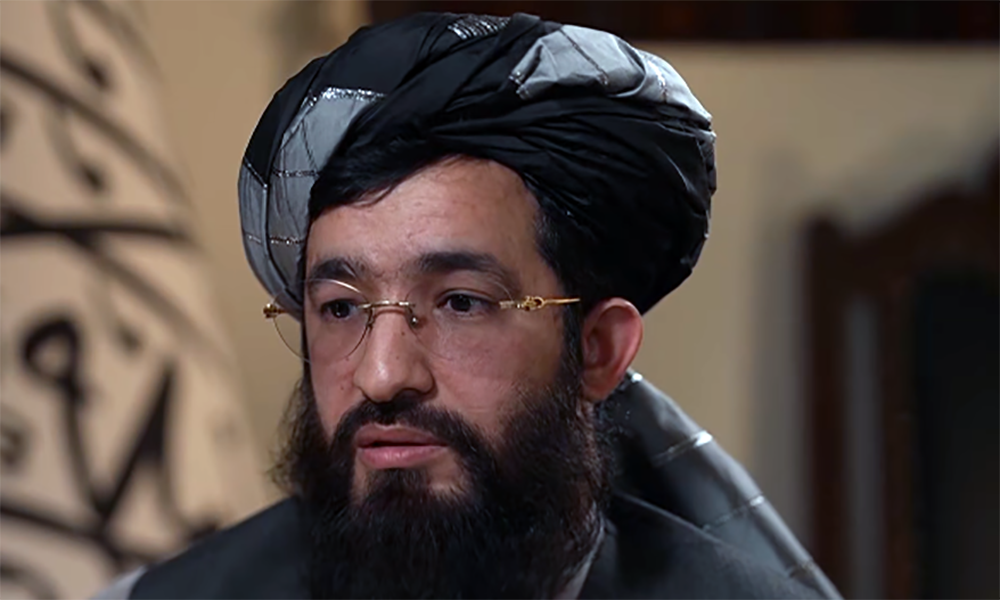
Five years after returning to power, the Islamic Emirate of Afghanistan (IEA) is highlighting what it describes as progress in security, economic activity and infrastructure development, while Afghanistan continues to face economic challenges, limited diplomatic recognition and international concerns over restrictions on women and girls.
In an interview with CBS, IEA Foreign Ministry Spokesman Abdul Gahar Balkhi said the end of the foreign military presence was the administration’s main achievement, pointing to calmer streets, fewer security checkpoints and ongoing infrastructure projects in Kabul.
He said that conditions had improved across the economy, trade, transit and international relations.
He claimed Afghanistan’s exports had increased from about $750 million in 2020 to nearly $2 billion, while the number of operating factories had risen from around 1,500 to approximately 6,000.
Afghanistan, however, continues to face severe economic and humanitarian challenges, including widespread hunger and unemployment.
Diplomatic recognition of the IEA administration also remains limited.
Balkhi told CBS that formal recognition was less important than practical diplomatic engagement, pointing to the presence of foreign ambassadors, diplomatic exchanges and trade relations with other countries.
Restrictions on women’s education remain a major source of international criticism. Public schooling for girls from grade seven onward remains suspended.
Balkhi rejected claims that the IEA had issued more than 100 decrees targeting women. He said the restrictions on secondary education were a suspension rather than a permanent ban, and pointed to homeschooling, religious schools and online education as alternatives.
“There is no such thing as secret schools. There’s homeschooling options,” he said.
“There’s madrasa options. There’s online options,” he said, adding that “you would call it a secret school, but we call it homeschooling.”
On counterterrorism commitments under the Doha Agreement, Balkhi told CBS that Afghan territory would not be allowed to serve as a base for attacks against the United States or other countries.
Asked about the 2022 U.S. drone strike in Kabul that killed al-Qaeda leader Ayman al-Zawahiri, Balkhi said Afghan officials could not confirm the identity of the person killed, while maintaining that the IEA was committed to its security pledges.
Balkhi also said the IEA wanted formal diplomatic relations with all countries, including the United States, and would welcome the reopening of the U.S. Embassy in Kabul.
Relations with Washington remain complicated by disagreements over frozen Afghan central bank assets and U.S. demands concerning military equipment left behind during the 2021 withdrawal.
“That is the assets of the state of Afghanistan. It’s not the money of the current government or the previous government or the governments before it,” Balkhi said in relation to the frozen assets.
“That money, freezing that money, is not to the benefit of the people of Afghanistan and it certainly isn’t to the benefit of the United States,” he added.
Balkhi also rejected any proposal to exchange military equipment for Afghanistan’s frozen financial reserves, arguing that both were assets belonging to the Afghan state.
“We have no intention of dealing on the assets of the state of Afghanistan,” he said.
He did however call for greater diplomatic engagement with Afghanistan, saying it could contribute to economic recovery and regional stability.
“We want formal diplomatic ties with every single country of the world, including the United States of America.
“In the world that we live in, in a globalized world, the prosperity and development of countries depends on interactions with each other, for the greater benefit of humanity,” he said.
He went on to say that it’s the IEA’s policy to “welcome all countries, including the United States of America, if they wish to invest in the mineral sector, in the gas sector, whatever sector that they feel is mutually beneficial.”
In conclusion, Balkhi stated: “We no longer have war and we can work towards the development of the country and stabilize it for our future generations.”
Latest News
UN warns of mounting humanitarian and human rights pressures in Afghanistan
The UN documented 399 civilian casualties in Afghanistan between 1 April and 30 June, including 57 deaths and 342 injuries.
The United Nations has warned that Afghanistan continues to face serious humanitarian, economic, security and human rights challenges, despite the Islamic Emirate (IEA) maintaining overall territorial and administrative control.
In its latest report, covering 22 May to 9 September 2026, the UN said relative stability masked growing risks, including human rights concerns, economic pressures, humanitarian needs and tensions with Pakistan.
The report said IEA policies continued to raise concerns over the rights of women and girls, restrictions affecting men and women, arrests of journalists, reported violations of the general amnesty and the continued use of corporal punishment.
Between 1 May and 31 July, the UN recorded 2,947 safety and security-related incidents, an 11 percent increase compared with the same period in 2025. Armed opposition groups claimed responsibility for 88 incidents across 21 provinces, of which 55 were verified.
The attacks mainly involved ambushes and assaults on checkpoints targeting IEA personnel and military facilities.
The UN also reported a suicide bombing outside a boys’ school in Kabul on 5 June, although no group claimed responsibility.
In Badakhshan, the Homeland Soldiers Front briefly seized administrative buildings in Yaftal-e Payin District on 17 July before withdrawing.
On 24 July, the Afghanistan Freedom Front attacked a security checkpoint in Zaybak District, but the IEA reportedly repelled the attack and retained control.
The Afghanistan-Pakistan frontier remained volatile, with drone activity, airstrikes, shelling and clashes reported on both sides.
The UN documented 399 civilian casualties in Afghanistan between 1 April and 30 June, including 57 deaths and 342 injuries.
Pakistani airstrikes on 28 June in Kunar, Paktika and Paktiya were reported to have killed 28 civilians and injured 189.
Pakistan said the strikes targeted terrorist hideouts, while the IEA rejected the allegations.
On 30 June, the IEA Ministry of Defence announced retaliatory drone attacks against alleged ISIL-K (Daesh) and anti-IEA group locations in Pakistan.
Pakistani authorities confirmed that drones had crossed into Pakistani territory and said they were intercepted.
The UN also reported that ISIL-K claimed an attack on a military checkpoint in Nuristan on 30 June, while an IEA official was killed near Faizabad in Badakhshan on 29 July.
Humanitarian pressure
The humanitarian response remained severely underfunded, the UN reported stating that the 2026 Afghanistan Humanitarian Needs and Response Plan had received $513 million of the $1.7 billion required, leaving it 29.9 percent funded.
The UN projected that 13.8 million people would face crisis or emergency levels of food insecurity in 2026, while 3.7 million children under five and 1.2 million pregnant and breastfeeding women were projected to face acute malnutrition.
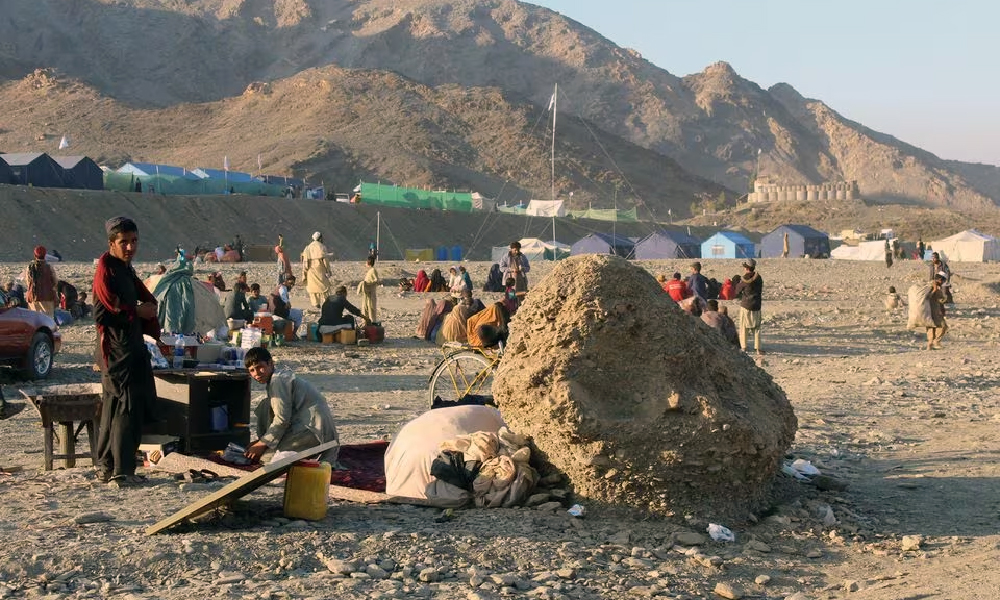
Nearly 1.15 million Afghans returned between 1 January and 22 August, including 686,200 from Pakistan and 465,000 from Iran. The UN said a large share of the returns were involuntary, placing additional pressure on labour markets and communities.
The report also noted that an estimated 2.4 million Afghan girls were systematically excluded from secondary education, according to UNESCO.
A UNICEF study estimated that restrictions on women’s education and labour-force participation cost Afghanistan at least $84 million annually.
Regional engagement
Despite the challenges, Afghanistan continued regional economic and diplomatic engagement.
Afghan and Uzbek traders signed 22 trade agreements worth $200 million, while Uzbekistan agreed to simplify visa procedures for Afghan patients seeking medical treatment.
Afghanistan also held discussions with Turkmenistan, Iran and India on energy, bilateral cooperation and agriculture.
Turkmenistan reported that construction of the Turkmenistan-Afghanistan-Pakistan-India (TAPI) pipeline had reached 67 percent completion.
UN Secretary-General António Guterres called on the IEA to remove restrictions affecting women and girls, protect media freedom, respect due process and detainee rights, prevent violations of the general amnesty and end corporal punishment.
He also urged all parties involved in Afghanistan-Pakistan hostilities to protect civilians and comply with international law, while calling for returns to Afghanistan to be voluntary, safe, dignified and supported by sustainable reintegration.
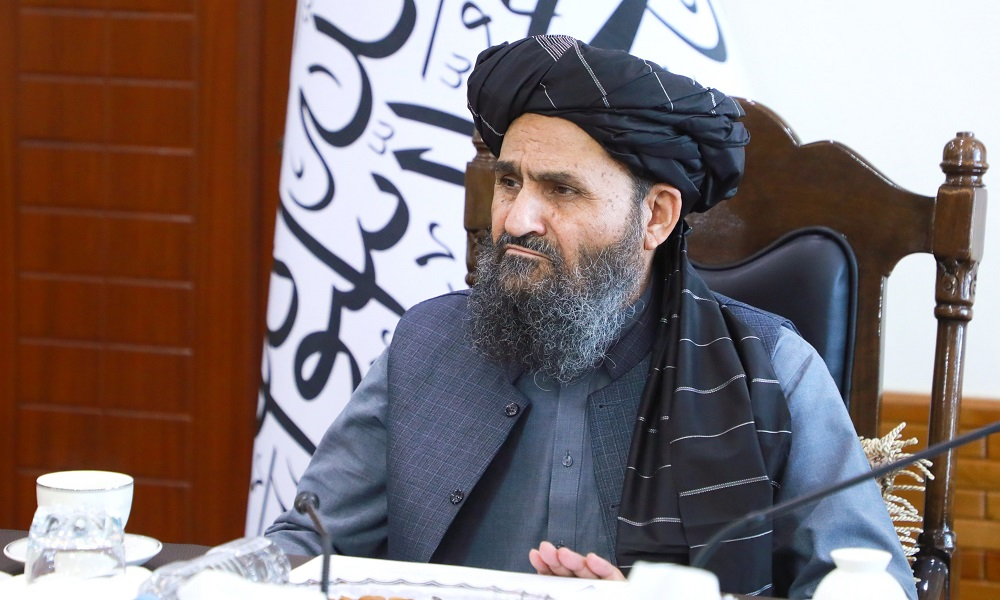
Afghanistan’s Economic Commission has approved 66 draft national standards and testing methods covering a wide range of agricultural, industrial and commercial sectors.
The commission, chaired by Deputy Prime Minister for Economic Affairs Mullah Abdul Ghani Baradar, approved 36 national standards and 30 testing methods following discussions and a review of the proposals, according to a statement from the Office of the Prime Minister.
The approved standards cover areas including agricultural products, food, medicines, textiles, chemicals and plastics, telecommunications and electricity, mining, construction materials and environmental protection, among other sectors.
The move is aimed at establishing clearer standards and testing procedures across key areas of production and trade, helping to provide a common framework for assessing the quality and safety of products.
The commission also discussed the ownership and management of coal unloading, loading, processing and packaging facilities in Paktia, Paktika, Khost, Kandahar and Nangarhar provinces.
Following a comprehensive assessment, the commission decided that the facilities would fall under the Ministry of Transport and Civil Aviation, which will oversee their operations.


Karzai strongly condemns attempted attack on Mecca

Saudi Arabia calls alleged Mecca attack a ‘red line’ as Houthis deny involvement

Five Years On: IEA touts economic growth despite international isolation

UN warns of mounting humanitarian and human rights pressures in Afghanistan

India take 2-0 lead in 3-match series against Afghanistan

Four mediators struggle to secure lasting Pakistan-Afghanistan ceasefire

Afghanistan’s trade diversification challenges Pakistan

Syria and Saudi Arabia condemn Kabul bombing, express solidarity with Afghanistan

Saudi energy group signs major Afghanistan deals covering gas exploration and pipeline plans

Afghanistan-India T20I series could see major schedule change

Tahawol: Afghanistan at the center of UN discussions

Saar: Afghanistan’s relations with regional countries discussed

Tahawol: Houthis’ return to regional power dynamics

Tahawol: Calls for U.S. engagement with Afghanistan

Saar: End of Chinese ambassador’s mission in Kabul
-

 Sport3 days ago
Zadran calls on Afghan fans to rally behind team against India
-

 Sport5 days ago
Omar Zawak, Toofan Herat secure victories in Afghanistan Champions League
-
 Latest News3 days ago
Khalilzad warns US risks losing influence in Afghanistan to China and Russia
-

 Regional4 days ago
Saudis shut down oil pipeline as Houthis tighten grip on Red Sea shipping
-
 Business3 days ago
EU and FAO launch €5m programme to strengthen Afghanistan’s agrifood sector
-
 World3 days ago
Houthi advance in Yemen puts U.S. in a new bind
-
 Regional3 days ago
Iran and UAE back joint BRICS statement urging restraint in war
-

 Latest News4 days ago
Afghan official highlights Badakhshan operation at China security forum