
Latest News
India urges world to ‘recognize Afghanistan’s new reality’ and change collective approach

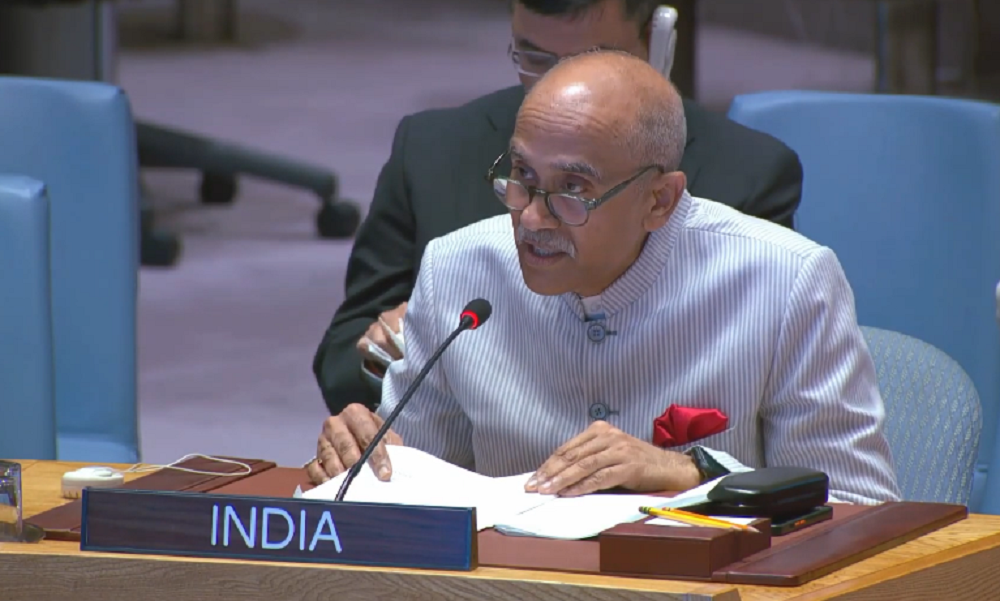
India has urged the international community to recognize Afghanistan’s “new reality” and reconsider its approach toward the country, calling for greater humanitarian, economic and development support.
Addressing the UN Security Council on Wednesday, India’s Permanent Representative Ambassador Harish Parvathaneni said Afghanistan’s humanitarian situation remained “especially dire” and called for broader international engagement, including positive incentives.
“We reemphasize the importance of incentivizing positive actions,” he said. “We cannot firewall 48 million people suffering deprivation and immense hardship out of our collective conscience and expect that there will be no consequences. There is a lot of misery in this world, but the case of Afghanistan is especially dire and we must recognize its new reality and change our collective approach, much like we have done in other similar situations.”
“The UN and international community must widen its policy toolkit to include positive inducements and nudges as well, so that one day, a young Afghan girl or boy can also proudly say that the world helped them when needed.”
India highlighted its humanitarian and development assistance, including more than 50,000 tonnes of wheat, medical supplies and support for Afghanistan’s healthcare system. It also said more than 3,000 Afghan students had benefited from scholarships since 2023.
Parvathaneni also raised concerns over the return of millions of Afghans, stressing that returns should be voluntary, safe and dignified. India reaffirmed its support for UNAMA and called for sustained international efforts to promote peace, stability and economic self-reliance in Afghanistan.

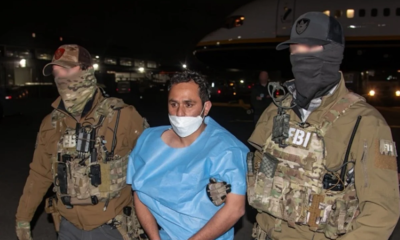



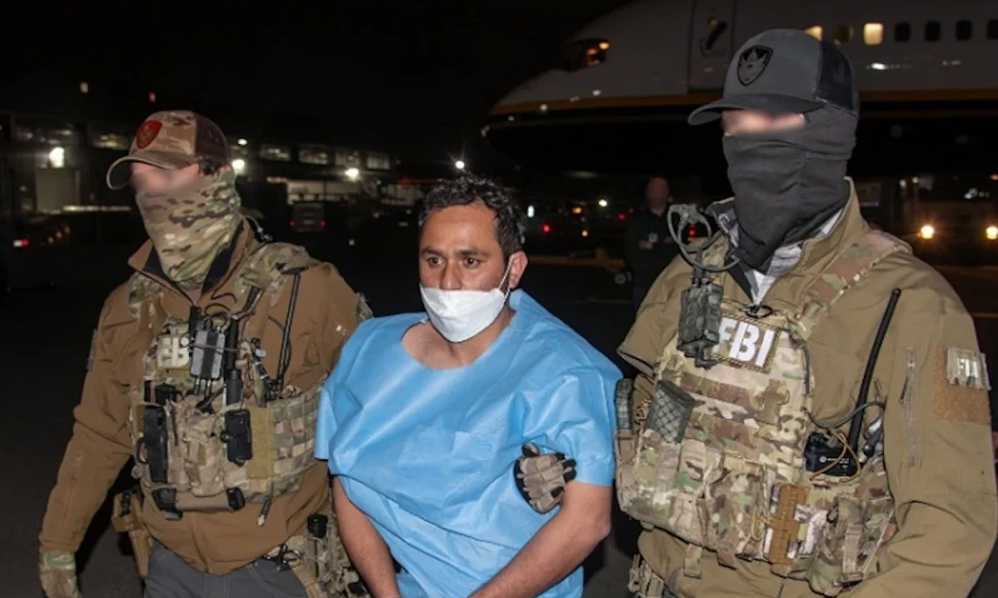
An Afghan man convicted in the United States of providing material support to ISIS-K has been sentenced to 20 years in prison in a case linked to the deadly 2021 bombing at Kabul airport.
A federal jury in Virginia convicted Mohammad Sharifullah in April of providing material support to ISIS-K. However, jurors could not reach a unanimous decision on whether he was responsible for deaths resulting from the August 26, 2021, attack at Abbey Gate.
The bombing, carried out by a suicide attacker during the US military withdrawal from Afghanistan, killed 13 US soldiers and around 160 Afghans, according to US authorities.
US prosecutors said Sharifullah’s role included scouting a route to the airport ahead of the attack. However, his lawyers argued that he was never convicted of directly participating in the bombing and that prosecutors had failed to establish a direct link between him and the attack.
Sharifullah, 28, did not testify during the trial and declined to address the court before sentencing. US District Judge Anthony Trenga imposed the maximum 20-year sentence for the conviction.
Prosecutors also accused Sharifullah of involvement in other attacks, including the 2024 attack on a concert hall in Moscow. His defense team disputed the allegations and said statements he made during FBI questioning were unreliable.
The case stems from the chaotic US military withdrawal from Afghanistan in August 2021. The Abbey Gate bombing was claimed by ISIS-K.
A US Central Command review previously identified the suicide bomber as Abdul Rahman al-Logari, an ISIS member who had been released from an Afghan prison before the attack.
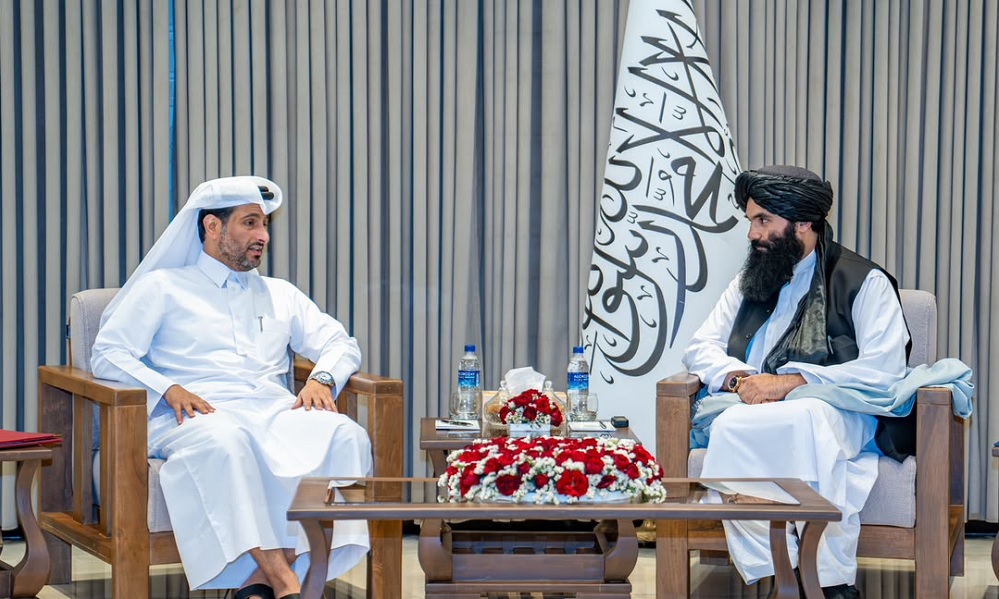
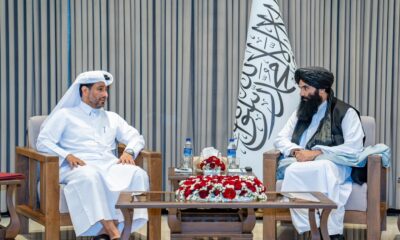
Hamad Khamis Al-Kubaisi, Deputy Secretary of Qatar’s National Security Council, has met with Afghan Minister of Interior Affairs Khalifa Sirajuddin Haqqani in Kabul.
According to a statement, the meeting focused on further developing the “good relations” between the two countries, Afghanistan’s positive engagement and constructive role within the international community, and ways to further strengthen bilateral ties.
The meeting comes as Kabul and Doha continue to maintain diplomatic engagement, with both sides discussing opportunities for closer cooperation and stronger relations
Latest News
Russia urges dialogue and economic support for Afghanistan, warns against excessive pressure
Russia supports what Nebenzia called a “realistic comprehensive approach” based on dialogue with Afghanistan’s authorities, consideration of Afghan needs, and cooperation on security, economic development and diplomatic relations.
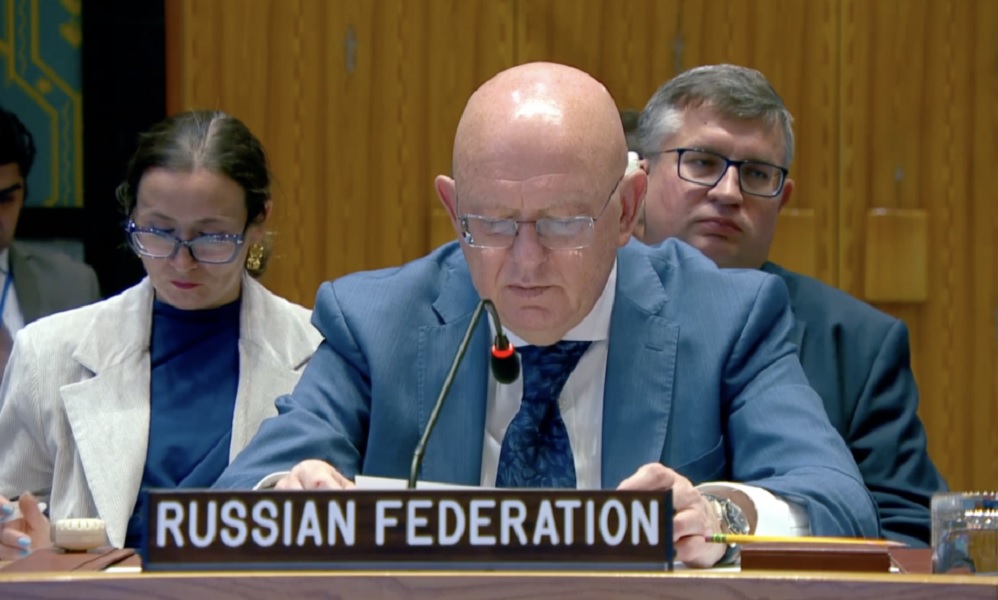
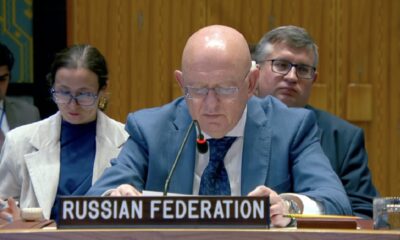
Russia has urged the international community to pursue a pragmatic approach toward the Islamic Emirate of Afghanistan (IEA), calling for dialogue, economic assistance and regional cooperation while warning against what Moscow described as excessive reliance on sanctions and political pressure.
Speaking at a UN Security Council meeting on Afghanistan on Wednesday, Russia’s Permanent Representative to the United Nations, Vassily Nebenzia, welcomed the appointment of Rabab Fatima as the new head of the UN Assistance Mission in Afghanistan (UNAMA) and said international efforts should focus on practical cooperation with authorities in Kabul.
Nebenzia argued that Afghanistan had not experienced the widespread collapse predicted by some Western governments following the withdrawal of foreign forces in 2021. He attributed what he described as relative stability partly to the IEA’s efforts to strengthen regional cooperation.
Russia supports what Nebenzia called a “realistic comprehensive approach” based on dialogue with Afghanistan’s authorities, consideration of Afghan needs, and cooperation on security, economic development and diplomatic relations.
He criticized what he characterized as Western governments’ focus on human rights at the expense of broader engagement.
“Selective and biased approaches, as well as a fixation on human rights aspects – which is of particular interest to a certain group of Western donors – will lead nowhere,” Nebenzia said.
At the same time, Russia said it was monitoring human rights and fundamental freedoms in Afghanistan, including access to education and employment regardless of ethnicity, religion or gender. Nebenzia also called for progress toward a government involving Afghanistan’s various ethnic and political groups.
Nebenzia expressed concern over tensions between Afghanistan and Pakistan and the activities of Tehrik-e Taliban Pakistan (TTP). He also cited the continued presence of Islamic State Khorasan and the Eastern Turkistan Islamic Movement as security threats.
Russia praised the IEA’s efforts to reduce opium-poppy cultivation while calling for greater attention to synthetic drugs and stronger regional cooperation against trafficking.
Moscow also called for international assistance to Afghanistan, including efforts to unblock Afghan assets and support economic development. Nebenzia praised humanitarian organizations operating in the country despite what he described as chronic underfunding.
Russia said continued engagement and economic assistance could contribute to Afghanistan’s stability and gradual reintegration into the international community.
U.S. calls for accountability
The United States, speaking in the session, placed greater emphasis on accountability, detainee releases and human rights concerns.
U.S. Ambassador to the United Nations Mike Waltz said Washington would not tolerate the IEA holding American citizens as bargaining tools, accusing the group of using detainees to seek political concessions and international legitimacy.
Waltz said the U.S. State Department had designated Afghanistan under IEA rule as a “State Sponsor of Wrongful Detention” and urged Council members to demand the release of Americans and other foreign nationals detained by the IEA.
Citing United Nations and UNESCO reporting, Waltz said millions of Afghan girls remain excluded from education beyond the sixth grade. He also criticized restrictions preventing Afghan women from working for the United Nations and entering UN compounds in Afghanistan.
“The Taliban (IEA) wants a seat at the international table,” Waltz said, arguing that its treatment of women and girls conflicts with its stated desire for international recognition.
Waltz also questioned how long the international community should continue engaging with the IEA without seeing measurable changes.
“How many UN reports documenting abuse? How many Council resolutions demanding change? How many years of ‘engagement’ can we pass before we see measurable results?” he asked.
The U.S. representative welcomed the extension and reform of UNAMA and the appointment of Fatima as its new head, saying Washington would closely monitor whether the revised mandate produces a more focused and accountable mission.


US sentences Afghan man to 20 year in case linked to 2021 Kabul airport bombing

Top Qatari official meets Afghan interior minister in Kabul

India urges world to ‘recognize Afghanistan’s new reality’ and change collective approach

Russia urges dialogue and economic support for Afghanistan, warns against excessive pressure

US officials met Iran-backed Houthis in Oman over the weekend

Four mediators struggle to secure lasting Pakistan-Afghanistan ceasefire

Afghanistan’s trade diversification challenges Pakistan

Syria and Saudi Arabia condemn Kabul bombing, express solidarity with Afghanistan

Saudi energy group signs major Afghanistan deals covering gas exploration and pipeline plans

Afghanistan-India T20I series could see major schedule change

Tahawol: Afghanistan’s readiness for US relations discussed

Saar: UN Security Council meeting on Afghanistan discussed

Tahawol: Afghanistan at the center of UN discussions

Saar: Afghanistan’s relations with regional countries discussed

Tahawol: Houthis’ return to regional power dynamics
-
 Sport4 days ago
Zadran calls on Afghan fans to rally behind team against India
-
 Latest News4 days ago
Khalilzad warns US risks losing influence in Afghanistan to China and Russia
-
 Business4 days ago
EU and FAO launch €5m programme to strengthen Afghanistan’s agrifood sector
-
 World4 days ago
Houthi advance in Yemen puts U.S. in a new bind
-

 Latest News5 days ago
Afghan official highlights Badakhshan operation at China security forum
-
 Regional4 days ago
Iran and UAE back joint BRICS statement urging restraint in war
-

 Sport4 days ago
India beat Afghanistan by seven wickets in first T20I
-
 Latest News5 days ago
Chinese ambassador, Muttaqi discuss expanding bilateral relations