
Business
Ghulam Khan border crossing in Khost temporarily reopened after two-week closure
The crossing had been closed by Pakistani authorities nearly two weeks ago without any formal explanation.


The Ghulam Khan border crossing in Afghanistan’s southeastern Khost province has been officially reopened for a period of 15 days, following a two-week closure that disrupted trade between Afghanistan and Pakistan, according to Border Police spokesperson Abidullah Uqab Farooqi.
Farooqi stated on Tuesday, July 16, that the temporary reopening would allow for the resumption of cargo transportation and trade activities between traders and freight companies. He emphasized that the move will help prevent further spoilage of perishable goods that had been stuck at the border.
Ghulam Khan is considered one of the most critical trade gateways between Afghanistan and Pakistan. It plays a vital role in the transportation of essential goods and raw materials between the two neighboring countries.
The crossing had been closed by Pakistani authorities nearly two weeks ago without any formal explanation. The abrupt shutdown caused significant disruptions for Afghan traders and truck drivers, with many reporting financial losses due to delayed shipments and rotting goods.
While the border has now reopened temporarily, Pakistani officials have yet to issue any formal statement regarding either the initial closure or the rationale behind its reopening.






Business
Baradar opens Fifth Imam Abu Hanifa International Exhibition in Kabul
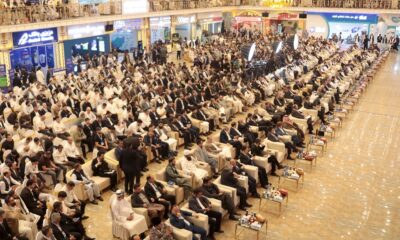
Hundreds of Afghan and foreign companies are participating in the seven-day exhibition, with around 600 booths showcasing products across various sectors, including food, medicines, dairy products, construction materials, handicrafts, carpets, plastics and iron products.
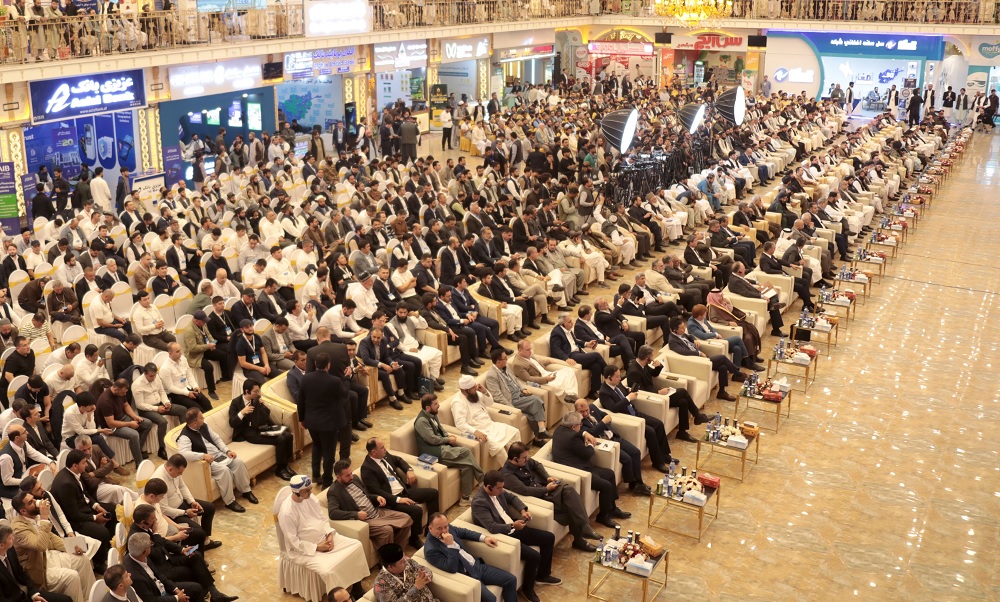
Mullah Abdul Ghani Baradar Akhund, the Islamic Emirate’s Deputy Prime Minister for Economic Affairs, on Wednesday inaugurated the Fifth General and International Imam Abu Hanifa (RA) Exhibition at the Afghanistan International Exhibition Center in Kabul.
Speaking at the opening ceremony, Baradar said the exhibition is an important platform for showcasing Afghanistan’s economic potential, supporting domestic production, expanding trade relations and strengthening direct commercial ties with the region.
He said Afghanistan’s agricultural, industrial and commercial products, including fresh and dried fruits, can help strengthen trade relations and open new regional and international markets for Afghan products.
“Trade relations and commercial ties among the countries of the region and the world are based on an important principle of trade, namely comparative and absolute advantages,” Baradar said.
He added that every country has comparative or absolute advantages in producing goods and products, which he described as a key driver of regional and international trade.
Baradar also said the Islamic Emirate is working to rebuild Afghanistan’s economic foundations despite limited resources.
“The Islamic Emirate of Afghanistan is not only completing unfinished chapters in the country’s economic growth and development, but has also, with limited resources, initiated new chapters in rebuilding the country’s economic foundations,” he said.
Baradar highlighted the opening of the Wakhan Economic and Trade Road, saying the route would strengthen Afghanistan’s role in regional trade and transit.
“The Wakhan Economic and Trade Road has been opened. This road connects China with European markets through Afghanistan via the shortest route and transforms Afghanistan into a major hub for regional transit and trade,” Baradar said.
He added that major infrastructure would gradually be developed along the route in addition to generating transit revenues.
Baradar further said the Islamic Emirate’s efforts to improve regional connectivity are aimed at transforming Afghanistan’s borders into centers of economic cooperation.
“We are transforming our borders from points of threat into points of connection for strategic economic cooperation,” he said, describing regional connectivity as one of the Islamic Emirate’s top priorities.
Meanwhile, Nooruddin Azizi, the Minister of Industry and Commerce, called for mutually beneficial foreign investment in Afghanistan. He said the Islamic Emirate will not allow the country’s raw minerals to be exported in the future.
Hundreds of Afghan and foreign companies are participating in the seven-day exhibition, with around 600 booths showcasing products across various sectors, including food, medicines, dairy products, construction materials, handicrafts, carpets, plastics and iron products.
Business
Afghanistan, Belarus discuss expanding industrial and trade cooperation
Particular attention was given to companies producing tractors, industrial machinery, and equipment and vehicles used in the mining sector.
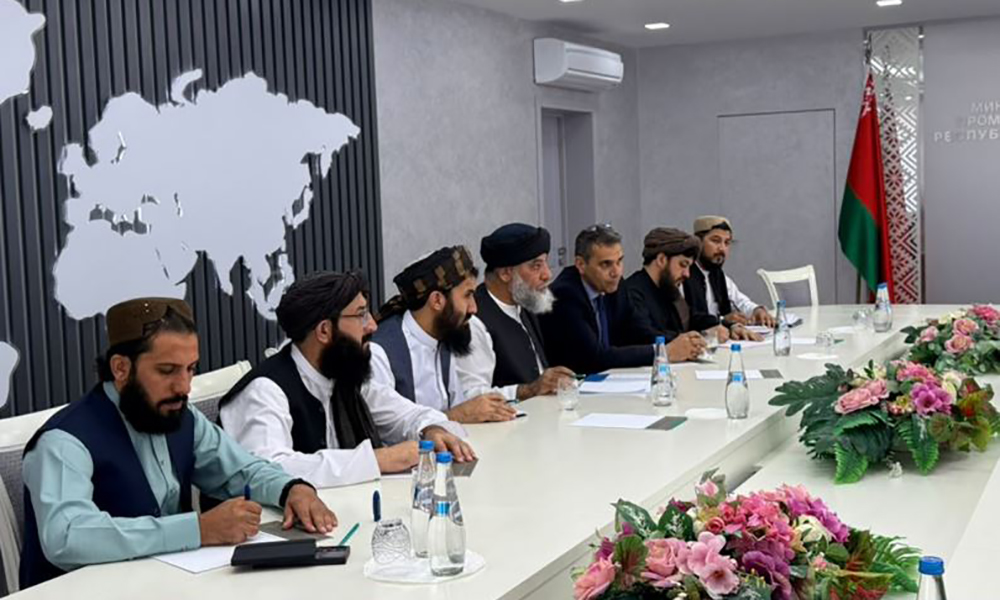
Afghanistan’s Minister of Industry and Commerce, Nooruddin Azizi, met with Belarus’ Minister of Industry during an official visit to the country.
The two sides discussed the establishment of manufacturing plants in Afghanistan, the regular organization of the Afghanistan-Belarus Business Forum, and follow-up on issues raised through the countries’ economic commission.
Belarusian officials expressed appreciation for Afghanistan’s participation in the country’s international industrial exhibition and voiced interest in expanding the presence of Belarusian manufacturing companies in Afghanistan.
Particular attention was given to companies producing tractors, industrial machinery, and equipment and vehicles used in the mining sector.
The second International Industrial Exhibition of Belarus is being held with the participation of around 500 companies from different countries. The exhibition has also attracted visitors from European and Asian countries.
Business
Afghanistan, Tajikistan seek stronger trade and investment ties
The two sides discussed increasing trade exchanges, establishing direct links between traders and investors, and organizing joint economic programs.
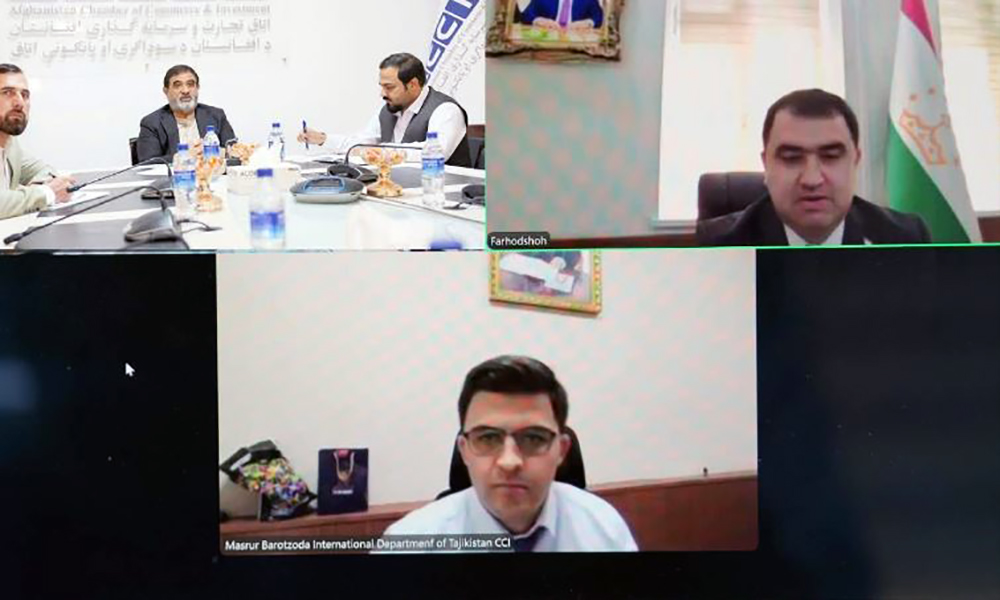
The heads of the chambers of commerce and industry of Afghanistan and Tajikistan have agreed to strengthen bilateral trade, promote investment and expand cooperation between the private sectors of the two countries.
Sayed Karim Hashemi, head of the Afghanistan Chamber of Commerce and Investment (ACCI), held an online meeting with Farhad Shah Rahman Alizoda, head of the Chamber of Commerce and Industry of Tajikistan, to discuss ways to expand economic ties.
The two sides discussed increasing trade exchanges, establishing direct links between traders and investors, and organizing joint economic programs.
Hashemi invited Tajik traders and investors to participate in the fifth Imam Abu Hanifa International Exhibition in Kabul.
Alizoda, meanwhile, invited an Afghan business delegation to attend a major trade and industrial exhibition in Dushanbe.
The two sides also stressed the importance of exchanging business delegations and developing long-term cooperation between the private sectors of Afghanistan and Tajikistan.


Tahawol: Consequences of US war in Afghanistan reviewed

Saar: Expulsion of Afghan refugees from Pakistan discussed

Kohi shines as Toofan Herat beat Abu Muslim Farah 2–0

Muttaqi and Iranian representative discuss expansion of bilateral relations

Baradar opens Fifth Imam Abu Hanifa International Exhibition in Kabul

UAE firm eyes investment in Salang’s second tunnel and pharmaceutical factories

US Treasury ratchets up pressure on Iran with sweeping new aviation sanctions

AI could pose ‘existential’ risk to humanity, UN rights chief warns

EU and FAO launch €5m programme to strengthen Afghanistan’s agrifood sector

Omar Zawak, Toofan Herat secure victories in Afghanistan Champions League
Tahawol: Consequences of US war in Afghanistan reviewed
Saar: Expulsion of Afghan refugees from Pakistan discussed

Tahawol: Discussion on outcome of Moscow Format meeting

Saar: Expansion of relations between Kabul and Moscow discussed

Tahawol: Afghanistan-Iran: shared opportunities and challenges discussed
-

 Sport2 days ago
Cricket Bonanza: Afghanistan set for packed international schedule
-
 Latest News5 days ago
Kazakhstan, Uzbekistan and UAE sign MoU on CASA railway project via Afghanistan
-
 Regional5 days ago
Pakistan says Mecca pact members to hold emergency talks on engaging Houthis
-
 Regional4 days ago
India, Pakistan summon top diplomats over border incident
-
 Latest News3 days ago
Afghanistan inaugurates 121 km Wakhan road to China border
-
 Sport5 days ago
Rashid Khan plans to build cricket academy and stadium in Nangarhar
-

 Sport3 days ago
ACL: Sorkh Poshan extend perfect run with 1-0 win over Khurasan
-

 Sport3 days ago
Afghanistan U19 to face Bangladesh, Oman in Youth ODIs