
Latest News
IEA’s foreign ministry calls on US to stop drones patrolling in Afghan airspace


The Ministry of Foreign Affairs of the Islamic Emirate of Afghanistan (IEA) said Wednesday the United States’ practice of using drones to patrol Afghan airspace was in violation of the Doha Agreement and of international law and requested Washington to stop.
They also asked countries in the region not to allow the US to use their territory or airspace against Afghanistan.
Speaking at a press conference on Wednesday Amir Khan Muttaqi, the foreign minister, said that America should not violate Afghanistan’s airspace.
According to Muttaqi Washington should adhere to the Doha Agreement and not violate Afghanistan’s airspace.
“We once again call on US to stop their flights over Afghanistan, there is countrywide security, and when Afghanistan’s soil is not used against any country, others also don’t have the right to have illegal flights in Afghanistan air,” Muttaqi said.
Muttaqi also said that currently, Afghanistan has no problem with any country and that the Islamic Emirate has official interaction with the world.
Muttaqi emphasized that Afghanistan’s foreign policy is economic-oriented and Kabul is trying to become the connecting point of the economic markets of South and Central Asia.
Muttaqi said that the current government of Afghanistan does not have any particular problem with any country but still asks the world to take note of the positive achievements of the Islamic Emirate.
According to Muttaqi, so far the world still does not have a clear definition of terrorism.
The IEA also said a big achievement was the eradication of Daesh.
Muttaqi said no proof has been provided by the US that Ayman al-Zawahiri, the leader of al-Qaeda, was in fact killed in a drone strike in Kabul in June.
“US has not yet provided any evidence or documents to the Afghan government to prove the killing of Ayman al-Zawahiri in Kabul, and the investigation by the Afghan government regarding the incident is yet to be completed,” said Muttaqi.
He said that information regarding the incident would be shared with the public once the investigation concludes.
Muttaqi also said that all ports in the country have been opened for business and facilities have been provided for traders. According to him, IEA delegations have visited various countries in the region to expand relations.
Emphasizing the economy-oriented policy of the country’s foreign policy, the foreign minister said: “The Islamic Emirate intends to make Afghanistan the center connecting South Asia to Central Asia.
“Afghanistan’s foreign policy is based on a balanced policy, the principle of non-interference in the affairs of countries and the establishment of good and diplomatic relations with the countries of the world, it has tried to turn Afghanistan into a connecting point between the countries of the region and the world from a challenge to an opportunity,” said Muttaqi.
He said currently 13 embassies are operating in Afghanistan.
In addition six Afghan embassies officially receive orders from the Ministry of Foreign Affairs and other embassies are in contact with the Ministry of Foreign Affairs, he said.
According to him, special measures have been taken to maintain the security of diplomatic establishments and foreign workers in Afghanistan. He also said the IEA will not allow and group to put foreigners in danger.
However, the UN Security Council wants the new rulers of Afghanistan to guarantee the security of diplomatic and consular places.
While condemning the attack on Russian diplomats in Kabul this week, the members of the council described terrorist activities as one of the most serious threats to the security of the international community.
The members of the Security Council have also emphasized the need for accountability and trial of perpetrators, and organizers of terrorist acts.


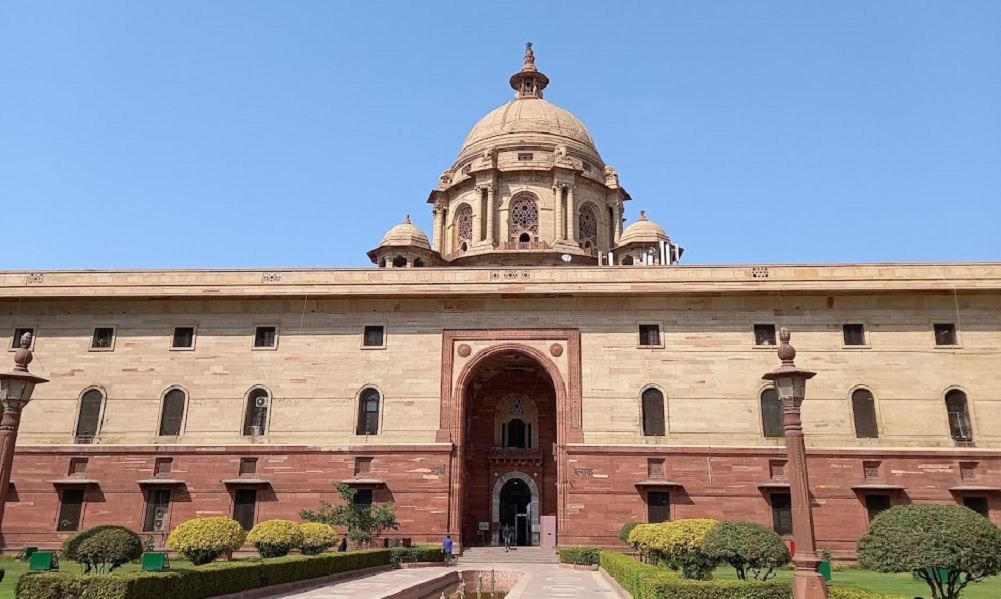
India has made it mandatory for Afghan Hindus and Sikhs who entered the country without valid travel documents to obtain visas to continue their stay.
The Indian Ministry of Home Affairs amended the Immigration and Foreigners (Exemption) Order, 2025, through a notification issued on Wednesday, The Hindu reported.
Under the amendment, Afghan Hindus and Sikhs who entered India on or before December 31, 2024, must obtain an appropriate category of visa to remain in the country.
The provision applies to those who entered India without valid travel documents or whose documents have since expired after seeking shelter due to religious persecution or fear of persecution.
The amendment retains an earlier exemption introduced on September 2, 2025, which allowed members of six non-Muslim communities from Afghanistan, Pakistan and Bangladesh to enter India without valid passports or visas. However, the latest notification requires them to obtain an appropriate visa after entering the country to continue their stay.
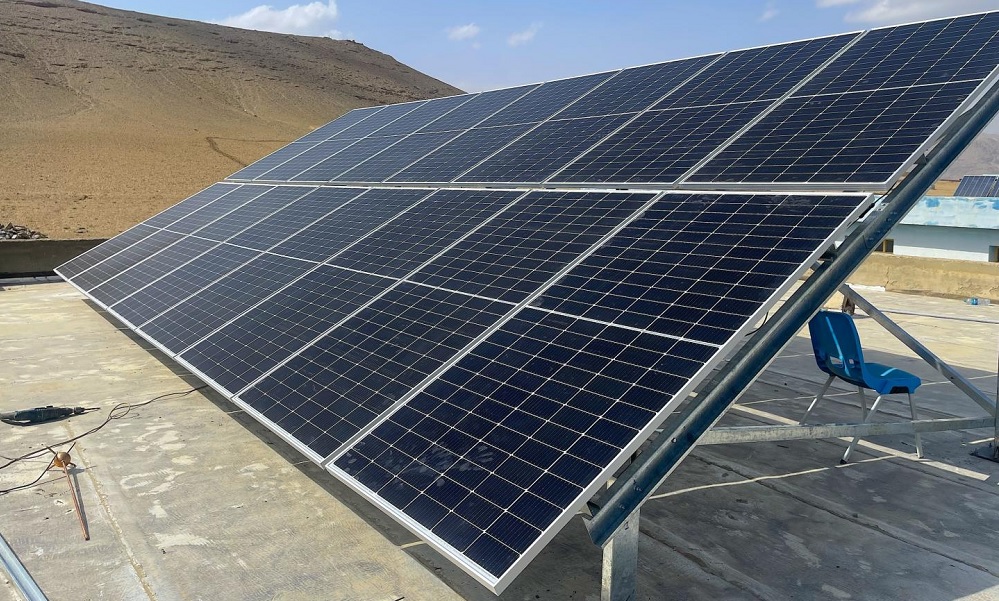
Afghanistan has the potential to generate up to 220 gigawatts of electricity from solar energy, yet it spends more than $280 million annually on electricity imports, the United Nations Development Programme (UNDP) says.
In a post on social media platform X on Thursday, UNDP said tapping into the country’s solar energy potential could reduce its reliance on imported electricity and expand public access to clean and sustainable energy.
According to the agency, more than 80 percent of Afghanistan’s electricity needs are currently met through imports, despite the country’s estimated solar power generation potential of up to 220 gigawatts.
Afghanistan imports most of its electricity from Tajikistan, Uzbekistan, Turkmenistan and Iran. Despite having considerable solar, wind and hydropower resources, the country has remained heavily dependent on foreign electricity supplies.
UNDP said that since 2021, its projects have helped more than 5.5 million people in Afghanistan gain access to clean energy.
The agency stressed the need for greater investment and cooperation among relevant institutions to harness Afghanistan’s solar energy potential and expand sustainable domestic electricity generation.
Latest News
More than half of Afghan primary school-age children out of school: UN report
The report, titled Afghanistan Education Situation 2026, warns that the country’s education system is struggling to meet growing demand amid population growth, recurring emergencies, insufficient investment and the large-scale return of Afghan migrants from Pakistan and Iran.
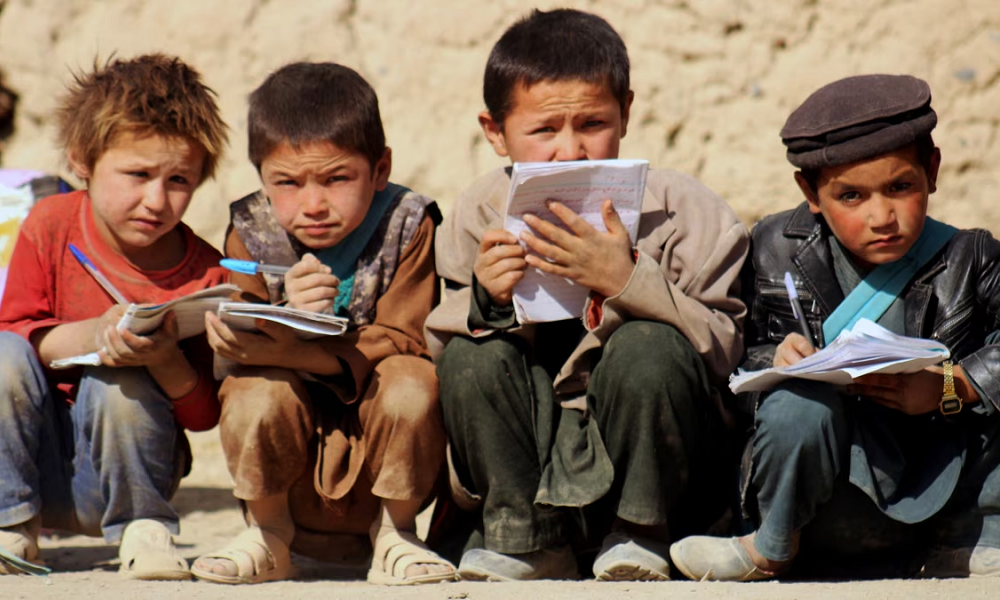
More than half of Afghanistan’s primary school-age children remain outside formal education, while more than 2.6 million girls are unable to continue their studies beyond the sixth grade, according to a new report by the United Nations Educational, Scientific and Cultural Organization (UNESCO) and UNICEF.
The report, titled Afghanistan Education Situation 2026, warns that the country’s education system is struggling to meet growing demand amid population growth, recurring emergencies, insufficient investment and the large-scale return of Afghan migrants from Pakistan and Iran.
According to the report, Afghanistan’s school-age population, comprising children and young people aged seven to 18, increased from approximately 10.4 million in 2019 to 11.5 million in 2024, putting additional pressure on schools, teachers and education services.
More than one million Afghans returned from neighbouring countries this year, including over 245,000 children, further increasing the demand for educational services.
The report highlights significant disparities in access to education, particularly for girls, noting that more than 2.6 million girls have been unable to attend school beyond grade six since August 2021.
It says alternative learning opportunities, including community-based classes, literacy programmes, distance education and private tutoring, remain insufficient to meet the educational needs of teenage girls.
Although around 5,300 community-based classes provide learning opportunities to approximately 162,000 students, with girls accounting for 64 percent of participants, the UN agencies stress that these programmes cannot replace formal, in-person education.
The report also points to declining school participation among boys, estimating that around 53 percent of primary school-age children are currently outside formal general education. Participation rates at lower and upper secondary levels stand at 67 percent and 79 percent, respectively.
Despite these challenges, Afghan families continue to seek educational opportunities for their children.
Around 6.6 million children enrolled in public primary schools last year, approximately 560,000 more than in 2022. However, the report says enrolment growth has not kept pace with the increasing school-age population.
It also raises concerns about the quality of education, noting that a nationwide assessment found fewer than half of fourth-grade students had achieved minimum proficiency in language skills.
Meanwhile, Afghanistan’s higher education sector remains significantly smaller than before 2021. Around 208,000 students are enrolled in universities this year, compared with 189,000 in 2024 and approximately 430,000 in 2020.
UNESCO and UNICEF have called for the full restoration of girls’ and women’s right to education and increased investment in teachers, learning materials and education services.
The agencies warn that without urgent action to address the challenges facing the sector, an entire generation of Afghans risks being left behind, with serious consequences for the country’s future recovery and development.

India makes visas mandatory for Afghan Hindus and Sikhs to continue their stay
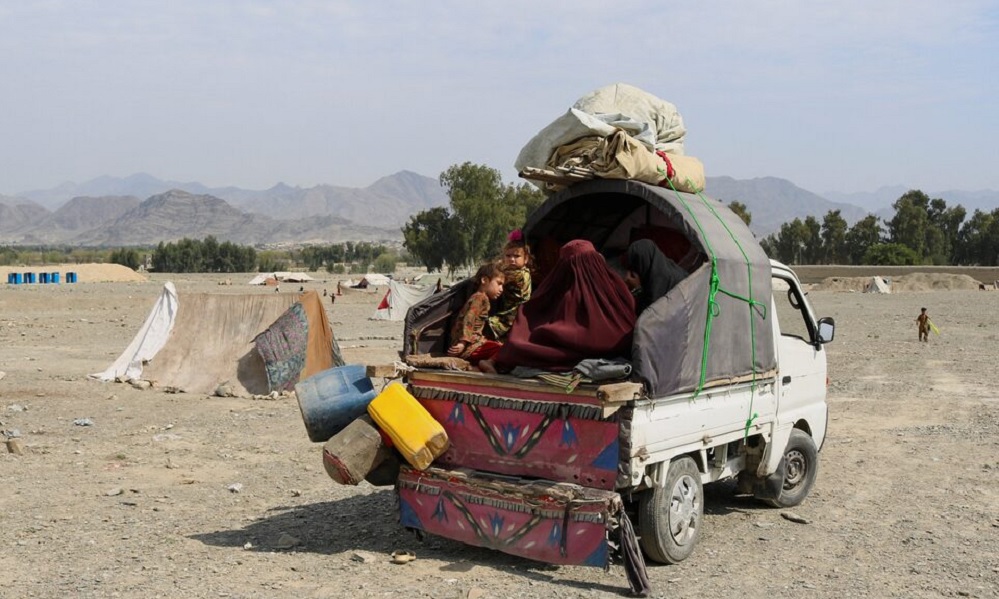
90 million displaced people at risk from climate threats, UN refugee agency says
Afghanistan has potential to generate 220 GW of solar power: UNDP
Tahawol: Calls for stronger joint action against terrorism discussed
Saar: Impact of closing trade routes between Kabul-Pakistan discussed

Afghanistan finish runners-up after 6-0 defeat to Brazil in futsal final

Trump says US will not attack Iran before midterm elections in November

Trump says US may strike Iran’s ‘Pickaxe Mountain’ nuclear facility

Afghan futsal coach: Brazil tournament is first step towards new goals and World Cup

WHO calls for greater mental health support in Afghanistan
Tahawol: Calls for stronger joint action against terrorism discussed
Saar: Impact of closing trade routes between Kabul-Pakistan discussed

El-Sayed’s historic victory opens a new chapter for Muslim Americans
Tahawol: Russia’s Moscow Format for Afghan issues discussed
Saar: Afghanistan’s second invitation to Global Climate Summit discussed
-
 Sport4 days ago
Afghanistan futsal team thrash Panama 5-0 in flying start to Dakar Youth Olympics
-
 Sport4 days ago
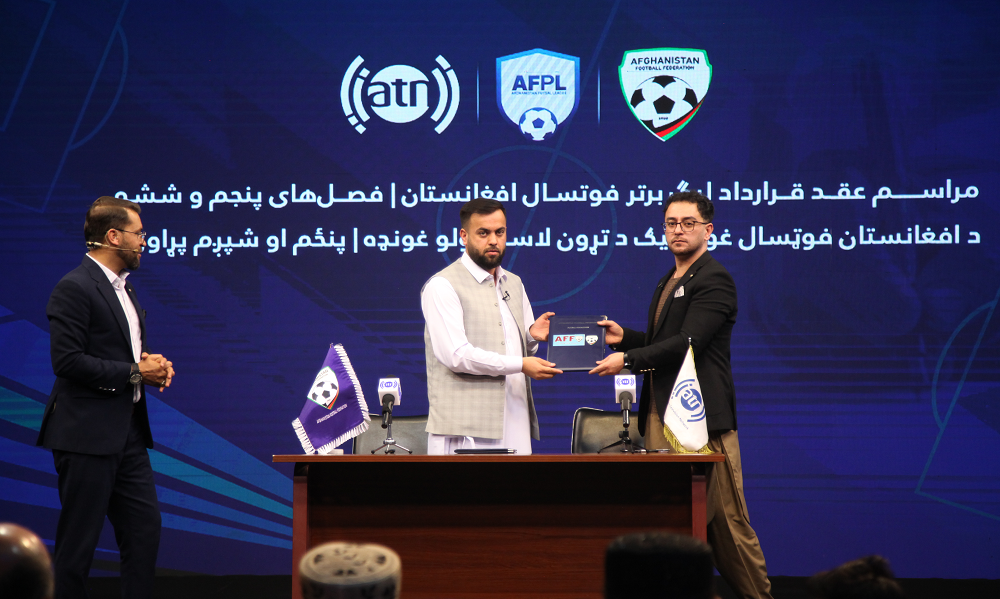
ATN signs deal to broadcast Afghanistan Futsal Premier League seasons 5 and 6
-
 Sport5 days ago
Afghanistan target T20I clean sweep against Zimbabwe in Sharjah
-
 World3 days ago
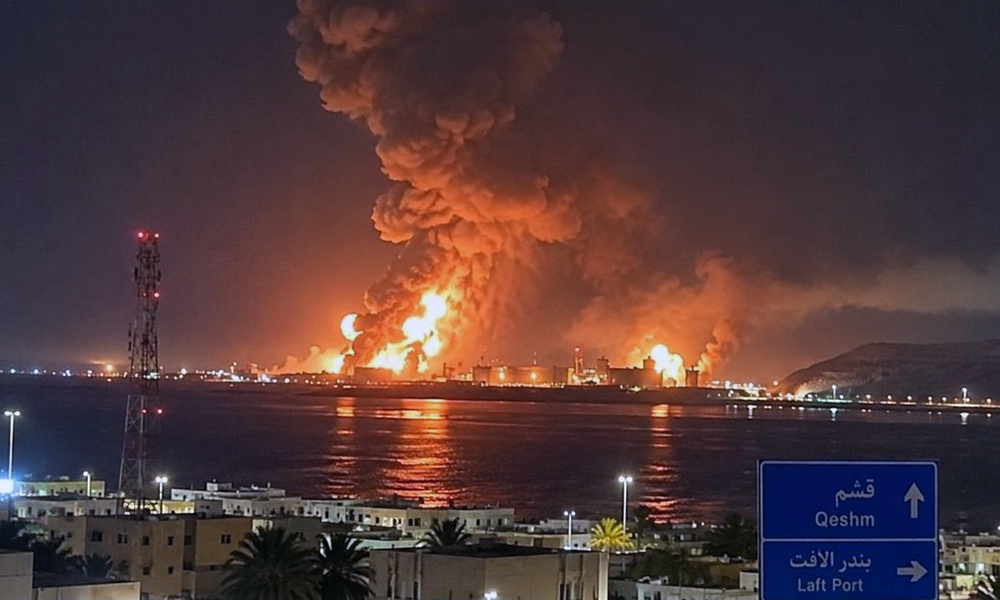
US carries out ‘defensive’ strikes on Iran’s Qeshm Island, officials say
-
 Sport4 days ago
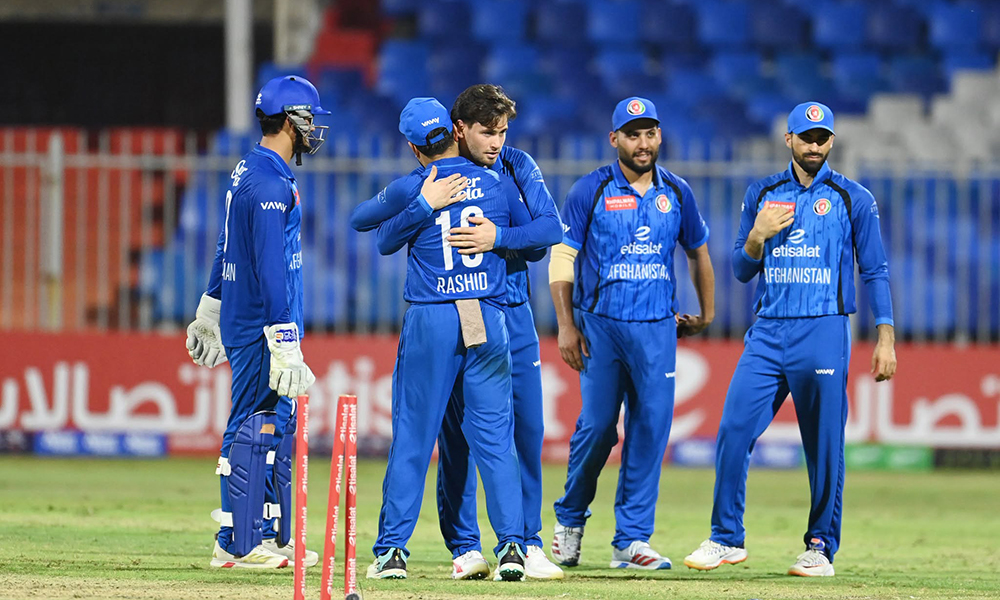
Afghanistan achieve their highest ICC Men’s ODI team ranking
-
 Latest News4 days ago
Trump claims he could have won Afghanistan war in three weeks
-

 Latest News5 days ago
Pakistan welcomes US offer to facilitate dialogue with Afghanistan, while Kabul rejects Islamabad’s allegations
-
 Latest News5 days ago
US plans to deport Afghans back to their home country via Pakistan