
Latest News
India, Afghanistan to appoint commercial attaches to boost bilateral trade
According to M. Anand Prakash, Joint Secretary of the PAI Division, both sides have committed to stationing trade attaches in their respective embassies to support and monitor trade cooperation.

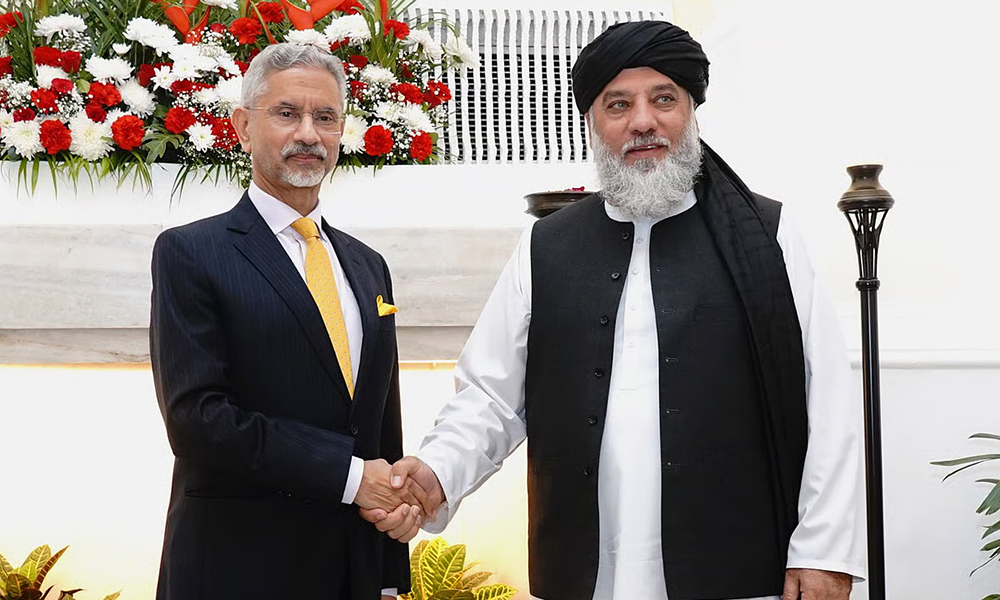
India and the Islamic Emirate of Afghanistan have agreed to appoint dedicated commercial attaches in each other’s capitals as part of a renewed push to expand bilateral trade, currently valued at more than $1 billion.
The decision was finalized during a meeting in New Delhi between Afghanistan’s Minister of Industry and Commerce Hajji Nooruddin Azizi and India’s Minister of State for Commerce and Industry Jitin Prasad.
According to M. Anand Prakash, Joint Secretary of the PAI Division, both sides have committed to stationing trade attaches in their respective embassies to support and monitor trade cooperation. “The Afghan minister will soon be sending a trade attaché to the embassy here,” he said on Friday.
Prakash added that the air freight corridor connecting Kabul–Delhi and Kabul–Amritsar has been reactivated, with cargo flights expected to begin shortly. “This will significantly enhance and further strengthen our bilateral trade,” he noted.
The development comes just days after Afghan Deputy Prime Minister Mullah Abdul Ghani Baradar instructed Afghan traders to gradually end commercial dependence on Pakistan within three months, citing repeated border closures and what he described as the “political misuse” of trade routes.
India and Afghanistan have also agreed to revive joint working groups on trade, commerce, and investment. Officials say the goal is to restore trade volumes to their pre-2021 level of more than USD 1.8 billion by fully operationalising the Chabahar Port route and simplifying customs and banking procedures.
During the meeting, Azizi urged India to expedite business visas, establish regular shipping lines from Chabahar Port, support the development of dry ports in Nimruz province, and streamline processes for Afghan goods passing through India’s Nhava Sheva Port.
Both sides also agreed to encourage joint investments in pharmaceuticals, cold storage networks, fruit processing, industrial parks, SME centres, and export processing zones. Azizi further proposed regular exhibitions, B2B engagements, and sector-focused conferences to deepen commercial ties.
The Indian delegation assured swift action, including strengthening air cargo links and banking channels, to boost economic cooperation. Azizi and his high-level delegation arrived in New Delhi earlier this week for a five-day official visit.







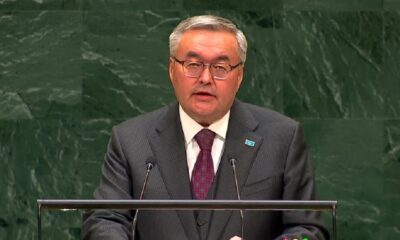




Kazakhstan’s Foreign Minister Mukhtar Tileuberdi has called for pragmatic and coordinated international engagement with Afghanistan, saying the country’s long-term stability is closely linked to the security and sustainable development of Central Asia.
Speaking during the general debate of the 81st session of the United Nations General Assembly in New York on Friday, Tileuberdi said humanitarian assistance to Afghanistan remains essential but alone cannot break the cycle of poverty, displacement and dependency.
He said Kazakhstan supports a “pragmatic, coordinated and step-by-step” approach to international engagement with Afghanistan, with the United Nations playing a central role.
Tileuberdi also said Kazakhstan is working with the UN to operationalize the United Nations Regional Centre for the Sustainable Development Goals for Central Asia and Afghanistan in Almaty.
He said the success of the centre should be measured by the results and assistance it delivers to the region.


Saar: Concerns over Pakistan’s political crisis discussed

Afghanistan Champions League: Omar Zawak Herat beat Toofan Herat 1-0

Blast in Pakistan’s Dera Ismail Khan kills 11, injures 30

Ariana Afghan Airlines increases Kabul-Delhi cargo flights

Khalilzad questions Pakistan’s commitment to Afghan welfare

Saudi energy group signs major Afghanistan deals covering gas exploration and pipeline plans

Trump floats idea of renaming Atlantic or Pacific Ocean

US hits Egyptian bank branches with Iran sanctions as war marks six months

Nepal flood rescue mission enters critical phase as thousands remain missing

Iranian clubs to face Gulf opponents at neutral venues in Asian Champions League Elite
Saar: Concerns over Pakistan’s political crisis discussed

Exclusive interview with Abdul Latif Mansoor, Minister of MRRD

Tawsia: Overview of Afghanistan’s iron mines

Tahawol: Discussion on fresh Pakistani airstrikes on Afghanistan

Saar: Calls for international support for Afghanistan discussed
-

 World5 days ago
CNN, MS NOW and Politico sue Trump, challenging White House ban
-

 Latest News3 days ago
Ariana Afghan Airlines ranks seventh among 45 Central Asian airlines
-

 Latest News4 days ago
UN reiterates call for respect for international law after Kunar airstrikes
-

 Regional3 days ago
US and Iran hold first talks since June after Trump’s ‘annihilation’ threat
-

 Latest News3 days ago
Silk Road highway in Wakhan corridor now reaches the China border
-

 Latest News4 days ago
Afghan Official: Pakistan’s airstrikes will not go unanswered
-

 Sport4 days ago
Afghan boxing referee heads to China for international festival
-

 Regional4 days ago
G7 foreign ministers call on Iran to stop arming Houthis