
International Sports
Messi vs Ronaldo: A look at their market values over the years

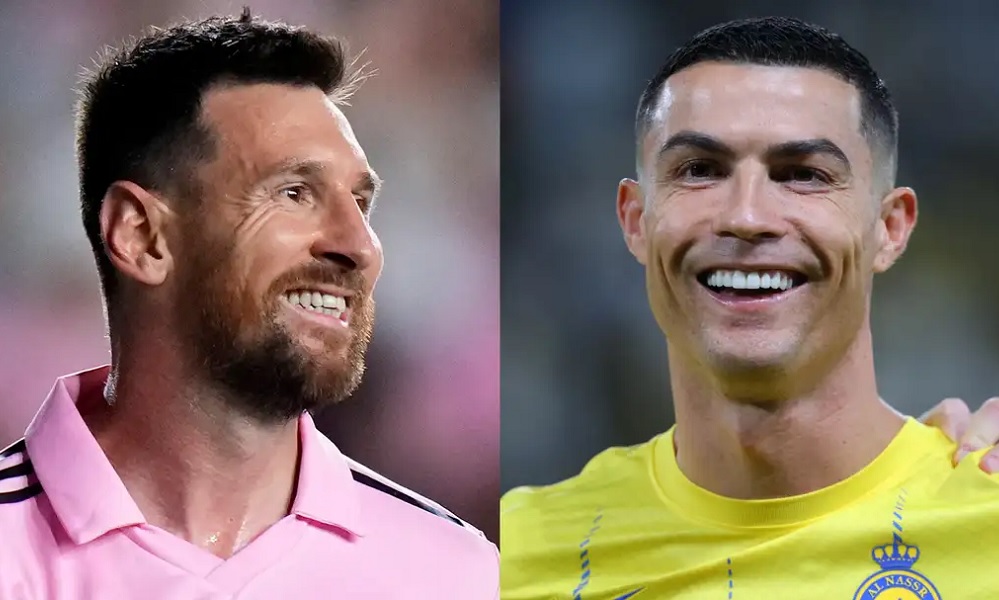
Lionel Messi and Cristiano Ronaldo have been football’s biggest stars for nearly two decades and have won 13 Ballon d’Or titles between them; Messi eight and Ronaldo five.
While the two superstars dominated the sport and set records that may never be broken, Transfermarkt this week analyzed the market values of each player over the years.
Both players are now in their late 30s; Ronaldo is 39 and Messi is 37. Despite their ages however both players remain key players in global football.
Messi currently plays for MLS club Inter Miami, and Ronaldo for Al-Nassr in Saudi Arabia.
But their market values have seen significant drops.
According to Transfermarkt, Messi’s current value is €20 million ($21 million), while Ronaldo’s has fallen to €12 million ($12.6 million).
The player valuation tracker reported this week that Ronaldo’s rise came earlier than Messi’s, as he is two years older.
Back in 2006, both players had similar values at around €20 million, according to Transfermarkt.
Ronaldor surged to €60 million in 2008 after winning his first Ballon d’Or. Messi however, quickly caught up and by 2011 had surpassed Ronaldo.
Between 2012 and 2018, Messi’s market value remained at a steady €120 million, while Ronaldo had some ups and downs. He hit his peak at €120 million in 2018 during his final season at Real Madrid.
That year, Messi, who was regarded as the best player in the world, reached his record-high valuation of €180 million.
But both players have seen their values drop with age. Ronaldo saw this when he moved to Juventus and then again when he returned to Manchester United.
Messi’s value has however been higher than Ronaldo’s for the past ten seasons.
Both Messi and Ronaldo remain valuable players despite being near the end of their careers – Ronaldo being a goal machine for Al-Nassr, and Messi defying the odds for MLS.





International Sports
Crystal Palace cruise into EFL Cup fourth round
Strand Larsen doubled the advantage eight minutes after the restart, meeting Ben Chilwell’s cross from the left to score his second of the night.
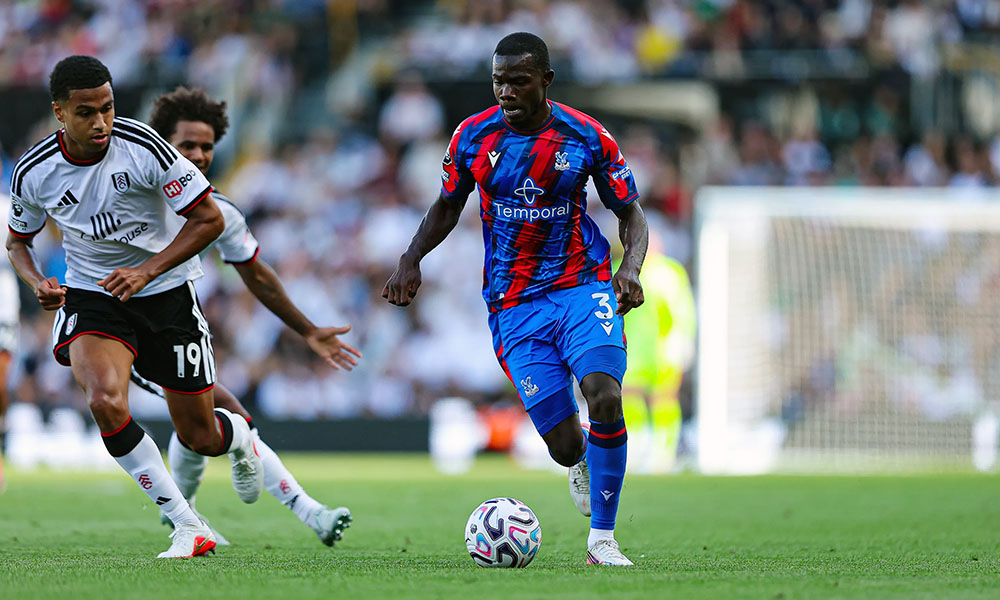
Crystal Palace advanced to the fourth round of the English Football League (EFL) Cup with a comfortable 3-0 victory over Championship side Middlesbrough at Selhurst Park.
Jørgen Strand Larsen scored twice with headers, one in each half, before substitute Daichi Kamada added a superb third to seal Palace’s progress.
Palace, who made eight changes from their 3-2 Premier League win over Fulham, took the lead when Óscar Mingueza delivered a cross from the right for Strand Larsen to head home.
Strand Larsen doubled the advantage eight minutes after the restart, meeting Ben Chilwell’s cross from the left to score his second of the night.
Kamada then completed the victory shortly after coming on, expertly chipping the ball over Middlesbrough goalkeeper Sol Brynn from outside the penalty area.
Middlesbrough struggled to create clear chances, with Amario Cozier-Duberry forcing Palace goalkeeper Walter Benítez into a save with 15 minutes remaining.
Strand Larsen was named Player of the Match after a standout performance.
Chelsea vs Leeds live on ATN
Football fans in Afghanistan can watch tonight’s EFL Cup action live and exclusively on Ariana Television Network (ATN), with Chelsea taking on Leeds United.
ATN will broadcast Chelsea vs Leeds live tonight, giving fans across Afghanistan the chance to watch the match exclusively on Ariana Television.
International Sports
Messi returns to Inter Miami after Argentina retirement
The Argentine superstar marked his return by creating both of Miami’s goals, underlining his continued importance to the club after revealing his decision to step away from the Argentina national team.
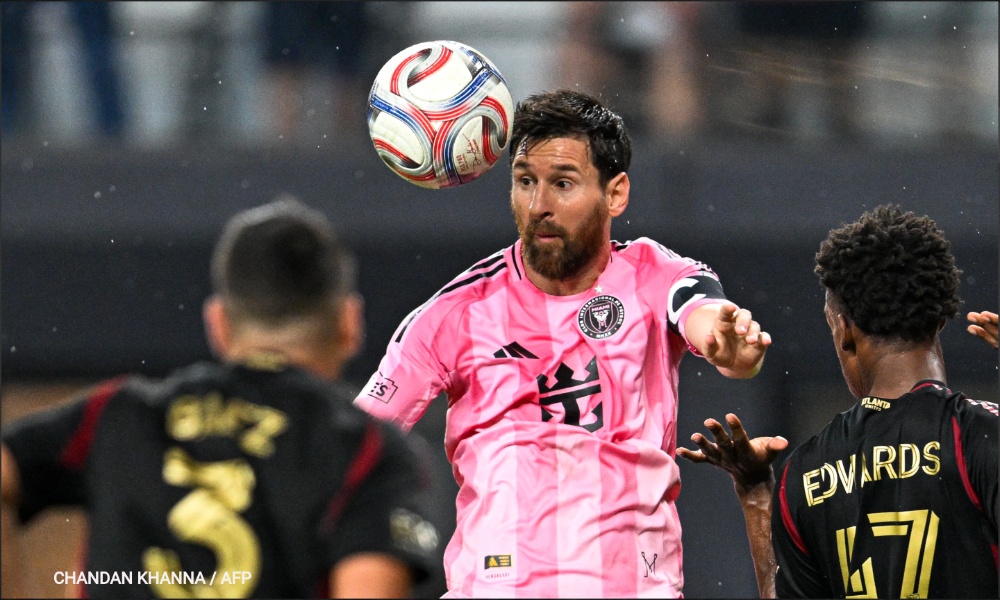
Lionel Messi returned to Inter Miami action on Saturday following his announcement that he is retiring from international football, helping the Major League Soccer champions to a 2-2 draw with Atlanta United.
The Argentine superstar marked his return by creating both of Miami’s goals, underlining his continued importance to the club just days after revealing his decision to step away from the Argentina national team.
The match was delayed by 90 minutes because of thunderstorms and lightning, but Messi provided plenty of fireworks once play finally got underway.
Miami opened the scoring in the 32nd minute when Brazilian midfielder Casemiro rose to head home Messi’s corner.
Atlanta hit back just three minutes later, with former Newcastle forward Miguel Almirón firing a low shot beyond the Miami defence.
Messi was again at the centre of the action just before half-time. He started a move down the left that eventually allowed former Liverpool and Barcelona striker Luis Suárez to calmly finish and restore Miami’s lead.
But Atlanta refused to surrender, with Swiss striker Breel Embolo converting an 87th-minute penalty to earn the visitors a point.
For Messi, the match represented his first appearance since announcing his international retirement and offered an early glimpse of the next chapter of his career, with his focus now firmly on Inter Miami.
The result came during a busy night of MLS action.
Toronto and Chicago played out a remarkable 4-4 draw, while Philadelphia defeated Montreal 2-0, with 16-year-old Cavan Sullivan scoring his fourth goal of the season.
Sullivan now has 11 goal contributions this season, surpassing Freddy Adu’s previous record of 10 for a 16-year-old.
In Orlando, Antoine Griezmann scored in the 28th minute to give the hosts a 1-0 victory over San Diego, while Austin rescued a 1-1 draw against San Jose through Guilherme Biro’s seventh-minute stoppage-time equaliser.
International Sports
Iranian clubs to face Gulf opponents at neutral venues in Asian Champions League Elite
Tehran-based Esteghlal and Tabriz-based Tractor will face UAE sides Al Ain, Al Wasl and Shabab Al Ahli, as well as Qatar’s Al Gharafa, Al Sadd and Al Shamal.
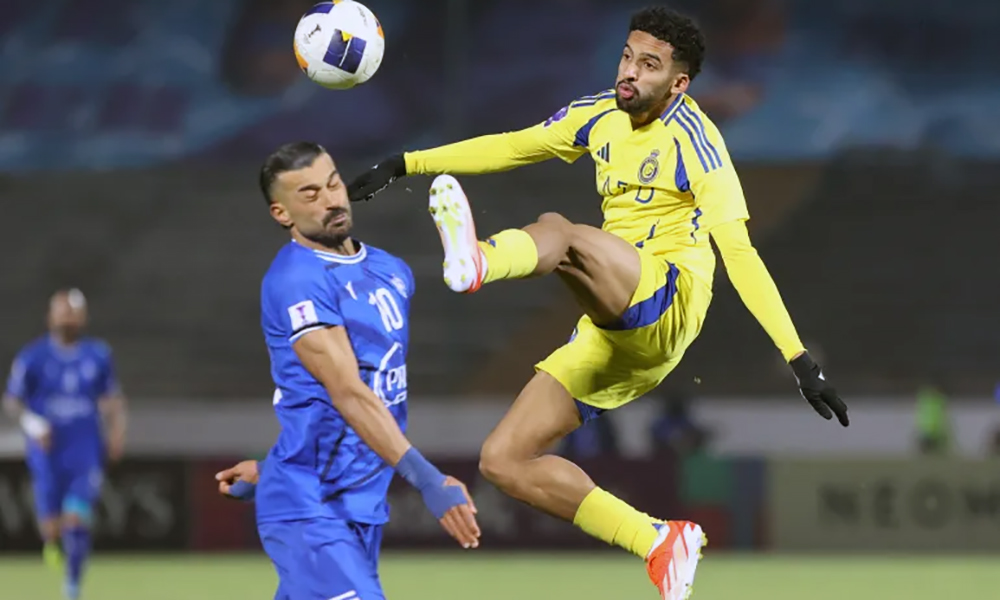
Iranian clubs Esteghlal and Tractor will play their AFC Champions League Elite matches against teams from Qatar and the United Arab Emirates at neutral venues, following the August 18 league-stage draw in Kuala Lumpur.
The Asian Football Confederation’s (AFC) premier club competition is scheduled to begin on September 14, with matches involving the Iranian clubs to be played at neutral venues.
Tehran-based Esteghlal and Tabriz-based Tractor will face UAE sides Al Ain, Al Wasl and Shabab Al Ahli, as well as Qatar’s Al Gharafa, Al Sadd and Al Shamal.
The 2026/27 AFC Champions League Elite features an expanded 32-team format, with 16 clubs competing in each of the Western and Eastern zones. The top eight teams from each zone will advance to the round of 16.
The knockout stages will continue through the regional rounds, with the quarterfinals, semifinals and final scheduled to be played in Saudi Arabia from April 23 to May 1, 2027.
Meanwhile, Ariana Television Network (ATN) will broadcast AFC Champions League Elite matches across Afghanistan, bringing fans nationwide live coverage of some of the biggest club football fixtures in Asia.
Fans across Afghanistan are urged to stay tuned to ATN for more updates, match schedules and broadcast details.


Afghanistan Champions League: Arman FC and Aino Mina play out goalless draw

Afghanistan says Pakistani military post destroyed near Spin Boldak

Nepal beat Afghanistan in Asian Games cricket

Mujahid: Pakistan attacking Afghanistan to evade Mecca Pact responsibilities

Kabul rejects U.S. claim that meth seized in Pakistan was of Afghan origin

Saudi energy group signs major Afghanistan deals covering gas exploration and pipeline plans

ATN secures exclusive rights to broadcast T20I series in India across Afghanistan

Trump floats idea of renaming Atlantic or Pacific Ocean

US hits Egyptian bank branches with Iran sanctions as war marks six months

Nepal flood rescue mission enters critical phase as thousands remain missing

Tahawol: Discussion on fresh Pakistani airstrikes on Afghanistan

Saar: Calls for international support for Afghanistan discussed

Tahawol: Opening of the 81st UN General Assembly Session

Saar: OIC Assessment of Afghanistan’s humanitarian and development situation discussed

Tahawol: Reactions to Pakistan’s attacks on Afghanistan discussed
-
 Sport4 days ago
Afghanistan to face Japan and Nepal in Asian Games cricket group stage
-
 Regional4 days ago
Iran and US trade threats after Houthi attacks escalate regional conflict
-

 World4 days ago
CNN, MS NOW and Politico sue Trump, challenging White House ban
-

 Health4 days ago
Four-day polio vaccination campaign begins across Afghanistan
-

 Latest News3 days ago
UN reiterates call for respect for international law after Kunar airstrikes
-
 Latest News4 days ago
Khalilzad condemns Pakistan airstrikes, says current strategy is not working
-

 Latest News2 days ago
Ariana Afghan Airlines ranks seventh among 45 Central Asian airlines
-

 Latest News3 days ago
Afghan Official: Pakistan’s airstrikes will not go unanswered