
World
More Israeli hostages expected to be freed after Gaza truce extended


An Israel-Hamas truce in the Gaza Strip stretched into a fifth day on Tuesday as the two sides completed the release of Israeli hostages and detained Palestinians and looked poised to free more as the pause in fighting was extended by two days.
Hamas took about 240 hostages during an Oct. 7 incursion into southern Israel that killed 1,200 people, according to Israeli figures, prompting Israel to retaliate by bombing the coastal enclave and launching a ground offensive in its north, Reuters reported.
Israel said 11 Israelis had returned to the country from the Gaza Strip on Monday, bringing to 69 the total of Israeli and foreign hostages the Palestinian group has freed since Friday under the truce.
The White House and Qatari negotiators said on Monday the original four day pause in fighting, due to expire at 0500 GMT on Tuesday, had been extended for two more days.
Israel has not commented on any agreement to extend the truce but, in what may be an implicit confirmation, the Israeli prime minister’s office said the government approved the addition of 50 female prisoners to its list of Palestinians for potential release if additional Israeli hostages are freed.
Hamas said it had sought to revise terms under which it would free hostages beyond the women and children it has already released.
“We hope the Occupation (Israel) abides (by the agreement) in the next two days because we are seeking a new agreement, besides women and children, whereby other categories that we have that we can swap,” Hamas official Khalil Al-Hayya told Al Jazeera late on Monday.
That, he said, would entail “going towards an additional time period to continue swapping people at this stage”.
Among hostages Hamas still holds are fathers and husbands of those it has freed in recent days.
Israel previously said it would extend the truce by one day for every 10 more hostages released, providing some respite from the war.
Israel’s government has received a list of hostages who are expected to be released on Tuesday, Israel’s Army Radio reported, citing the Israeli prime minister’s office.
The Axios news website reported the list contained 10 hostages. There was no immediate comment from the prime minister’s office.
Israel Prison Service said 33 Palestinian prisoners were released on Monday from Israel’s Ofer prison in the occupied West Bank and from a detention center in Jerusalem, bringing the total number of Palestinians it has freed since Friday to 150.
Israeli forces clashed with some of the dozens of Palestinians who gathered outside Ofer prison to await the prisoner release, the Palestinian health ministry said.
Some of the protesters waved the flags of Hamas and Islamic Jihad, another Palestinian militant group.
The ministry said a Palestinian was killed in the area, and that it was unclear if he had participated in the clashes. Palestinian media reported he was shot dead. Israel had no immediate comment on the incident.
In response to the Oct. 7 attack, Israel has bombarded the Gaza Strip and mounted a ground offensive in the north. More than 15,000 Palestinians have been killed, Gaza’s Hamas-run government says, and hundreds of thousands displaced.
Each day since the truce began on Friday, Hamas has released some hostages while Israel has freed some Palestinians it holds. Of the 69 hostages freed by Hamas were 51 Israelis and 18 foreigners.
Ido Dan, a relative of Israelis Sahar Calderon, 16, and Erez Calderon, 12, spoke of the joy at their release on Monday mixed with anxiety about their father, Ofer, who is still being held.
“It is difficult to go from a state of endless anxiety about their fate to a state of relief and joy,” Dan said. “This is an exciting and heart-filling moment but … it is the beginning of a difficult rehabilitation process for Sahar and Erez, who are still young and have been through an unbearable experience.”
The U.S. State Department said U.S. Secretary of State Antony Blinken would visit Israel, the West Bank and the United Arab Emirates this week to discuss sustaining aid flows to Gaza and freeing all hostages as well as U.S. principles for the future of Gaza and the need for an independent Palestinian state.
The original truce agreement allowed more aid trucks into Gaza, where the civilian population faces shortages of food, fuel, drinking water and medicine. An estimated 1.8 million of the territory’s 2.3 million population are internally displaced, according to the United Nations.
While describing the extension as “a glimpse of hope and humanity,” U.N. Secretary-General Antonio Guterres said two more days was not enough time to meet Gaza’s aid needs.







World
World leaders return to UN amid wars in Middle East and Ukraine
The 15-member UN Security Council may hold high-level meetings on Ukraine, AI and the Middle East, including talks with Arab leaders, diplomats said.
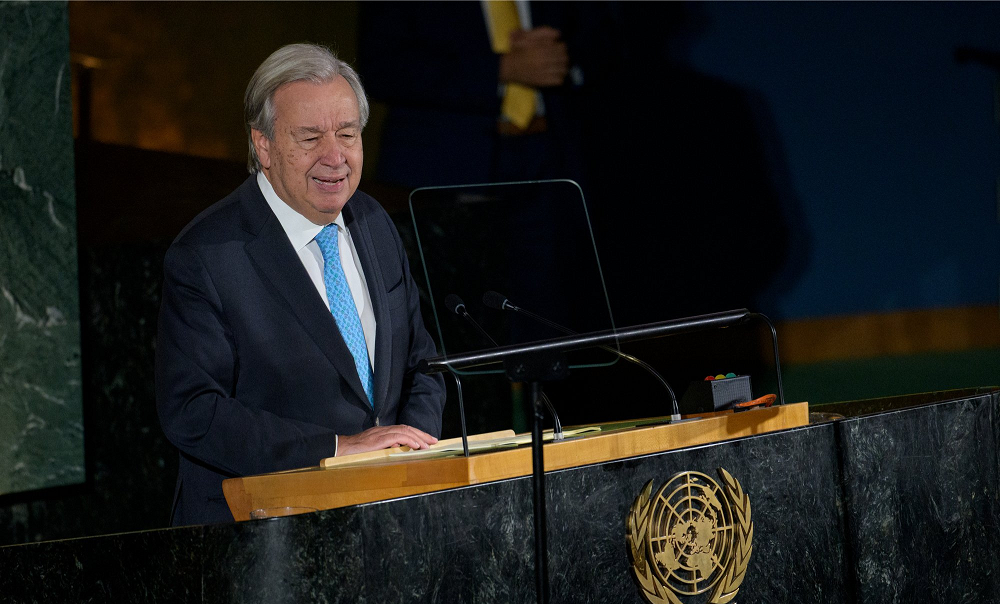
World leaders gather in New York this week for the UN General Assembly, bracing for President Donald Trump’s return to the rostrum for a second year running, with talks centering on the widening conflicts in the Middle East and Ukraine and the risks of artificial intelligence.
Nearly 130 heads of state meet with the post-World War Two order under strain and with the UN itself struggling to remain relevant and weathering attacks from Trump, who has slashed America’s contributions and withdrawn from dozens of UN bodies, Reuters reported.
Chinese leader Xi Jinping, who last addressed the diplomatic jamboree via video in 2021, will skip New York in favor of one-on-one talks with Trump in Washington on Thursday, fueling debate about the UN’s relevance in addressing global crises.
Compounding the crisis of morale and finance are questions about the next leader of the 80-year-old organization: Secretary-General Antonio Guterres completes his term at the end of 2026, with no clear frontrunner in the race to replace him.
The 15-member UN Security Council may hold high-level meetings on Ukraine, AI and the Middle East, including talks with Arab leaders, diplomats said.
More than a year into Trump’s second term, “we would no longer say that the UN is in freefall, but we would say that it’s stuck in an open-ended crisis,” said Richard Gowan of the International Crisis Group.
“The UN may not be in emergency care like it was last year, but it seems to be trapped in a trauma center for the foreseeable future,” Gowan said.
The US avoided losing its vote at the assembly by paying $725 million in contributions to the regular budget this week, but it still owes the organization more than a billion dollars and makes ongoing demands for cuts and reforms.
GROWING AI RISKS
The assembly meets shortly after several artificial intelligence industry leaders called for a coordinated slowdown of the development of the technology, warning that it could soon improve on its own and escape human control.
Guterres has said that AI will be a major topic, adding that countries pushing its frontiers should set up “common guardrails in order to avoid this race to the bottom that could lead one day to a gigantic disaster at the global level.”
The secretary-general has long proposed global governance of AI. In 2023, the UN created an advisory body on the technology, with members including tech executives, government officials and academics.
The warning has put Guterres at odds with Trump, who dismissed AI risks as a “hoax,” saying there is a “sick conspiracy” against it and that China would benefit from the doubt being cast on its development.
MIDDLE EAST ESCALATION
The Middle East will again be a focus of discussions, as the US-Israeli war on Iran continues to drive global inflation and destabilize the region. Recent gains by Houthi militants threaten shipping in the vital Bab el-Mandeb Strait and could further spike energy prices.
“It’s very difficult to have a military solution for that problem, and the experience of fighting in Yemen demonstrated how complicated it is to have successful interventions,” said Guterres, adding that the UN’s envoy on Yemen was making a “huge effort” to advance talks.
Peace talks remain stalled, however, as Iran and the US continue to exchange strikes and Trump threatens a major escalation of the war.
Iranian President Masoud Pezeshkian is scheduled to address the assembly on Wednesday.
Israeli Prime Minister Benjamin Netanyahu – wanted by the International Criminal Court over alleged war crimes and crimes against humanity in Gaza that Israel denies – is to speak on Thursday.
Palestinian President Mahmoud Abbas will for the second year running not be at the gathering in person. The US, a close Israeli ally, again denied him a visa. On Thursday, the General Assembly voted to allow Abbas to appear via video.
There is likely to be a high-level meeting on the conflict in Sudan on the sidelines, diplomats said, although a diplomatic breakthrough is unlikely.
UKRAINE, FOOD SECURITY
Also on the agenda is Russia’s more than four-year-old war in Ukraine.
Ukrainian President Volodymyr Zelenskiy and Russian Foreign Minister Sergei Lavrov will address the General Assembly. Zelenskiy will likely seek to shore up Ukraine’s position ahead of what is expected to be another tough winter, diplomats said.
The Security Council has been unable to take action to end the conflict because permanent member Russia holds a veto.
Trump has at times appeared frustrated that he has been unable to broker an end to the war, a goal he declared a priority when he began his second term in January last year. The US president spoke with his Russian counterpart Vladimir Putin earlier this month, but it was unclear whether he plans to meet Zelenskiy in New York.
Guterres highlighted the impact the war was having on civilians but also on food security and energy prices.
“The effective blockade existing in the Black Sea is creating enormous problems that add to the problems generated by the Middle East crisis, and I think it would be very important to find a way to allow Ukrainian exports and Russian exports of food, fertilizers and energy to take place in a safe way through the Black Sea,” he said.
World
US and Denmark reach deal on Greenland, Trump says
In a separate statement, US Secretary of State Marco Rubio said that the deal “permanently and completely” addressed Washington’s national security concerns with respect to the island.

The United States, Denmark and Greenland have entered into an agreement for the US to develop a significant military presence on Greenland, while prohibiting US adversaries from building their own bases on the island, Donald Trump said on Friday.
In a Truth Social post, the US president wrote that no US enemies would be able to make sensitive investments on the island without the approval of the United States and that the agreement had no expiry date, Reuters reported.
“At my direction, we worked with representatives of Denmark and Greenland to guarantee that the United States will FOREVER have the complete ability to do what is necessary in Greenland in order to secure and defend the security of Greenland, and the United States of America,” Trump wrote.
Earlier on Friday, Reuters exclusively reported that the US and Denmark were closing in on a deal that would result in an increased US military presence in Greenland, an autonomous territory of Denmark, but would stop well short of Trump’s long-held dream of acquiring the island for the United States.
The US already has nearly total overflight and basing rights in Greenland due to a 1951 treaty.
Trump’s announcement suggests he was nonetheless pleased with the outcome of the negotiations and that he might not revive his territorial claims, at least in the near future. He said, without elaborating, that the US would soon be rolling out a large military presence on the island, which already hosts one Space Force base in its remote northwest.
“This is a dream come true for the United States of America,” Trump wrote.
EXTENT OF AGREEMENT REMAINS UNCLEAR
The Danish prime minister’s office said on Friday that the agreement would strengthen North Atlantic and Arctic security.
Greenland’s prime minister, Jens-Frederik Nielsen, said in a statement that the agreement recognized Greenland’s interests and the Arctic island’s place in international cooperation. “This benefits us all,” he said.
Much was unclear as of Friday night, including whether any new US bases would be constructed as a result of the agreement. Trump’s Truth Social posts about negotiations or agreements often lack context or specifics.
Imran Bayoumi, a former Pentagon official now with the Atlantic Council think tank, said it would be new if the US can build bases without the approval of Greenland or Denmark but that largely “it seems that Washington could have achieved a lot of these objectives through diplomacy and dialogue without straining the broader US-NATO relationship.”
It was also unclear how the agreement would be received in Greenland, an autonomous territory of Denmark. The island’s residents aspire to independence and have bristled at US attempts to assert control.
In a separate statement, US Secretary of State Marco Rubio said that the deal “permanently and completely” addressed Washington’s national security concerns with respect to the island.
“Greenland will forever be part of the strategic defense area of North America and exclude any adversary from it and the surrounding area,” he wrote.
A State Department official, speaking on condition of anonymity to discuss specific terms, said the deal prohibits non-NATO countries from building a base in Greenland and will allow only the US and its allies to make unspecified “sensitive investments.” The official said the agreement grants the US permanent access, basing and overflight rights, and would continue to apply even if Greenland becomes independent.
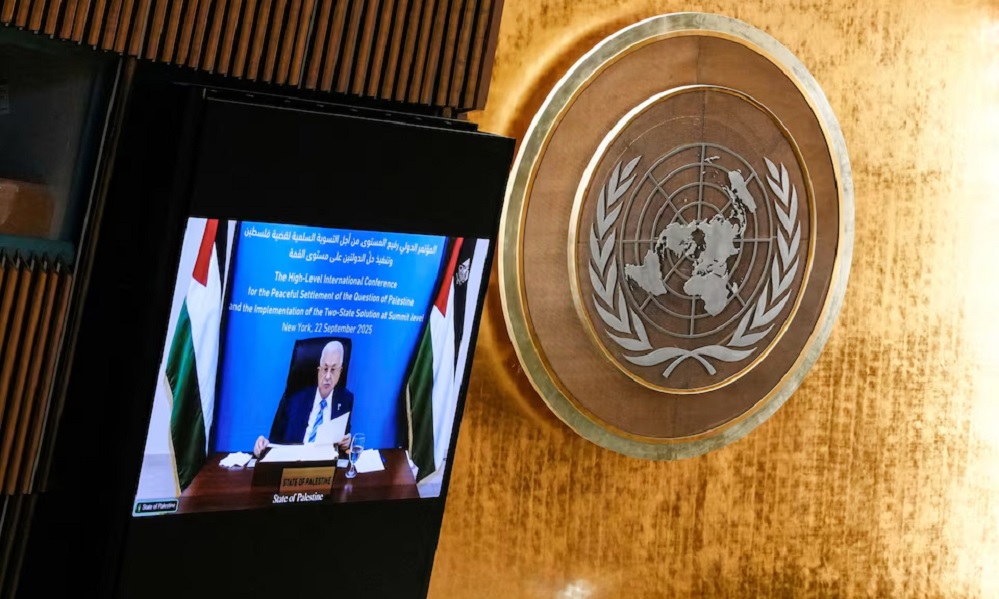
The United Nations General Assembly voted on Thursday to allow Palestinian President Mahmoud Abbas to address the annual gathering of world leaders next week via video – for the second year in a row – after the United States again denied him a visa to travel to New York.
The resolution received 152 votes in favor and three votes against, while four countries abstained. It also allows Abbas and any other high-level Palestinian officials to take part in U.N. meetings or conferences via video over the next year if they are prevented from traveling to the United State, Reuters reported.
The US said last year that Abbas and about 80 other Palestinians would be affected by its decision to deny and revoke visas from members of the umbrella Palestine Liberation Organization and the West Bank-based Palestinian Authority. Washington announced on Wednesday that it had extended the visa bans.
“If the PA wants to be treated as a partner, it must stop subsidizing terror and stop using diplomatic theater as a substitute for serious governance,” Deputy US Ambassador to the United Nations Tammy Bruce told the assembly before the vote.
Palestinian leaders rejected and condemned the move by the United States, Palestinian UN envoy Riyad Mansour told the General Assembly.
Without naming specific officials, the US State Department said on Wednesday it would extend visa sanctions against Palestinian officials over actions they took to “internationalize the Israeli-Palestinian conflict,” including pursuing cases against Israel at international tribunals.
A Palestinian official, who spoke on condition of anonymity, confirmed Abbas’ visa had been denied.
Under a 1947 U.N. “headquarters agreement,” the U.S. is generally required to allow access for foreign diplomats to the UN in New York. However, Washington has said it can deny visas for security, extremism and foreign policy reasons.


Sorkh Poshan Khafi beat Toofan Herat 3-1 in Afghanistan Champions League

ACL: Arman FC fight back to beat Khurasan Faryab 2-1

Tahawol: Impact of middle East war on Afghanistan

Pakistan says Kohat attackers had roots in Afghanistan

Saar: Pakistan blames Afghanistan for deadly attack

Four mediators struggle to secure lasting Pakistan-Afghanistan ceasefire

Syria and Saudi Arabia condemn Kabul bombing, express solidarity with Afghanistan

Afghanistan’s trade diversification challenges Pakistan

Saudi energy group signs major Afghanistan deals covering gas exploration and pipeline plans

ATN secures exclusive rights to broadcast T20I series in India across Afghanistan
Tahawol: Impact of middle East war on Afghanistan
Saar: Pakistan blames Afghanistan for deadly attack

Tahawol: Kabul’s warning over any threat from Pakistan discussed

Debate on Afghanistan and New Investment Opportunities

Tahawol: Reasons behind Qatari, Turkish security officials’ Kabul visit discussed
-
 Latest News5 days ago
UN warns of mounting humanitarian and human rights pressures in Afghanistan
-

 Regional4 days ago
Saudi Arabia calls alleged Mecca attack a ‘red line’ as Houthis deny involvement
-
 Latest News5 days ago
Five Years On: IEA touts economic growth despite international isolation
-

 Sport5 days ago
India take 2-0 lead in 3-match series against Afghanistan
-

 Latest News3 days ago
Five years out of school: Amnesty raises alarm over Afghan girls’ education
-
 Latest News4 days ago
Russia urges dialogue and economic support for Afghanistan, warns against excessive pressure
-

 Sport4 days ago
ACL: Ariana Khost win, Aino Mina and Khurasan Faryab draw
-
 Latest News2 days ago
Afghanistan seeks stronger ties with Saudi Arabia, dialogue with Pakistan: Mujahid