
Iran’s absence in Doha was due to tensions with US: Abdullah

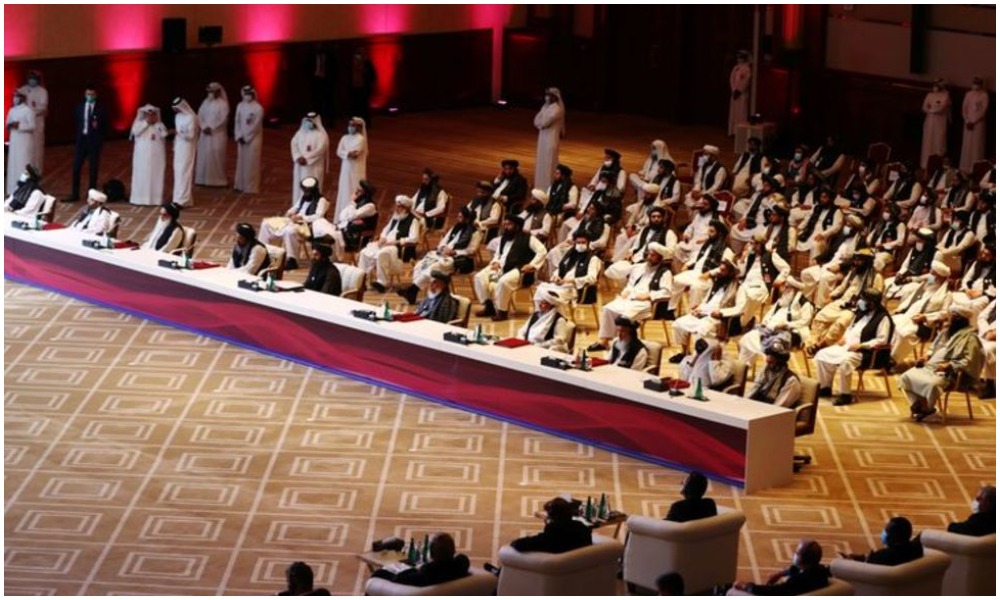
Chairman of the High Council for National Reconciliation Abdullah Abdullah says Iran did not attend the opening ceremony of the historic peace talks between Afghanistan and the Taliban in Doha last month due to tensions with the United States.
“Iran was invited…Sometimes their relations with the United States which [are] under a lot of tension at the moment, those things affect their decisions [of] participating in a conference or not,” Abdullah said in an interview with Voice of America this week.
He said however that despite their absence from the event, Iran supported the peace process.
Abdullah also said Tehran had “legitimate concerns” and “legitimate interests” in Afghanistan adding that Iran’s contacts with various Taliban groups could be used to advance peace efforts.
This comes after US Special Representative for Afghanistan Reconciliation, Zalmay Khalilzad, told a Washington-based research group, the United States Institute of Peace, last week that US-Iran relations were getting in the way of Iran cooperating with Afghanistan’s peace process.
“Iran would like to keep us entangled in a conflict without winning or losing but paying a high price until there is an agreement between the US and Iran,” he said.
Iran refuted the claims but deputy foreign minister for political affairs, Abbas Araghchi, said at the time Iran questioned the US’ intentions in Afghanistan.
“We believe that the US should not be trusted and that the US presence in the region is dangerous and will cause a lot of discord in the region,” said Araghchi.

World
World leaders return to UN amid wars in Middle East and Ukraine
The 15-member UN Security Council may hold high-level meetings on Ukraine, AI and the Middle East, including talks with Arab leaders, diplomats said.

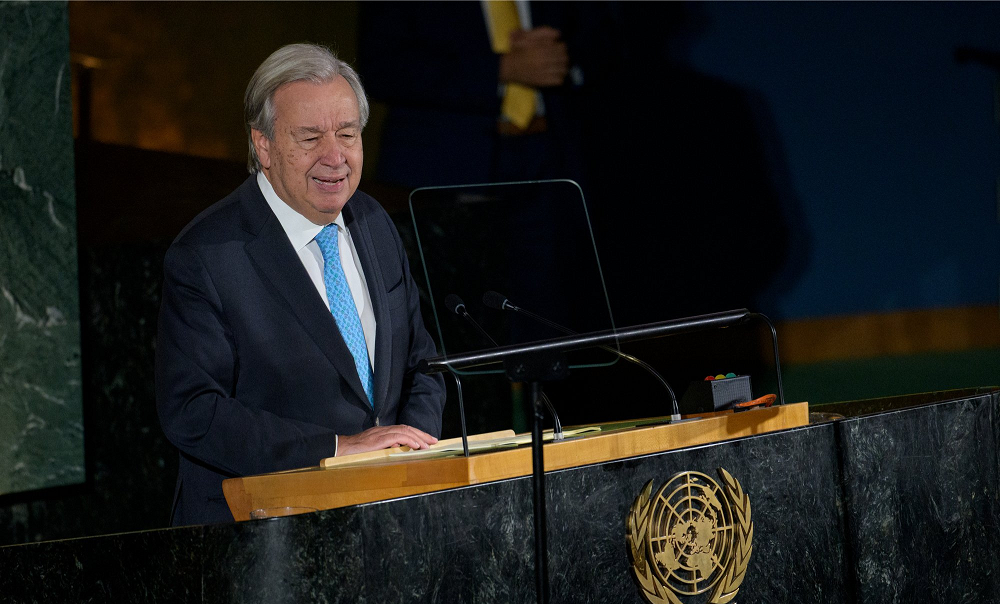
World leaders gather in New York this week for the UN General Assembly, bracing for President Donald Trump’s return to the rostrum for a second year running, with talks centering on the widening conflicts in the Middle East and Ukraine and the risks of artificial intelligence.
Nearly 130 heads of state meet with the post-World War Two order under strain and with the UN itself struggling to remain relevant and weathering attacks from Trump, who has slashed America’s contributions and withdrawn from dozens of UN bodies, Reuters reported.
Chinese leader Xi Jinping, who last addressed the diplomatic jamboree via video in 2021, will skip New York in favor of one-on-one talks with Trump in Washington on Thursday, fueling debate about the UN’s relevance in addressing global crises.
Compounding the crisis of morale and finance are questions about the next leader of the 80-year-old organization: Secretary-General Antonio Guterres completes his term at the end of 2026, with no clear frontrunner in the race to replace him.
The 15-member UN Security Council may hold high-level meetings on Ukraine, AI and the Middle East, including talks with Arab leaders, diplomats said.
More than a year into Trump’s second term, “we would no longer say that the UN is in freefall, but we would say that it’s stuck in an open-ended crisis,” said Richard Gowan of the International Crisis Group.
“The UN may not be in emergency care like it was last year, but it seems to be trapped in a trauma center for the foreseeable future,” Gowan said.
The US avoided losing its vote at the assembly by paying $725 million in contributions to the regular budget this week, but it still owes the organization more than a billion dollars and makes ongoing demands for cuts and reforms.
GROWING AI RISKS
The assembly meets shortly after several artificial intelligence industry leaders called for a coordinated slowdown of the development of the technology, warning that it could soon improve on its own and escape human control.
Guterres has said that AI will be a major topic, adding that countries pushing its frontiers should set up “common guardrails in order to avoid this race to the bottom that could lead one day to a gigantic disaster at the global level.”
The secretary-general has long proposed global governance of AI. In 2023, the UN created an advisory body on the technology, with members including tech executives, government officials and academics.
The warning has put Guterres at odds with Trump, who dismissed AI risks as a “hoax,” saying there is a “sick conspiracy” against it and that China would benefit from the doubt being cast on its development.
MIDDLE EAST ESCALATION
The Middle East will again be a focus of discussions, as the US-Israeli war on Iran continues to drive global inflation and destabilize the region. Recent gains by Houthi militants threaten shipping in the vital Bab el-Mandeb Strait and could further spike energy prices.
“It’s very difficult to have a military solution for that problem, and the experience of fighting in Yemen demonstrated how complicated it is to have successful interventions,” said Guterres, adding that the UN’s envoy on Yemen was making a “huge effort” to advance talks.
Peace talks remain stalled, however, as Iran and the US continue to exchange strikes and Trump threatens a major escalation of the war.
Iranian President Masoud Pezeshkian is scheduled to address the assembly on Wednesday.
Israeli Prime Minister Benjamin Netanyahu – wanted by the International Criminal Court over alleged war crimes and crimes against humanity in Gaza that Israel denies – is to speak on Thursday.
Palestinian President Mahmoud Abbas will for the second year running not be at the gathering in person. The US, a close Israeli ally, again denied him a visa. On Thursday, the General Assembly voted to allow Abbas to appear via video.
There is likely to be a high-level meeting on the conflict in Sudan on the sidelines, diplomats said, although a diplomatic breakthrough is unlikely.
UKRAINE, FOOD SECURITY
Also on the agenda is Russia’s more than four-year-old war in Ukraine.
Ukrainian President Volodymyr Zelenskiy and Russian Foreign Minister Sergei Lavrov will address the General Assembly. Zelenskiy will likely seek to shore up Ukraine’s position ahead of what is expected to be another tough winter, diplomats said.
The Security Council has been unable to take action to end the conflict because permanent member Russia holds a veto.
Trump has at times appeared frustrated that he has been unable to broker an end to the war, a goal he declared a priority when he began his second term in January last year. The US president spoke with his Russian counterpart Vladimir Putin earlier this month, but it was unclear whether he plans to meet Zelenskiy in New York.
Guterres highlighted the impact the war was having on civilians but also on food security and energy prices.
“The effective blockade existing in the Black Sea is creating enormous problems that add to the problems generated by the Middle East crisis, and I think it would be very important to find a way to allow Ukrainian exports and Russian exports of food, fertilizers and energy to take place in a safe way through the Black Sea,” he said.
Sport
Asian Games open in Japan as Afghanistan sends 34 athletes
The Afghan delegation includes competitors in wushu, boxing, cricket and other disciplines, with athletes set to face strong competition from across the continent.
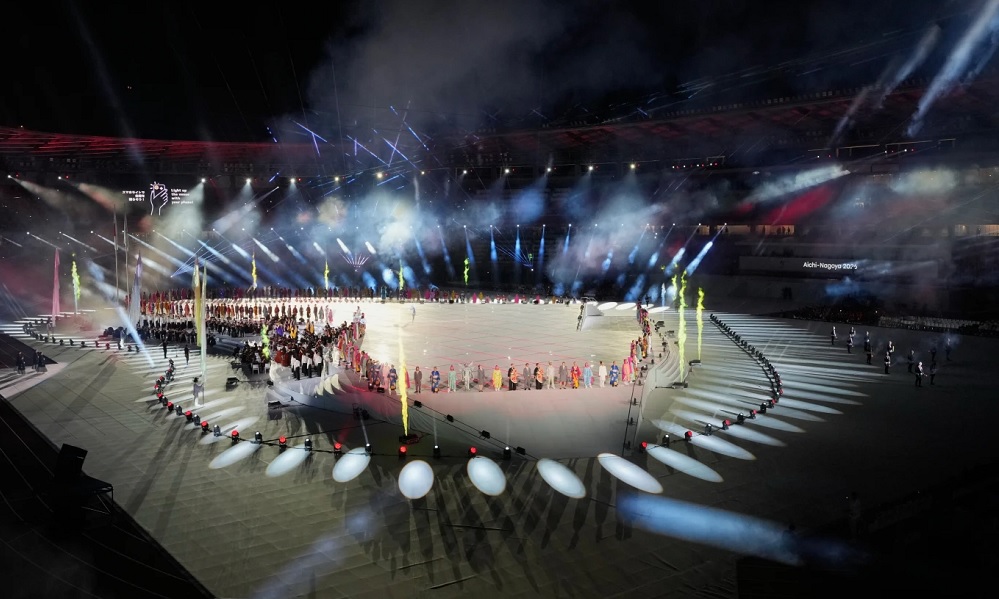
The 20th Asian Games officially opened in Nagoya, Japan, on Saturday, bringing together more than 11,000 athletes from 45 countries and regions for Asia’s biggest multi-sport event.
Japan’s Emperor Naruhito formally declared the Games open during a colourful ceremony at Mizuho Park Athletic Stadium. Empress Masako, International Olympic Committee President Kirsty Coventry and Olympic Council of Asia President Sheikh Joaan bin Hamad Al Thani were among the dignitaries attending.
Held under the theme “Harmonic Heart Beat,” the opening ceremony featured Japanese cultural performances, music, technology displays and fireworks before athletes entered the stadium for the traditional parade of nations.
The Aichi-Nagoya Games run from September 19 to October 4, with athletes competing in 43 sports and 469 medal events. Some competitions began before the opening ceremony, including football and basketball, because of the packed schedule.
Afghanistan sends 34 athletes
Afghanistan is represented by 34 athletes competing across nine sports at the Games.
The Afghan delegation includes competitors in wushu, boxing, cricket and other disciplines, with athletes set to face strong competition from across the continent.
Four Afghan wushu athletes — Mohammad Jafar Soltani, Shahzada Safi, Mohammad Khalid Hotak and Hamid Ashrafi — are scheduled to begin their campaigns on Sunday.

Afghanistan will also compete in cricket, with the Afghanistan Cricket Board selecting a 15-member squad for the men’s tournament. Darwish Rasooli will captain the side, with experienced players including Najibullah Zadran and Karim Janat included in the squad.
The cricket tournament is scheduled to take place from September 24 to October 3, giving Afghanistan’s emerging players another opportunity to compete on a major international stage.
For Japan, the Games mark the country’s return to hosting a major multi-sport event with spectators following the Tokyo Olympics in 2021, which were held largely without fans because of COVID-19 restrictions.
The Nagoya Games have nevertheless faced logistical challenges during their preparation. Organisers decided against building a traditional athletes’ village, instead housing competitors in hotels, temporary accommodation and a cruise ship. Some delegations have reported difficulties involving accommodation, transportation and registration.
Despite the problems, the opening ceremony provided a colourful start to the competition, with organisers highlighting the role of sport in bringing people together.
OCA President Sheikh Joaan said athletes from across Asia demonstrated how sport could help bridge divisions around the world.
“While the world is too often divided by conflict, they [the Asiad athletes] remind us that sport remains a powerful force for peace, understanding and friendship among nations,” he said.
Competition will continue across Japan until October 4, when the 20th Asian Games will conclude after 16 days of sporting action.
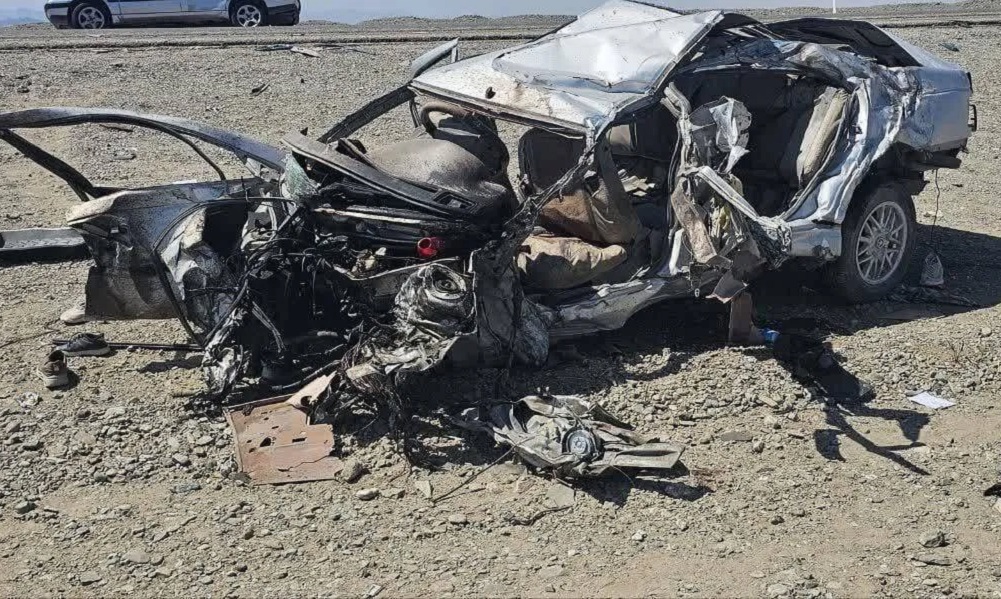
Seven Afghan migrants have been killed after a vehicle carrying Afghan migrants collided with a fuel-carrying vehicle in Iran’s Sistan and Baluchestan province.
According to the human rights organization HalVash, the accident occurred on Friday in the Sarbaz area of Sistan and Baluchestan.
Siyavash Mohbi, the head of Iran’s traffic police in Sistan and Baluchestan, said the Afghan nationals had entered Iran illegally.
He added that nine other people were injured in the incident.
Mohbi attributed the accident to the negligence of the driver of the vehicle carrying the migrants.


World leaders return to UN amid wars in Middle East and Ukraine

Asian Games open in Japan as Afghanistan sends 34 athletes

Seven Afghan migrants killed in traffic accident in Iran’s Sistan and Baluchestan

OIC to hold Afghanistan Contact Group meeting on sidelines of UN General Assembly

Flames, smoke seen near Riyadh airport; Houthis claim attacks on Saudi capital

Four mediators struggle to secure lasting Pakistan-Afghanistan ceasefire

Syria and Saudi Arabia condemn Kabul bombing, express solidarity with Afghanistan

Afghanistan’s trade diversification challenges Pakistan

Saudi energy group signs major Afghanistan deals covering gas exploration and pipeline plans

ATN secures exclusive rights to broadcast T20I series in India across Afghanistan

Tahawol: Kabul’s warning over any threat from Pakistan discussed

Debate on Afghanistan and New Investment Opportunities

Tahawol: Reasons behind Qatari, Turkish security officials’ Kabul visit discussed

Saar: Outcome of UN Security Council meeting on Afghanistan discussed

Tahawol: Afghanistan’s readiness for US relations discussed
-
 Latest News4 days ago
UN warns of mounting humanitarian and human rights pressures in Afghanistan
-
 Regional4 days ago
Saudi Arabia calls alleged Mecca attack a ‘red line’ as Houthis deny involvement
-
 Latest News4 days ago
Five Years On: IEA touts economic growth despite international isolation
-

 Sport4 days ago
India take 2-0 lead in 3-match series against Afghanistan
-
 Sport5 days ago
Nabi reaches 2,500 T20I runs
-

 Latest News3 days ago
Five years out of school: Amnesty raises alarm over Afghan girls’ education
-
 Latest News3 days ago
Russia urges dialogue and economic support for Afghanistan, warns against excessive pressure
-
 Sport4 days ago
ACL: Ariana Khost win, Aino Mina and Khurasan Faryab draw