
Latest News
Iran raises concern over ‘shortage’ of Afghan border forces

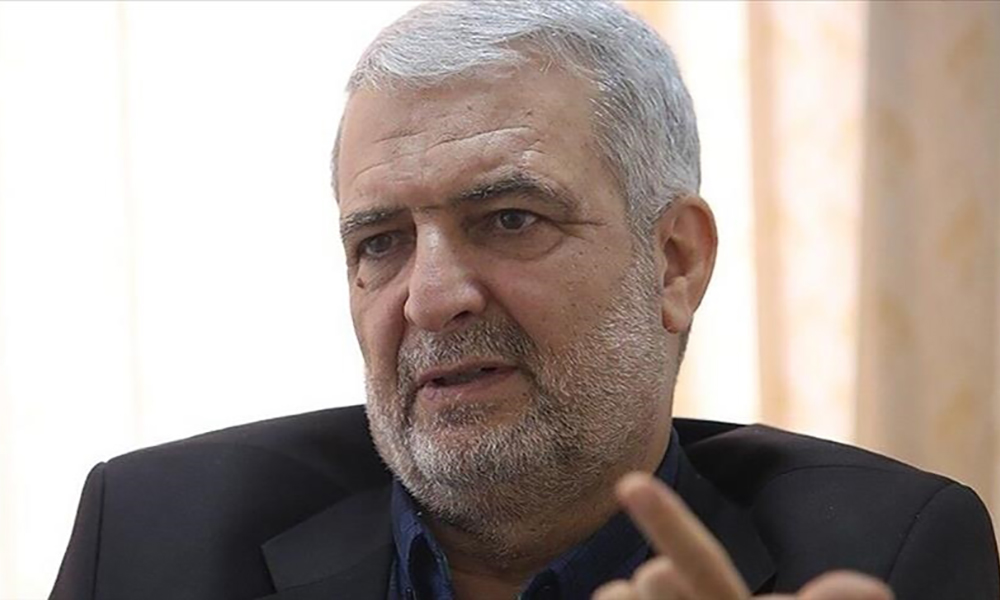
The special representative of Iran in Afghanistan has said that the new rulers of Afghanistan do not have enough forces at border posts and Iran should unilaterally establish border security.
But the Ministry of National Defense says that they have deployed forces to 450 security posts that have advanced military equipment along the borders of Afghanistan with neighboring countries.
Iran is worried about the infiltration of terrorist groups, including Daesh, into the country through the borders of Afghanistan, Iranian officials have said.
Hassan Kazemi Qomi, the special representative of Iran to Afghanistan, said in an interview with ISNA news outlet: “America is looking for evil, one of our big tasks is to help Afghanistan move in a direction so that it does not fall into the trap of these evils.
“Fortunately, ISIS has not been able to penetrate our borders,” he said adding “but the threat is there.”
“If they [IEA forces] exist, they don’t have a special uniform, we have to establish unilaterally security to strengthen the borders,” he said.
Qomi further added: “Emptying the arena in Afghanistan means that terrorism is strong there and will be drawn towards our borders.”
But the Afghan Ministry of Defense says that 450 security posts equipped with advanced military equipment have been established on the borders of Afghanistan with neighboring countries.
“We have eight border brigades, each of which has around 3,000 soldiers and they are engaged in service,” said Mohammad Yaqoub Mujahid, Afghan defense minister.
However, the Iranian president’s representative on Afghanistan also mentioned the issue of the legitimacy of the government and said that the Iranian government will continue to interact with Afghanistan, but Tehran will not recognize the new government until an inclusive government is formed.
He says that if the government wants to be recognized by the international community, they should have the support of the people and consider the people’s wishes.
“The fight against terrorism depends on the formation of a strong and inclusive government in Afghanistan, such a government can fight terrorism and carry out construction and development projects. Therefore, we have a desire to help Afghanistan move in this direction. Reconstruction and construction is not possible without the help of the international community. Afghanistan must definitely interact with the international community. This interaction is not possible unless Afghanistan complies with the legitimate demands of the international community and form a cooperative government,” said Qomi.
The Islamic Emirate of Afghanistan (IEA), considers the government to be inclusive, but has said reforms will be introduced.
After a year, no country has yet officially recognized the new government but some countries are engaging with Kabul.




Latest News
Silk Road highway in Wakhan corridor now reaches the China border
The road is expected to be officially opened for use in the near future, potentially improving connectivity through the remote Wakhan Corridor.
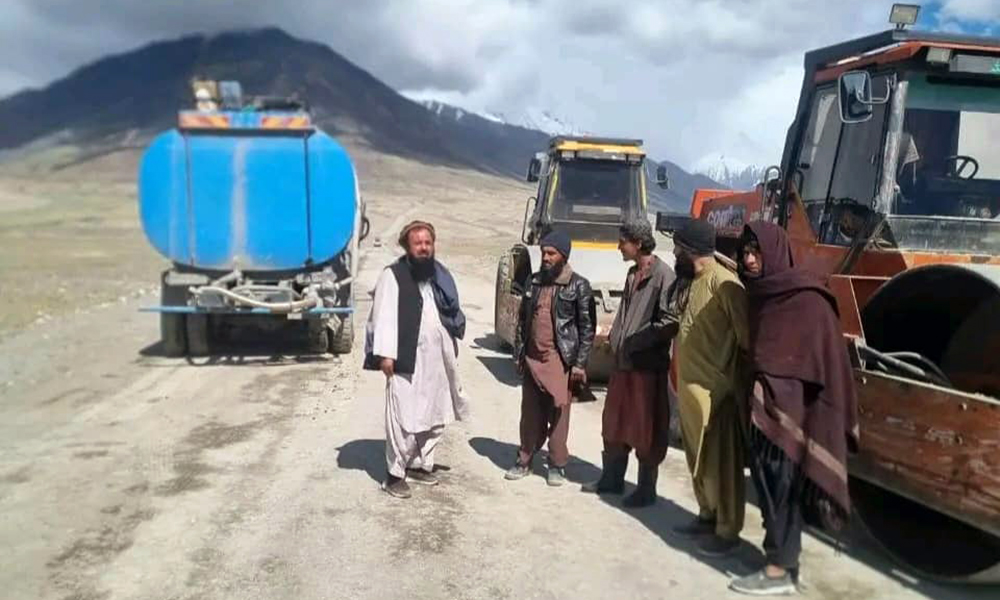
The construction of the Silk Road Highway in Afghanistan’s Wakhan Corridor has been fully completed after five years of work, officials in Badakhshan province said.
Amanullah Chehra, head of Rural Rehabilitation and Development in Badakhshan, said the 121.13-kilometre road begins in the Barghil area and stretches to Bzai Gonbad near the Chinese border.
According to officials, the road is between 7 and 10 metres wide and includes three major bridges, each measuring approximately 20 to 22 metres in length. Numerous smaller drainage structures have also been built along the route to facilitate the flow of water.
The road is expected to be officially opened for use in the near future, potentially improving connectivity through the remote Wakhan Corridor.
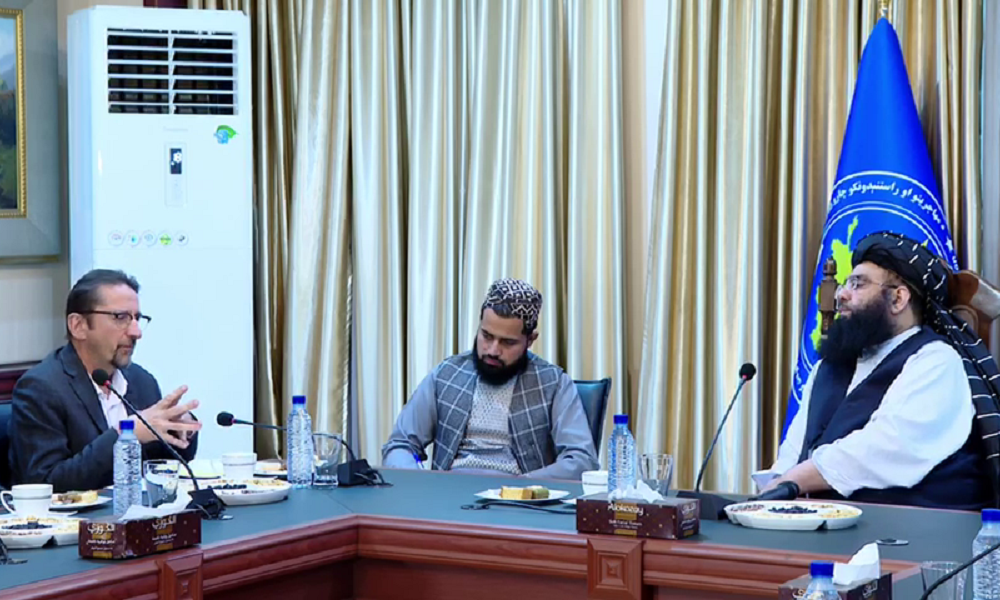
Afghanistan’s Minister of Refugees and Repatriation, Mawlawi Abdul Kabir, met on Wednesday with Bruno Lemarquis, UNAMA’s Deputy Head for Humanitarian Affairs, to discuss the situation of Afghan returnees and humanitarian assistance.
The Ministry of Refugees and Repatriation said Lemarquis briefed the minister on assessments conducted by UN agencies during visits to several provinces to identify the needs of returnee families.
Lemarquis said joint cooperation between UN agencies and the Islamic Emirate is needed to support and resettle returnees. He added that UN agencies are currently assisting thousands of families and called for the expansion of humanitarian assistance.
He also said the international community should pay greater attention to the needs of Afghans, adding that UNAMA is ready to cooperate in addressing challenges facing returnees.
Abdul Kabir welcomed UNAMA’s support and thanked the United Nations for its assistance to Afghans. He said various government institutions have been tasked with addressing returnees’ needs.
The minister also called on aid organizations to continue supporting returnee families, saying a program to resettle thousands of internally displaced families is also underway.
Kabir further said the necessary facilities have been provided for UN agencies to operate and that the Islamic Emirate welcomes UNAMA’s humanitarian cooperation.
Latest News
OIC Contact Group reaffirms support for Afghan people
The OIC Secretary-General also highlighted the organization’s work through its mission and field office in Kabul, particularly in the areas of girls’ education, healthcare and social cohesion.
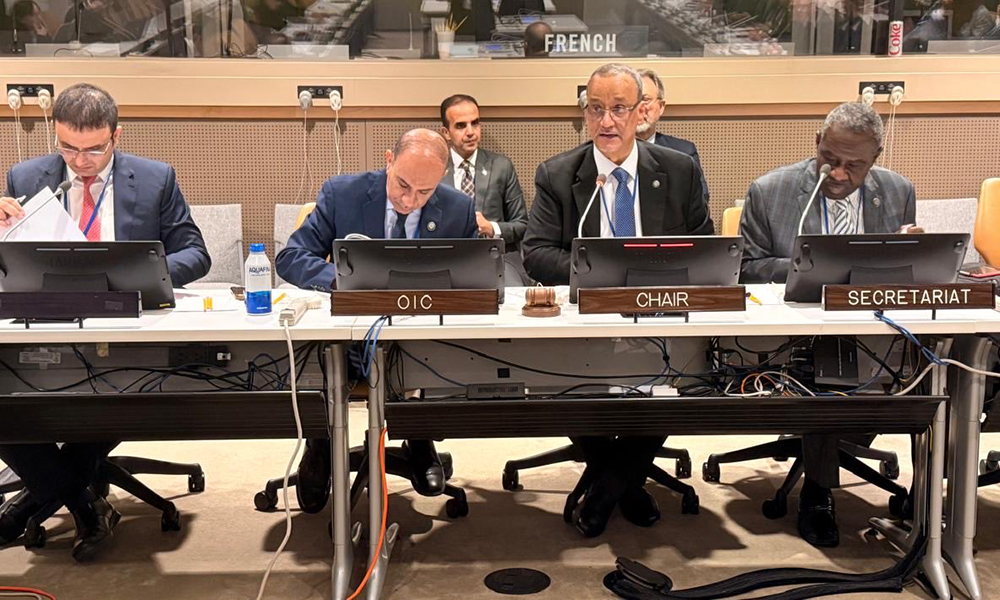
The Organization of Islamic Cooperation (OIC) Contact Group on Afghanistan has reaffirmed its commitment to supporting the Afghan people and strengthening the international response to the country’s humanitarian and development needs.
The group met in New York on Tuesday on the sidelines of the 81st session of the United Nations General Assembly to discuss the latest humanitarian and development situation in Afghanistan and ways to strengthen international support.
OIC Secretary-General Ismail Ould Cheikh Ahmed reaffirmed the organization’s commitment to the Afghan people, highlighting an approach based on engagement and practical cooperation with Afghanistan’s de facto authorities.
He said such engagement should serve the interests of the Afghan people while helping ensure the continuity of humanitarian assistance.
The OIC Secretary-General also highlighted the organization’s work through its mission and field office in Kabul, particularly in the areas of girls’ education, healthcare and social cohesion.
The meeting comes as Afghanistan continues to face significant humanitarian and development challenges, with international organisations and aid agencies calling for sustained support for the Afghan population.


Silk Road highway in Wakhan corridor now reaches the China border

Minister of Refugees, UNAMA deputy discuss returnees’ needs

OIC Contact Group reaffirms support for Afghan people

UK Afghanistan war crimes inquiry faces delay over 97 million newly identified documents

US and Iran hold first talks since June after Trump’s ‘annihilation’ threat

Saudi energy group signs major Afghanistan deals covering gas exploration and pipeline plans

ATN secures exclusive rights to broadcast T20I series in India across Afghanistan

China evacuates thousands as Typhoon Narra brings torrential rain

Trump floats idea of renaming Atlantic or Pacific Ocean

US hits Egyptian bank branches with Iran sanctions as war marks six months

Tahawol: Reactions to Pakistan’s attacks on Afghanistan discussed

Saar: Uncertain fate of Afghanistan’s seat at UN discussed

Tahawol: Uncertain future of Afghanistan’s permanent UN seat

Saar: Pakistan military strikes Afghan provinces discussed

Tahawol: Impact of middle East war on Afghanistan
-

 World4 days ago
US and Denmark reach deal on Greenland, Trump says
-
 Latest News3 days ago
Pakistan says Kohat attackers had roots in Afghanistan
-
 Sport2 days ago
Afghanistan to face Japan and Nepal in Asian Games cricket group stage
-
 Latest News4 days ago
Afghanistan condemns mosque attack in Khyber Pakhtunkhwa
-
 Latest News3 days ago
OIC to hold Afghanistan Contact Group meeting on sidelines of UN General Assembly
-
 Latest News4 days ago
Afghan official meets Iranian oil minister to discuss energy cooperation
-
 Regional3 days ago
Flames, smoke seen near Riyadh airport; Houthis claim attacks on Saudi capital
-

 Sport5 days ago
ACL: Sarsabz Yashlar edge Istiqlal Kabul 2–1