
World
Witkoff, Kushner to meet Ukrainians for talks on the war, says US source
President Donald Trump this week said he planned to talk to Russian President Vladimir Putin by phone soon.

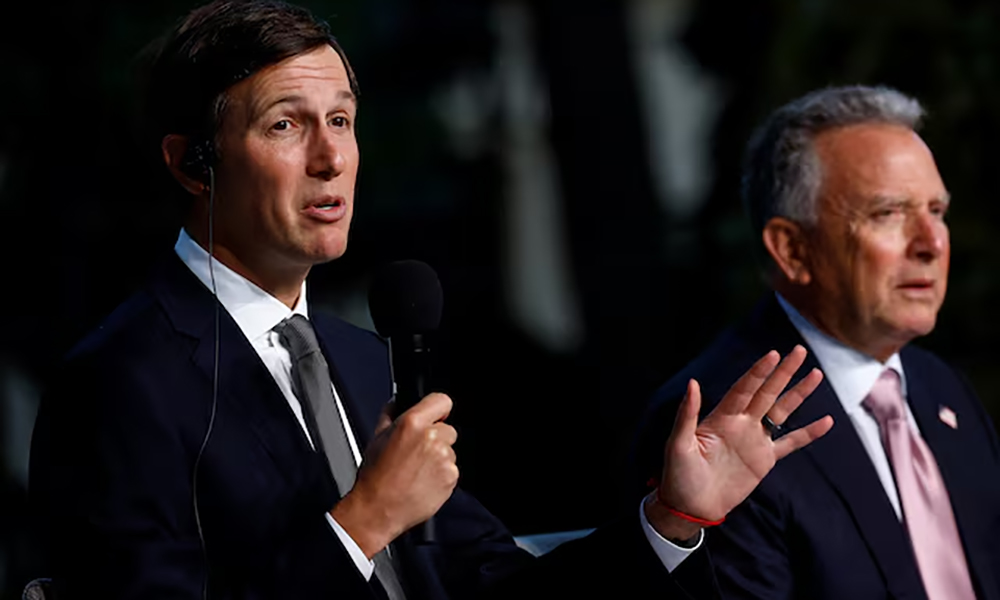
US envoys Steve Witkoff and Jared Kushner will meet Ukrainian representatives on Friday in Miami to discuss new ideas and try to produce a unified proposal for resolving the war in Ukraine, an American source familiar with the plan said on Thursday.
Earlier on Thursday, US Secretary of State Marco Rubio said the conflict was at a dangerous stalemate. President Donald Trump this week said he planned to talk to Russian President Vladimir Putin by phone soon, Reuters reported.
Trump, whose efforts to resolve the conflict have so far not succeeded, has been trying to arrange trilateral talks between Russia, the US and Ukraine.
The source said Witkoff and Kushner would hold a working session with the Ukrainians to discuss “new ideas and proposals that American negotiators began developing with the Russians and Ukrainians during their recent visit to the region”.
The meeting will include representatives from the White House National Security Council and US Treasury Department, the source said. Ukraine’s chief of staff Kyrylo Budanov, intelligence chief Rustem Umerov, and top negotiator David Arakhamia will represent Kyiv.
The American negotiators also invited national security advisors from the United Kingdom, France, and Germany, as well as officials from NATO and the European Union, read the report.
They are expected to discuss proposals for security guarantees for Ukraine, a post-war prosperity plan, and other aspects of the conflict, the source said.
The source said the Europeans had told the United States of their frustration with high energy costs and other major financial impacts of the conflict.
“It will be a tough winter if the war does not stop. So, the United States is trying to mediate with the sides with the goal of creating a unified proposal,” the source said.









World
Denmark says Russia has conducted sabotage attacks against its defense firms
Moscow has repeatedly denied involvement in sabotage or hybrid warfare operations.
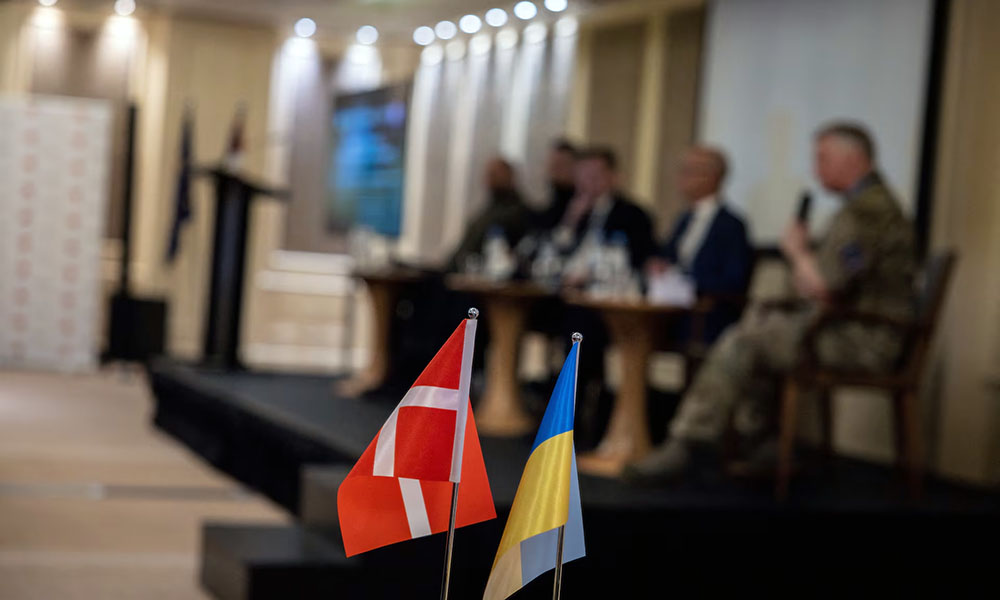
Russia has begun sabotage operations against Danish companies supplying Ukraine after concluding that broader disruption efforts failed to curb Western military support for the country, Reuters quoting a Danish intelligence official said on Wednesday.
The shift reflects a significant escalation in Moscow’s hybrid warfare campaign, the official, from the Danish national security and intelligence service (PET), told a homeland security conference in Copenhagen.
“What we saw in the spring was a lot of planning, but very little carried out; what we saw in early summer is that they started to carry out a lot more,” the official said.
Russia concluded that its previous broad-spectrum targeting “did not have the effect of deterring the Western (military alliance) NATO from supporting Ukraine,” the official added, and while Moscow maintains political control over operations, its operational boldness is growing and Russia is now “trying to hit targets that have a direct impact on the front line. That means weapons production.”
Moscow has repeatedly denied involvement in sabotage or hybrid warfare operations. The Russian embassy in Copenhagen rejected the allegations on Wednesday, accusing Danish authorities of making unfounded accusations against Russia, read the report.
The official cited a Russian defence ministry list of alleged European drone and drone component manufacturers that Moscow said in April amounted to potential military targets, without elaborating further.
Russia is increasingly using untrained proxies — including homeless people and people addicted to drugs — recruited via Telegram and other social media platforms. Recruitment typically starts with low-threshold tasks such as reconnaissance or photography, then escalates toward actual sabotage operations, PET has said.
“It could be anyone just looking for quick money,” the official said. “If the first person isn’t successful, they’ll throw another one at the problem until they succeed.”
Denmark’s defence intelligence service last month said Russia is likely to intensify hybrid attacks against the West in coming months, after Germany blamed Russia for an attempted drone attack at Leipzig/Halle Airport in August.
In September 2025, before Denmark hosted an EU summit, drones disrupted air traffic at six Danish airports, including Copenhagen, the Nordic region’s busiest, in what Prime Minister Mette Frederiksen called a hybrid attack on her nation.
World
Vance says Iran must cut enrichment to end war
Vance said the US remained open to an agreement but would require concrete Iranian nuclear concessions.
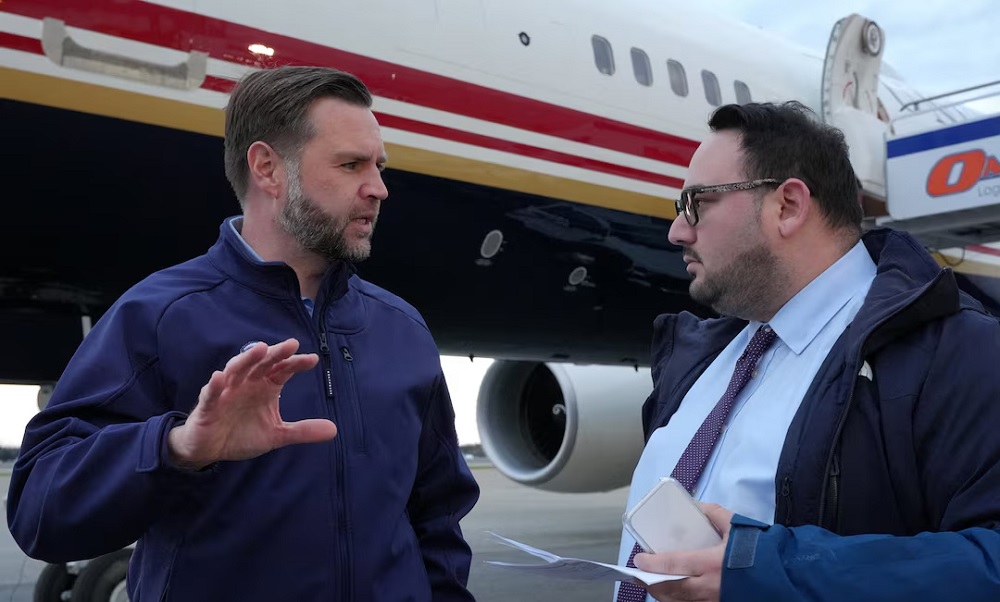
US Vice President JD Vance said in an exclusive interview with Reuters that Iran must make a “meaningful” reduction in its nuclear enrichment capacity to satisfy US demands and end the countries’ seven-month war, even as Washington was unsure how Tehran makes decisions in negotiations.
Vance, a longtime skeptic of US involvement in foreign wars, has taken a leading role in negotiating a settlement to the conflict and brokered a provisional peace agreement in June that quickly fell apart. The war has jolted global energy markets and become a political liability for President Donald Trump and fellow Republicans ahead of November midterm elections, Reuters reported.
Speaking on Monday after a campaign trip in Alaska, Vance said any agreement would require Iran to reduce its nuclear enrichment capacity, rather than offer assurances of future nuclear drawdowns.
“If you don’t want a nuclear weapon, then why do you need 60% enriched fuel? And if you want to show commitment to not building a nuclear weapon, don’t build highly enriched fuel. That’s a very basic threshold issue,” Vance said.
“I think if they want to show a commitment to not building a nuclear weapon, they would do something meaningful on their enrichment capacity.”
Iran and the US have exchanged proposals in recent weeks aimed at ending the war and reopening the Strait of Hormuz, a vital global energy shipping route. Trump rejected Tehran’s latest offer and has warned that military operations could intensify after the midterms.
Vance said the US remained open to an agreement but would require concrete Iranian nuclear concessions.
“We’re not going to trade words for actions,” Vance said.
UNCLEAR HOW IRAN MAKES DECISIONS: VANCE
Complicating matters, Vance said Washington is uncertain who makes decisions in Tehran.
Vance said the US was in talks with Iranian President Masoud Pezeshkian and Foreign Minister Abbas Araqchi. But it was unclear how much authority they wield within Iran’s power structure, he said, after joint US-Israeli strikes at the start of the war killed Supreme Leader Ayatollah Ali Khamenei.
“One of the things we picked up on is it’s not totally clear how their country makes decisions,” Vance said. Separately, Trump said on Tuesday his “biggest problem” is no one knows who is running Iran.
Iran’s Foreign Ministry spokesperson said on Sunday that US officials are well aware of who their Iranian counterparts are and how Iran’s decision-making system works.
“The problem is actually the opposite: it lies in the contradictory positions and mixed messaging from US officials,” Esmaeil Baghaei told a weekly press conference.
Vance told Reuters he has held personal conversations with field commanders to gauge battlefield conditions. He dismissed concerns over critical munitions shortages and added that while Iranian troops are periodically able to strike commercial ships in the Strait of Hormuz, they are largely unable to prevent energy exports through the waterway.
Vance declined to say if he was leading peace talks, though he is frequently cited as the White House’s top negotiator.
“We’re certainly involved,” he said. “Ultimately, the president of the United States is driving things.”
The war — and its $3 billion monthly price tag — has become a key issue on the campaign trail. Higher energy prices have put Trump and Republicans on the defensive in competitive states that will decide control of Congress.
Vance has sought to temper criticism of Trump’s handling of the conflict, telling voters they should not let that issue keep them from backing Republicans in next month’s elections.
In Alaska, Vance rallied for Republican Senator Dan Sullivan, who is locked in a tight reelection battle with Democratic challenger Mary Peltola. Trump carried Alaska by 13 percentage points in 2024, but rising everyday costs have put the state in play.
Before speaking with Reuters, Vance focused much of his speech on affordability concerns, especially around energy. Alaska’s remote locale makes consumer goods more expensive, and energy production is a key industry.
Rally attendees roared when Sullivan nearly introduced Vance as the president of the US, rather than the vice president. Vance is seen as a leading Republican contender to succeed Trump in the White House.
Vance told Reuters afterward that he had not decided whether to seek the presidency in 2028.
“I’m inherently a procrastinator,” he said. “I really haven’t thought about it much.”
World
▶️Saudi Arabia, Turkey, Pakistan activate Mecca defense pact
The three countries said the measures would be implemented under approved arrangements and in accordance with the national laws of each country.
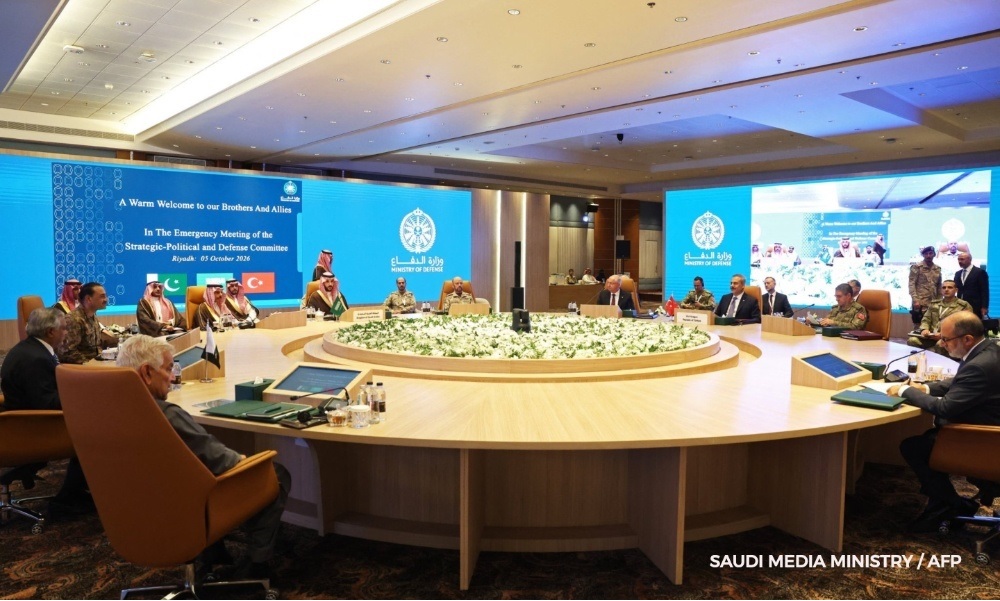
Saudi Arabia, Turkey and Pakistan have agreed to immediately implement their collective defence commitments, including the rapid deployment of agreed military forces and capabilities to Saudi Arabia.
The decision was reached on Monday during an emergency meeting of the Mecca Defence Alliance in Riyadh, according to a joint statement issued by Pakistan’s foreign ministry.
The three countries said the measures would be implemented under approved arrangements and in accordance with the national laws of each country.
Saudi Defence Minister Khalid bin Salman said the meeting reaffirmed the three countries’ “solidarity and unity” in responding to what he described as attacks against Saudi Arabia and Islamic holy sites.
The move follows a reported attack on a power distribution station in Medina. The Saudi-led coalition fighting Yemen’s Iran-aligned Houthi group said the attack targeted a facility supplying electricity to the Prophet’s Mosque, one of Islam’s holiest sites.
Saudi Arabia, Pakistan and Turkey signed the Mecca Joint Defence Agreement in August. Under the pact, an armed attack against one of the three members is considered an attack against all.
The agreement initially provided few details on the specific military commitments or defence obligations of each country.
The latest announcement marks a move from the framework of the agreement towards its practical implementation, with the three countries now agreeing to put arrangements for the deployment of military capabilities into effect.


Witkoff, Kushner to meet Ukrainians for talks on the war, says US source

Trump says US will not attack Iran before midterm elections in November

Tahawol: CSTO meeting on Afghanistan reviewed

Saar: Guterres’s talks with Pakistani officials on Afghanistan discussed

Arman FC defeat Istiqlal Kabul 3-2 in thrilling comeback

UAE firm eyes investment in Salang’s second tunnel and pharmaceutical factories

EU and FAO launch €5m programme to strengthen Afghanistan’s agrifood sector

Omar Zawak, Toofan Herat secure victories in Afghanistan Champions League

Houthi advance in Yemen puts U.S. in a new bind

Afghanistan Champions League Season 6 kicks off today: Abu Muslim Farah face Sarsabz Yashlar
Tahawol: CSTO meeting on Afghanistan reviewed
Saar: Guterres’s talks with Pakistani officials on Afghanistan discussed

Tahawol: Consequences of US war in Afghanistan reviewed

Saar: Expulsion of Afghan refugees from Pakistan discussed

Tahawol: Discussion on outcome of Moscow Format meeting
-

 Sport4 days ago
Cricket Bonanza: Afghanistan set for packed international schedule
-

 Latest News5 days ago
Afghanistan inaugurates 121 km Wakhan road to China border
-

 Sport5 days ago
ACL: Sorkh Poshan extend perfect run with 1-0 win over Khurasan
-

 Sport4 days ago
Afghanistan U19 to face Bangladesh, Oman in Youth ODIs
-

 Sport5 days ago
ACL: Toofan Herat crush Sarsabz Yashlar 3-0
-

 Regional4 days ago
Yemeni government launches offensive to seize all areas from Iran-backed Houthis
-

 Latest News3 days ago
Ariana Afghan Airlines ends 15-year control of ticketing and operational systems by Pakistani firm
-

 International Sports5 days ago
India clinch Asian Games cricket gold after beating Pakistan