
Latest News
Afghanistan will no longer mediate Pakistan–TTP talks, calls it Pakistan’s internal matter
Addressing concerns over Afghanistan’s growing engagement with India, Mujahid clarified that such relations are not intended to undermine Pakistan.


The Islamic Emirate of Afghanistan has announced it will no longer mediate peace talks between Pakistan and the Tehreek-e-Taliban Pakistan (TTP), describing the issue as an internal matter for Islamabad.
In an interview with Deutsche Welle Pashto, Zabihullah Mujahid, spokesperson for the Islamic Emirate, said Afghanistan sees no reason to continue facilitating dialogue between Pakistan and the TTP.
“This is Pakistan’s internal problem, and it is their responsibility to address it,” Mujahid stated.
He confirmed that delegations from Afghanistan and Pakistan are scheduled to meet in Turkey on October 25 to finalize a bilateral agreement aimed at sustaining the recently established ceasefire between the two neighbors.
“The upcoming meeting in Turkey will focus on finalizing the agreement that both sides have been working on,” he added.
Mujahid reiterated that Afghanistan does not support the TTP or its attacks against Pakistan.
“We will not support any group or attack against Pakistan. This is purely a domestic issue for Islamabad,” he said.
Addressing concerns over Afghanistan’s growing engagement with India, Mujahid clarified that such relations are not intended to undermine Pakistan.
“Our engagement with India is not against anyone. Afghanistan and Pakistan share deep historical, cultural, and economic ties — both countries need each other equally,” he noted.
The IEA’s spokesperson also alleged that a “specific decision-making circle” within Pakistan’s security establishment has repeatedly sought to disrupt relations between Kabul and Islamabad.
“Whenever relations between the two countries have improved, this particular group has acted — not for Pakistan’s interests, but for the interests of others — to derail the progress,” he claimed.
The announcement comes as Afghanistan and Pakistan work to maintain a fragile ceasefire following recent tensions along their shared border. Both sides are expected to use the upcoming meeting in Turkey to strengthen a long-term framework for peace and cooperation.

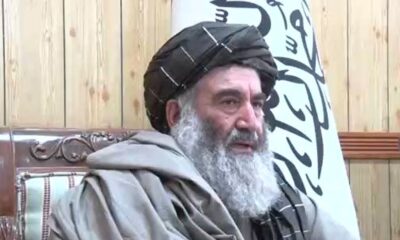


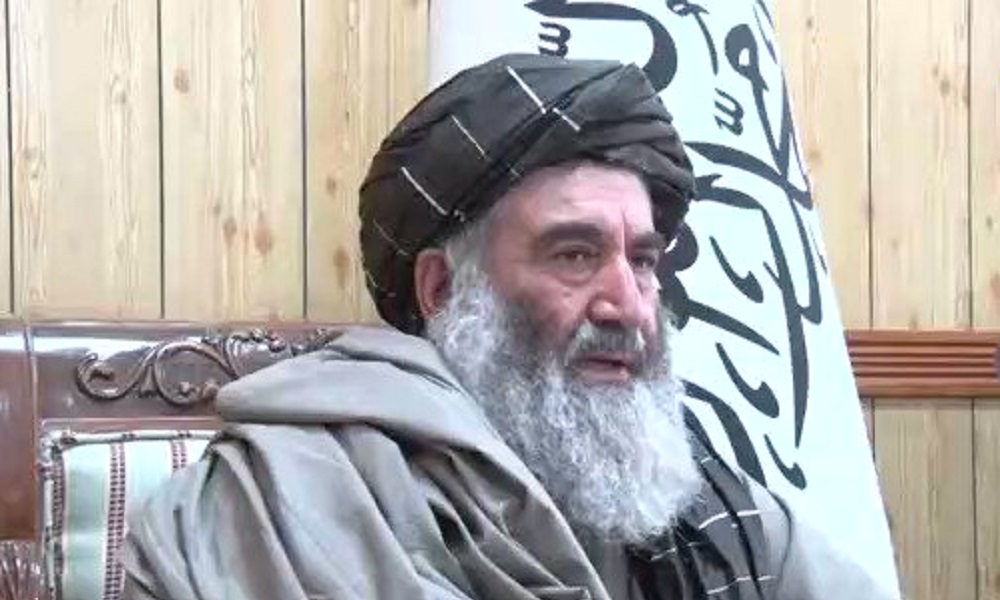
Kandahar Governor Mullah Mohammad Shirin Akhund has called on the World Bank to implement major and essential development projects in the southern Afghan province.
The remarks were made during a meeting with Faris Hadad-Zervos, World Bank Group country director for Afghanistan, and Richard Trenchard, representative of the UN Food and Agriculture Organization (FAO).
At the meeting, Hadad-Zervos briefed Kandahar officials on the World Bank’s activities and assistance across Afghanistan, as well as the work of the FAO, provincial governor’s office said in a statement.
He said the World Bank has continued its operations in Afghanistan since the Islamic Emirate came to power, while the FAO’s financial activities are also funded by the World Bank.
According to Hadad-Zervos, the organizations are working in areas including health, humanitarian assistance, education, clean water and agriculture.
He said the World Bank and local authorities had also begun joint efforts to implement projects aimed at strengthening the private sector and creating employment opportunities.
Kandahar Governor Mullah Mohammad Shirin Akhund welcomed the visiting officials and praised the assistance and cooperation provided by the World Bank and FAO.
He called on the World Bank to implement major projects in Kandahar, including raising the height of the Dahla Dam, continued support for Mirwais Regional Hospital, construction of cold-storage facilities and check dams, expanding markets for fresh and dried fruits, and supporting alternative crops to replace narcotics cultivation.
The Kandahar governor said Afghans had endured years of hardship and should therefore be provided with essential and quality public services.
Latest News
Afghanistan condemns mosque attack in Khyber Pakhtunkhwa
At least 16 people were killed and 57 others injured in the blast in Kohat on Friday.
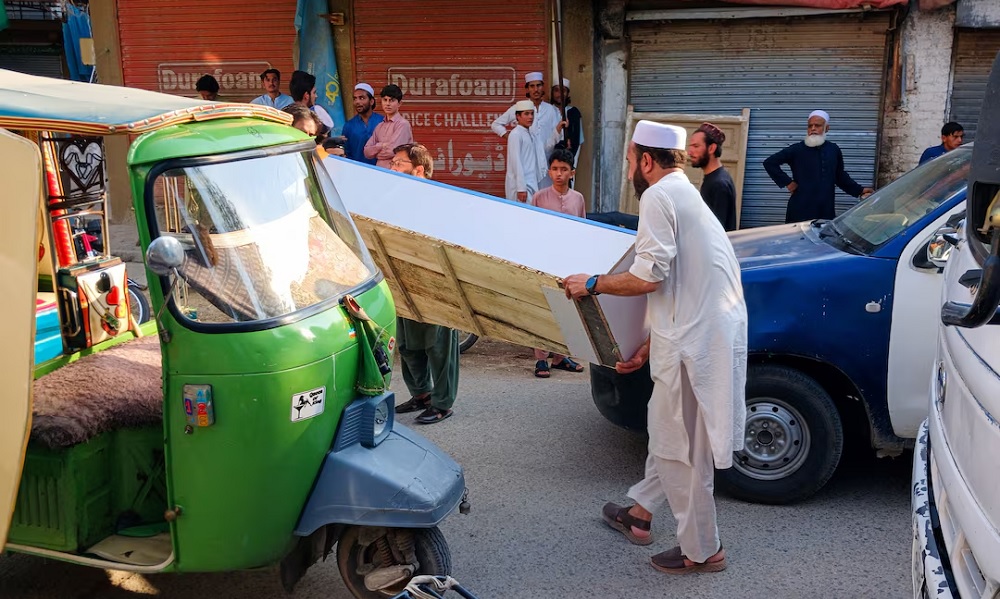
Afghanistan’s Ministry of Foreign Affairs has strongly condemned an attack on a mosque in Kohat city in Khyber Pakhtunkhwa province during Friday prayers.
In a statement issued on Saturday, the ministry’s spokesman described attacks on places of worship as “unjustifiable and condemnable.”
The ministry also expressed sympathy with the families of those killed and injured in the incident.
At least 16 people were killed and 57 others injured in the blast in Kohat on Friday.
No individual or group has so far claimed responsibility for the attack.
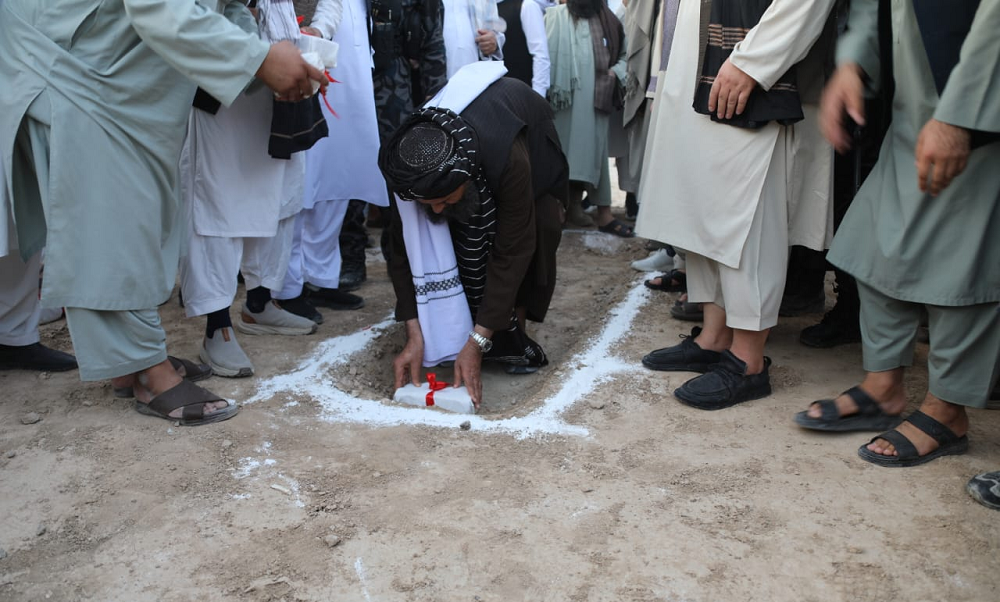
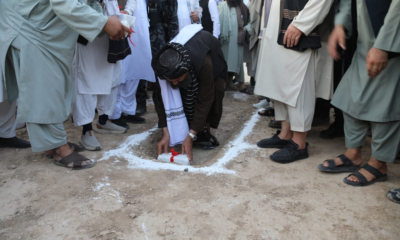
Mullah Abdul Ghani Baradar, Deputy Prime Minister for Economic Affairs, on Friday laid the foundation stone for the Imam Shaqiq Balkhi Industrial Township at the Hairatan Two-Way intersection in Balkh province.
Speaking at the ceremony, Baradar said the Islamic Emirate’s priority is to gradually transform Afghanistan into a productive country and turn its young population into a productive workforce.
He said efforts are also underway to connect industries, production and markets and make Afghan products available in regional and international markets.
Baradar described the Balkh industrial township as a practical demonstration of the Islamic Emirate’s commitment to developing an industrial and productive economy.
According to Baradar, the project will help address the shortage of industrial land in Balkh, create opportunities for businesses, reduce dependence on imports and provide jobs for thousands of people.
He said Balkh is one of Afghanistan’s key commercial, transit and industrial provinces and called for the Hairatan port and transport route to play a greater role in exports.
“Hairatan should not only be a route for imported goods and regular traffic,” Baradar said, adding that it should become an important transit corridor for exporting Afghanistan’s processed and manufactured products.
Baradar also called on the international community to expand formal economic relations with Afghanistan and remove financial and banking restrictions.
He said the Islamic Emirate has both the capacity and determination to participate in regional and global economic partnerships.
At the ceremony, Baradar urged industrialists to invest in different sectors within the new township and said the government would provide the necessary facilities and cooperation.
The Balkh Industrial Township will be developed on 22,000 jeribs of land. It is expected to provide space for businesses involved in processing raw materials, manufacturing standardized products and exporting finished goods.


Kandahar governor calls on World Bank to implement key development projects

Afghanistan condemns mosque attack in Khyber Pakhtunkhwa

Baradar lays foundation stone for industrial township in Balkh

US and Denmark reach deal on Greenland, Trump says

ACL: Sarsabz Yashlar edge Istiqlal Kabul 2–1

Four mediators struggle to secure lasting Pakistan-Afghanistan ceasefire

Syria and Saudi Arabia condemn Kabul bombing, express solidarity with Afghanistan

Afghanistan’s trade diversification challenges Pakistan

Saudi energy group signs major Afghanistan deals covering gas exploration and pipeline plans

ATN secures exclusive rights to broadcast T20I series in India across Afghanistan

Debate on Afghanistan and New Investment Opportunities

Tahawol: Reasons behind Qatari, Turkish security officials’ Kabul visit discussed

Saar: Outcome of UN Security Council meeting on Afghanistan discussed

Tahawol: Afghanistan’s readiness for US relations discussed

Saar: UN Security Council meeting on Afghanistan discussed
-
 Latest News3 days ago
UN warns of mounting humanitarian and human rights pressures in Afghanistan
-
 Latest News5 days ago
Muttaqi defends Afghanistan’s policies, calls for stronger international ties
-
 Sport5 days ago
Farooq Khan Ahmadzai makes international umpiring debut
-
 Sport5 days ago
ACL: Abu Muslim Farah 4-0 Istiqlal Kabul; Omar Zawak 3-1 Sarsabz Yashlar
-
 Latest News5 days ago
Mujahid: Afghanistan’s reconstruction must rely on domestic investment
-
 Latest News5 days ago
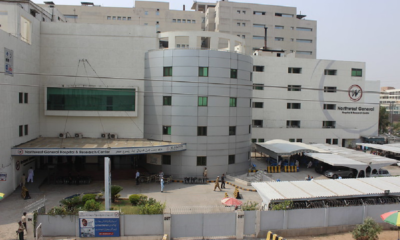
Afghan doctors barred from Peshawar hospital over visa issues
-

 Science & Technology5 days ago
New warnings reignite debate over AI threat to humanity
-
 Regional5 days ago
Gulf states call off meeting with Iran, Houthis launch new attack on Saudi