
Latest News
Brilliant Bayern humiliate hapless Barca with 8-2 crushing


German champions Bayern Munich utterly humiliated Barcelona with an extraordinary 8-2 demolition job on Friday that sent them through into the semi-finals of the Champions League.
Thomas Mueller scored twice for a rampant Bayern, who led 4-1 after 31 astonishing minutes, as Lionel Messi and his team mates were condemned to a thrashing that felt like the end of an era for the illustrious Catalan club.
“We feel devastated, although shame is the real word I’m looking for,” said Barca defender Gerard Pique, adding that the historic defeat called for urgent changes across the club.
Barca coach Quique Setien, who is unlikely to survive the looming inquest, called the drubbing “a tremendously painful defeat”.
Bayern coach Hansi Flick hailed an “outstanding” display from his side but stressed that they were firmly focused on the semi-final, which will be against Manchester City or Olympique Lyonnais.
Mueller added: “We had so much fun today. Of course, Barcelona are special, so we had to be even more aggressive and come back again and again.
“You can imagine we feel good after this match but we have to be quiet and regenerate.”
The scoreline recalled Germany’s 7-1 semi-final win over Brazil in the 2014 World Cup, a game where Flick was on the bench as the national team’s assistant coach.
It began with Bayern grabbing a fourth-minute lead when Mueller collected Ivan Perisic’s cross from the left and played a clever one-two with Robert Lewandowski before drilling home.
But within three minutes Barca had struck back – Clement Lenglet’s super long ball found Jordi Alba in space and David Alaba’s attempt to deal with his searching cross ended up flying past his own keeper Manuel Neuer.
Neuer then had to be quick off his line to foil a goal-bound Luis Suarez but was almost caught out by Messi’s cross-shot from the right which drifted through the area and struck the post.
But just as Barca seemed to have established themselves, the Germans regained their lead in the 21st minute — Serge Gnabry fed Perisic on the left and the Croatian glanced up to see his options before drilling past Marc-Andre ter Stegen.
Bayern then added the third as Barca’s defence was opened up again with ease. Thiago Alcantara was given plenty of space in midfield to find Leon Goretzka whose superb ball picked out Gnabry, who had got behind Lenglet and then made no mistake with the finish.
Flick’s side were running riot and it got worse for Barca when a low cross from Joshua Kimmich was turned in at the near post by Mueller — another goal of ruthless simplicity making it 4-1 at the break.
The Spaniards desperately needed to find a way to shift the momentum after the break and Suarez, one of the few Barca players to emerge with any credit from the encounter, provided a route back into the game with a fine strike, in the 57th minute.
Jordi Alba found Suarez on the edge of the box and the Uruguayan jinked passed Jerome Boateng before blasting home.
But Bayern were in no mood to turn down the heat and six minutes later they restored their three-goal advantage thanks to some outstanding work from their Canadian teenager Alphonso Davies.
The left back dribbled in from the flank, danced past Nelson Semedo to get to the byline and then pulled the ball back to fellow full back Kimmich to slot home and make it 5-2.
Somehow Bayern had managed to score five goals without prolific striker Robert Lewandowski, who had scored in his previous seven Champions League matches, getting in on the act.
Eight minutes from the end, the Pole put that right.
Substitute Philippe Coutinho, who is on loan at the German club from Barca, floated over a cross from the left which Lewandowski firmly headed home at the back post.
To add insult to the already painful injury, Coutinho then scored two more before the end, as Barcelona fell apart in unimaginable fashion to the brilliance of the Bavarians.






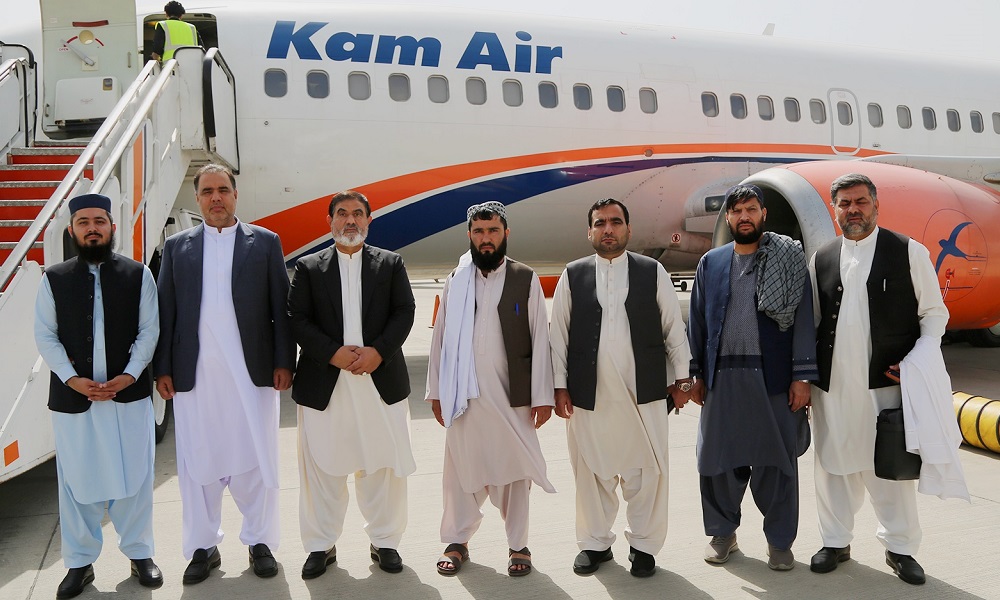
The Chairman of the Afghanistan Chamber of Commerce and Investment (ACCI), Sayed Karim Hashemi, has departed for Uzbekistan at the head of a high-level delegation comprising ACCI leaders and more than 100 Afghan traders and investors.
According to ACCI, the three-day visit will include meetings with officials in Uzbekistan’s Syrdarya region, business-to-business (B2B) meetings, and visits to production facilities.
The chamber said the visit is aimed at expanding bilateral trade, encouraging investment, and strengthening long-term economic cooperation between Afghanistan and Uzbekistan.
Latest News
India says UN sanctions on Afghanistan no longer effective
He further accused Islamabad of imposing trade and transit restrictions on Afghanistan and called for those measures to be lifted.

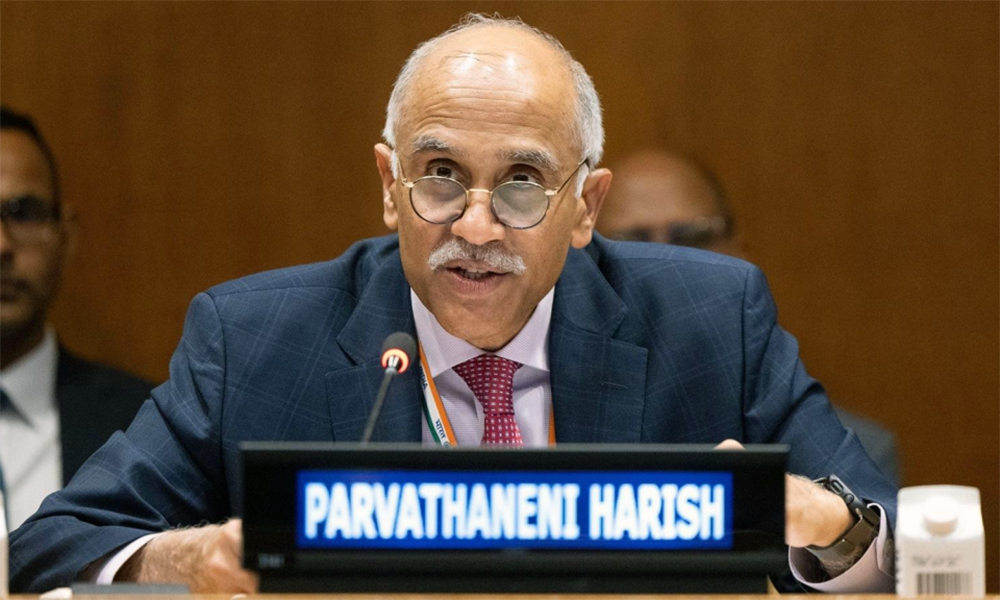
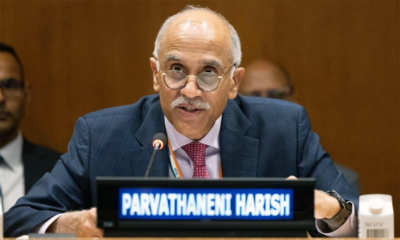
Parvathaneni Harish, India’s Permanent Representative to the United Nations, told a recent UN Security Council meeting that the political landscape in Afghanistan has changed significantly, making it necessary to reassess the current UN sanctions regime.
Harish said the existing punitive measures have lost their effectiveness and urged the international community to adopt a new approach toward engagement with Afghanistan.
The Indian envoy also condemned Pakistan’s airstrikes inside Afghanistan, citing findings by the United Nations Assistance Mission in Afghanistan (UNAMA) that linked the attacks to significant civilian casualties.
He further accused Islamabad of imposing trade and transit restrictions on Afghanistan and called for those measures to be lifted.
Latest News
Widespread reaction to Nuristan floods; from messages of sympathy to requests for urgent assistance
Hamid Karzai expressed his condolences to the families of the victims and called on Afghan business leaders and humanitarian organizations to provide urgent assistance to flood-affected communities.
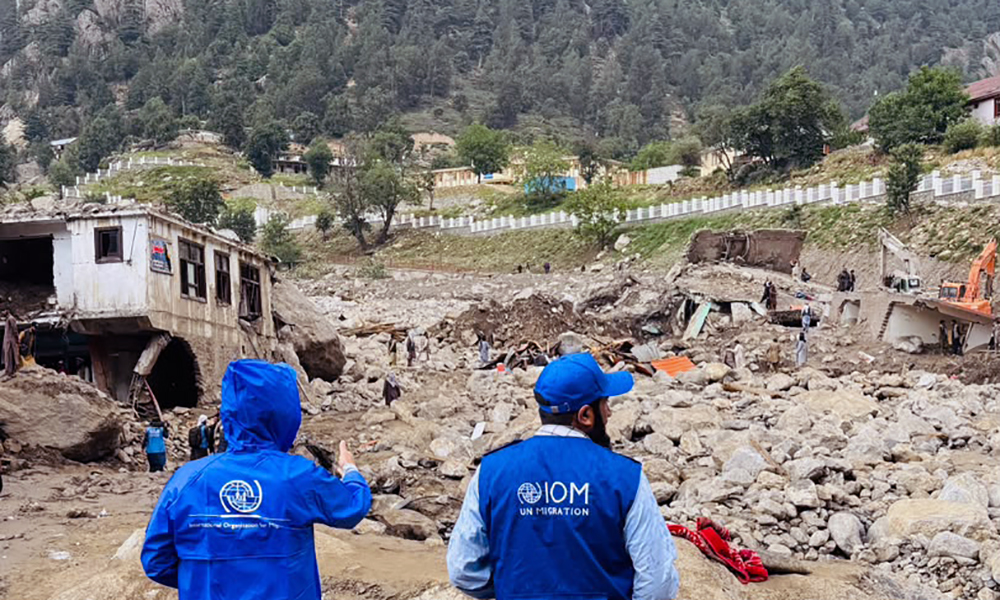
Messages of condolence and support have poured in from foreign governments, international organizations and prominent Afghan figures following the devastating flash floods that struck Parun, the capital of Nuristan province on Monday.
Japanese Ambassador to Afghanistan Takayoshi Masamoto expressed deep sorrow over the loss of life and injuries caused by the floods, extending heartfelt condolences to the victims’ families and wishing a swift recovery to those affected.
The European Union Delegation to Afghanistan also expressed solidarity with the people of Nuristan, offering condolences to bereaved families, expressing hope that those still missing would be found quickly, and praising the efforts of rescue teams.
The Embassy of Iran in Kabul conveyed its condolences over the floods in Nuristan and other eastern provinces, expressing sympathy with affected families and wishing the injured a speedy recovery.
Richard Lindsay, the United Kingdom’s Special Envoy to Afghanistan, said he was deeply saddened by reports of the disaster and extended his thoughts to the victims, their families and emergency responders carrying out search and rescue operations.
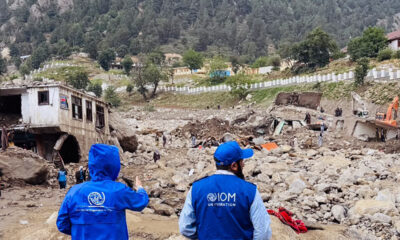
The International Organization for Migration (IOM) said its teams are on the ground conducting rapid multi-sector assessments to identify urgent humanitarian needs, noting that the flooding has caused casualties and extensive damage to homes, infrastructure and farmland.
Former Afghan President Hamid Karzai expressed his condolences to the families of the victims and called on Afghan business leaders and humanitarian organizations to provide urgent assistance to flood-affected communities.
Afghanistan national cricket star Rashid Khan also appealed for immediate support, urging national and international aid organizations, charitable institutions and wealthy Afghans to provide emergency humanitarian assistance, including food, medicine and shelter, to families affected by the disaster.
Search and rescue operations remain underway as authorities continue assessing the full scale of the tragedy.


War in Iran has cost the US $37.5 billion so far, Pentagon says

Tahawol: Cause of devastating floods in Nuristan discussed

Saar: Impact of climate change on Afghanistan discussed

ACCI chairman leads trade delegation to Uzbekistan

New AI tool helps Afghans identify visa pathways

Afghanistan eyes direct Basmati rice imports from India amid tensions with Pakistan

India offers 1,000 online scholarships for Afghan students for 2026-27 academic year

TAPI project sees rapid progress in Afghanistan

Cricket world pays tribute to Afghanistan fast bowler Shapoor Zadran

Turkey spent over $120 million to prepare airport for Qatar-donated U.S. presidential aircraft
Tahawol: Cause of devastating floods in Nuristan discussed
Saar: Impact of climate change on Afghanistan discussed

Tahawol: U.S.-Iran Conflict Enters Its Ninth Night

Saar: Impact of the Middle East Crisis on Afghanistan and the Region

Tahawol: More Than 4,000 Afghans Return Home in One Day
-
 International Sports4 days ago
Rodri urges Spain to chase World Cup glory without fear against Messi’s Argentina
-

 International Sports3 days ago
What’s at stake? World Cup glory, millions in prize money and football immortality
-
 Business5 days ago
Afghanistan temporarily eases fuel import standards to help curb rising prices
-

 International Sports3 days ago
Storms disrupt World Cup final training session
-
 Latest News4 days ago
Al-Qaeda activity declines in Afghanistan but group maintains presence, says UN official
-
 Latest News4 days ago
International-standard textile factory to begin operations in Kabul
-

 Latest News3 days ago
AI backs Argentina in World Cup final, but football still has final say
-

 International Sports2 days ago
Spain sweep FIFA World Cup player awards after historic triumph