Latest News
Rights watchdog calls for IEA to ease back on moral policing
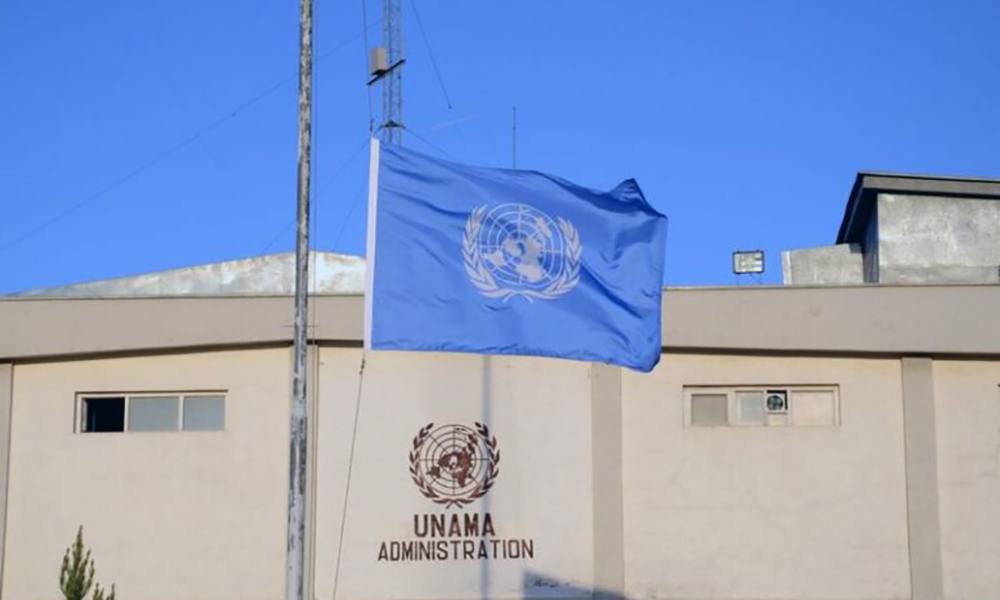
This comes after UNAMA released its report titled, De Facto Authorities’ Moral Oversight in Afghanistan: Impacts on Human Rights, earlier this week.

Amnesty International on Wednesday called for the Islamic Emirate of Afghanistan to roll back on moral policing.
Responding to a new report by the United Nations Assistance Mission (UNAMA) in Afghanistan on the violations of human rights by the Islamic Emirate of Afghanistan’s (IEA) Ministry for the Propagation of Virtue and Prevention of Vice (MPVPV), Amnesty International said the moral policing has had a decaying effect on human rights in the country.
Zaman Sultani, regional researcher for South Asia at Amnesty International, said: “This report lays bare the role of the Taliban’s MPVPV in violating various human rights and fundamental freedoms in Afghanistan.
“Its arbitrary, inconsistent and ambiguous record of morally policing the people of Afghanistan, with an institutionalized system of discrimination that disproportionately impacts women and girls, has had a decaying effect on human rights in the country.”
Healso stated that “the arbitrary, inconsistent and ambiguous record of morally policing the people of Afghanistan, with an institutionalized system of discrimination that disproportionately impacts women and girls, has had a decaying effect on human rights in the country.”
Sultani went on to say that Amnesty International shares the UN’s call to the Islamic Emirate to guarantee the rights of freedom of expression, freedom of thought, conscience and religion, right to health and work, among a host of other fundamental rights and freedoms as guaranteed under the international human rights treaties to which Afghanistan is a State party.
“The prevalent impunity for the Taliban’s gross violations of human rights and crimes under international law must come to an end,” he said.
He also called for the United Nations to establish a dedicated independent international accountability mechanism to investigate crimes under international law and other serious violations in Afghanistan as well as to collect and preserve evidence for future accountability efforts and prosecutions.
“They must also ensure that gender justice is prioritized and the involvement of women human rights defenders and civil society stakeholders remains central in all engagements with the Taliban on the future of Afghanistan. To fail to do so would be to turn our backs on the victims and their rights to truth, justice and reparation.”
This comes after UNAMA released its report titled, De Facto Authorities’ Moral Oversight in Afghanistan: Impacts on Human Rights, earlier this week.
The report outlines the negative impact that the activities and expanding role of the MPVPV has had on the enjoyment of human rights and fundamental freedoms in various aspects of private and public life for people living in Afghanistan.
The Islamic Emirate meanwhile said Wednesday the claims by UNAMA were unfounded and that all rights were respected in accordance with Sharia.
Zabihullah Mujahid, the IEA’s spokesman said that the rulings recommended by the MPVPV are well-known Islamic rulings.
He said UNAMA was trying to compare Afghanistan’s policies against those of the West, which was not “the right thing to do”.
He added that under the IEA, the rights of all citizens are secured in accordance with Sharia.
“All men and women are dealt with according to Sharia, Sharia rulings are enforceable as laws, and in this case, no one is oppressed or violated,” said Mujahid.
Related Stories:
UNAMA’s criticism of Afghanistan’s morality ministry ‘unfounded’, says IEA
UNAMA issues latest rights report, notes ongoing challenges for women, girls and media
