
International Sports
Pakistan to boycott T20 World Cup group match against India

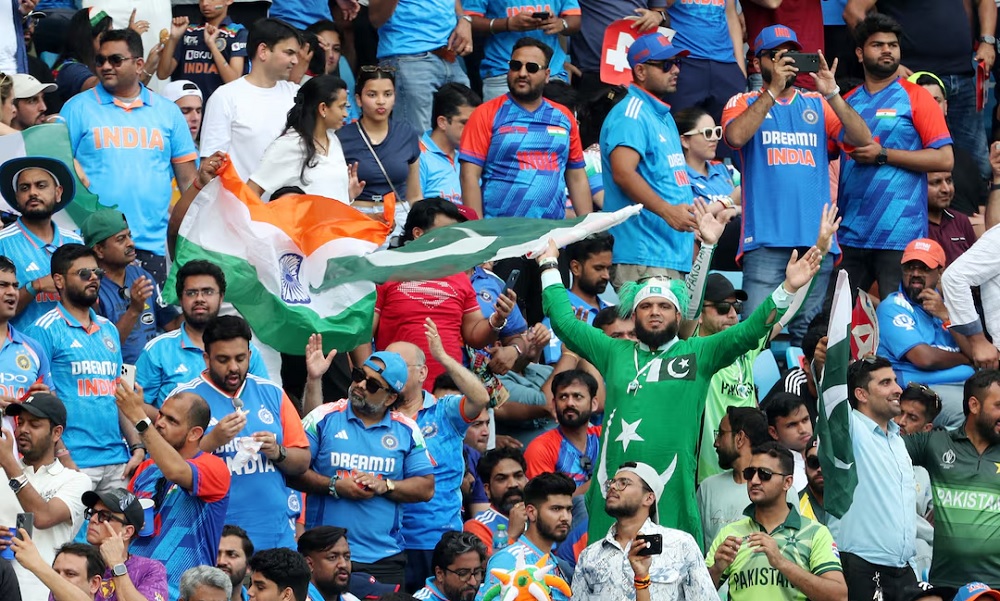
Pakistan will boycott their February 15 match of the Twenty20 World Cup against arch-rivals India in Colombo, the Pakistan government said on Sunday while approving the team’s participation in the global showpiece.
“The government… grants approval to the Pakistan cricket team to participate in the ICC World T20 2026, however, the Pakistan Cricket Team shall not take the field in the match scheduled on 15th February 2026 against India,” the post on the government’s official X account said without elaborating on reasons behind the decision, Reuters reported.
Pakistan, who are scheduled to play all their matches in Sri Lanka, would forfeit two points if they boycotted the India match. There was no clarity on what would happen should the neighbours meet in a knockout game.
Bilateral cricket remains suspended between the nuclear-armed neighbours, who engaged in a military conflict that nearly snowballed into a fully-fledged war last year.
Their fraught political relations prompted the governing International Cricket Council (ICC) to broker an arrangement allowing them to play at a neutral venue when their neighbour hosts a global tournament.
The 2009 champions had earlier announced their squad for the 20-team tournament beginning on February 7, maintaining that their participation was subject to government approval.
Their decision to boycott the India match is a serious blow to the tournament because an India-Pakistan clash remains cricket’s greatest blockbuster, which is why they are clubbed together in the same group in ICC events.
The ICC said it was awaiting an official communication from the Pakistan Cricket Board (PCB) conveying their “position of selective participation”.
“While the ICC respects the roles of governments in matters of national policy, this decision is not in the interest of the global game or the welfare of fans worldwide, including millions in Pakistan,” the Dubai-based body said in a statement.
“The ICC hopes that the PCB will consider the significant and long-term implications for cricket in its own country as this is likely to impact the global cricket ecosystem, which it is itself a member and beneficiary of.”
ASIA CUP PRECEDENT
The governing body said a successful tournament was its priority, while sounding an optimistic note.
“The ICC’s priority remains the successful delivery of the ICC Men’s T20 World Cup which should also be the responsibility of all its members including the PCB,” it said.
“It expects the PCB to explore a mutually acceptable resolution, which protects the interests of all stakeholders.”
This is not the first example of geopolitical tension affecting the tournament.
Bangladesh have been replaced by Scotland in the global showpiece following their refusal to travel to India over safety concerns.
The latest setback is a continuation of the soured India-Pakistan relations which manifested in last year’s Asia Cup in Dubai.
India beat Pakistan three times in the tournament, including in the September 28 final, but declined to shake hands with their opponents and refused to accept the trophy from Asian Cricket Council chief Mohsin Naqvi, who is also Pakistan’s interior minister.
Namibia, United States and the Netherlands are also in Group A from which two sides will advance to the tournament’s Super Eight stage.
“I extend my best wishes to the Pakistan team for the World Cup,” Naqvi, also the PCB chairman, was quoted as saying by Geo TV.
“I hope the team will return with the T20 World Cup trophy.”
The PCB supported Bangladesh’s demands to shift their matches to Sri Lanka. The ICC ruled out any threat to Bangladesh players or fans in India and rejected their late demand for a schedule change.









International Sports
Crystal Palace cruise into EFL Cup fourth round
Strand Larsen doubled the advantage eight minutes after the restart, meeting Ben Chilwell’s cross from the left to score his second of the night.

Crystal Palace advanced to the fourth round of the English Football League (EFL) Cup with a comfortable 3-0 victory over Championship side Middlesbrough at Selhurst Park.
Jørgen Strand Larsen scored twice with headers, one in each half, before substitute Daichi Kamada added a superb third to seal Palace’s progress.
Palace, who made eight changes from their 3-2 Premier League win over Fulham, took the lead when Óscar Mingueza delivered a cross from the right for Strand Larsen to head home.
Strand Larsen doubled the advantage eight minutes after the restart, meeting Ben Chilwell’s cross from the left to score his second of the night.
Kamada then completed the victory shortly after coming on, expertly chipping the ball over Middlesbrough goalkeeper Sol Brynn from outside the penalty area.
Middlesbrough struggled to create clear chances, with Amario Cozier-Duberry forcing Palace goalkeeper Walter Benítez into a save with 15 minutes remaining.
Strand Larsen was named Player of the Match after a standout performance.
Chelsea vs Leeds live on ATN
Football fans in Afghanistan can watch tonight’s EFL Cup action live and exclusively on Ariana Television Network (ATN), with Chelsea taking on Leeds United.
ATN will broadcast Chelsea vs Leeds live tonight, giving fans across Afghanistan the chance to watch the match exclusively on Ariana Television.
International Sports
Messi returns to Inter Miami after Argentina retirement
The Argentine superstar marked his return by creating both of Miami’s goals, underlining his continued importance to the club after revealing his decision to step away from the Argentina national team.

Lionel Messi returned to Inter Miami action on Saturday following his announcement that he is retiring from international football, helping the Major League Soccer champions to a 2-2 draw with Atlanta United.
The Argentine superstar marked his return by creating both of Miami’s goals, underlining his continued importance to the club just days after revealing his decision to step away from the Argentina national team.
The match was delayed by 90 minutes because of thunderstorms and lightning, but Messi provided plenty of fireworks once play finally got underway.
Miami opened the scoring in the 32nd minute when Brazilian midfielder Casemiro rose to head home Messi’s corner.
Atlanta hit back just three minutes later, with former Newcastle forward Miguel Almirón firing a low shot beyond the Miami defence.
Messi was again at the centre of the action just before half-time. He started a move down the left that eventually allowed former Liverpool and Barcelona striker Luis Suárez to calmly finish and restore Miami’s lead.
But Atlanta refused to surrender, with Swiss striker Breel Embolo converting an 87th-minute penalty to earn the visitors a point.
For Messi, the match represented his first appearance since announcing his international retirement and offered an early glimpse of the next chapter of his career, with his focus now firmly on Inter Miami.
The result came during a busy night of MLS action.
Toronto and Chicago played out a remarkable 4-4 draw, while Philadelphia defeated Montreal 2-0, with 16-year-old Cavan Sullivan scoring his fourth goal of the season.
Sullivan now has 11 goal contributions this season, surpassing Freddy Adu’s previous record of 10 for a 16-year-old.
In Orlando, Antoine Griezmann scored in the 28th minute to give the hosts a 1-0 victory over San Diego, while Austin rescued a 1-1 draw against San Jose through Guilherme Biro’s seventh-minute stoppage-time equaliser.
International Sports
Iranian clubs to face Gulf opponents at neutral venues in Asian Champions League Elite
Tehran-based Esteghlal and Tabriz-based Tractor will face UAE sides Al Ain, Al Wasl and Shabab Al Ahli, as well as Qatar’s Al Gharafa, Al Sadd and Al Shamal.
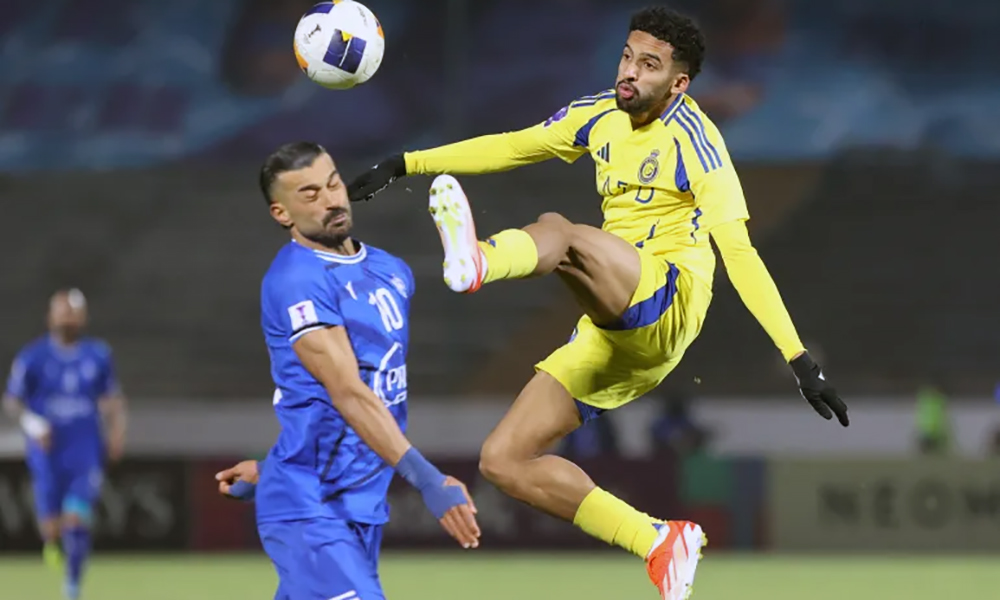
Iranian clubs Esteghlal and Tractor will play their AFC Champions League Elite matches against teams from Qatar and the United Arab Emirates at neutral venues, following the August 18 league-stage draw in Kuala Lumpur.
The Asian Football Confederation’s (AFC) premier club competition is scheduled to begin on September 14, with matches involving the Iranian clubs to be played at neutral venues.
Tehran-based Esteghlal and Tabriz-based Tractor will face UAE sides Al Ain, Al Wasl and Shabab Al Ahli, as well as Qatar’s Al Gharafa, Al Sadd and Al Shamal.
The 2026/27 AFC Champions League Elite features an expanded 32-team format, with 16 clubs competing in each of the Western and Eastern zones. The top eight teams from each zone will advance to the round of 16.
The knockout stages will continue through the regional rounds, with the quarterfinals, semifinals and final scheduled to be played in Saudi Arabia from April 23 to May 1, 2027.
Meanwhile, Ariana Television Network (ATN) will broadcast AFC Champions League Elite matches across Afghanistan, bringing fans nationwide live coverage of some of the biggest club football fixtures in Asia.
Fans across Afghanistan are urged to stay tuned to ATN for more updates, match schedules and broadcast details.


Abu Muslim Farah defeat Khurasan Faryab 2-0 in ACL season six

Saar: Concerns over Pakistan’s political crisis discussed

Afghanistan Champions League: Omar Zawak Herat beat Toofan Herat 1-0

Blast in Pakistan’s Dera Ismail Khan kills 11, injures 30

Ariana Afghan Airlines increases Kabul-Delhi cargo flights

Saudi energy group signs major Afghanistan deals covering gas exploration and pipeline plans

Trump floats idea of renaming Atlantic or Pacific Ocean

US hits Egyptian bank branches with Iran sanctions as war marks six months

Nepal flood rescue mission enters critical phase as thousands remain missing

Iranian clubs to face Gulf opponents at neutral venues in Asian Champions League Elite
Saar: Concerns over Pakistan’s political crisis discussed

Exclusive interview with Abdul Latif Mansoor, Minister of MRRD

Tawsia: Overview of Afghanistan’s iron mines

Tahawol: Discussion on fresh Pakistani airstrikes on Afghanistan

Saar: Calls for international support for Afghanistan discussed
-

 World5 days ago
CNN, MS NOW and Politico sue Trump, challenging White House ban
-

 Latest News3 days ago
Ariana Afghan Airlines ranks seventh among 45 Central Asian airlines
-

 Latest News5 days ago
UN reiterates call for respect for international law after Kunar airstrikes
-

 Regional4 days ago
US and Iran hold first talks since June after Trump’s ‘annihilation’ threat
-

 Latest News3 days ago
Silk Road highway in Wakhan corridor now reaches the China border
-

 Latest News5 days ago
Afghan Official: Pakistan’s airstrikes will not go unanswered
-

 Regional3 days ago
Iran airlines cancel flights as US sanctions hit
-

 Sport4 days ago
Afghan boxing referee heads to China for international festival