
World
Trump administration imposes new sanctions on four ICC judges, prosecutors

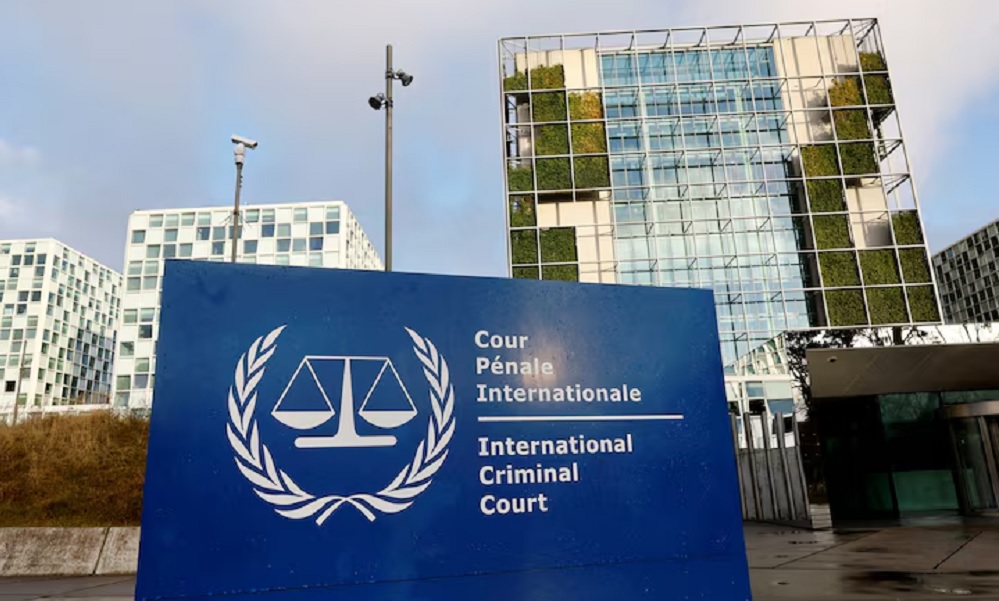
President Donald Trump’s administration on Wednesday imposed sanctions on two judges and two prosecutors at the International Criminal Court, as Washington ramped up its pressure on the war tribunal over its targeting of Israeli leaders and a past decision to investigate U.S. officials.
In a statement, U.S. Secretary of State Marco Rubio called the court “a national security threat that has been an instrument for lawfare” against the United States and Israel, Reuters reported.
The move drew ire from France and the United Nations. Paris urged Washington to withdraw the sanctions, while the ICC said it deplored the designations, calling them “a flagrant attack” against the independence of an impartial judicial institution.
Washington designated Nicolas Yann Guillou of France, Nazhat Shameem Khan of Fiji, Mame Mandiaye Niang of Senegal, and Kimberly Prost of Canada, according to the U.S. Treasury and State Department. All officials have been involved in cases linked to Israel and the United States.
“United States has been clear and steadfast in our opposition to the ICC’s politicization, abuse of power, disregard for our national sovereignty, and illegitimate judicial overreach,” Rubio said.
“I urge countries that still support the ICC, many of whose freedom was purchased at the price of great American sacrifices, to resist the claims of this bankrupt institution.”
The second round of sanctions comes less than three months after the administration took the unprecedented step of slapping sanctions on four separate ICC judges. The escalation will likely impede the functioning of the court and the prosecutor’s office as they deal with major cases, including war crime allegations against Russia over its invasion of Ukraine.
ICC judges issued arrest warrants for Israeli Prime Minister Benjamin Netanyahu, former Israeli defense chief Yoav Gallant, and Hamas leader Ibrahim al-Masri last November for alleged war crimes and crimes against humanity during the Gaza conflict.
In March 2020, prosecutors opened an investigation in Afghanistan that included looking into possible crimes by U.S. troops, but since 2021, it has deprioritized the role of the U.S. and focused on alleged crimes committed by the Afghan government and the Taliban forces.
The ICC, which was established in 2002, has international jurisdiction to prosecute genocide, crimes against humanity, and war crimes in member states or if a situation is referred by the U.N. Security Council.
Although the ICC has jurisdiction over war crimes, crimes against humanity, and genocide in its 125 member countries, some nations, including the U.S., China, Russia, and Israel, do not recognise its authority.
It has high-profile war crimes investigations under way into the Israel-Hamas conflict, as well as in Sudan, Myanmar, the Philippines, and Venezuela.
UNDERMINING INTERNATIONAL JUSTICE
Both France and the United Nations said the judges’ work is crucial for international justice.
“Their role is essential in the fight against impunity,” a statement from the French Foreign Ministry said.
The U.S. sanctions undermine the foundation of international justice, U.N. spokesperson Stephane Dujarric said, adding: “The (U.S.) decision imposes severe impediments on the functioning of the office of the prosecutor.”
Netanyahu’s office issued a statement welcoming the U.S. sanctions.
The designations freeze any U.S. assets the individuals may have and essentially cut them off from the U.S. financial system.
Guillou is an ICC judge who presided over a pre-trial panel that issued the arrest warrant for Netanyahu. Khan and Niang are the court’s two deputy prosecutors.
Canadian Judge Kimberly Prost served on an ICC appeals chamber that, in March 2020, unanimously authorized the ICC prosecutor to investigate alleged war crimes and crimes against humanity committed in Afghanistan since 2003, including examining the role of U.S. service members.
The Trump administration’s dislike of the court goes back to his first term. In 2020, Washington imposed sanctions on then-prosecutor Fatou Bensouda and one of her top aides over the court’s work on Afghanistan.
Countering Rubio’s call to other countries to oppose the ICC, the court urged member states to stand in solidarity.
“The Court calls upon States Parties and all those who share the values of humanity and the rule of law to provide firm and consistent support to the Court and its work carried out in the sole interest of victims of international crimes,” it said.




World
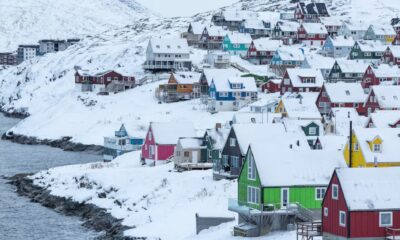
US and Denmark reach deal on Greenland, Trump says
In a separate statement, US Secretary of State Marco Rubio said that the deal “permanently and completely” addressed Washington’s national security concerns with respect to the island.
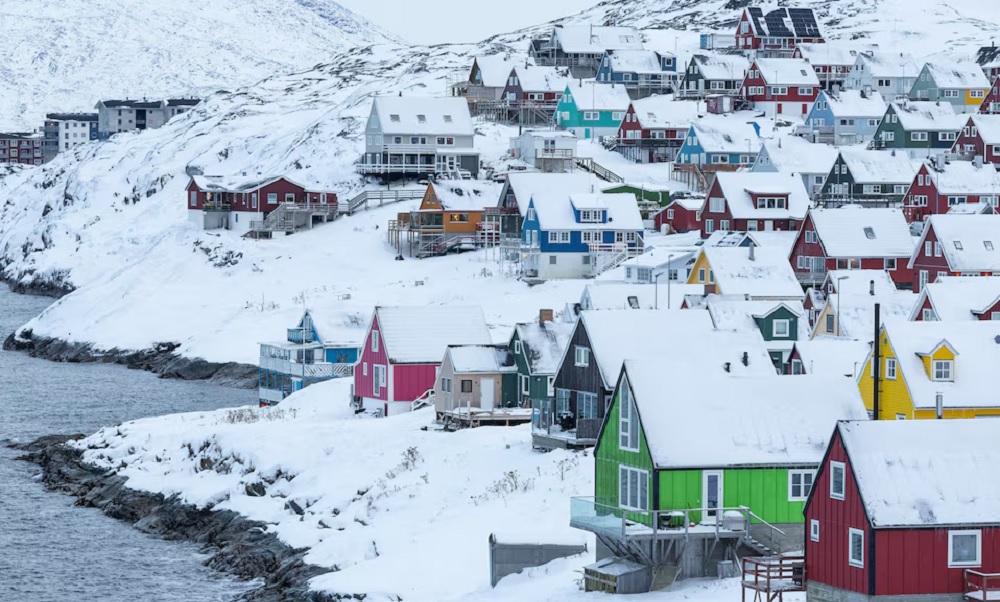
The United States, Denmark and Greenland have entered into an agreement for the US to develop a significant military presence on Greenland, while prohibiting US adversaries from building their own bases on the island, Donald Trump said on Friday.
In a Truth Social post, the US president wrote that no US enemies would be able to make sensitive investments on the island without the approval of the United States and that the agreement had no expiry date, Reuters reported.
“At my direction, we worked with representatives of Denmark and Greenland to guarantee that the United States will FOREVER have the complete ability to do what is necessary in Greenland in order to secure and defend the security of Greenland, and the United States of America,” Trump wrote.
Earlier on Friday, Reuters exclusively reported that the US and Denmark were closing in on a deal that would result in an increased US military presence in Greenland, an autonomous territory of Denmark, but would stop well short of Trump’s long-held dream of acquiring the island for the United States.
The US already has nearly total overflight and basing rights in Greenland due to a 1951 treaty.
Trump’s announcement suggests he was nonetheless pleased with the outcome of the negotiations and that he might not revive his territorial claims, at least in the near future. He said, without elaborating, that the US would soon be rolling out a large military presence on the island, which already hosts one Space Force base in its remote northwest.
“This is a dream come true for the United States of America,” Trump wrote.
EXTENT OF AGREEMENT REMAINS UNCLEAR
The Danish prime minister’s office said on Friday that the agreement would strengthen North Atlantic and Arctic security.
Greenland’s prime minister, Jens-Frederik Nielsen, said in a statement that the agreement recognized Greenland’s interests and the Arctic island’s place in international cooperation. “This benefits us all,” he said.
Much was unclear as of Friday night, including whether any new US bases would be constructed as a result of the agreement. Trump’s Truth Social posts about negotiations or agreements often lack context or specifics.
Imran Bayoumi, a former Pentagon official now with the Atlantic Council think tank, said it would be new if the US can build bases without the approval of Greenland or Denmark but that largely “it seems that Washington could have achieved a lot of these objectives through diplomacy and dialogue without straining the broader US-NATO relationship.”
It was also unclear how the agreement would be received in Greenland, an autonomous territory of Denmark. The island’s residents aspire to independence and have bristled at US attempts to assert control.
In a separate statement, US Secretary of State Marco Rubio said that the deal “permanently and completely” addressed Washington’s national security concerns with respect to the island.
“Greenland will forever be part of the strategic defense area of North America and exclude any adversary from it and the surrounding area,” he wrote.
A State Department official, speaking on condition of anonymity to discuss specific terms, said the deal prohibits non-NATO countries from building a base in Greenland and will allow only the US and its allies to make unspecified “sensitive investments.” The official said the agreement grants the US permanent access, basing and overflight rights, and would continue to apply even if Greenland becomes independent.
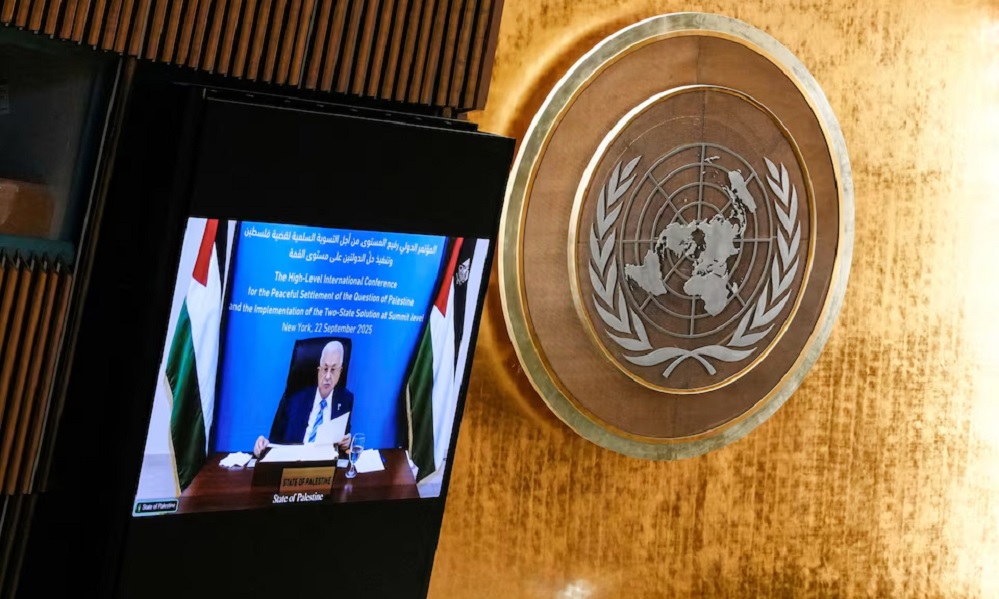
The United Nations General Assembly voted on Thursday to allow Palestinian President Mahmoud Abbas to address the annual gathering of world leaders next week via video – for the second year in a row – after the United States again denied him a visa to travel to New York.
The resolution received 152 votes in favor and three votes against, while four countries abstained. It also allows Abbas and any other high-level Palestinian officials to take part in U.N. meetings or conferences via video over the next year if they are prevented from traveling to the United State, Reuters reported.
The US said last year that Abbas and about 80 other Palestinians would be affected by its decision to deny and revoke visas from members of the umbrella Palestine Liberation Organization and the West Bank-based Palestinian Authority. Washington announced on Wednesday that it had extended the visa bans.
“If the PA wants to be treated as a partner, it must stop subsidizing terror and stop using diplomatic theater as a substitute for serious governance,” Deputy US Ambassador to the United Nations Tammy Bruce told the assembly before the vote.
Palestinian leaders rejected and condemned the move by the United States, Palestinian UN envoy Riyad Mansour told the General Assembly.
Without naming specific officials, the US State Department said on Wednesday it would extend visa sanctions against Palestinian officials over actions they took to “internationalize the Israeli-Palestinian conflict,” including pursuing cases against Israel at international tribunals.
A Palestinian official, who spoke on condition of anonymity, confirmed Abbas’ visa had been denied.
Under a 1947 U.N. “headquarters agreement,” the U.S. is generally required to allow access for foreign diplomats to the UN in New York. However, Washington has said it can deny visas for security, extremism and foreign policy reasons.
World
North Korea’s Kim vows to expand ties with Russia, backs victory in ‘sacred war’
Kim delivered a similar message to Chinese President Xi Jinping in a reply published by KCNA on Sunday.

North Korean leader Kim Jong Un said he would “expand and deepen” joint work with Russia in a message to Russian President Vladimir Putin, state media KCNA reported on Tuesday.
In a reply sent on Monday to Putin’s congratulations for North Korea’s 78th founding anniversary, Kim said Pyongyang’s government had a firm will to broaden cooperation with Russia “in a comprehensive way” based on friendship, mutual assistance, and what he described as the countries’ alliance relations.
Kim also said he was convinced of Russia’s victory in the current “sacred war for defending the security interests of the country and international justice”, language that appeared to refer to Russia’s war in Ukraine.
He pledged his “invariable support” for Putin and the Russian people.
The remarks come as Moscow and Pyongyang have drawn markedly closer, with North Korea sending troops to fight alongside Russian forces in Ukraine in 2024 and deepening military cooperation under a mutual defence pact.
Kim delivered a similar message to Chinese President Xi Jinping in a reply published by KCNA on Sunday, saying North Korea would work with China to further develop their traditional friendship and advance their shared socialist cause.
Both messages were responses to congratulatory letters sent by Putin and Xi on September 9, when North Korea marked the 78th anniversary of its founding.


ACL season six: Aino Mina and Omar Zawak play out 1–1 draw

Iran executes man convicted of spying for Israel’s Mossad, judiciary says

Afghan official meets Iranian oil minister to discuss energy cooperation

Afghanistan condemns mosque attack in Khyber Pakhtunkhwa

Baradar lays foundation stone for industrial township in Balkh

Four mediators struggle to secure lasting Pakistan-Afghanistan ceasefire

Syria and Saudi Arabia condemn Kabul bombing, express solidarity with Afghanistan

Afghanistan’s trade diversification challenges Pakistan

Saudi energy group signs major Afghanistan deals covering gas exploration and pipeline plans

ATN secures exclusive rights to broadcast T20I series in India across Afghanistan

Debate on Afghanistan and New Investment Opportunities

Tahawol: Reasons behind Qatari, Turkish security officials’ Kabul visit discussed

Saar: Outcome of UN Security Council meeting on Afghanistan discussed

Tahawol: Afghanistan’s readiness for US relations discussed

Saar: UN Security Council meeting on Afghanistan discussed
-
 Latest News3 days ago
UN warns of mounting humanitarian and human rights pressures in Afghanistan
-
 Sport5 days ago
ACL: Abu Muslim Farah 4-0 Istiqlal Kabul; Omar Zawak 3-1 Sarsabz Yashlar
-

 Regional3 days ago
Saudi Arabia calls alleged Mecca attack a ‘red line’ as Houthis deny involvement
-

 World4 days ago
North Korea’s Kim vows to expand ties with Russia, backs victory in ‘sacred war’
-
 Latest News4 days ago
UNICEF expands aid to millions of Afghan children after flash floods
-
 Latest News4 days ago
Kyrgyz, Afghan foreign ministers discuss expanding trade and investment ties
-
 Latest News4 days ago
Petition filed in Islamabad High Court against PMDC directive affecting Afghan students
-
 Latest News3 days ago
Five Years On: IEA touts economic growth despite international isolation